Tag Archives: Fiction

Escaping Limbo

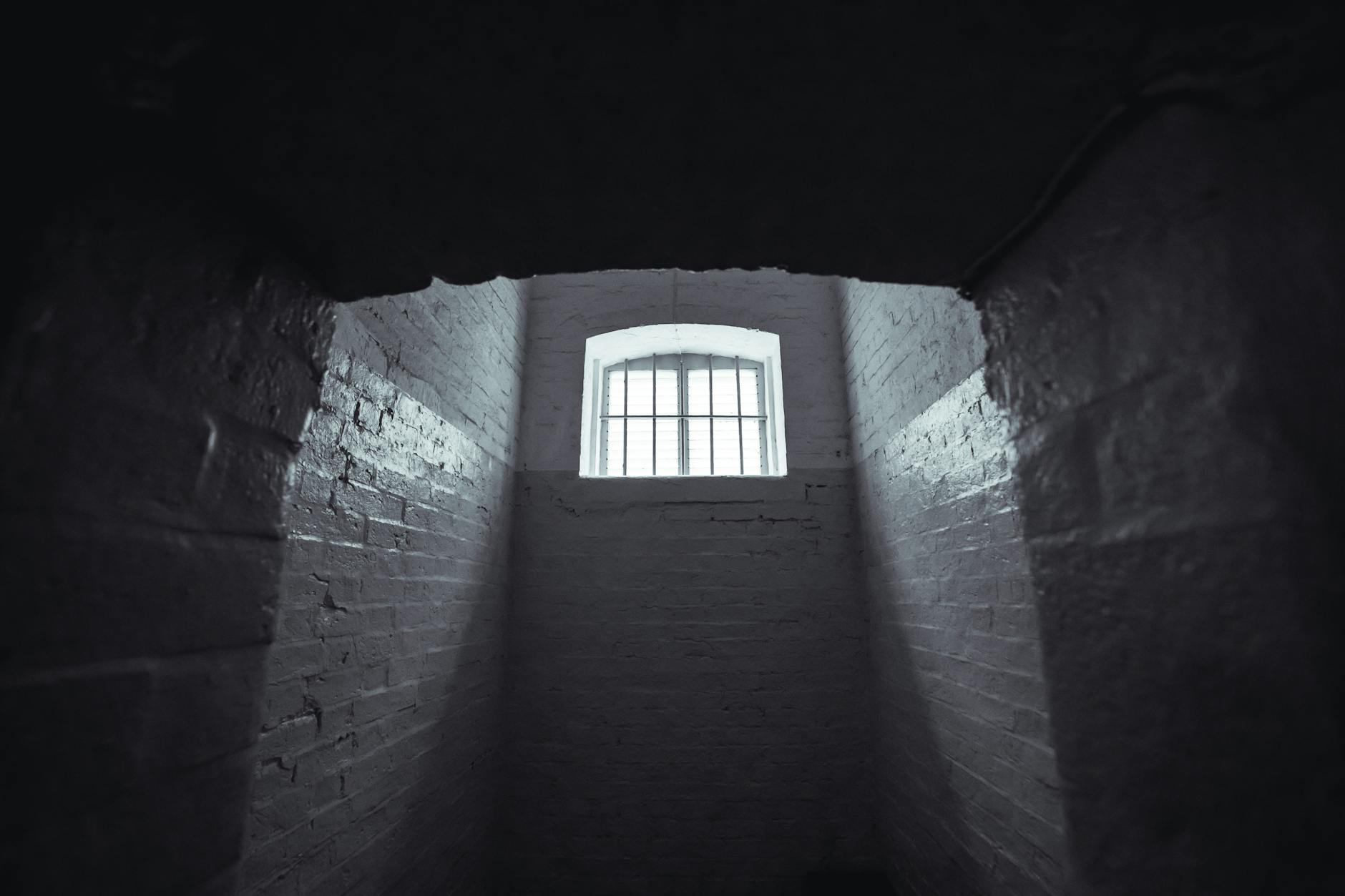
I have thought a lot lately about the discomfort of being in a perpetual state of waiting for something to happen, of worrying about what the results will be when something finally does happen, and then, wondering if I will navigate any of it well. The word “limbo” is often in my thoughts.

Photo by Jimmy Chan on Pexels.com

2024 brought new health concerns for my husband, and with that a reconsideration of where we should live, since we are currently in a very remote location, three and a half hours by car from the nearest medical center with cardiac care. We responded decisively by putting our house on the market. That decisiveness did not break us out of Limbo, however, as we do not know when or if our home will sell, and we do not know what it will sell for if it does sell. We cannot make plans on where to move until we sell the house. Still, we’re thinking about returning to the Midwest where real estate prices are more reasonable than here in the West and where we can reasonably expect to afford to live in a town with a hospital. But, until we sell, we are in Limbo.

Also, in 2024, I was thrilled to receive an invitation from my dream literary agent to send her my full manuscript, A Fine Suddenness, a World War II historical fiction novel based in Lake Arrowhead, CA. I’ve no idea if she has read it yet. It has been out of my hands for six months now, this after having worked on it pretty consistently for years. Many years. I miss it terribly (it’s an odd thing, really, the attachment I’ve made), and I have no interest in beginning a new novel yet, though at least I am continuing to write. Even so, journaling or posting online, as important and healthy as they are, do not give me the same sense of mission as novel writing does. I wait to hear from the agent, and I do not move forward on a sequel to the book I sent her, nor on some new unrelated novel, because I desperately want her opinion on A Fine Suddenness first. More Limbo.

And 2024, oh my goodness, has been a year of intense worry and anticipation for our nation and the world. We are no longer in the first stage of that particular limbo state, but we are certainly still in a place of transition and uncertainty. So many possible scenarios there, and so little I have control over. More Limbo.

Earliest historical references to Limbo describe a place in-between—not heaven, not hell—a place for deceased unbaptized humans born before the birth of Christ, or who died as infants before baptism, to reside until the second coming of Christ by the Roman Catholic Church, and these begin in the 14th Century. From there, the word limbo (more and more with a lower case “l”) entered usage in less theological contexts: as a place or state of restraint, confinement, neglect, oblivion, uncertainty, or an intermediate or transitional place or state.

Etymology also traces limbo from the English of Trinidad and Barbados limbo “a dance that involves bending backwards under a pole,” related to Jamaican English limba “to bend,” from English limber “flexible” (merriam-webster.com).

Photo by RDNE Stock project on Pexels.com

Which leads us to the dance, or funeral game, which dates back to the mid to late 1800s on the island of Tobago. In the beginning, the game started with the bar at the lowest possible height and the bar was gradually raised, signifying an emergence from death into life (Wikipedia.org). It is possible that the roots of this practice come from the slave experience of being transported across the seas in ships, where the slaves were separated and tried to squeeze through narrow spaces in order to see or touch one another. In some African beliefs, the game reflects the whole cycle of life . . . the players move under a pole that is gradually lowered from the chest level and they emerge on the other side as their heads clear the pole as in the triumph of life over death (Stanley-Niaah, Sonjah “Mapping of Black Atlantic Performance Geographies: From Slave Ship to Ghetto.” Quoted on Wikipedia.org).

The secularization of the dance began in the 1940s where “it became a popular entertainment in Trinidad and was adopted as a physical fitness exercise by American troops,” . . . and is now “considered the unofficial national game of Trinidad and Tobago” (Wikipedia.org). It has become a fun and happy pastime.

Historically, Limbo to limbo, has moved on. Broken free, so to speak. I wonder if my own limbo could progress that way, too. As for human history, perhaps also for me? If I am stuck in the place between heaven and hell right now, will it be possible for me to become limber enough to squeeze myself through the narrow places that block me from reaching the open, even joyful places that still may exist beyond my current ability to see them or experience them?

In order to do that, I would need to understand the constructs of the narrow places. What are they exactly? What are they made of? Are they hard and impervious, like granite? Splintered like rough wood? Flexible and sometimes deadly like serpents? Or are they only real because I make them real in my own paralyzed mind? Maybe I could wish them away, disintegrate them, with new knowledge or some kind of personal epiphany.

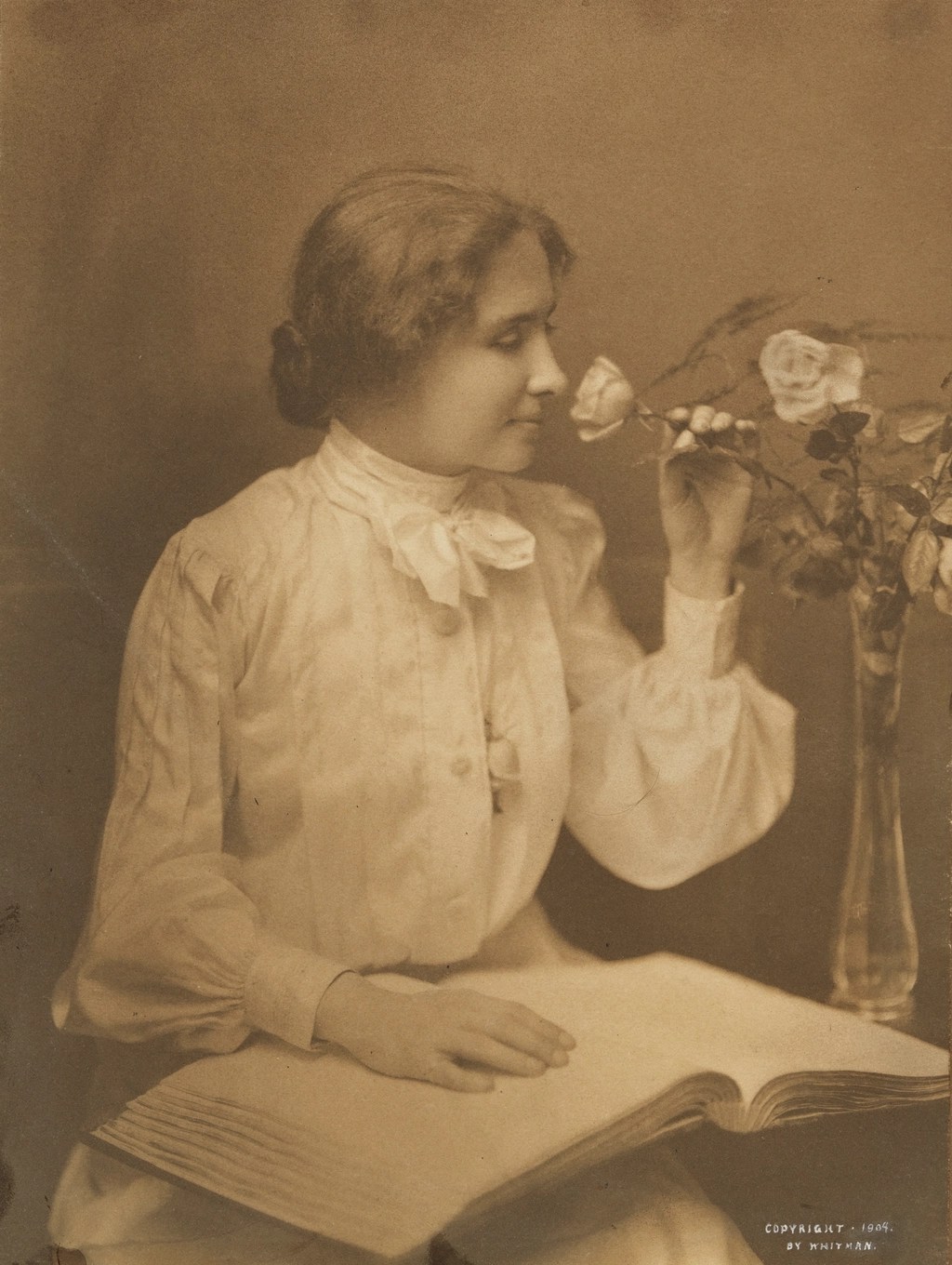
Perhaps there is a way. Perhaps not. But I must strive, at least, to remember Helen Keller’s words, these taken from her open letter in response to Nazi book burnings in Germany on May 9, 1933: “History has taught you nothing if you think you can kill ideas. Tyrants have tried to do that often before, and the ideas have risen up in their might and destroyed them. . .You can burn my books and the books of the best minds in Europe, but the ideas in them have seeped through a million channels and will continue to quicken other minds.”

If Helen Keller believed that ideas and hopes have always “seeped through a million channels,” who am I to deny it? Might not a few of those ideas and hopes, and more likely a multitude, have made their way to us now at the dawning of the year 2025? Might not they sustain us, quicken our minds, and help us find a way out of our narrow places and into the light?

Helen Adams Keller“/ CC0 1.0 from Openverse.

22 Comments

Filed under Advice, Books, Depression, Identity, Lake Arrowhead, Literary Agents, New Year's, Uncategorized, World War II, Writing

Embrace Autumn: October’s Beauty in Nature

Hello, October!

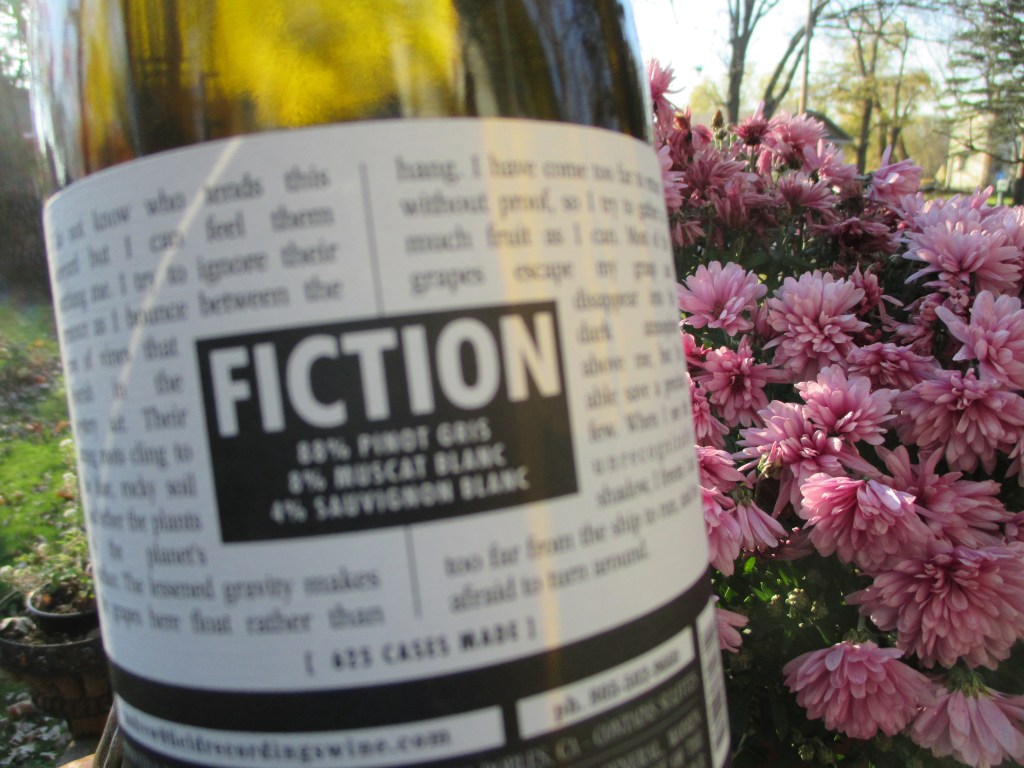
Suddenly the leaves turn red, yellow, and orange; the night temperatures dip into the thirties, and I enjoy sitting in my front yard both in the morning and the early evening. Ahhh . . . those morning coffees and evening wines . . .

The steeple front, right, is on the old Methodist church, now our community center. The steeple across the canyon (you may have to zoom in if the image is too small) is on St. George’s Episcopal church, where I attend. Sunday services have never stopped at St. George’s since the church opened in 1878.

Just a month ago it was much too hot to sit here for any length of time. It is an unusual yard, not yet shaded, one that we created by tearing down an old carport that covered the entire front of our old parsonage for sixty years. This reclaimed space has an incredible view of two one-hundred-plus-year-old church steeples and an impressive hillside on this, the northern end of our section of the Toiyabe Mountains, but no large trees yet. We have planted an oak, a cottonwood, and a blue spruce there, but they are small still.

That evening wine.

Our little town of Austin, Nevada is located in central Nevada’s sparsely-populated, history-rich Lander County in  “. . .the Toiyabe Range, a mountain range in Lander and Nye counties, Nevada, United StatesThe range is included within the Humboldt-Toiyabe National ForestThe highest point in the range is Arc Dome (11,788 feet, 3592 m), an area protected as the Arc Dome WildernessThe Toiyabe Crest Trail runs along the Toiyabe Range for over 70 miles, and is one of the most challenging and secluded trails in the United States.”  U.S. Forest Service, www.fs.us.gov.

In October, we venture out on the mountain trails, we get supplies ready for the long winter to come, and we sit in quiet reverie, grateful for nature’s hush. Enjoying the splendor. Soon, it will be too cold to sit out here without a coat. Soon, there will be more time inside, tending the fire, cooking large pots of soups and stews, reading, and writing.

This gradual gathering of the special autumn light, the relish we feel as we take it in, and our own eventual inner-directed shift is a very great gift as the seasons change, I believe.

Mostly Marigolds! Some of my favorites.

Here is a poem of great beauty by John Keats on the season:

 “To Autumn”

Season of mists and mellow fruitfulness,

  Close bosom-friend of the maturing sun;

Conspiring with him how to load and bless

  With fruit the vines that round the thatch-eves run;

To bend with apples the moss’d cottage-trees,

  And fill all fruit with ripeness to the core;

    To swell the gourd, and plump the hazel shells

  With a sweet kernel; to set budding more,

And still more, later flowers for the bees,

Until they think warm days will never cease,

    For summer has o’er-brimm’d their clammy cells.

Who hath not seen thee oft amid thy store?

  Sometimes whoever seeks abroad may find

Thee sitting careless on a granary floor,

  Thy hair soft-lifted by the winnowing wind;

Or on a half-reap’d furrow sound asleep,

  Drowsed with the fume of poppies, while thy hook

    Spares the next swath and all its twined flowers:

And sometimes like a gleaner thou dost keep

  Steady thy laden head across a brook;

  Or by a cider-press, with patient look,

    Thou watchest the last oozings, hours by hours.

Where are the songs of Spring? Ay, where are they?

  Think not of them, thou hast thy music too,—

While barred clouds bloom the soft-dying day,

  And touch the stubble-plains with rosy hue;

Then in a wailful choir the small gnats mourn

  Among the river sallows, borne aloft

    Or sinking as the light wind lives or dies;

And full-grown lambs loud bleat from hilly bourn;

  Hedge-crickets sing; and now with treble soft

  The redbreast whistles from a garden-croft,

    And gathering swallows twitter in the skies.

Written September 19, 1819; first published in 1820. This poem is in the public domain.

Hello, October! And Welcome!

7 Comments

Filed under Nature, poetry, Reading, Seasons, Uncategorized

Unearthing the Character Behind A Fine Suddenness

Three Months ago, at the beginning of summer, I received an agent request for the full manuscript of my historical fiction novel, A Fine Suddenness. I am told that 3 months is about the time I might begin to expect to hear back from the agent, and so today I am checking my email even more regularly than usual, and I am thinking about the origins of the manuscript.

My Journal

It began in May of 2011 with the glimmer of a character suggested by a signature of ownership in an old red leather-bound book a friend gifted me: The Conqueror, by Gertrude Atherton. My friend Lynn is a librarian, a teacher of history, a seller of used books, and a maker of reclaimed book journals. You can check out her business at brownbagbooks.biz. This book was one of her rescued book journals. The cover was intact, rebound into a smallish wire bound blank journal.

The original inscription inside was simple: Mary Miller 1903. Who was this lady, I wondered? She must have loved her books, I thought, to have signed her name and the year of acquisition on the inside cover, a habit I also have. I usually add the place I acquired the book also, but Mary Miller did not do so. A quick search told me that Gertrude Atherton was a San Francisco author, and The Conqueror had been published in 1902, was about Alexander Hamilton, and was widely acclaimed.

I immediately began writing in Mary’s book-turned-journal, taking on an imagined persona of the unknown lady. It began: “May 8, 1903. Lake Arrowhead, California. I am proposing to tell you a story which I am quite sure you will doubt . . .” Rather quickly it took on the overtones of a ghost story, and I named Mary’s father, described his field of study and stated that her mother had died of influenza when she was a child. All of that came to me very spontaneously. Also, Mary’s husband was dead, but she had a vision of him. So, A Fine Suddenness began as a ghost story. And in some ways perhaps that is what it still is, but not in the way it began.

Eventually, the real Mary Miller, whoever that lady was, disappeared from my mind and became instead a woman who lived in Lake Arrowhead, California during the 1940s—70 years before I read her inscription rather than the actual 108 years. Once I placed Mary in a new time and most certainly a different place than the real Mary had lived, I began to conjure what life was like during World War II on the mountain we shared, not in time, but in place.

All of that pondering gradually grew into a scene of Mary in her yard among her roses, the trees towering in the background. And so, she became real to me, and I wrote her story. She is completely fictional, other than the sense I got from seeing her name, and from the beautiful red and gold embossed cover of a book.

She, I hope, would make her namesake, the real Mary Miller, proud.

24 Comments

Filed under HIstorical Fiction, Lake Arrowhead, Literary Agents, Publishing, Uncategorized, World War II, Writing

Looking for Comps

Photo by Suzy Hazelwood on Pexels.com

     Hello, Readers! I’m putting together my summer reading list, and getting my historical fiction manuscript ready for submission. One part of this process is to read recent books (published within the last few years) that are in some way comparable to mine, so that I can better describe my own manuscript to potential agents, publishers, and booksellers.

     Have you read any recently published fiction set during the 1930s or 1940s? Have you read a novel about a war widow, or a strong woman struggling and coming to grips with some other loss? If so, I’d love to hear about it. My manuscript is set in Lake Arrowhead, California, and the place is integral to the plot, so I’m also interested in any fiction that transports the reader to a specific city, town, or region.

     If any titles come to mind, I’d greatly appreciate your sharing them here. I welcome any and all suggestions. Many thanks!

1 Comment

Filed under Advice, Books, HIstorical Fiction, Lake Arrowhead, Literary Fiction, Publishing, Women's Fiction, World War II, Writing, Writing Advice

But Night Crawler is so much more Evocative

Our yard in May contains the world. Wisconsin teems with life. For many of us living in climates where the temperatures are at or below freezing for so many months of the year, this is a heady experience. One day you’re wearing your jacket and mittens and looking at everything brown and gray, and almost like Dorothy’s arrival in Munchkinland, the next moment goes blindingly Technicolor.

IMG_1086

A Few Minutes Ago…

It is grass that melting snow washes to emerald green. Tiny lime-colored leaves on black branches. Tulips, orange, and pink, and red. Daffodils, deep yellow and apricot. Lilacs, deep purple, lavender, and white.

FallWinter2015Mostly 010

Munchkinland

Robin’s breast russet, and then those impossibly lovely blue shells their babies shed in unexpected places. I find one on the metal chair on the front deck. Cardinals, still here, looking tropical now, the crimson against the green. Red-winged black birds. White herons. Orioles, as orange as the fruit we feed them.

The sky at day, a brilliant blue, at night diamonds and velvet.


My husband calls me out to the yard.
“You have to see this.”
It’s dark and slightly cool. Wet.

“Look.”
He shines a flashlight across the lawn, catching the quiet, clandestine movements of thousands of earthworms.
They are everywhere. The lawn is undulating like the surface of a lake. I’m afraid I’ll hurt them.

He bids me come. “Step slowly. Lightly.”

I’m sure I shouldn’t be out like this, could never tread lightly enough. I say a quick prayer. “Please don’t let me do any harm.”

We stand together watching the glistening movement as the worms slide back into the ground. Everywhere the light hits them, they move. We talk about what they are doing. We’ve never learned.

I suspect they come up out the earth and the rich dark loom to gulp in the sweet, sweet air. My husband suspects it’s for sex.

We know very little about the life of worms. Such a common thing to know so little about. We feel silly, and are sure these must be things our parents were born knowing. Like the call of a mockingbird.

Then, a voice inside me says, Thibookworm-151738__180s is why they’re called night crawlers, Lori. And I know I am a complete dolt. How could this simple fact have escaped my attention all these years? Though it’s no excuse, night crawlers is not a term I ever remember being used in my family. Just earthworms, or simply worms. We didn’t fish, and we didn’t garden much. Out of sight, out of mind.
But “Night crawlers” is so much more evocative. Briefly, I picture little worm-sized, worm-shaped zombies crawling out of tiny worm-graves, marked by little crosses and a mausoleum or two—“Here lies Squirmy, Beloved Father and Husband”—our entire lawn a movie set for a new Tim Burton story.

graveimage                   How could I miss this?

“They’re good for the garden,” I say. (We’ve just planted tomatoes, peas, beets, onions, peppers, lettuce, and broccoli.)
“Yes.”
As we walk back to the house, I think, “And fireflies will be next.”


Rachel “Lori” Pohlman, Copyright 2016

*For some interesting facts on worms, such as the fact that, yes, there is some sex involved in night crawling (but that’s not all they do), go to: http://blog.nwf.org/2014/02/ten-things-to-know-about-earthworms/.

4 Comments

Filed under Humor, Nature, Night Crawlers, Seasons, Uncategorized, Wisconsin, Worms, Writing

Fireside Chats in Springtime


Early Spring 2015 048

Silly me. I had this idea to write a WWII-era literary fiction novel a while back. Quite a while back.

I spent a lot of time researching in between writing scenes. I felt I had a decent grasp on the time period; my dad was a WWII marine—I grew up waking to The Marine Corps Hymn–and though I majored in English, not history, I spent a good deal of time learning about and teaching the Holocaust to my eighth-grade classes when I taught The Diary of Anne Frank. I even wrote a YA novel about a Polish boy falling in love in war-torn Poland for my Master’s thesis in creative writing.

I’d just need to check a few dates here and there, maybe read a few more books and immerse myself in the movies and music of the 1940s, and presto! I’d be good.

Not so true.

What is true is that old saying about “the more you learn, the more you realize how much you don’t know.” Today’s epiphany: Go Deeper. I stumbled into going deeper today almost by accident. I was looking up a few Roosevelt quotes for a scene in my manuscript where my protagonist listens to the president on the radio. Just a few lines, you know, to add realism and texture to the scene.

                                                                                                Paris to home 2013 033   GO DEEPER

And I find myself, hours later, too torn up to write the scene. I’ll write it tomorrow, or maybe the next day. You see, I found recordings of Franklin D. Roosevelt speaking to the American public. I listened to them. Then I found recordings of the broadcasts made by the journalists who had followed him throughout his long presidency talking about him on the day of his death.

These recordings are priceless. You will need Kleenex. And maybe a dog. Or a loved one nearby. Luckily, my protagonist has a hankie, a dog, and a brother.

Fireside Chat           (Not my photo)                 Silly me? Yes. But also grateful me.

If you haven’t done so, and you’re interested, go to http://www.fdrlibrary.marist.edu/archives/collections/utterancesfdr.html to get started.

Three dates you might be interested in:

January 11, 1944: Radio Address to the Nation- State of the Union message to Congress (30 min.)

November 2, 1944: Campaign radio speech from the White House—“The World is Rising” (15 min.)

December 24, 1944: Christmas Eve Address (5 mins.) Make sure to stay tuned for The National Anthem that immediately follows.

Rachel “Lori” Pohlman, Copyright2016


2 Comments

Filed under Fireside Chats, HIstorical Fiction, Literary Fiction, President Franklin D. Roosevelt, Radio, Research, Uncategorized, World War II, Writing

Yoga Epiphanies and Full-Time Fiction, February 24, 2015

Owl Bar SundanceThursday or Friday, if you’ve been following me, are usually my Pub Fiction Nights. On these nights I set myself up in a pub and inconspicuously suck in and record the atmosphere. I know. Poor me. Lest you become too jealous, let me give you a bit of background.

I suck (and not just atmosphere).

Ok, that’s a little harsh. I don’t always suck. What I mean is, even though I am a writer at heart, since my earliest memories I have both known and simultaneously rejected the dream. Being a writer, right. From my perspective, I might just as well have wanted to be an astronaut or a movie star.

And I needed to earn a living. I always tended to let inconsequential things like paying the rent or buying groceries come in between me and my dream of being a full-time writer. Fine. Didn’t have a trust fund. Not many people do.

But here’s the thing. I am not getting any younger. And even during all of those years of working at not being a full-time writer, guess what? I wrote. I wrote two novels in fact while working full-time, and that doesn’t suck at all—but even so, I never felt like a real writer. I sent each of those novels out a few times, particularly the second one, but mostly I just kept them in a drawer and went on with my “real” life.

And then, and then… after a year coming to grips with my own mortality through cancer and two incredible decades of teaching eighth graders, I reached an age, that certain age, where I had a bit of money invested in retirement, and was able to say, “Time to go.” The plan was, I’d meet up with my husband across the country where he’d started a new job. I would live the literary life. Get those books published. Write more books. Really be a Full Time Writer!

Only I haven’t been writing full-time…more like some-time, between the avoiding-writing-times.

Tuesday is my Yoga night. During Corpse Pose it came to me. Yes, during that time when your mind is supposed to be completely relaxed and clear of all thoughts. That’s when I had my Ah Ha! Moment. My realization is this: My problem is not that I can’t write regularly and with complete commitment because I need to pay for my new partial dentures or that I have to be employed in order to feel valuable. Nor is it because the kitchen and bathroom floors are torn up indefinitely while my husband struggles to correct major and unexpected structural issues that we can’t afford to pay a contractor to fix. All of these things are distractions, true, but they aren’t such big obstacles to writing, not really.

Here’s my problem:  I need someone to report to, to produce for; otherwise, I will dilly-dally around with this new novel for years. That’s what I mean by “I suck.” For the first time in my life I have the time to write, yet I spend more time looking for a new job than I do writing—all kinds of ridiculous jobs—anything to distract me for a day or two or ten until I either get an outright rejection or I just never hear back so my excitement fizzles. Ho-hum, guess I’ll write a sentence or two on the novel then since I didn’t get that mad scientist job…

I am a teacher, and I love lessons! Bingo! I applied for a job recently that required I complete an assigned task. I was thrilled the entire time I was working on that assignment, couldn’t wait to get it turned in. I didn’t get the job, but I learned a valuable lesson about myself. I work best when I work for someone other than me.

When I taught language arts the biggest thrill was in the relationships, and sharing of knowledge. I wasn’t writing lessons in a vacuum, they were written in the classroom, constantly changing, adjusting to the needs and moods of the students and the days—the lessons needed to breathe to be compelling. So it is with my writing.

So I’m going back to the classroom, in a way, investing in my own education once again. There are many courses I want to take through the University of Wisconsin, Madison Continuing Studies Writing Program, but I’ll choose one for now. I hope to begin soon. It will force me to focus. This is not to say that I won’t become gainfully employed one of these days; if the right offer comes along, I’ll take it! But whether I work outside the home again or not, one thing is for certain, I will be writing, full-time. Early Winter 2014 to 15 047

6 Comments

Filed under Writing Advice

Fact or Fiction? Writing Tips from Writers Digest

http://www.writersdigest.com/online-editor/6-tips-for-writing-fiction-based-on-true-events?et_mid=712046

One of the great things about online media is that sometimes you find just the advice you need at that moment.  This short piece regarding writing fiction based on true events came at the right time for me. I have been finding myself trapped between two opposing needs: to tell the truth, and to protect others.  Maybe, according to this article, I can do both. I hope you find it useful.

Leave a comment

Filed under Writing Advice

One of the Smart Things…’Cause Why Tell You the Dumb Stuff?

Importfromcell6272014 489Writing Log

One of the smart things I do occasionally, though not as often as I should, is attend writing events, such as book signings, workshops, and lectures.  At each of these events, I endeavor to follow through on at least one suggestion that strikes me as being easy to accomplish (Did I really say easy? I meant one that I thought to be a practical and intelligent idea).  Smirk.

This past week I attended a lively and informative lecture given by Amy Gail Hansen, former English teacher and author of The Butterfly Sister, her first novel, published in 2013 by William Morrow, an imprint of Harper Collins Publishers.  She is nearly a local author; she lives in neighboring Illinois, and attended college here in Wisconsin.  In fact, her guest lecture took place at her alma mater, Carthage College, just here in Kenosha, which also happens to be one of the central settings for her novel.  Pretty neat.

In addition to being a lively, personable, humorous speaker, Ms. Hansen, was also generous with sharing writing tips and publishing industry information.  I really can’t say enough nice things about her—just a lovely person.  You can learn more about her at www.amygailhansen.com

The practical and intelligent idea I’ve decided to follow through on from Amy Gail Hansen’s lecture, is this—I’ve decided to begin keeping a Writing Log.  This, not to be confused with a Writing Blog, or a Journal; those are two totally separate things, sort of.  I find that when it comes to writing, everything leaks.  And I think that’s good. As a former writing project colleague says, “If it goes into my head, it goes into my writing.”

I’m not planning to keep the log on the blog (damn, I love rhyme), but I’m thinking if I make the commitment here, I have a better chance of following through.  Writers make lots of promises to themselves.  I will write every day.  I will always have something out there—out in the world—that it would be much easier to keep here, safely tucked away.  I will be brave.  I will finish project A, B, C, and D before beginning Project E.  I will set up a defined and sacred writing schedule…I will not be distracted by news of the day, or Facebook, or those adorable text messages my granddaughter is sending me right now from far away in California…

So, you get the idea.  Some of these promises I actually know I will not keep.  Shocking, right?  Honestly, I know I can do better, though I don’t expect, really not ever, one-hundred percent adherence.   That might stunt my creativity!  And, come on, no grandmother can ignore a text from her growing up too fast and won’t always have time for me granddaughter—that’s just criminal even to think about.

I will, however, keep a Writing Log beginning Monday, August 18, 2014.

The Writing Log shall include:

     Date

     Time

     Progress

     Notes

Wish me luck!  And please, share your ideas.  Comments are most welcome.

Mahalo.  Lori.

Leave a comment

Filed under Uncategorized

Pub Fiction

Continue reading

Leave a comment

Filed under Uncategorized