A Priceless and Precious Piece of World War II History
I have had the privilege of friendship with the talented poet, Stephanie Peirce for some years now. We met at Goddard College where we were both pursuing our MFAs in creative writing, Stephanie as an aspiring poet and I as a writer of novel length fiction. It was love at first sight (for me anyway!) when I sat in on a poetry group she was in. She was, I fancied, a younger and more talented version of me. We both had the same long, wild mass of hair, though mine was beginning to silver by then and hers was golden. Somehow, though we were on different paths and didn’t see much of each other at school, we began a long distance friendship after graduation, checking in on each other’s writing journey and eventually serving as reader-editors for one another’s manuscripts.
Glimpses is Stephanie’s newest achievement, and it is wonderful! I recommend it heartily, and I am so proud to introduce you to it here.
Glimpses is a slim volume of letters, photos, and commentary that offers precious glimpses into the lives of the author’s paternal grandparents, Catherine “Treenie” Barham Peirce and Chichester “Chit” Tapscott Peirce Jr., who was killed in Germany on February 9, 1945. It tells a compelling story of love and loss, one that is carefully compiled and beautifully rendered. It is an absolute treasure, a gift not only to the memories of Stephanie’s grandparents, but also to the countless lives altered by World War II, and to readers and historians everywhere.
Glimpses will fit perfectly on this shelf!
Stephanie’s first book of poetry, The Bright Dark
Wishing you all ample time to read, to write, to dream and to create–and beautiful friends to share it all with. Love, Lori
I recently had one of those decade milestone birthdays. I am not an enormous fan of birthday celebrations in general, and less so when I am the one in the spotlight. I can’t remember ever being excited about my own birthday, at least not in the way I imagine other people get excited. I guess I really don’t know if other people are truly excited on their birthdays or if it is all performative theatre. Maybe some of each? I know I get embarrassed, especially when I open presents in front of people. I feel like I’m going to let them down in some undefinable way.
My first memory of my own birthday was when I was very young—perhaps three? Definitely no more than four. I was a shy little kid who liked to be alone and sleep a lot. Who knows why. As far as I know things hadn’t yet fallen apart in my world at that point, so I don’t think I was depressed per se. Though disaster was looming, no one knew that yet. Definitely not little Lori. So, I was just a little odd, I guess. Anyway, my older brother, Billy, was the sunny opposite—funny, excitable, energetic. Everything delighted him.
The thing I remember about that early birthday is being shaken out of the soft cocoon of sleep by Billy jumping up on my bed and hopping around whooping, “Sissy, sissy, wake up. It’s your birthday!” I am pretty sure he stepped on me during the process. I reacted the way a fifty-year-old spinster might, groaning and covering my head with my pillow and telling him to go away. It was a story often repeated in the family. Billy was more excited about Lori’s birthday than she was.
Over the years, birthdays never really got more exciting, except, perhaps, for the 18th, because when I turned 18 it became legal for me to drink alcohol in the state of Wisconsin and I was, sadly, very interested in taverns in those days. I was a bit of a lost soul. By the time I turned 21, I was a mother, and so there was little reason or opportunity to celebrate my own birthday. I could instead focus on making birthdays memorable for my son, and then my daughter when she came along a few years later. I enjoyed making their cakes, choosing presents for them, planning little parties. I began taking my daughter to Disneyland every year on her birthday since we lived nearby at the time, and she continues to be a huge Disneyland fan to this day.
Friends
I think it was when I was in my late thirties that my friend Cheryl suggested we start a birthday tradition of meeting somewhere special to celebrate our milestone birthdays, the ones that ended in 0, and so it was that we went to Robert Redford’s Sundance Resort in Utah for our 40th birthdays. We have been friends since we were little girls, and we are only a couple months apart. The once-a-decade birthday trip suited me. No big gatherings. No embarrassing surprises, just two old friends going for nature walks and eating nice food. Perfect!
Friends
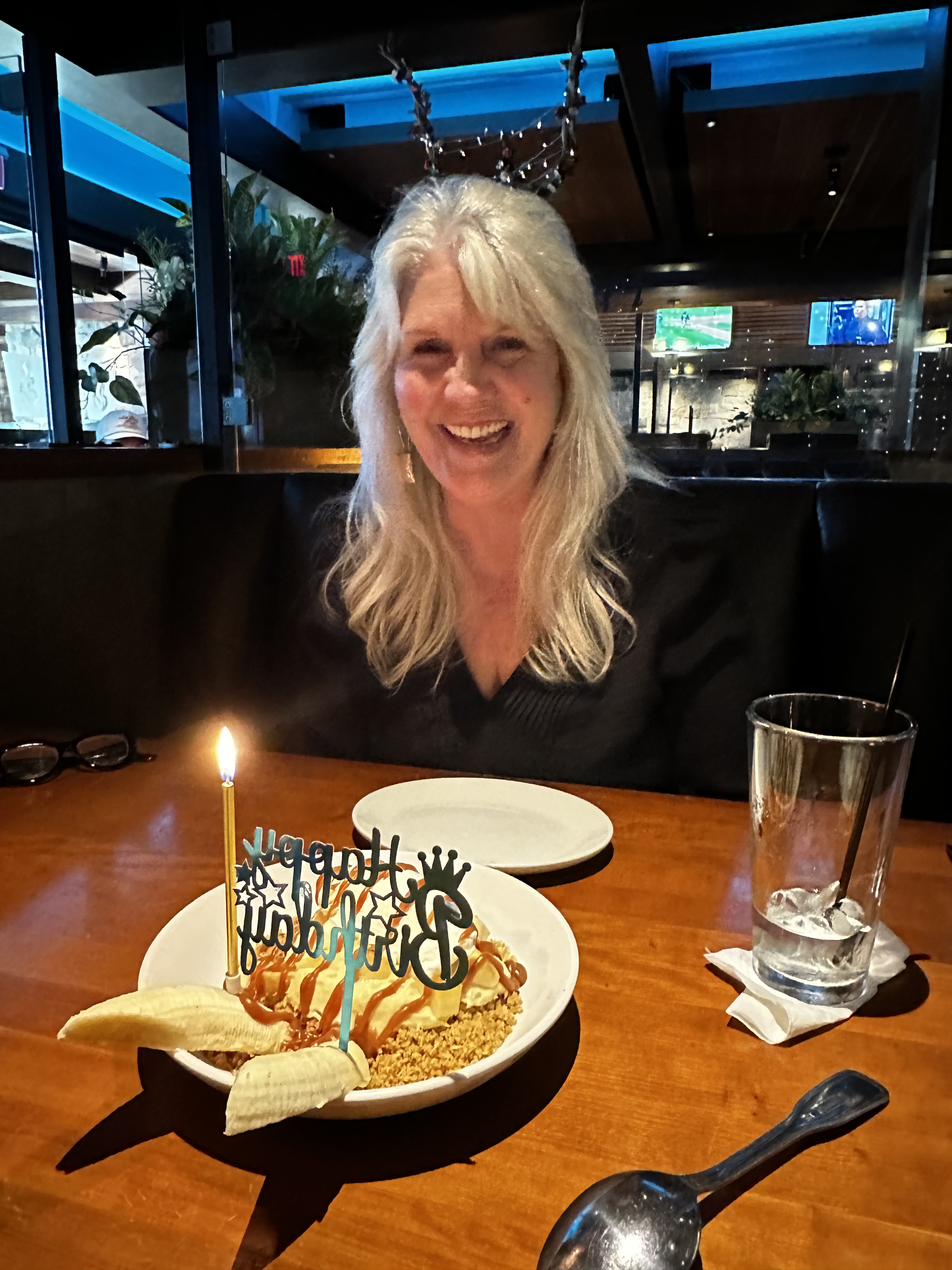
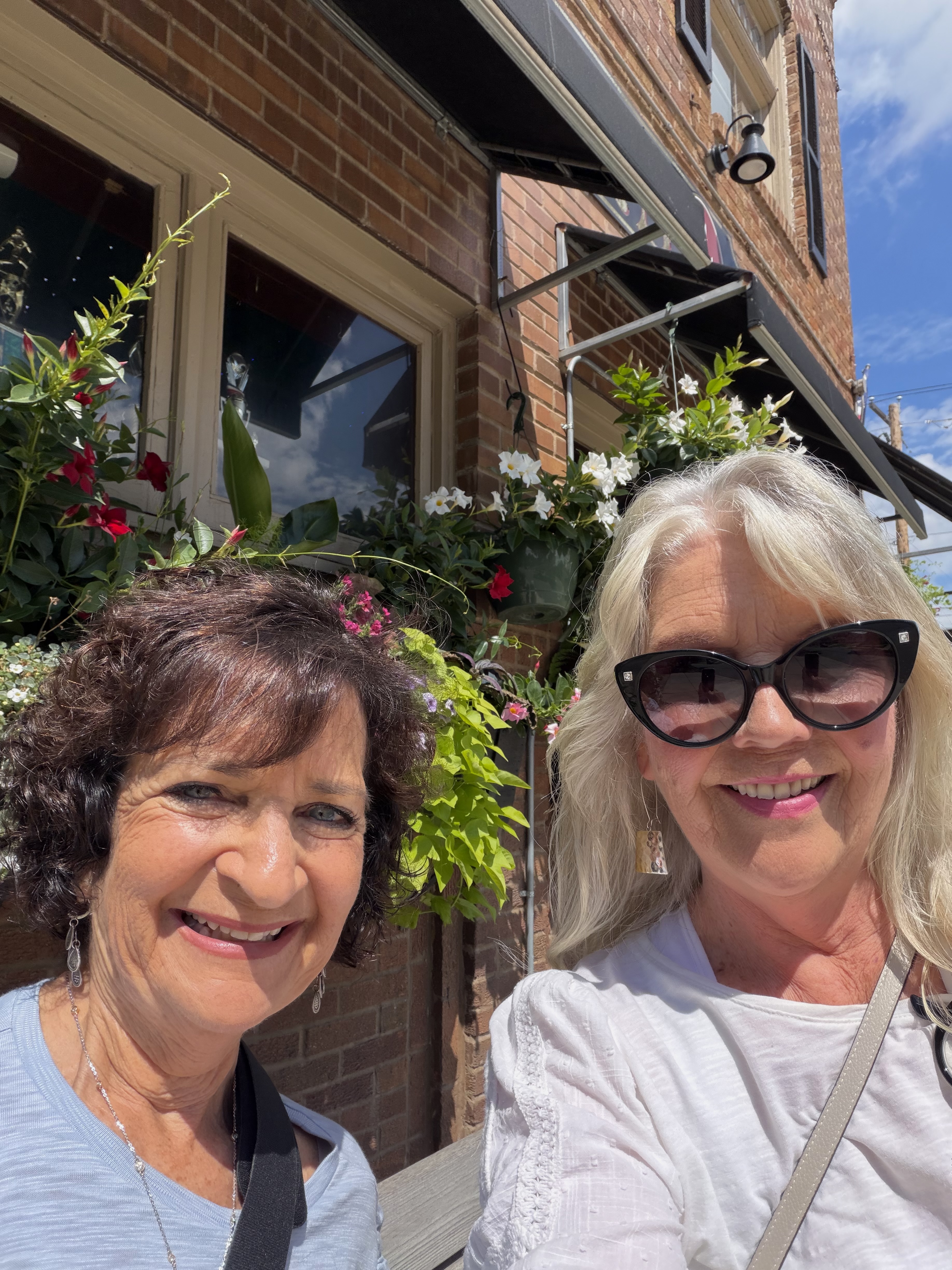
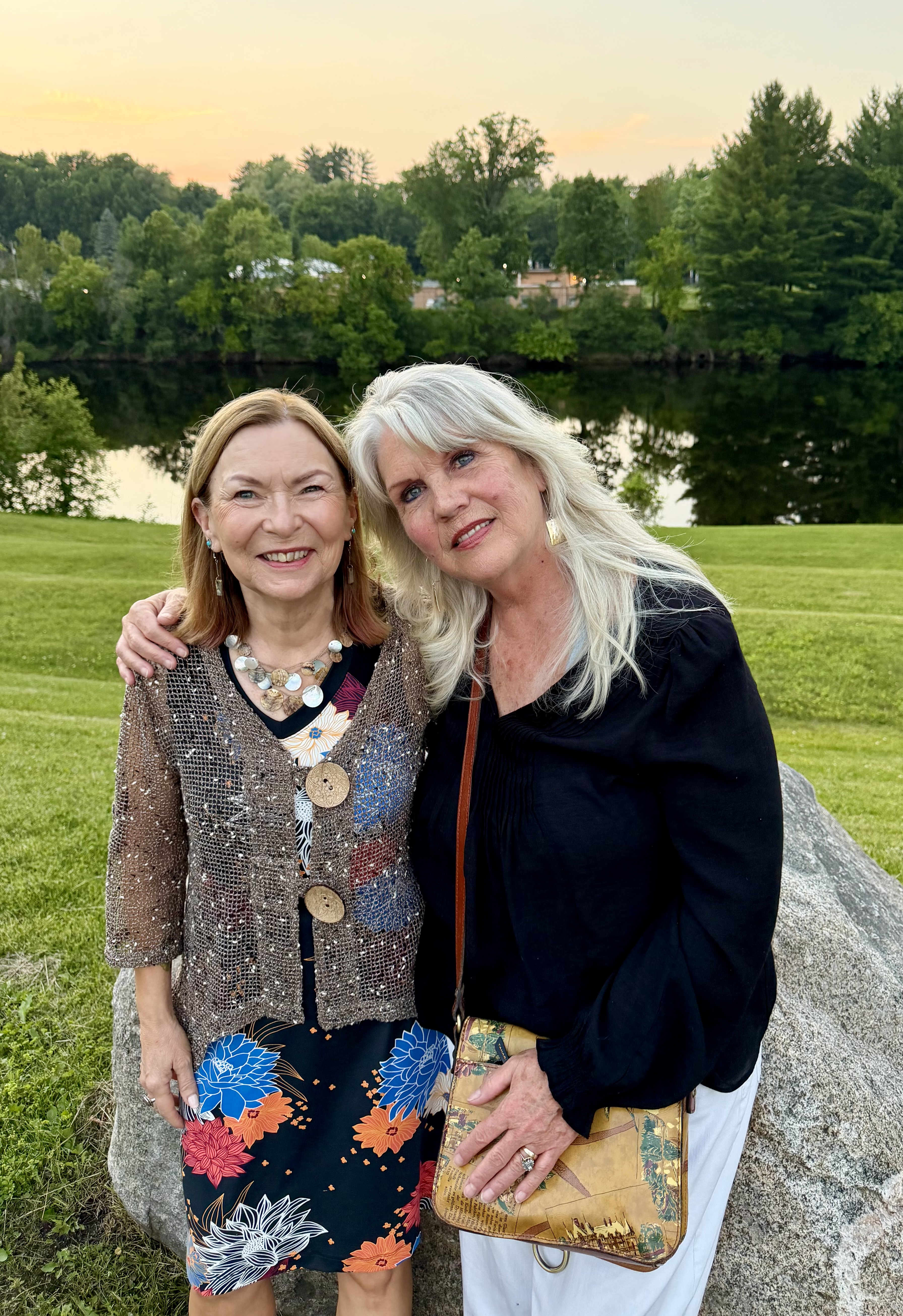
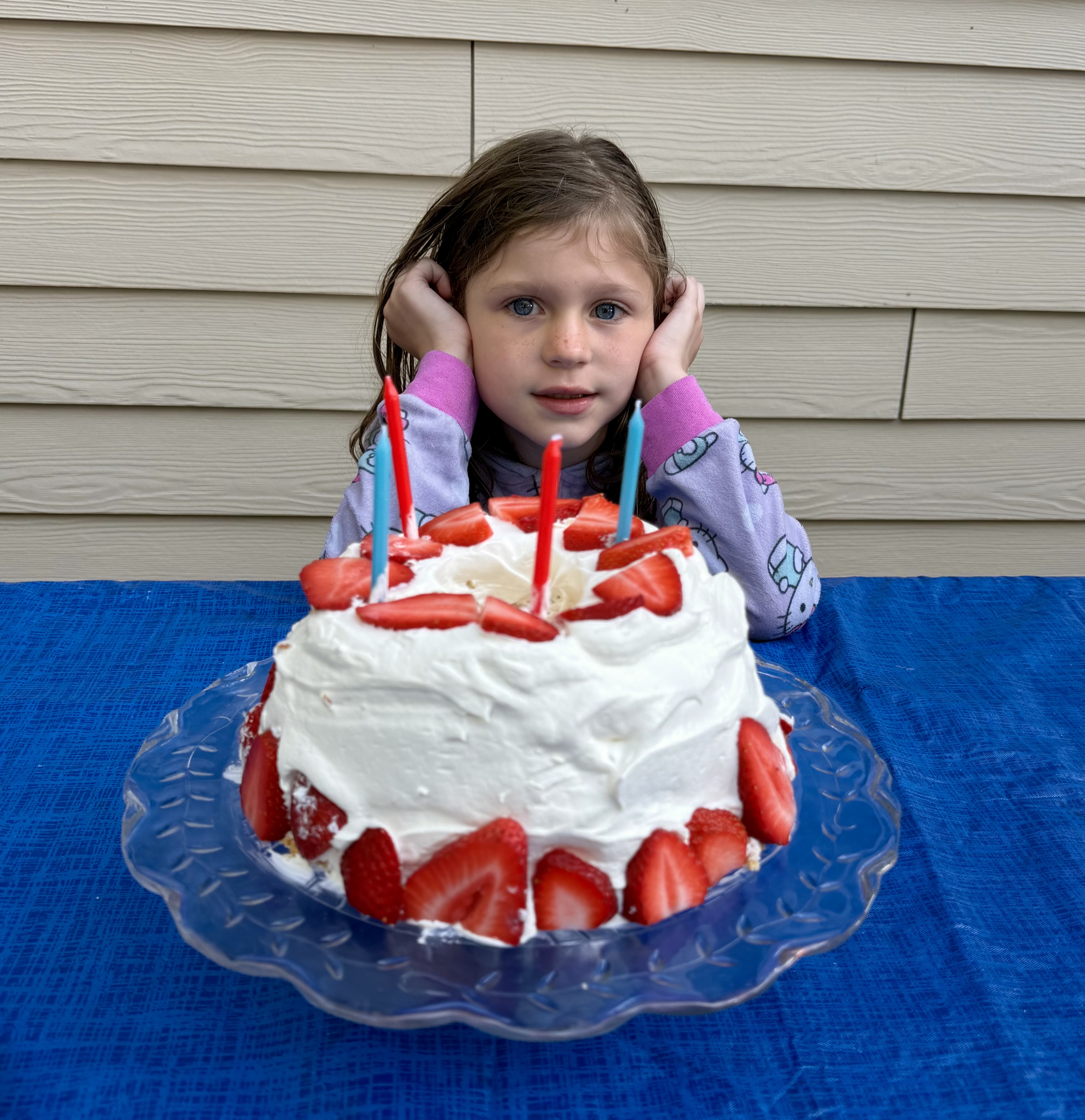
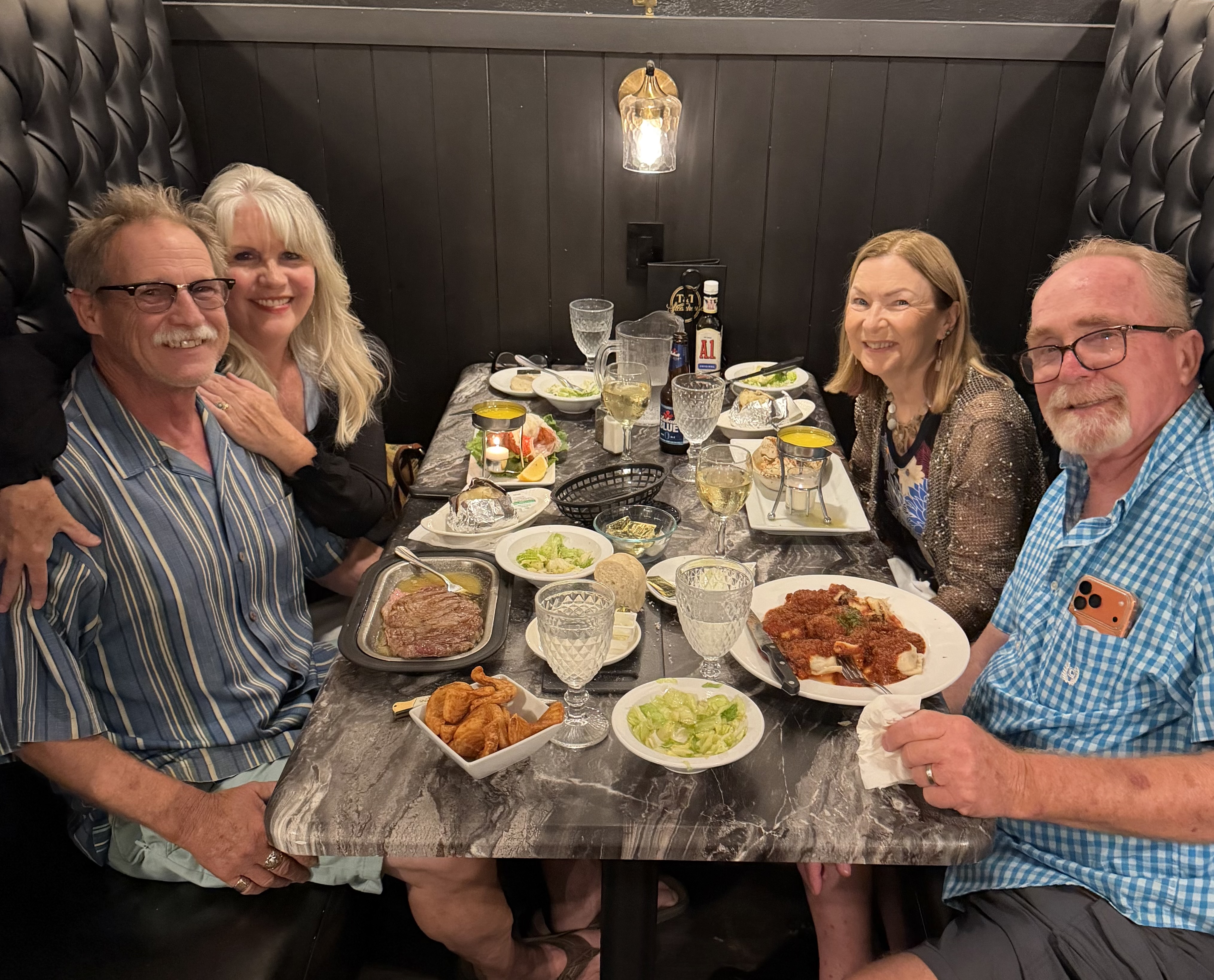
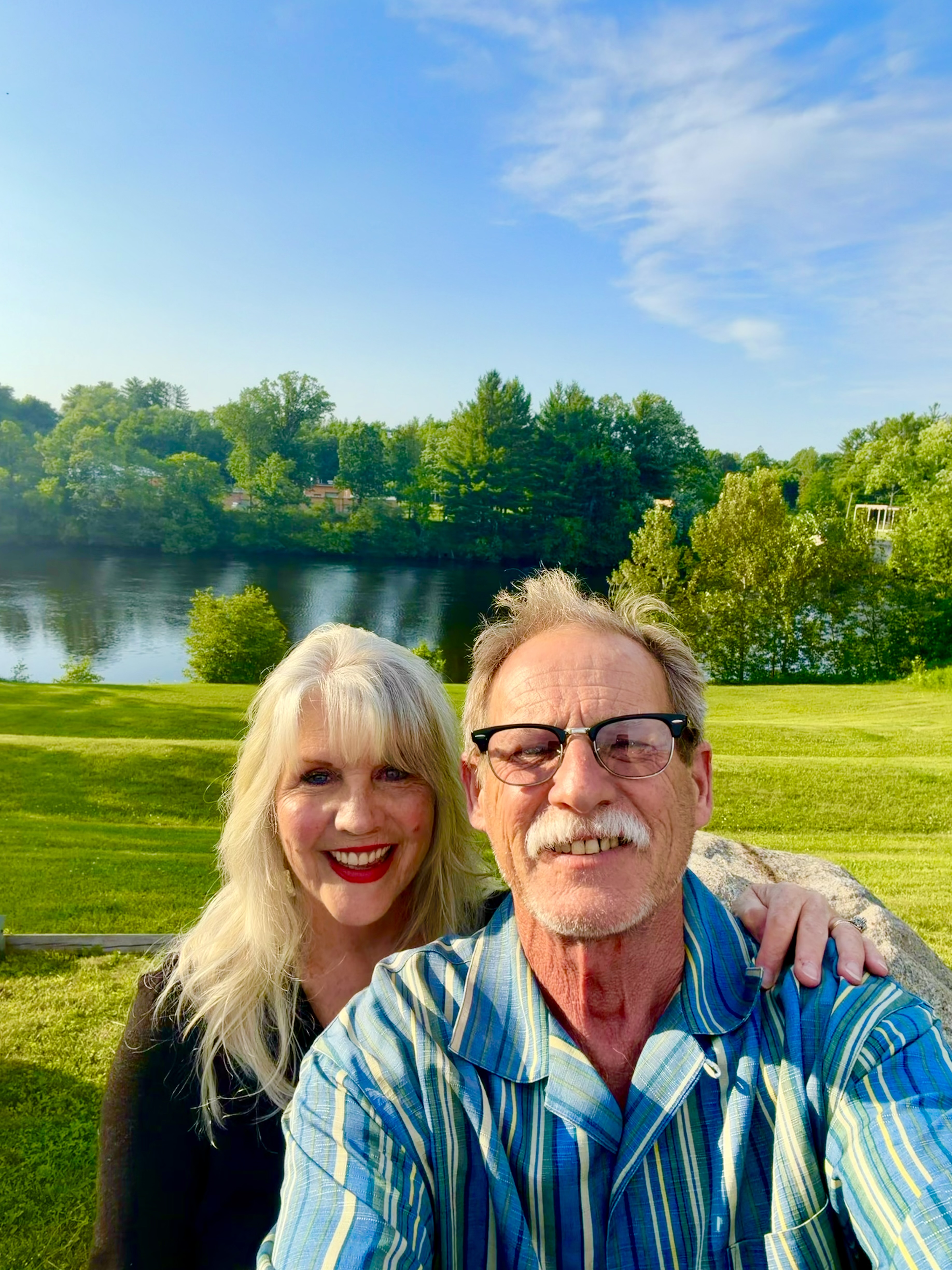
This year I had three birthday celebrations! That’s a lot of cake! Not that a lot of cake is a bad thing. I had several days with my friend, Sandy, then several with my friend, Cheryl, and then a little visit with my sister-in-law, Kathy, and some of her family at her new home in Menominee, Michigan. It’s been wonderful. The only thing missing is my kids and grandkids who are far away. Spending time with them cannot come soon enough!
Aunt Lori Gets More Cake?
Dinner at a Wisconsin Supper Club
Birthdays can be a bit like New Year’s in a sense—a time to reflect on the past, celebrate, remember, and look forward—a time to plan ahead. My friends and family reminded me of the good things about reaching this milestone, of the experience and love, of pain, too, but also wisdom. Somehow, over the years I managed to raise two children, put myself through college and grad school, teach wonderful young people, and a few older ones, write several novels (and finally am in the process of getting the third one published), maintained rich and meaningful relationships (but also lost a few), and am experiencing now the joy of watching my beautiful grandchildren as they grow. A long life provides a kind of strength, a strength that recognizes the good, the bad, the hopelessness and the hopefulness—the totality of it all. And I have been all those things at one time or another.
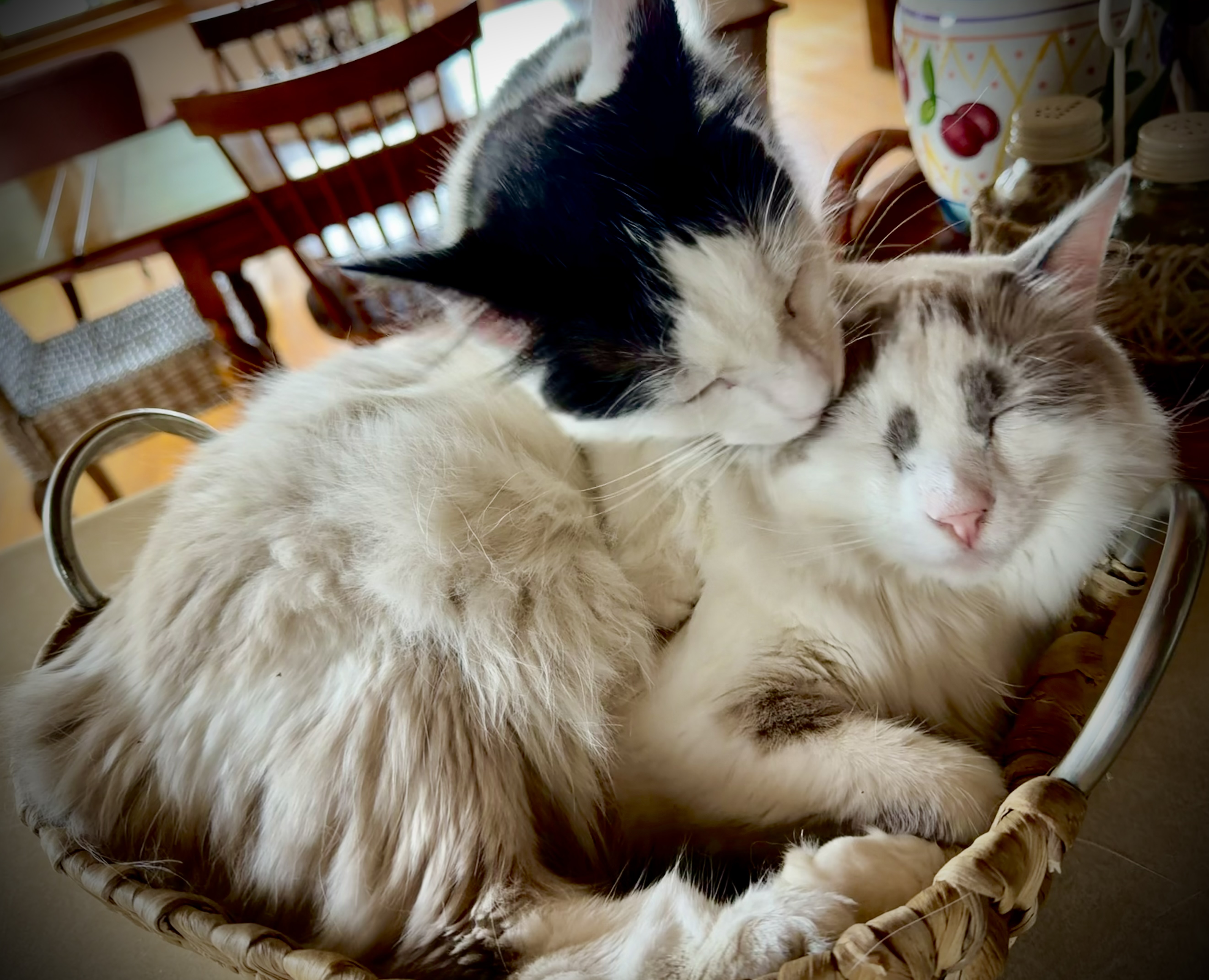
Kitty Bliss
I wish I could say I’ve put all my mistakes behind me, and that I have reached a state of peaceful benign bliss, but I definitely can’t! Just after priding myself on what I considered my valiant composure while under stress, and, in fact, bragging about it, my husband jumped into a swimming pool and got my hair wet. I lost my mind. I shot through the water like an angry shark, whipping and whacking water into his surprised face with an intensity never before seen outside of a hurricane. I was as surprised as he was! Where did that come from?
I guess I still have some growing up to do. I Am So Sorry, Sweetheart!
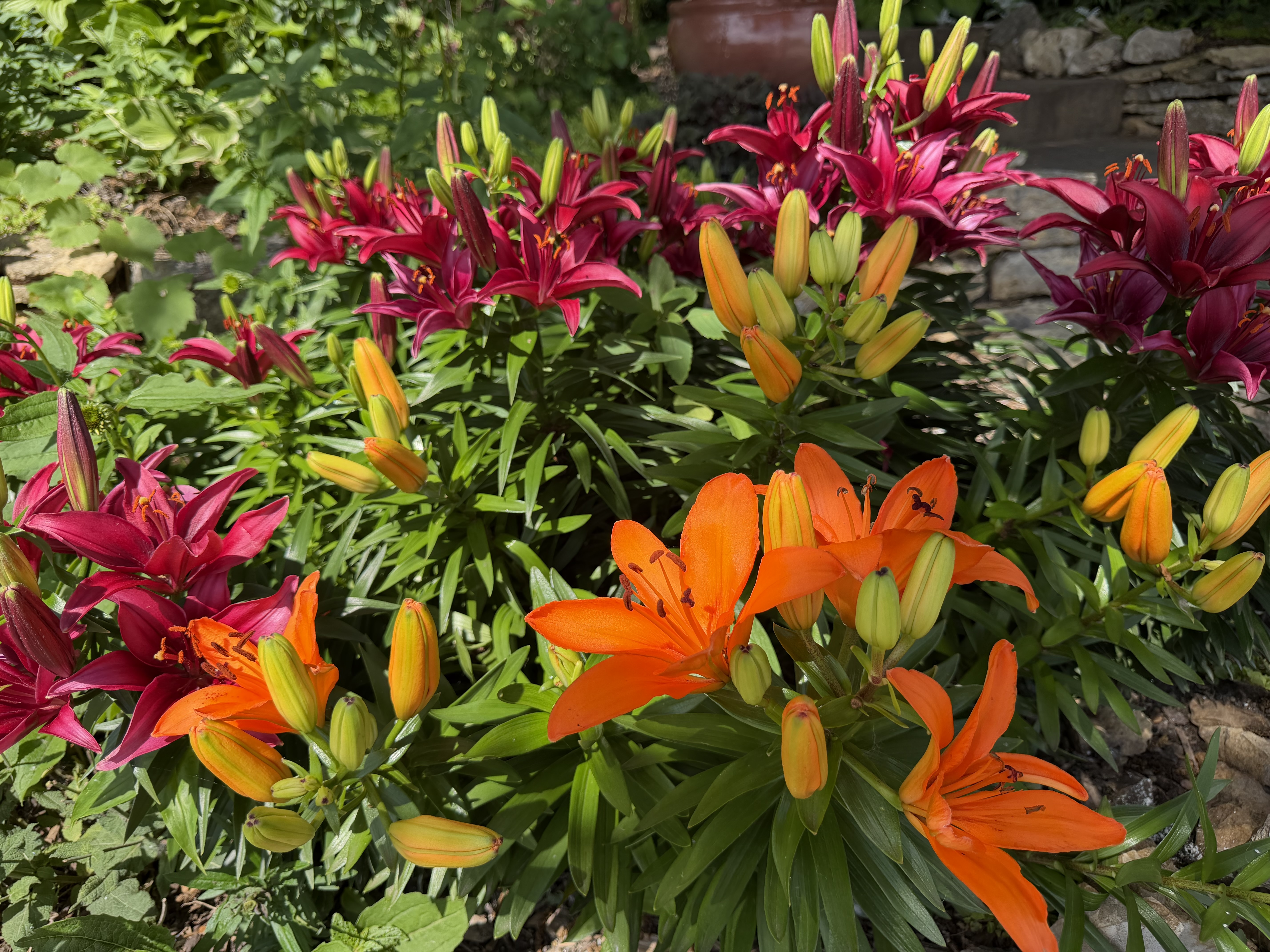
Sending Love and Blissful Blooms to You Today! And Birthday and UnBirthday Best Wishes Galore!
One of my oldest friends called me last week. I’d been having a rough time and had withdrawn in a way that only a very close friend would recognize. I’d still been “in touch” with her, but I was withholding, and she could tell. She called, and I don’t remember exactly what she said, but her voice was soft and patient and expectant. She made it possible for me to reveal my heartache and gave me time to say the things out loud that I hadn’t been able to say.
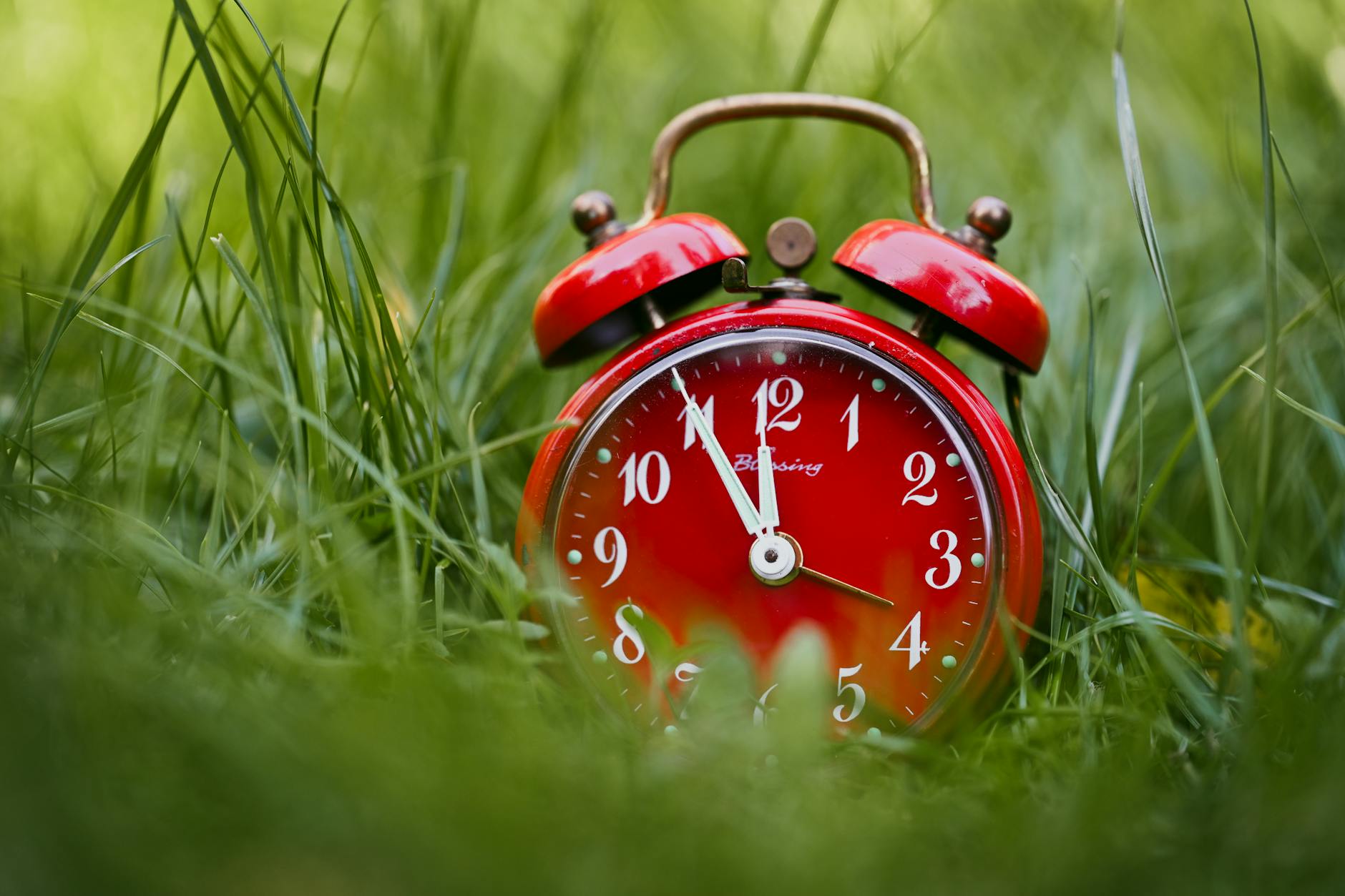
Dr. Gerald Stein in his post, “Why the Clock is Essential in Therapy (and Relationships)” (https://drgeraldstein.wordpress.com), discusses that making time for “tender issues… can be like a dance, the partners move together as if choreographed…”, and that is what my friend did for me. She didn’t try to stop my tears or give me advice. It was like a dance in a way, or maybe like a prayer. Total acceptance and love.
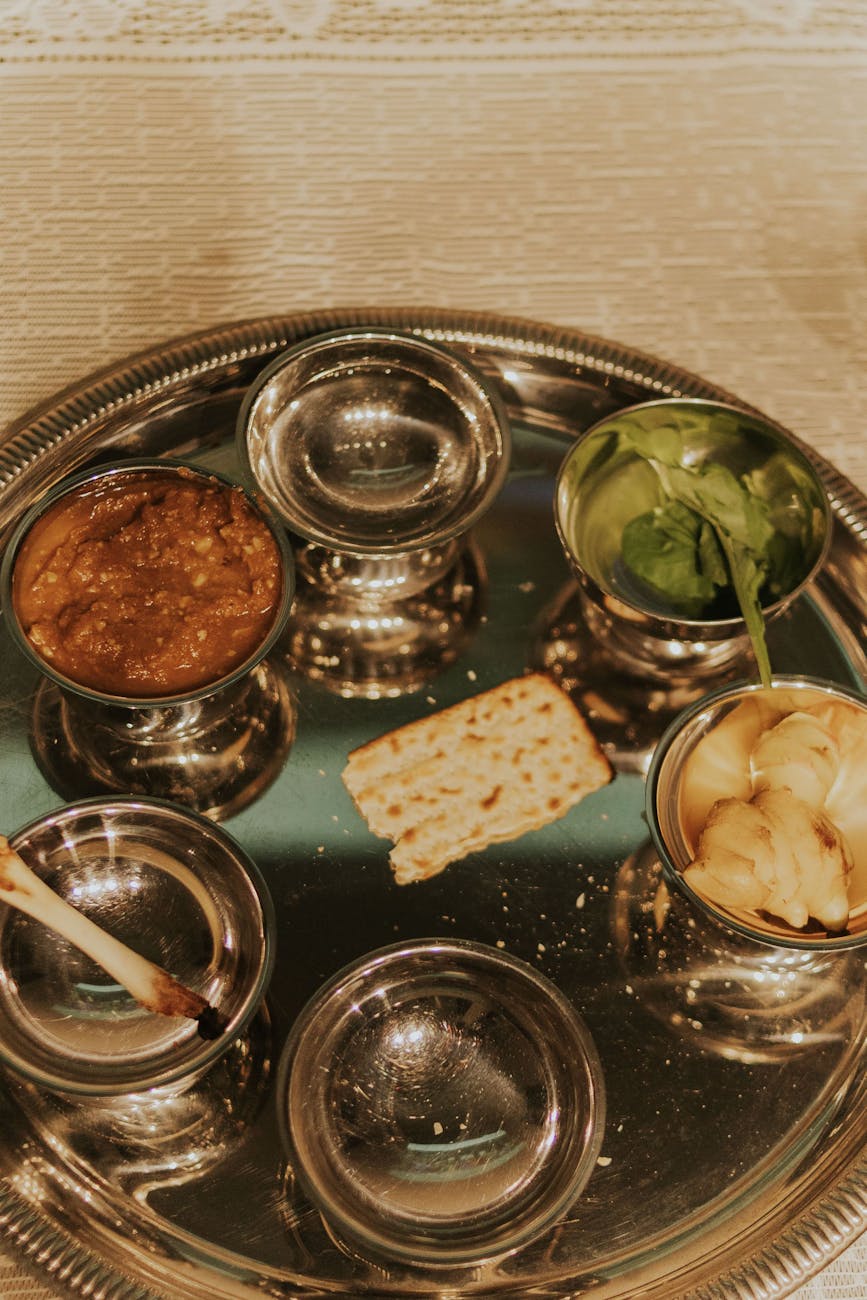
After a while my breathing settled and we continued our conversation. She told me about “Dayenu,” the prayer and Passover seder song that tells the story of Exodus. The melody of the song is joyous and upbeat, a list of fifteen things God did for the Jews, anyone of which, they say, would have been enough for them. Sefaria Library’s reading of the text begins “How much good, layer upon layer, the omnipresent has done for us. Had He brought us out of Egypt without bringing judgment upon [our oppressors], that would have been enough for us.”
Traditional Seder Plate with Symbolic Foods for Passover- Pexels Free Photos
It would have been enough. Dayenu is a prayer of gratitude, but, she intimated (or perhaps I misunderstood and twisted it to suit my own situation), that sometimes the word Dayenu can also be used as a cleansing release. I don’t want to be disrespectful. But when I think of her saying “Dayenu! Enough!” I feel a little better.
Unlike my friend, I wasn’t raised in any specific faith. Though I believe my divorced parents were given religious instruction, I think my dad more than my mom, they did not, evidently, feel the need to share it with their progeny.
Why not? I’ve wondered. Parsing that is loose. My grandfathers died long before I was born, and one of my grandmothers died when I was a baby. The only grandparent I knew was my mom’s mom who died when I was nineteen. Sadly, I didn’t see her enough, nor know what to ask her about when I did. And for some reason, religion wasn’t much spoken of in my childhood, unless you took the Lord’s name in vain. That was frowned upon, unless Mom was really angry, in which case, she couldn’t be held to account. Dad never lost his temper and never cursed, so there wasn’t a lot of reason, I guess, for him to even bring up sin or religion or God. Anyway, Mom and Dad didn’t live together after I was four-years-old, so I would never be a member of a traditional united family like the ones I fantasized about.
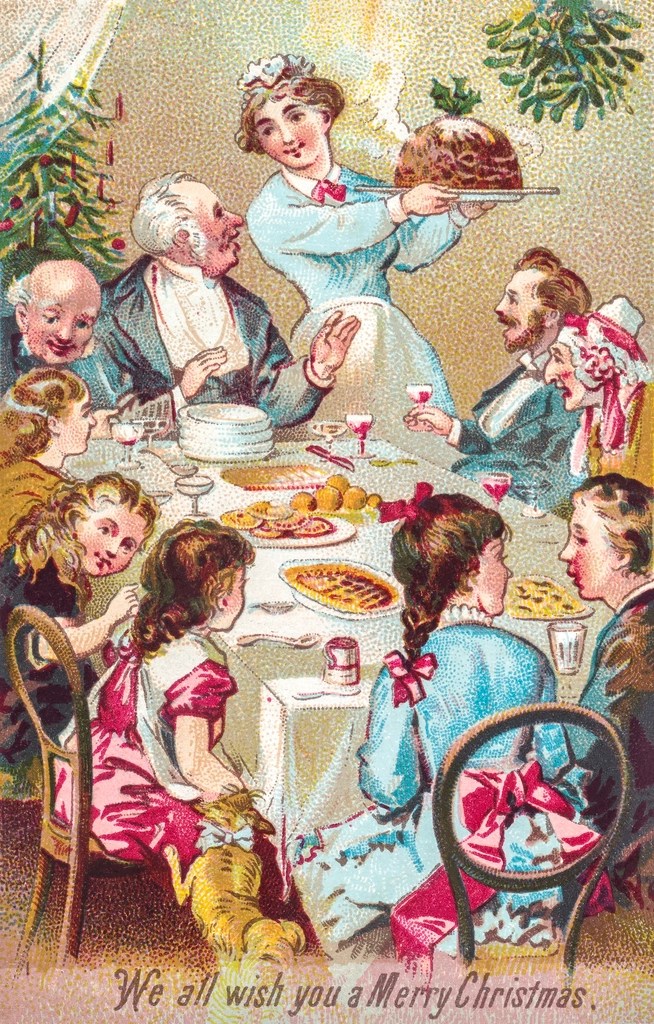
Openverse, New York Public Library (Obviously I had very grand and old-fashioned fantasies about family life–I read a lot!)
I know Dad attended a Methodist church growing up in Chicago, and that his widowed librarian mother was a model of decorum, and that, in the 1920’s and ‘30s meant adherence to social norms such as church attendance. I’m not sure whether Mom was taken to church as a child, but given the times, I imagine she was at least exposed. Her upbringing was less city, less refined than Dad’s. Mom grew up in Faribault, Minnesota with a terminally ill father she adored, a Swedish immigrant who was bedridden by the time she was of school age, and her mother worked many hours a week to support the family. There were eight children, but by the time Mom came along several of them had left home. It wasn’t a farm, so it wasn’t as if the siblings had a reason to stay once they reached maturity, though I believe several of her older brothers helped contribute to the family income.
Both of my grandmothers worked outside the home, which I used to think was somewhat unusual, but now I know women have always worked in all kinds of ways other than homemaking. It just didn’t get reported. Women’s contributions have always been underrepresented in American society. For me, born in the 1950s and growing up in the 1960s and early 70s, it was normal to think that women had always been home. I grew up watching The Donna Reid Show, I Love Lucy and Leave it to Beaver. Sitcoms regularly featured women as married and caring for husbands and children, even if the woman happened to be a witch, as in Samantha of Bewitched. It was the ideal. Only a rare few Katherine Hepburn types, charming enough, but come on, not really practical, lived independent lives or made money of their own. That’s what we were told. I mean neither of my grandmothers was even allowed to vote when they were young, but they were allowed to work to support their families.
Dad’s father, a Scottish immigrant, died when Dad was four. Dad’s only sibling died at age twelve, and his spinster aunt, a seamstress, lived with them, bringing in an extra bit of income and caring for my dad (now an only child) while his mother worked, so even though it was the Great Depression and the family had experienced horrible loss, between his mother and his aunt, things stayed afloat. Dad was well looked after, educated, participated in church and school activities, and was enrolled in a pre-med program at college before WWII changed everything. Mom, on the other hand, didn’t, couldn’t, get the same amount of attention and help. When would her mother who cooked and cleaned and cared for other people and other people’s children probably for most of the day and most of the night, day after day without reprieve have had the time to take my mom to church?
Mom didn’t talk about it. Both of my parents claimed to believe in God and considered themselves Christian, and I believed them, but it was sort of incidental. God was why you didn’t lie or cheat or hurt others. Jesus was why we had Christmas and Easter. Despite their professed faith, both of them shunned churches and had little good to say about people who attended them. Organized religion, Dad said, had caused most of the world’s problems. Mom was less philosophical. She just didn’t care for their “holier than thou” ways. I was left to find my own path if I so desired, but was never given any formal, or indeed informal, religious education.
It took me a long time, with a lot of detours, to begin to travel my own spiritual path, and I haven’t been exactly good at it, but in my own halting way I’ve touched—not held, but touched, fragments of comfort, peace, and wonder over the years. The ways grace arrived for me are varied. A Lutheran friend. A Jewish friend. A Latter-Day Saints friend. A longing to give something lasting to my children. A church bell, and then another, and another. Calls to worship. Two Presbyterian congregations, one large and one small. One Episcopal congregation, tiny. A community where different faiths worked together. Health scares. Reading. Love. All of these. And Prayer. Something I always did, instinctively. Prayer.
I was surprised to find handwritten prayers in Dad’s bedside table drawer when he died. A nightly prayer list, it appeared. All beautifully written, eloquently phrased personal prayers for me and my brother and our families.
So Dad prayed, too, more than I knew.
Perhaps that was enough.
Thank you for reading, and my hopes for you today are these—may you have enough friendship, enough time, and the opportunity to grow in love and joy in all the ways that fill you.
“The strongest oak of the forest is not the one that is protected from the storm and hidden from the sun.It’s the one that stands in the open where it is compelled to struggle for its existence against the winds and rains and the scorching sun.” – Napoleon Hill
Hello, Reader and Writer Friends! I hope this post finds you well and blessed with the energy, time, and resources you need and deserve. I am grateful to you and wish you joy. The past few weeks have brought both expected and unexpected news, tasks, challenges, joys, and sorrows to my little corner of the planet, and I suspect they may have to yours also.
Changes of season, the holidays, national and world events, community and family celebrations, work, play, plans, and the shadow of illness and even death for some have been on the hearts and minds of many.
This week in my little town we’ve lost a young woman to suicide. The tragic and violent event has left many of us in shock, and the pain is palpable. And yet, standing right beside that horror, we also have grace in the shape of a group of dear people who planned and cooked and decorated our community center, and fed everyone in town who wished to come. And we had the Christmas tree lighting in the park, followed by fireworks. And we have a live nativity on Main Street coming in a few days. And I’m going to Disneyland with my grandkids next week. And yet, a friend’s cat died and one of our own adopted cats disappeared (you see how the sadness creeps back in). And yet, I got a surprisingly good medical report from my doctor. And in the netherworld of being a writer, I began another round of manuscript submissions today, sending out queries to six publishers.
The light shifts, the wind blows.
We manage as best we can, remembering that the strongest oak
About sixty years ago on Flag Day, two little girls got up early in the morning and went to work in the kitchen, making cupcakes. These little girls had met when their moms rented apartments next door to one another after their marriages ended, and the girls had become fast and, it has turned out, life-long friends.
Cheryl was the host. I was staying at her house for an extended visit, as I did most holidays and summer breaks from school.
My mom had moved away from Cheryl’s town and taken my brother and I with her, but my dad remained. He lived in a men’s only residence in downtown Kenosha, Wisconsin, about 19 blocks away from Cheryl’s house, so I could never stay with him, but I was lucky to have Cheryl and her dear mom, Marion, welcome me in whenever I could come. Marion was an X-ray technician at St. Catherine’s Hospital and left the house before dawn most mornings to work, so Cheryl and I were on our own.
My hosts, a few years later
The cupcakes turned out well, and we set out. It was my dad’s birthday, and we were going to surprise him with the cupcakes. As often happens in life, the spirit was willing, but the flesh was weak. As we walked, we were tempted to eat first one, then two, and then ultimately all three of the cupcakes we planned to share with Dad.
Oops!
We mustered on, and eventually arrived at the imposing building where Dad resided, standing at the front desk of the huge lobby, two little chocolate-smudged waifs, empty handed, tired and thirsty. The attendant rang Dad’s room and he came down.
The former Kenosha Youth Foundation building (now Residences at Library Park) where my rented a room for many years. I believe it was in the front, left, on the upper floor.
We got the surprise part of our visit right. Dad had certainly not expected us to walk so far at our young age, unattended. I honestly don’t remember exactly how old Cheryl and I were that summer, but I remember being small in the distant way adults remember such things.
“Happy Birthday, Dad! We made you cupcakes, Dad, but we got hungry.”
It’s a story my dad always told with affectionate tenderness.
All these years later, that Flag Day is on my mind, along with so many other thoughts and feelings that I believe must be expressed. These are complicated times. . .
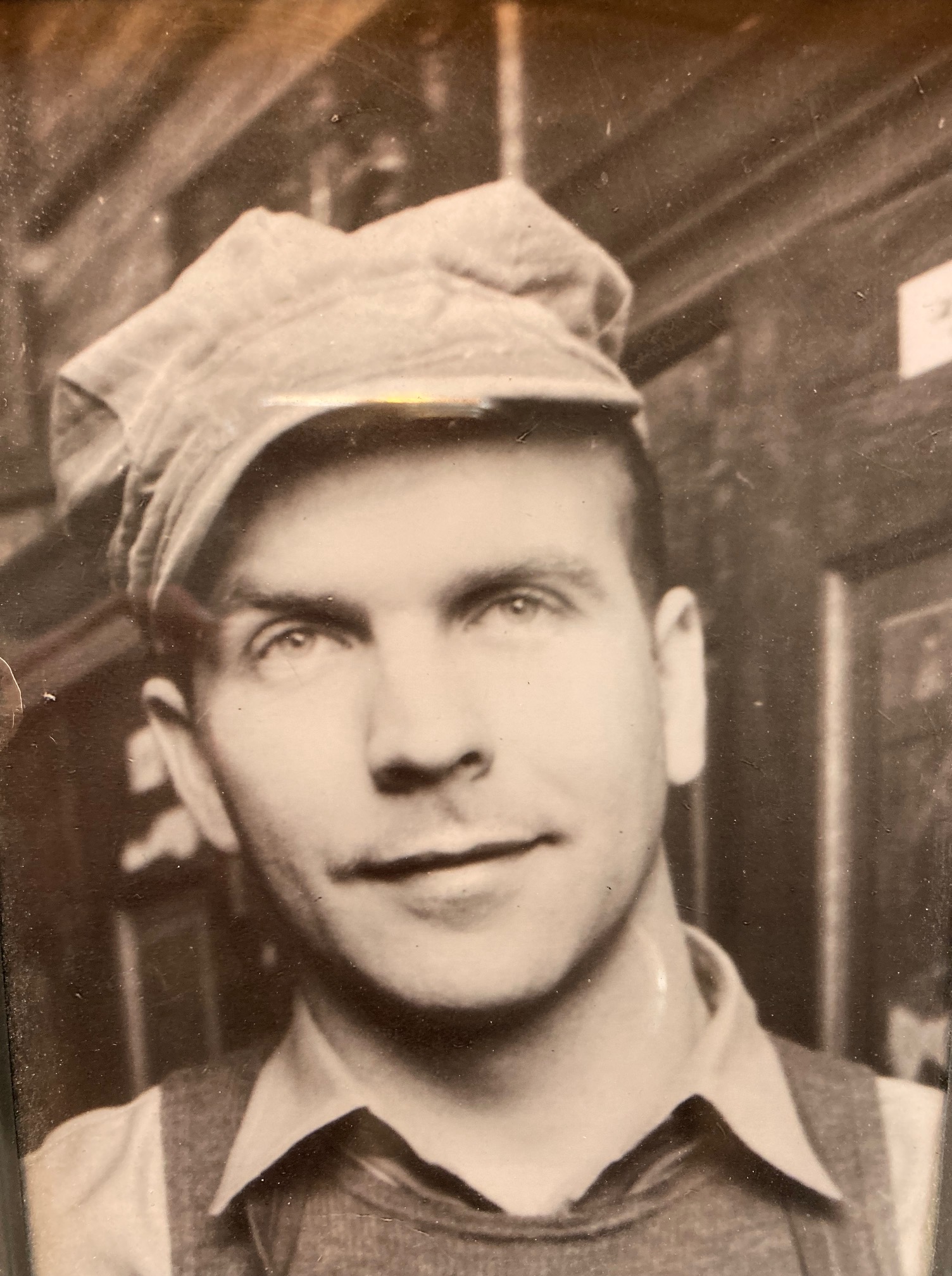
My father was a World War II United States Marine Corps veteran, something my brother and I were always aware of. We knew the Marine’s Hymn, and we knew he had learned to talk like Donald Duck while he was in the service, but he was a quiet man who never spoke to us of his battle experiences. Other than his Purple Heart, we never saw a uniform, a gun, or any military artifacts in our home while he lived with us, nor did I find any among his possessions after he died.
Dad was playful and sentimental with us, teaching us about nature and camping and the stars. On his Flag Day birthdays, he enjoyed the simple things—cake and ice cream, tea or coffee, a home-made dinner. He did not use profanity, never used derogatory terms when referring to other people, and abstained from smoking and alcohol, all of which were somewhat unusual among his peers. He believed in staying fit, mind and body.
Dad and Cheryl on one of our many blue tent camping trips.
For many years, while living at the Kenosha Youth Foundation, he walked across the lawn, past its statue of Abraham Lincoln, into the beautiful old library where he read several daily newspapers, and enjoyed reading non-fiction books, mostly medical titles, as I recall. He continued a daily walking regimen all his life.
My Dad
This gentle man died long before the current resident of our White house launched his political campaign, so I cannot say for certain how he would feel about sharing his birthday with him, or whether he would support his policies. Dad was a Republican so I imagine this last decade would have been a challenge for him, certainly in different ways, but perhaps just as powerfully as it has been for me. Dad’s nature was the very opposite of this president. I like to think he would not have voted for him or supported him.
These are the musings of a daughter, his only living child, as the president of United States of America is set to preside over a huge military parade in Washington D.C. for the Army’s 250th birthday. And as National Guard troops and U.S. marines are staked out in the city of Los Angeles against the wishes of the governor and mayor. As ICE agents conduct raids, sweeping up suspected undocumented immigrants. As many of our government agencies are gutted, our history is being rewritten, and kindness and love and We the People seem forgotten.
But also, as over 2000 gatherings of everyday citizens in America and around the world will be protesting.
I will be among them.
I hope he would be proud, but I do not know.
What I do know is that even if he wasn’t proud of my participation, or he didn’t want me to attend because he feared for my safety, he would not try to stop me. He believed in all of the freedoms he fought so hard for in World War II. And I know that no matter what, he would hug me and tell me he loved me as he always did, throughout the many mistakes, successes, and milestones, large and small, of my life.
And if we could spend his birthday together this Flag Day, I know he would smile and tell the story of the little cupcake girls who visited him on his birthday.
Something I don’t write about much is my writing background. And of course there’s a reason for that. I have spent a significant amount of time, effort, and money over a period of many years on writing, and though I don’t consider any of that effort to be wasted, I do think sometimes, sometimes when the shadows fall a little too dark, a little too thick, that I should have done more with it, this writing thing, by now. That it should have gone somewhere. Perhaps I’m even a bit embarrassed to admit that with a BA in English and an MFA in creative writing, and years of study and teaching under my belt, I still haven’t published a novel.
Have I written a novel? Oh, yes. I wrote my first novel three decades ago. I was teaching English and became active in the National Writing Project, a fantastic program for teachers that encourages us to become writers, ourselves. I wrote a contemporary novel during that time but never attempted to have it published. It was my learning novel, the one that I would never throw away, but also, the one that wouldn’t be good enough to publish. Don’t ask me exactly how I came to this conclusion. I think I read an awful lot of books and articles about writing, and this was my take on first novels. They were like the first pancake, or the first kiss. You just had to do it and get it out of the way. The payoff would be better pancakes and better kisses later. Fluffier, more evenly browned, delicious. Or maybe my own writing just embarrassed me so much that I couldn’t even think of approaching anyone with it. So, I printed it out and boxed it away.
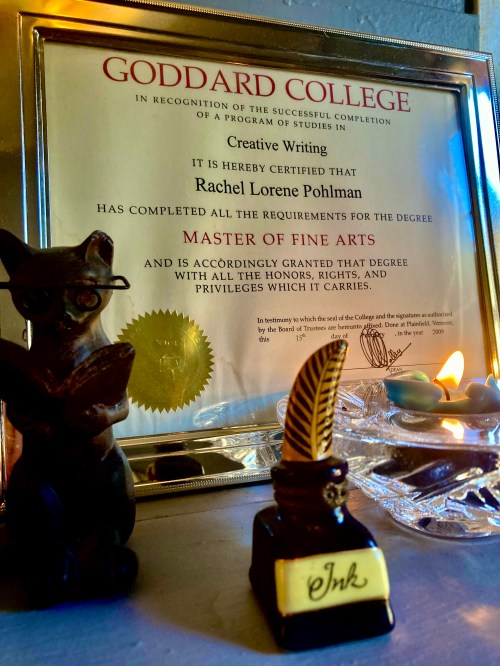
The itch to learn more and to focus more on writing took me to Goddard College next. I continued teaching and worked on my master’s from 2007-2009. During this exciting period, I wrote constantly, including many formal papers for my instructors and my thesis, which was a young adult historical fiction novel about a Catholic Polish teen and his Jewish neighbors during World War II. This one, I thought, I would try to get published. I just didn’t hurry it.
I attended Goddard West in Port Townsend, WA. I have never been to the original campus in Vermont, which has sadly, closed, but I still hope to visit there someday.
After the MFA, I focused on researching agents and publishers and writing queries. Admittedly, I didn’t try very hard. It was excruciating for me to put myself out there—my writing out there—which to me, amounted to putting my inexperience and inadequacy on full display, a neon sign of not-good-enough, flashy and annoying, just begging someone far more hard-working and talented than myself to squash it.
Time went by and I wrote with friends for fun, and to learn more. Shout out to you, Alicia, Lynn, Mike, Maria Elena, and of course all of my amazing students! I thought maybe I needed to put more time between me and my second novel. I started blogging. I was still teaching.
But then I found myself seriously ill with a rare form of cancer, and the world stopped spinning. I lost track of days, weeks. My brother was also ill and had come to live with us. My surgeries were successful. But I felt unwell. Months of chemo took a toll. And my brother. My beautiful brother, my only sibling, died.
I read that the average life span for appendiceal cancer was seven years, and yes, I also read that was not to be taken to mean that I would die in seven years—there were so many factors involved, and it was just an average. Many people died sooner. Others lived for twenty years or more. Blah, blah, blah, I thought. I have seven years.
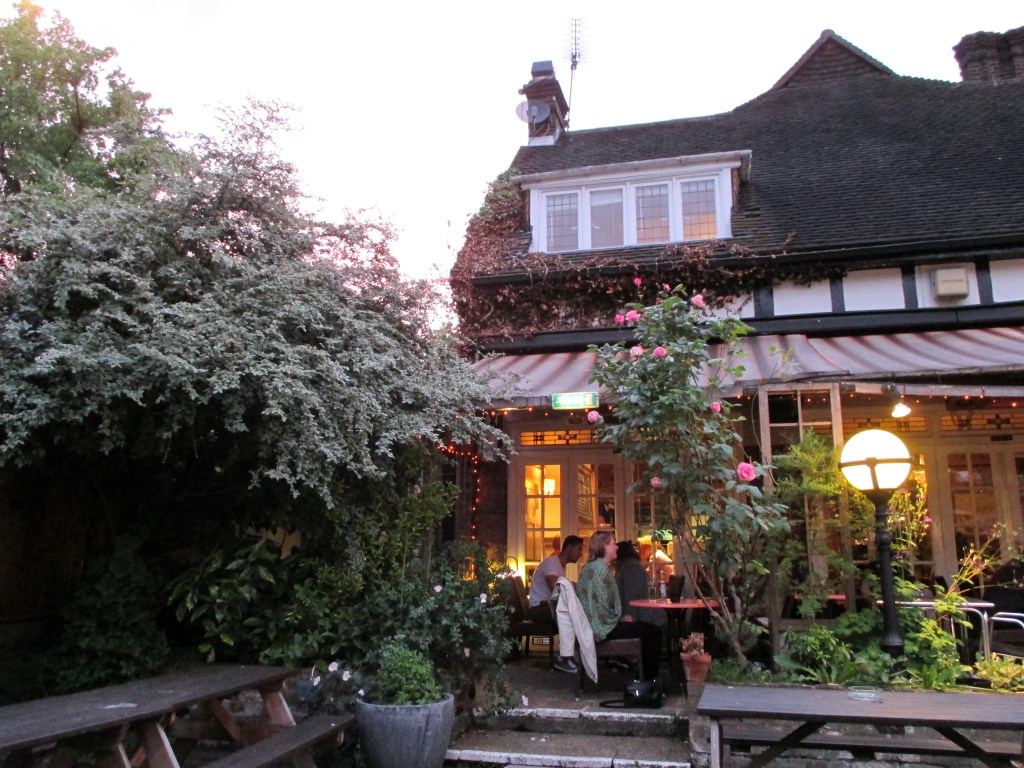
With my husband’s blessing, I cashed in a small savings account and took a short trip to London and Paris (my one and only trip outside the U.S.), and it was wonderful, and I knew I wanted to write. My writing vision could not have been more clear. I came home and worked on a new novel.
East Finchley, Outside London.
A Beautiful Place to Write.
I taught for a couple more years. Other than my family, my teaching career was what I was most proud of and committed to. Still, I felt my energy shifting. I expected an early death. I imagined myself too weak to be the kind of teacher I had always aspired to be, which was the Robin Williams as John Keating kind of teacher from Dead Poet’s Society. That was who I should be, but instead, I felt—I believed, I was tired, in failing health, more Virginia Poe dying slowly of tuberculous while Edgar became ever more prolific than John Keating taking on the entire world of poetry and elevating young minds and spirits. I saw myself settling into an early writing retirement where my husband would continue to work, but I would just be . . . . the quiet writer in residence.
Robin William as the victorious Mr. Keating
The sadly beautiful Mrs. E. A. Poe
And so, I finished my third book. It is not published.
I found I missed gainful employment and have steadily worked part-time since my early retirement, teaching and library work mostly. I am fighting my hermit-like tendencies, and I’m enjoying getting more involved in actively reading and responding to my fellow writers online, as well as the few writers I know personally. This is a joy and a responsibility. I believe we must support each other, and I am so in awe of all of you! I just finished reading a fellow Goddard graduate’s Sci-Fi thriller, The Regolith Temple, yesterday, and was blown away! Roxana Arama, I will be writing a review for your excellent book very soon!
I am still waiting to hear back from an agent who requested my full manuscript many months ago. I’m considering next steps.
I’m not dead. I stopped going in for cancer scans several years ago. I can’t afford them, and anyway, I’m quite spectacularly healthy. Weirdly! So maybe the seven years thing was really just about itches and actually had nothing to do with my diagnosis. Whatever the reason, I’m grateful, and I’m still in love with this beautiful planet. And pancakes and kisses.
I’m walking every day and working on another novel.
An early picture of our old house, before renovation.
One of the most enjoyable writing exercises I’ve done lately comes from a biographical poetry template based on a poem by George Ella Lyon. I came across it on Jeannine Quellette’s brilliant Substack, Writing in the Dark. The exercise is familiar to me in a distant way, as though perhaps I’d done it before but lost it. Or perhaps it suited me perfectly this past week because I have been contemplating writing memoir and fictionalized biography, so it seems as though I always had it—a poem about beginnings, and the echoes still heard, the lessons still being learned.
Green grass, Blue water, the whoosh of wind and wings
Flocks of seagulls
I am from Lilies of the Valley, Bleeding Hearts, Lake Michigan’s endless sand and waves
I’m from World War II, Ramblers, and Divorce
From Rachel and Frederick and William and Lorene
From Rae and Bill
I’m from long car rides and listening to albums on the stereo
From Mr. Wonderful and Stop Crying and What did you learn in school today?
I’m from no church, lost pets, and rented houses.
From a mother who scoffed at religious people
And a father who blamed organized religion
For the world’s woes.
But I’m also from Christmas trees and baking cookies, from bunnies and Easter baskets.
And I’m from the hand-written prayers I found in my father’s bedside table when he died.
I’m from Chicago and Kenosha
From Illinois, Wisconsin, and Minnesota
From Scots called Johnstone, and Swedes called Nelson
From ground beef casseroles, navy bean soup, and sour cream raisin pie
From Great Aunt Mary who broke up with her beau when he jumped into a fountain,
Never to wed, who lived with her sister Lorene’s family and then mine until The Divorce when she
Was sent back to Chicago to an old folk’s home
And Mother was hospitalized
I am from women who sewed and worked in libraries
and who cooked and cleaned other people’s houses.
And from men who sought love and adventure and worked on farms and in factories.
I am from Midwestern barefoot summers and sea glass and wandering the West
Restless and yearning for polished maple tables and a place to call home.
RLP, 2025
If you would like to write your own “I Am From” poem, here is the template. Use it as a springboard. Jump in and adjust it to suit. I hope the writing brings you joy, or something like joy, which is sometimes as simple as finding a way to express the inexpressible past.
Blessings! And please share your poems in the comments!
Kenosha, Wisconsin
Template: I Am From
I am from ________________ (specific ordinary item)
From ____________ (product name) and _____________ (product name)
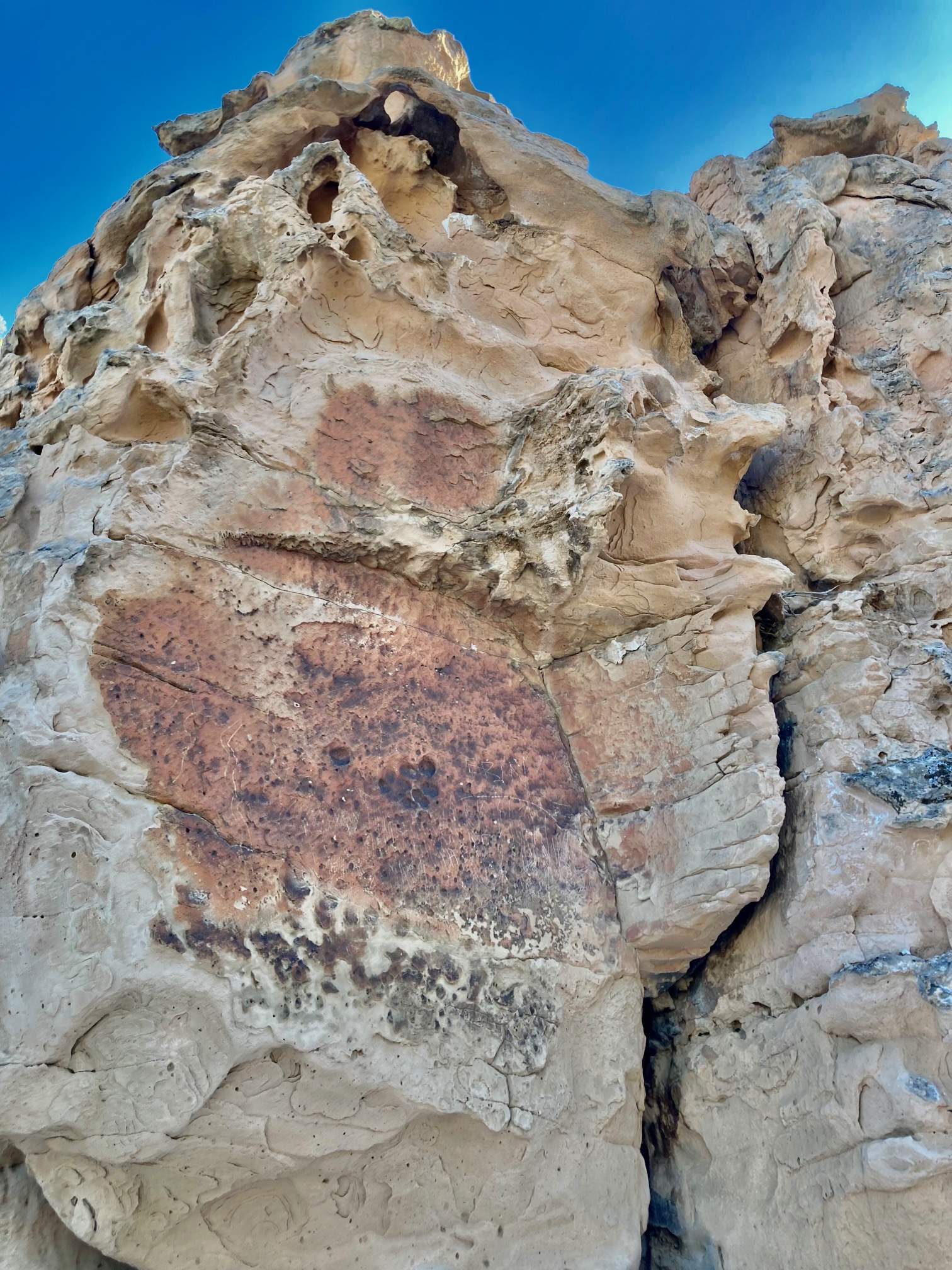
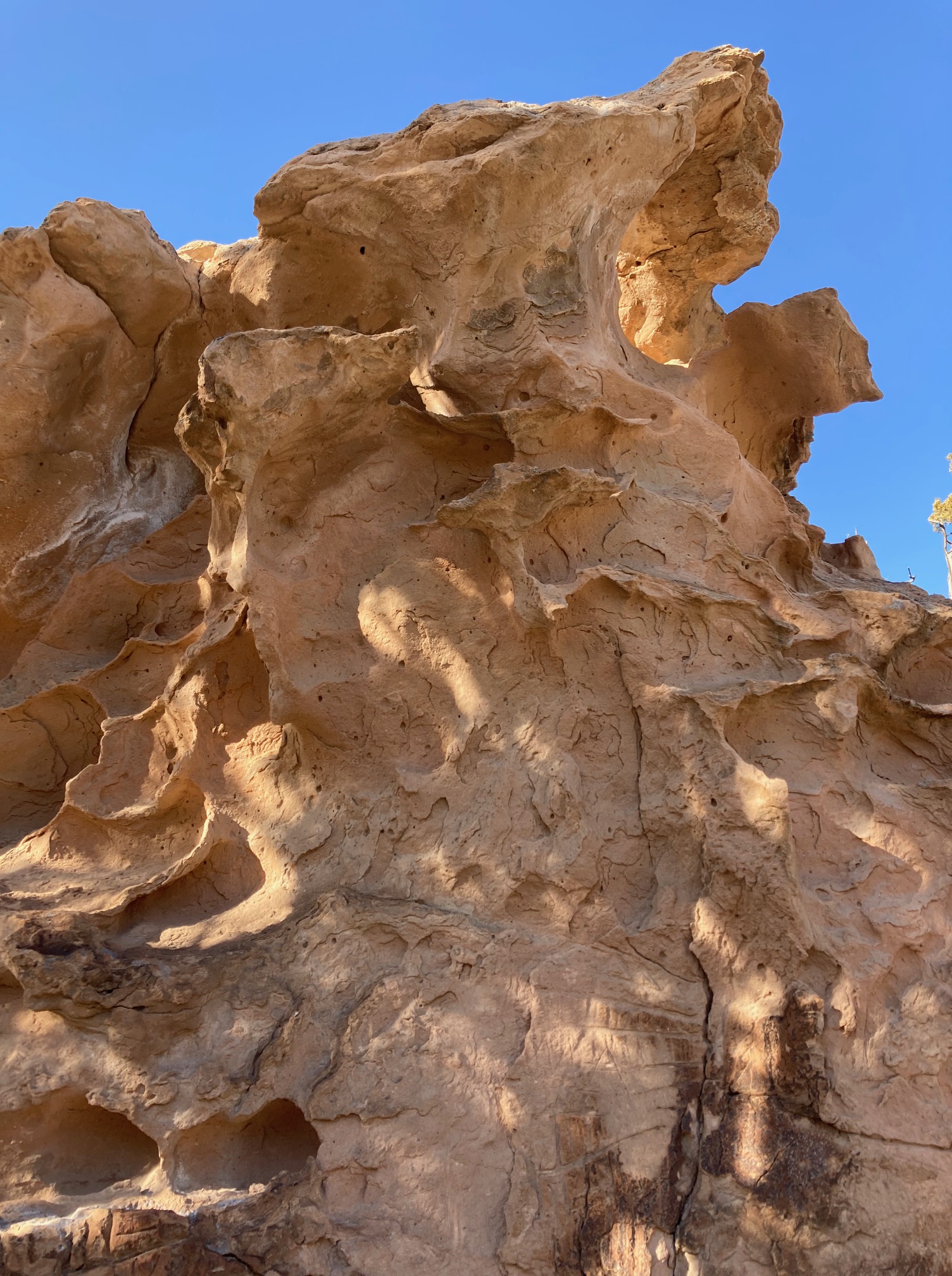
Just before Christmas, Mr. P and I drove to the Hickison Petroglyph Recreation Area, which is located a short drive from our home over the Austin Summit on Highway 50, “The Loneliest Road in America.” I love nature and history, as well as walking and exploring new (to me) places, and this little day trip exceeded my expectations. As soon as we arrived, I was surprised that I had not heard much about the place in the four-plus years we have lived in Austin. Only one person had ever mentioned the spot to me, and that was a traveler who stopped in to see our historic general-store-turned-library and told me he had camped there the night before. I imagine the locals have all been there, and they have been good at telling us about other wonderful places to explore in the area, so it mystifies me that no one thought to suggest this historically and scenically stunning spot to visit.
Therefore, I will do so. If you travel Highway 50, be sure to make this one of your stops!
Some history:
“The Hickison Petroglyph Recreation Area provides public access to petroglyphs created by prehistoric people living near Hickison Summit at the north end of the Toquima Range and the south end of the Simpson Park Mountains in the U.S. state of Nevada. . . In the general vicinity of Hickison Summit are multiple prehistoric hunting and living sites dating to 10,000 B.C. as well as more recent sites such as mining camps and ranches.
Trails used by mid-19th century explorers John C. Fremont and James H. Simpson pass through the area as do the routes of the Pony Express and the Overland Stages. At the time of the earliest prehistoric sites, the Great Basin contained large lakes, including Lake Toiyabe and Lake Tonopah in the Big Smoky Valley west of the summit. As the climate became drier, the lakes evaporated, and the former lake dependent cultures were replaced by hunter-gatherers. When the first European-Americans arrived in about 1850, Western Shoshone people lived in the region” (https://en.wikipedia.org/wiki/Hickion_Petroglyph_Recereation_Area).
Wow, right? My dear friend, Cheryl, just informed me that when you see faces in things, it’s called pareidolia. I definitely see a face here, and a neck as graceful as Audrey Hepburn’s.
Here is the proposed text for the marker plate, State Historical Marker No. 137, from the Nevada State Historic Preservation Office:
The summit is named after rancher John Hickison because the road to his ranch passed over the summit. About one-mile northwest lies Hickison Summit, a natural pass between two low buttes. Passes and canyons were common Native American hunting locations for funneling and ambushing bighorn sheep and deer herds. Archaeological sites in the region reveal a dominance of bighorn bones and horn, reflecting the bighorn’s importance to Native Americans as food and raw material for tool production. The bighorn lacked resistance to diseases introduced by domestic sheep in the nineteenth century, and this resulted in catastrophic bighorn population declines through the West. Prehistoric native American petroglyphs, images and designs are carved into rock surfaces and are interpreted along a short hiking trail. Archaeologists hypothesize that the meanings for these designs include ceremonial, female puberty markers, ritual hunting magic symbols, and rock art or simply graffiti.
On the day we went, there were no interpretive booklets available, and other than a lone camper, no other people, so we didn’t learn as much as we would have liked. Still, it was stunning, and felt somehow sacred. The park was silent and isolated enough that all the years of this century easily fell away, and then echoes of past centuries offered themselves to our quieted minds. I was saddened, too, as I often am, thinking of how much is lost in the mists of history. What a stunning sight it must have been, all those herds of bighorn sheep and deer, and what a shame that diseases introduced by newcomers decimated the population even unto today.
Standing here, looking across the Great Smoky Valley to the Toiyabe Mountains, blue in the distance, I felt connected to all those who came before me. . . human, bird, mammal. . . all.
Such an amazing planet. Such an amazing gift to live here. Sending love and best wishes for a healthy, joyful, and adventurous 2025. Happy New Year!
A few months in the life–part of an in-progress memoir. Lori Pohlman
The duplex days were numbered, and surprisingly sweet. Billy and I had to go to a different school, but I walked in the first day, and every day, with my new best friend. She was a quiet girl, but obviously respected among the kids and teachers there. She did, indeed, sleep in a very small bed in her mother’s room, but it wasn’t a crib.
“My three brothers are in the other bedroom,” Cheryl said, indicating her tiny wooden “youth bed” at the foot of her mom’s bed. “This is my bed.” Her eyebrows raised, disappearing under her bangs. “Bed,” she repeated.
“Yeah, it’s a bed.” I wasn’t about to argue with her, even though I’d never seen a “youth bed” before. It didn’t have really high rails on the side like baby cribs had, so I decided it was just some special privilege she had, being so small, I mean. A special bed just her size.
She gave me a knowing look, “I’m sure not gonna sleep in my brothers’ room.”
I didn’t know what to say. On my side of the duplex, my mom had her own room and I shared the other one with my brother. She seemed to sense my discomfort.
“I don’t mean it’s weird you share a room with your brother,” she said. “He’s not that old and he’s just one boy.”
I nodded. “He’s not that bad,” I said.
Cheryl put a hand on my shoulder. “I believe you,” she said, her large blue eyes solemn. “Over here though, there are three brothers. Great, big, loud, smelly teenagers,” she said, “Ugh.”
They seemed pretty cool to me. I could hear their laughter, their deep voices, one of them strumming a guitar, a record playing I’d never heard before. They played a lot of Beatles music.
At school, no one gave me any trouble. I barely remember the place, to be honest, which probably means I had already entered my “amnesia” period. Huge chunks of time that I can’t remember or account for. The school year ended quickly, leaving us kids with long, largely unsupervised, summer days. I remember making holes in the dirt, paths for the clear and colored glass marbles-the cat’s eyes, the pearlies, and the steelies that we flicked expertly with our thumbs and forefingers. On a good day we could earn enough pennies to buy ourselves a bag of French fries at the Chat-n-Chew drive-in restaurant.
With Billy and his new friends, we explored the open concrete tunnel that ran the length of the property and beyond, always daring one another to go in just a little bit farther. We played Monopoly, a game I hated, and Billy would reach over and openly take all of Cheryl’s winnings, prodding her to talk to him. But she never would. When it came to him, she was mute.
“He took my money,” she’d whisper in my ear.
I was always ready to do battle for her, and in fact, enjoyed fighting with my brother. It was probably the only time I felt any power, though I always lost. Even so, I could fight, and he wouldn’t really hurt me back too bad, and was never mad at me afterward.
We kids began to settle in to this new life, and I suppose imagined that when summer ended we would go back to Curtis Strange School and become, rather than faceless new kids, kids who belonged.
"Two roads diverged in a wood and I - I took the one less traveled by, and that has made all the difference" With those 22 words, Robert Frost concisely summarized my life. The road I chose has been rift with rabbit trails which, more oft than not, my innate impulsive, adventurous spirit couldn’t resist exploring. Therein lies my life's greatest joys and sorrows . . . triumphs and trails. Such were my yesterdays, now buried in the past. The future owns all my unknown tomorrows. Today alone is God's gift to embrace, explore and enjoy. Perhaps Amy Charmichael penned my life’s credo . . . "Love to live, live to love" After 8 decades I've finally begun to grasp the serene simplicity of Amy's 6 words which, when truly embraced, convey tranquil comfort, soul soothing joy, and mystical peace. I’m truly blessed to still be able to "Love to live" wandering through the wilderness and climbing among my Creator’s majestic mountain cathedrals, astounded in wonder by its utter magnificence. "Love to live" is my portion to joyfully grasp with both hands each new day. "Live to love" is my portion to share with open hands each new day. My prayer is amidst my musings and ‘creationscapes’ my camera captures, someone may glimpse a "Love to live, live to love" moment that will brighten their day. Keep Looking Up ^ . . . His Best is Yet to Come! Fred D














 We left Wisconsin before summer’s end.













Book Review: Glimpses, Grandfather’s Life During World War II by Stephanie Peirce
I have had the privilege of friendship with the talented poet, Stephanie Peirce for some years now. We met at Goddard College where we were both pursuing our MFAs in creative writing, Stephanie as an aspiring poet and I as a writer of novel length fiction. It was love at first sight (for me anyway!) when I sat in on a poetry group she was in. She was, I fancied, a younger and more talented version of me. We both had the same long, wild mass of hair, though mine was beginning to silver by then and hers was golden. Somehow, though we were on different paths and didn’t see much of each other at school, we began a long distance friendship after graduation, checking in on each other’s writing journey and eventually serving as reader-editors for one another’s manuscripts.
Glimpses is Stephanie’s newest achievement, and it is wonderful! I recommend it heartily, and I am so proud to introduce you to it here.
Glimpses: Grandfather’s Life During World War II | Barnes & Noble®
Glimpses is a slim volume of letters, photos, and commentary that offers precious glimpses into the lives of the author’s paternal grandparents, Catherine “Treenie” Barham Peirce and Chichester “Chit” Tapscott Peirce Jr., who was killed in Germany on February 9, 1945. It tells a compelling story of love and loss, one that is carefully compiled and beautifully rendered. It is an absolute treasure, a gift not only to the memories of Stephanie’s grandparents, but also to the countless lives altered by World War II, and to readers and historians everywhere.
Share this:
34 Comments
Filed under Authors, Books, Commentary, Nonfiction, Reading, Relationship, The Greatest Generation, Uncategorized, World War II
Tagged as Book Review, Books, Family, Friendship, poems, poetry, Writing