Tag Archives: animals

Wild Horses

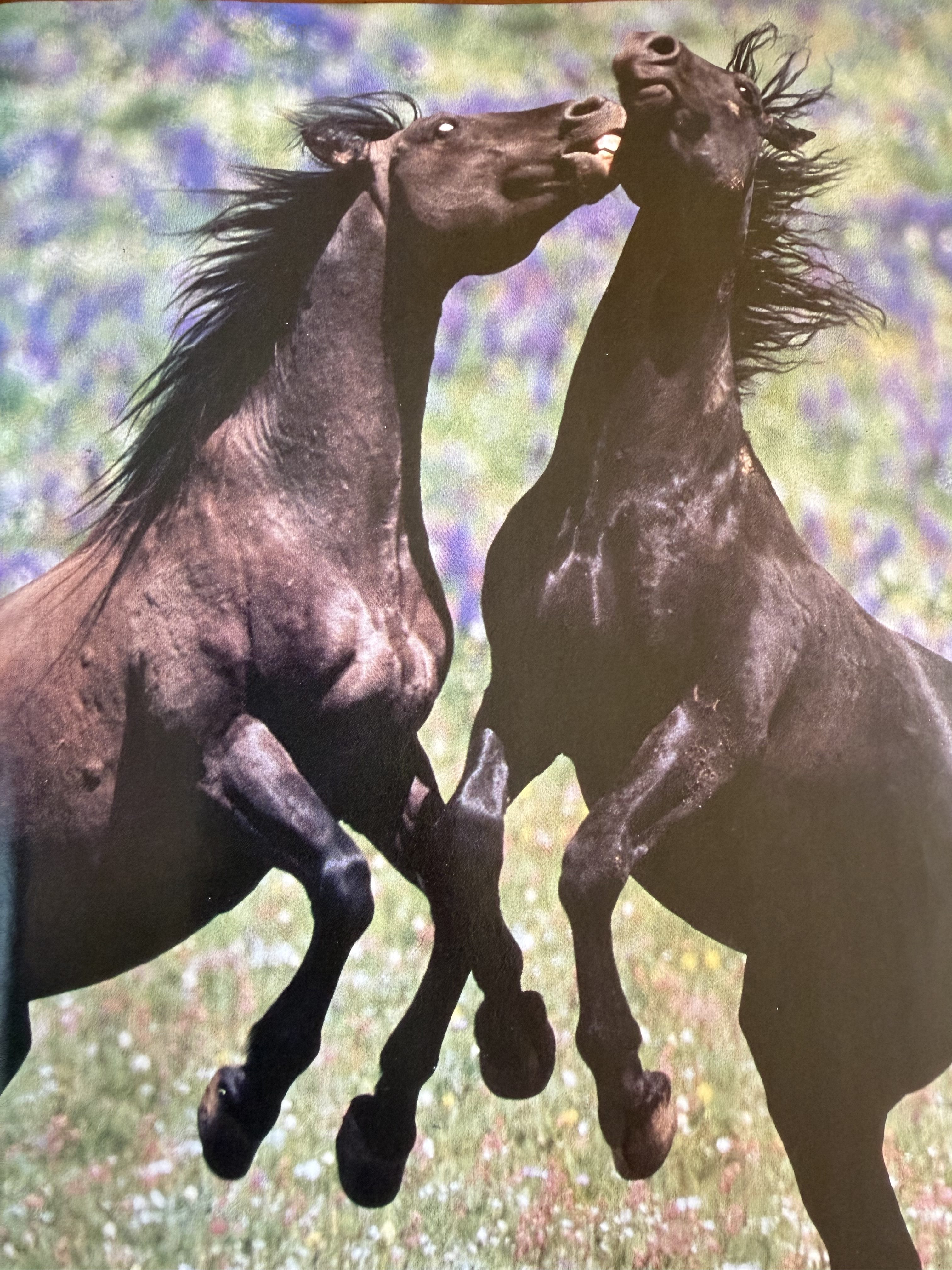
Photograph by Yva Momatiuk & John Eastcott, “Mustangs on the Move” Smithsonian, November 1997

Last Sunday, in honor of St. Francis of Assisi and because it was Holy Trinity Episcopal Church’s and the Almost Home Animal Shelter’s annual Blessing of the Animals Day, we sang a song in church, “All Things Bright and Beautiful.” The song “is an Anglican hymn, also sung in many other Christian denominations. The words are by Cecil Frances Alexander and were first published in her Hymns for Little Children of 1848.” All Things Bright and Beautiful – Wikipedia.
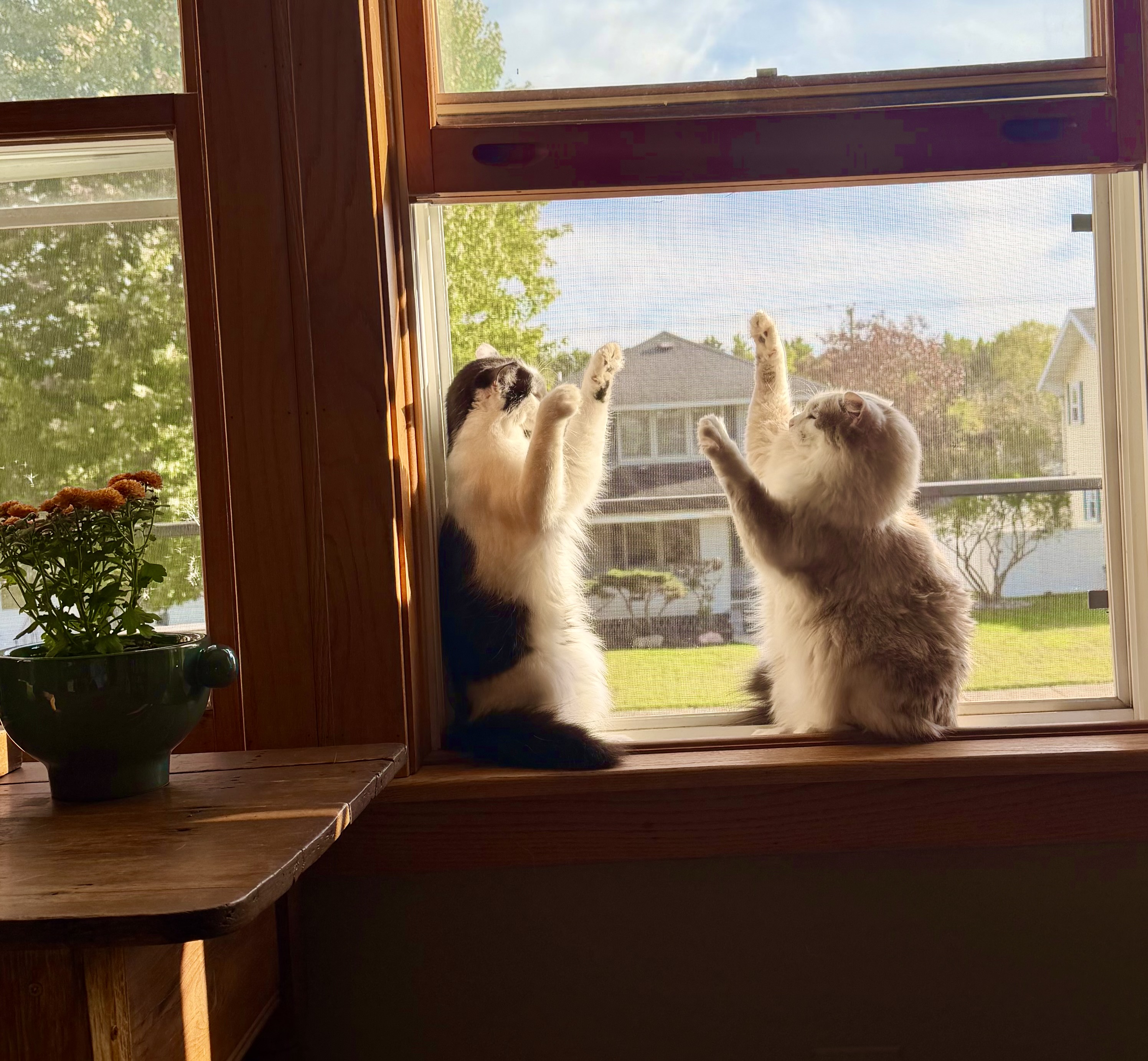
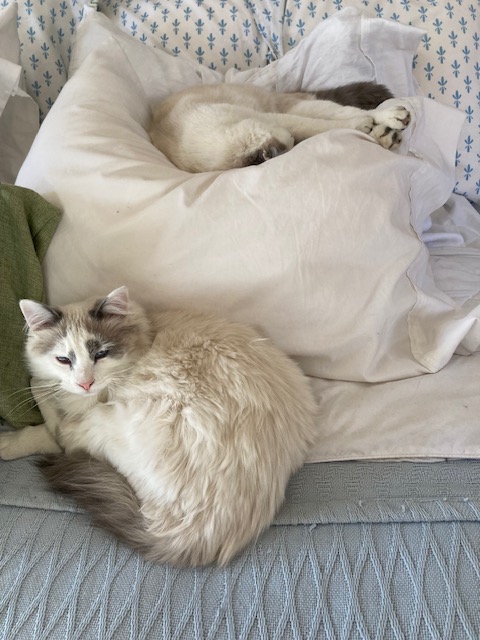
Scout and Gremlin, our own wild kittens of Nevada now domesticated in the U.P. I couldn’t help but notice the similarity to the Mustangs. (: My photo.

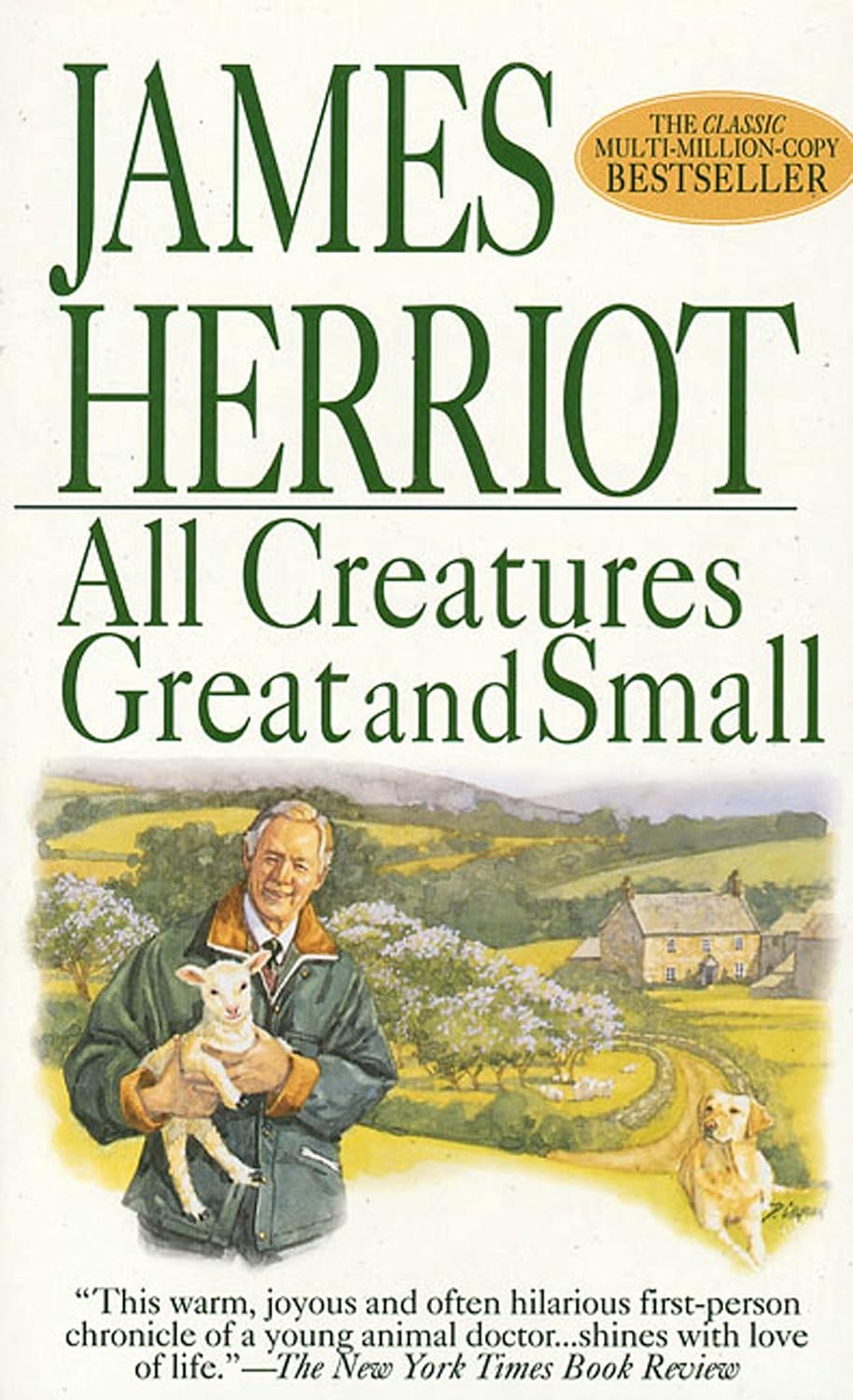
Not having been reared by churchgoers, my first reference to these words came from the wonderful James Herriot books I read as a teen, beginning with All Creatures Great and Small. Later, I learned there was a song. Yes, I was woefully undereducated! Anyway, after church I couldn’t stop thinking about the song, and about all the beautiful things in the world, and I went online to listen to various versions.
And then my mind and heart and writer’s brain led me back to Nevada, a state where I lived briefly as a child and then again from the autumn of 2020 until the spring of 2026, a state filled with many things bright and beautiful.

Living in Nevada, I often saw wild horses. I will never forget my first sight of them, a band of maybe nine or ten, their glossy dark flanks shining in the sun, tails and manes flying as they raced along the edge of the Truckee River down in the canyon below the freeway. I was on my way to my new home, still a part of the crowd of humans in the vehicles speeding away from Reno, going on to our disparate destinations, while just below, past a short guardrail and down a steep embankment, water sparkled, aspens glowed golden in the autumn sun, and the mustangs ran, as if in another world, a parallel universe. I was awestruck.

I moved to a remote area, far away from any freeway, and spotting wild horses became more familiar, though I would never call it common. The sight of them always caught me, tugged at me, seemed sacred. Yet, I soon learned that these horses are not entirely free. A number of them are rounded up by the Bureau of Land Management each year in an effort, according to the BLM, “to protect the health of the animals and health of our nation’s public rangelands. In some locations, the BLM also uses birth control to slow the growth of wild horse herds. Absent management and natural predators, wild horse herds can double in just 4-5 years and quickly outgrow the ability of the land to support them” Nevada – Gathers & Removals | Bureau of Land Management.
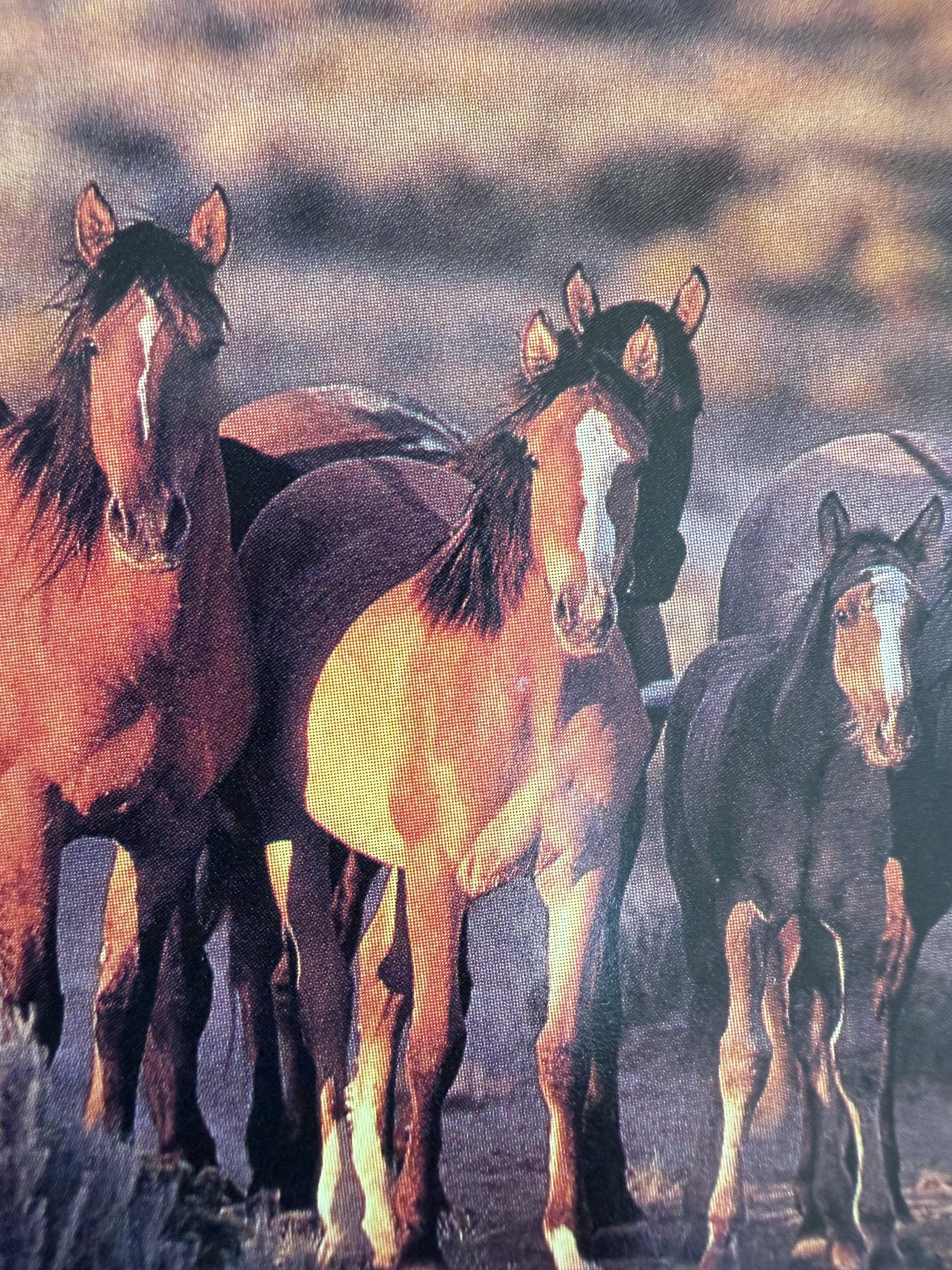
Photograph by Yva Momatiuk & John Eastcott, “Mustangs on the Move” Smithsonian November 1997

According to The Cloud Foundation, a Colorado non-profit that aims to protect wild herds, The BLM’s 2026 roundup plan targeted 14,830 wild horses and burros for removal, The Cloud Foundation. What happens during and after these roundups is beyond my ability to describe. There are many good sources of information on this topic online and through libraries. What I at first saw as a kindness to the animals I eventually came to see as something much more complex, and even, in its execution and outcome, cruel. I do not claim expertise.

Additionally, I learned that wild horses were not universally revered. Because I regarded them with awe, I expected everyone else would, too. Sort of like when a group of people are gathered together on a beach at sunset, you just assume everyone there appreciates the beautiful display in some similar fashion to the way you do. That’s why they are all taking pictures, right? It seems universal.

I suppose I should have known better, but I am often taken by surprise. I was absolutely stunned to learn that some people, people who loved the wild and lightly populated land of central Nevada—probably more than I as a newcomer ever could–did not see the breathtaking beauty of the wild horses, but instead saw “trash” animals, “no good for anything.” Or so I was told by an old cowboy not long after I arrived. I don’t know if his was a widely held opinion in the area. Frankly, that conversation so saddened me that I didn’t want to know.
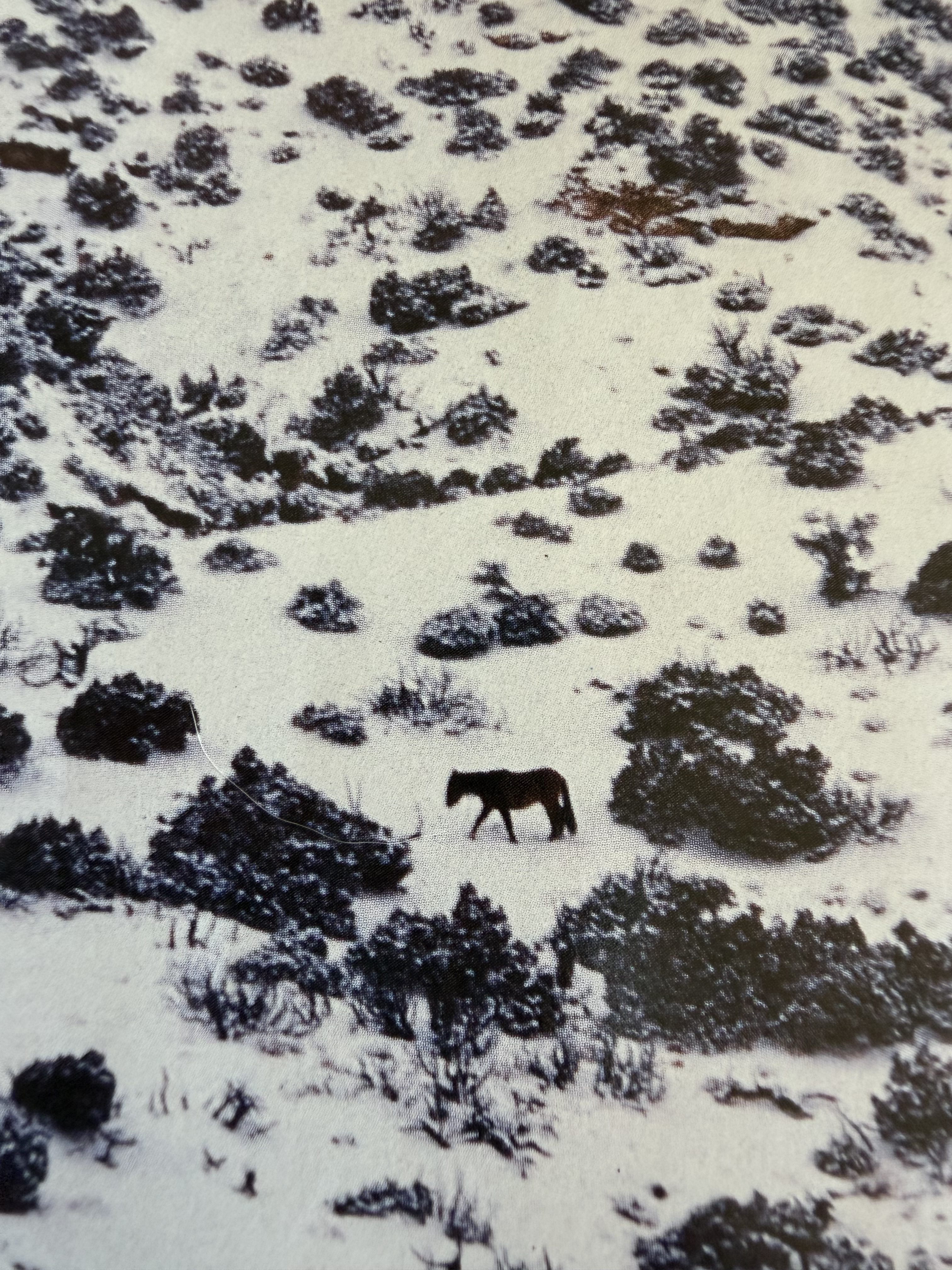
Photograph by Yva Momatiuk & John Eastcott, “Mustangs on the Move” Smithsonian, November 1997

I did some reading and came to the conclusion that, in this, as in so many other aspects, humanity is capable of great love, and also of perfect disdain. While some people care deeply about wildlife, others either take it for granted, see it as a hindrance, want to own it, dominate it, tame it, eat it, turn it into a trophy—or even downright despise it. I don’t understand it, don’t have the perspective needed to grasp it, because, some might say, I’ve never had to compete with another creature for land or food or water. Maybe that’s it. I don’t know.

When it comes to wild horses, I still wonder how anyone could not care about such gorgeous creatures, creatures whose only wish is to live? What other value do they need? What value does any creature need? The horse, the bear, the deer, the eagle, the salmon? And what value do flowers need? Or trees?

Sometimes life hurts. You may see the beauty around you with clear eyes, and that sustains you. I hope you do. Usually, these days, for me, that means noticing the splendor of nature. It is in nature that I seek solace, and also renewal. You may appreciate the beauty you find in nature, or in your child’s eyes, or in a piece of music, or a work of art, and revere it—yet still, you weep as I have. And sometimes, it is beauty itself that sparks the weeping. For me, today as I write this, the beauty I weep for is the beauty of the horses.

Here is a link to one of the Tabernacle Choir’s performances of “All Things Bright and Beautiful.” I hope you enjoy it.

And the lyrics:


All things bright and beautiful,
All creatures great and small,
All things wise and wonderful,
The Lord God made them all.

Each little flower that opens,
Each little bird that sings,
He made their glowing colours,
He made their tiny wings.
 

The rich man in his castle,
The poor man at his gate,
God made them, high or lowly,
And ordered their estate.

The purple-headed mountain,
The river running by,
The sunset and the morning,
That brightens up the sky.

The cold wind in the winter,
The pleasant summer sun,
The ripe fruits in the garden,−
He made them every one:

The tall trees in the greenwood,
The meadows where we play,
The rushes by the water,
We gather every day;−

He gave us eyes to see them,
And lips that we might tell,
How great is God Almighty,
Who has made all things well.

All things bright …

(Amen)

The United Church of Canada includes a fourth verse:[14]

The rocky mountain splendour,
The lone wolf’s haunting call,
The 
Great Lakes and the prairies,
The forest in the fall.

And here I am back in The Great Lakes, in the forest, in the fall.

Thank you, Lord God, for them all.
43 Comments

Filed under Gratitude, Nature, Personal History, Preservation, Uncategorized, Wildlife, Worship

Veterinarians Deserve Our Praise and Support, and What Happens When Ferals Find a Home

Double Decker Comfort: Tanner takes the top. Gremlin below.

Sometime late last winter, or perhaps it was early spring, a beautiful feral cat began coming into our carport. She was fluffy, blue-eyed, and her body was entirely white except for a gray tail. We nicknamed her Snow White (It was just a nickname. After all, we weren’t keeping her. She wasn’t our cat.) Snow White was clearly hungry, so we fed her. We had three beautiful cats of our own. We had adopted two gorgeous long-haired brothers from Kindred Kitties in Kenosha, Wisconsin a few years before (on purpose!), Jack (pure black) and London (pure gray), and we had Annabelle Lee, a calico Manx stray that had burst into our kitchen through the cat door a year earlier on Halloween and never left. We had plenty of cat supplies and food to share. Snow White never got too close to us or to our cats, but she came often and ate a lot.
It wasn’t long before we realized why she was so hungry. One day we spotted her walking along the white picket fence in the front of our house, tail up. Following her, in perfect formation, were four little kittens, each of them a variation of her white and gray. Two were fluffy like their mom, two were sleek. She brought them straight into the carport. She ate, she nursed them, and then they left. This established a daily ritual which alarmed us because oh my goodness we couldn’t afford to have five more cats and to get them fixed and vaccinated—and oh no how can we take on this responsibility but how can we not—and wow, aren’t they just the most charming and adorable little things . . . ever?

Then one of the kittens got sick. The tiniest and most delicate of the bunch. While the other kittens played after eating, she would sit immobile, her blue eyes weepy, her nose runny, and her fur appearing sticky and dirty. Right about this time Snow White took off, leaving all four of her kittens with us. She stayed away, but the kittens stayed in the carport. Three of them looked healthy, but the tiniest was clearly getting sicker by the day. I made up a washing solution of warm water and peroxide, and Mr. P began washing her with a soft washcloth. She was too weak to resist. We also gave her softened food and cream (which I was told later never to do, but it did seem to revive her). She began to respond to the treatment and soon seemed to appreciate Mr. P’s ministrations.

Tiny Gremlin in the Carport

You may be wondering why I wasn’t washing her, too. It’s because I am a horrible coward. I couldn’t go near her without crying. There is something horribly weak about me. It is the worst part of me, the thing that I am probably most ashamed of.  I cannot bear to see innocent creatures suffer. Or even think about it. This is the real reason I do not eat meat.  

Mr. P knows this about me. He also cares deeply about animals, but he can somehow separate that feeling from his appetite, and when it comes to helping, he is stronger and can push through the sadness.  And I knew he would. Now, if he weren’t here when this happened, would I gather up the courage to take care of the baby? Yes. I know that I would. This I am sure of. I am so grateful though, that I was not alone this time.

We were by then calling the littlest one Gremlin—even though she wasn’t our kitten (Self-Delusional R Us) . . . and we had dubbed the others Tanner, Cole Porter and Annette Bening. Cole Porter and Annette Bening were the two sleek, shiny ones. Cole appeared to be wearing a tuxedo and Annette a matching gown. They were an elegant duo. Mr. P dubbed the other one Tanner because though he was mostly ivory with some gray, he had an interesting area of light beige running in a cap pattern on the top of head and wrapping around the bulk of his back. So now we had four growing kittens in our carport, all of them with names.

As Gremlin’s health improved, we noticed that Annette Bening began to develop Gremlin’s original symptoms. She was heartier than Gremlin had been though, and not as easy to get close to. We thought she would be okay. She wasn’t. The next morning, I found her as I walked to church. Annette had probably died during the night. She was dead at the bottom of the stairs that led from the front yard to the street below. I hesitated going on to church, but then continued on. I cried to my priest when I got there, and she said a prayer for sweet little elegant Annette, who never had a chance to grow up.

This was very hard on us. We decided we would take the remaining three kittens to the veterinarian 70+ miles away in Eureka, and we would get them whatever health care they needed, plus we would get them all fixed. It was a big expense, but one that made us feel immeasurably better. The vet said they were big enough for the operations, and all three came through fine. They were given medications too, in a series, and they all were doing well after that. We learned that only Tanner was a male. Cole Porter and Gremlin were both female.

We set about trying to get our original cats and Annabelle to accept the newly adopted siblings into our home. It wasn’t easy. They are still not the best of friends, but it’s better.

Jack: Ugh. Kittens.

London: On My Bed? Really?

I wish this were the end of the saga of Snow White’s kittens, but it’s not, quite. We lost Cole Porter shortly after her surgery. She was outdoors when Mr. P and I took three tiny new kittens who had shown up (one of them tumbling out of a thorny bush and right into my arms) over to our dear friend’s special kitty house. Our friend, who is one of God’s sweetest helpers, had kindly offered to take in the new foundlings. Unbeknownst to us, Cole Porter had been hiding in the wheel well of our car. We didn’t knock on the hood or honk the horn before driving out of the carport, as we should have done. Cole Porter must have been terrified, and she hung on for several blocks. Then we heard a thump and to our horror we saw a kitty fly out into the snow on the side of the street.

Cole Porter was dead. And we had stupidly caused it.

Our little town has been home to many feral cats over the years, with very little human interference. There is no county catch-and-release effort to spay and neuter them here. Kind souls do what they can for the cats, but there is often not enough money, or even any money, for private citizens to handle the costs of really addressing the problem. Other folks focus their efforts on getting rid of the cats—trapping them and taking them out into the desert and dumping them, or using them as bait for their hunting dogs, or simply shooting them. These occurrences are too horrible for me to even contemplate. It is hard to even write the words. As I admitted, I have an aching weakness when it comes to suffering.

Annabelle Lee: Queen of Roof

The town needs help and organized, kind, positive planning. As it is, more kittens are being born all the time. Not from “our” cats, but from those who weren’t “lucky” enough to have their mommy drop them off in our carport, or the homes of the other kind souls in town with the means to get them fixed. The people need help, the kitties need help, and all of the veterinarians who work to help animals every day need help, too. Vets work hard, and their work takes a huge toll on them. Imagine spending your days doing everything you can to help animals, and seeing their fear, loneliness, and suffering, and often not being able to change their situations. Euthanizing far too many.

It has been “confirmed (using stronger statistical methods than previous studies of suicide among veterinarians) that suicide is more likely among veterinarians than among the general population — 1.6 times more likely for male veterinarians and 2.4 times more likely for female veterinarians.”

(September 4, 2019 by Randall J. Nett, MD, MPH; Tracy Witte, PhD; Elizabeth G. Spitzer, MA; Nicole Edwards, MS; and Katherine A. Fowler, PhD. CDC NIOSH Science Blog. blogs.cdc.gov)

This sad statistic doesn’t surprise me, the woman who can’t bear the sound of an animal crying.

No Crying Here: This is the Life

“Veterinarians have to deal with what one scholar called the ‘caring-killing paradox.’ A veterinarian, for example, might provide wellness visits for a kitten. They weigh the little kitten, give vaccinations and provide advice. Months later, if the kitten contracts feline leukemia virus, the focus of the care changes. After end-of-life discussions with the pet parent, the vet must euthanize the patient they once cared for… Veterinarians also witness a range of emotions from pet parents. The loss of an animal companion can bring profound grief. And veterinarians see the tearful last minutes between a person and their pet, followed by the outpouring of sadness after the animal has passed… They also see pets who have been abused and mistreated. Veterinarians are learning how to recognize signs of animal abuse. All 50 states now have laws that make animal cruelty a felony, and veterinary forensic pathology is taught at conferences. Law enforcement supports veterinarians reporting abuse, as studies have linked households with animal abuse to other forms of domestic violence. The profession is becoming increasingly aware of these stresses. In autumn 2021, the AMVA held their first-ever roundtable discussion to address veterinary suicide prevention. Several goals of the roundtable was to increase veterinarians’ ability to recognize symptoms and to vocalize resources available, such as suicide prevention hotlines, to those in crisis. Trauma and stress lead to mental health struggles among veterinarians and the profession is becoming increasingly aware of the issue.”

(Emilie Le Beau Lucchesi, May 12, 2022 8:00 AM.www.discovermagazine.com/mind/researchers-try-to-understand-high-suicide-rate-among-veterinarians).

Jack and London, The Original Wild Ones

It should also be mentioned that veterinarians have access to drugs used for euthanasia. This has been shown to be another reason for the high number of suicides among the profession.

(NIH. National Library of Medicine. National Center for Biotechnology Information. Suicide in veterinary medicine: Let’s talk about it – PMC).

This is a longer than usual post for me. I hope that you have stayed with me. I am passionate about animals . . . about caring for the voiceless, and I have often been too quiet about it. In a world graced with the beauty of all God’s creatures, bright and beautiful, great and small, and the many fine people who devote their lives to helping them, mine is an insignificant voice. But earnestly, with love and hope, I ask that all of us do what we can to help the voiceless, and to appreciate and thank those who are working to better their lives. For we all share this miraculous planet. Together.

It Was Meant to Be

14 Comments

Filed under Uncategorized