Tag Archives: Fiction

Lessons in Chemistry / Lessons in Flexibility

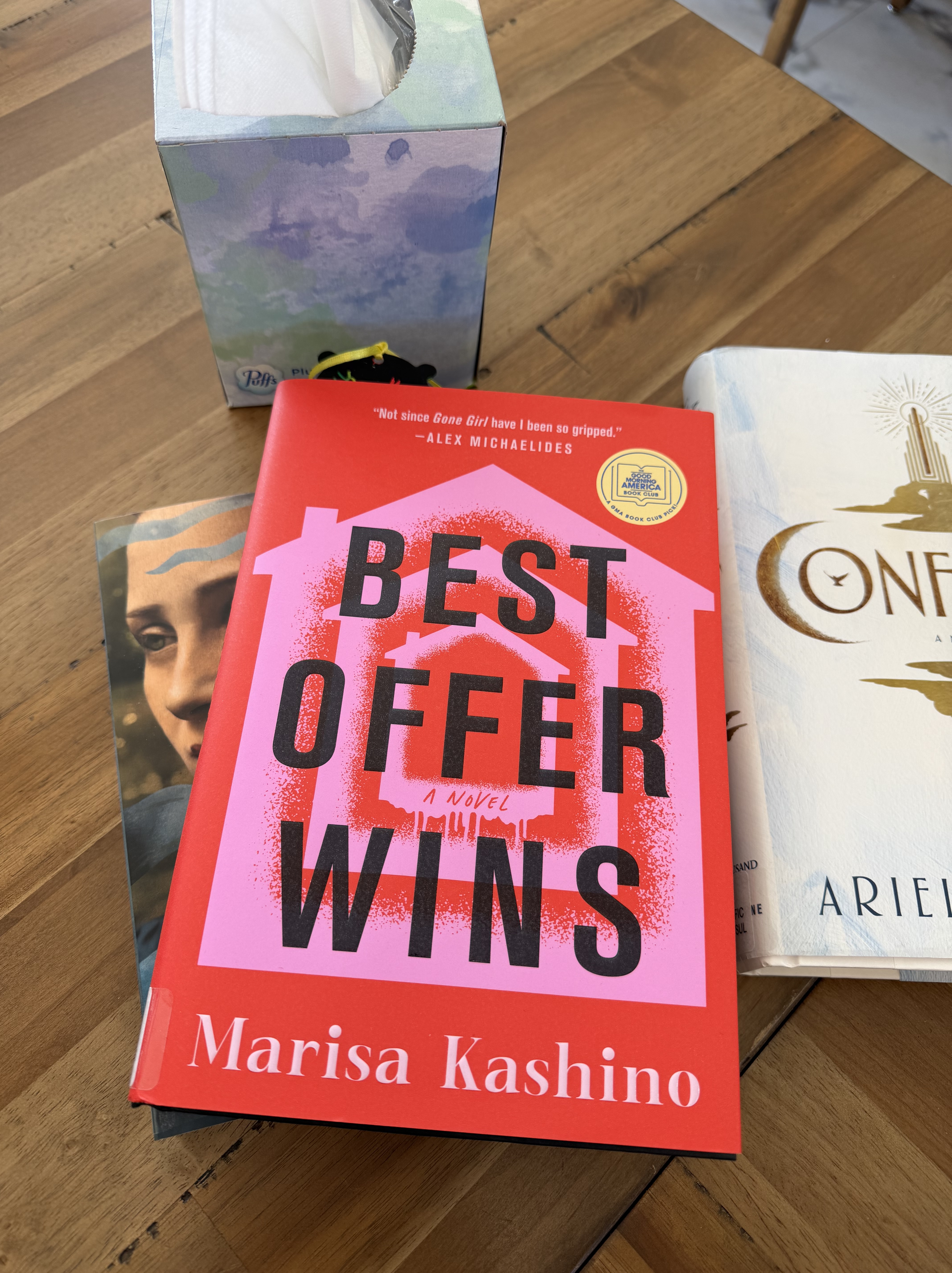
How I missed out on reading Lessons in Chemistry by Bonnie Garmus in the several years since its publication is a classic lesson in the old adage, Don’t judge a book by its cover, and also, a lesson in personal flexibility—that being that there are no doubt a plethora of other excellent books out there that I would love if I had bothered to read them, and sometimes that deprives me of valuable experiences. I heard Lessons in Chemistry was very good, but, eh . . . I thought. Not for me. I’m not into chemistry. The 1950s and early 60s don’t interest me as much as earlier times. It looks somehow . . . I don’t know . . . frivolous?

Hardcover Edition

I’m happy to report that I was wrong on all counts. Well, maybe not the I’m not into chemistry part, but as it turns out, that doesn’t matter. I didn’t need to be into chemistry to appreciate chemist Elizabeth Zott’s deep love of it. I just needed to appreciate Elizabeth Zott, the wonderful protagonist of this deeply funny, tragic, and ultimately affirming story. And that was easy. As for my not being interested in the 1950s-60s, I think I took that period for granted because I am a product of it. I have few memories of my earliest childhood, and of those, most are sad. Those years have not been a time I willingly wish to revisit. It appears I prefer visiting earlier and more dramatic times—times that occurred before I was able to suffer through them in person.

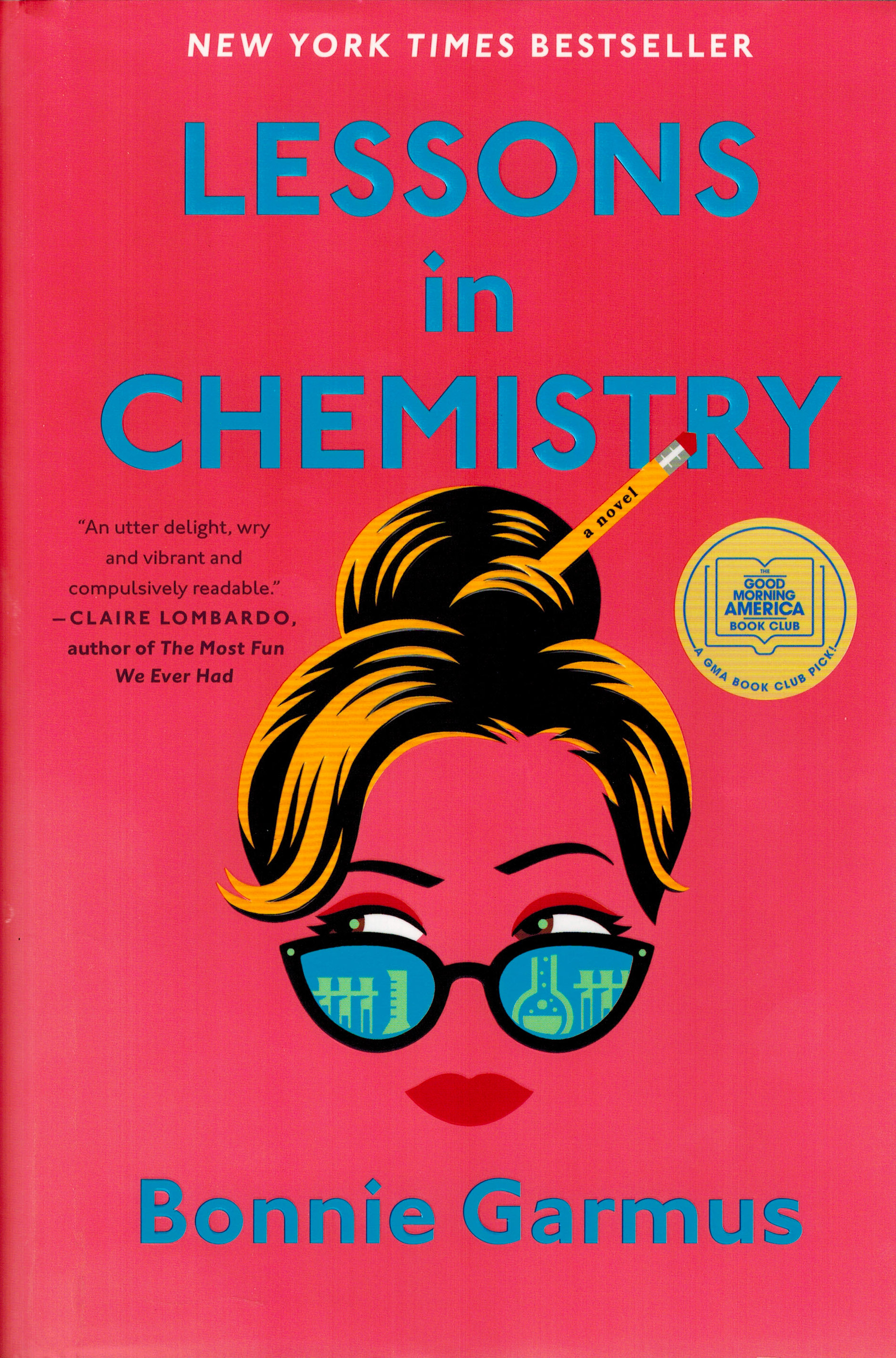
As for the idea that the book was probably frivolous, I definitely derived that from the cover. And I wasn’t the only one. Three years ago, a reader named Lisa Wright posted a question on Goodreads, “Am I the only one who was furious about the pink chick-lit, rom-com cover on this book? It belittles the book in exactly the same way Elizabeth Zott is belittled!”

Bonnie Garmus, the author, answered: “I have to agree–and I’m the author! All I can say is, the publisher did let me have input and I told them I thought it looked like chick-lit (nothing against chick-lit but this book isn’t that). Still, publishers have a lot of experience knowing what an audience will respond to and they thought this was the best way. They’ve been great to work with; we just didn’t see eye-to-eye on this. You can google other covers from the other nations and see you if you think anyone else got a little closer–I think Germany and the UK both did a nice job. I have hopes that this cover will change for the paperback.”

Paperback Cover

The way I fell into reading this book

I went on a trip and forgot to bring my library book. The airport gift shop’s book selection was pretty slim. I didn’t see anything from my TBR list. The cover on the paperback version was slightly less frivolous in my very unscientific opinion than the hardcover I had entered in our public library collection. At least it featured something that looked like the periodic table in the background. I picked it up, sighed, and purchased it.

The book delighted me from the first page. When I read these lines: “Fuel for learning, Elizabeth Zott wrote on a small slip of paper before tucking it into her daughter’s lunch box. Then she paused, her pencil in midair, as if reconsidering. Play sports at recess but do not automatically let the boys win, she wrote on another slip. Then she paused again, tapping her pencil against the table. It is not your imagination, she wrote on a third. Most people are awful. She placed the last two on top.”

Bonnie Garmus had my attention on page one, and she had me laughing and crying and feeling every range of emotion throughout the delicious ride through the air from Reno, Nevada to Minneapolis, Minnesota and back again. I loved this book! Highly recommended.

Have you had this experience? Purposely avoiding something, whether a book or a movie or a sport or an activity, that you later found to be good or valuable? I’m sure I’ve done it a lot!

Luckily for me, this time I was given the gift of proving myself wrong.

Happy Fall, Y’all!

26 Comments

Filed under Authors, Books, Commentary, Uncategorized

This Writing Life

A few days in Paris, Writing . . . Years ago Never forgotten

Instructions for living a life.
Pay attention.
Be astonished.
Tell about it.”
―Mary Oliver

Moving a life forward is an investment in dreams, time, learning, relationship building, and so much more. Moving a writing life forward is all of that, and I would add it is also, at its best, a life transformed. As Anne Frank so eloquently put it: “I can shake off everything as I write; my sorrows disappear, my courage is reborn.” Writing did not save Anne Frank’s life, but I believe her writing has saved the lives of countless others.

Writers may feel called to the creative life, but that one precious life often must take a back seat to another, more practical life, one that includes a sensible career (aka something with a steady paycheck), perhaps with snatches of scribbling in between the job, chores, and attending to family or societal needs and expectations. The writing life can be a kind of shadow life. It has been for me. Some writers seldom or never mention their craft while engaged in their more acceptable “real” life.

“I love writing. I love the swirl and swing of words as they tangle with human emotions.”
—James Michener

It’s hard to explain to nonwriters why a few hours or a whole day spent attending a sporting event or a picnic can create in the writer a kind of panic—a feeling that the time needed to be alone, to read and to write, will never be enough, that time is seeping away, draining their spirit. Spending “free time” in non-creative areas can feel terribly wasted to the writer, while to others, the writer’s avoidance of joining in reeks of selfishness, or delusion. Or perhaps it’s just incomprehensible. Why, people wonder, is writing so important to you? There’s no money in it. And if there is, it’s only available to a few spectacularly talented gifted authors. If you had that gift, surely you’d have been published by now.

The writing life can be an ill-defined series of swells of poetic energy or flow, which is heady and soul lifting. There is nothing quite like those times. Catherine Drinker Bowen says, “For your born writer, nothing is so healing as the realization that he has come upon the right word.” And I have felt that many times. Writing has healed me.

But those transcendent hours or days are for writers seeking an agent or publisher likely to alternate with rejection after rejection after rejection. Writers do much of their writing alone, but if they seek representation and traditional publishing, they must eventually learn the oft times punishing lessons of business.

Soon I’ll be working with a developmental content editor on my completed World War II historical fiction manuscript. I’m excited to be taking this major step forward. It’s been a long journey, and honestly, I’ve loved the myriad lessons and experiences along the way, even the hard ones.

“If a story is in you, it has to come out.”
—William Faulkner

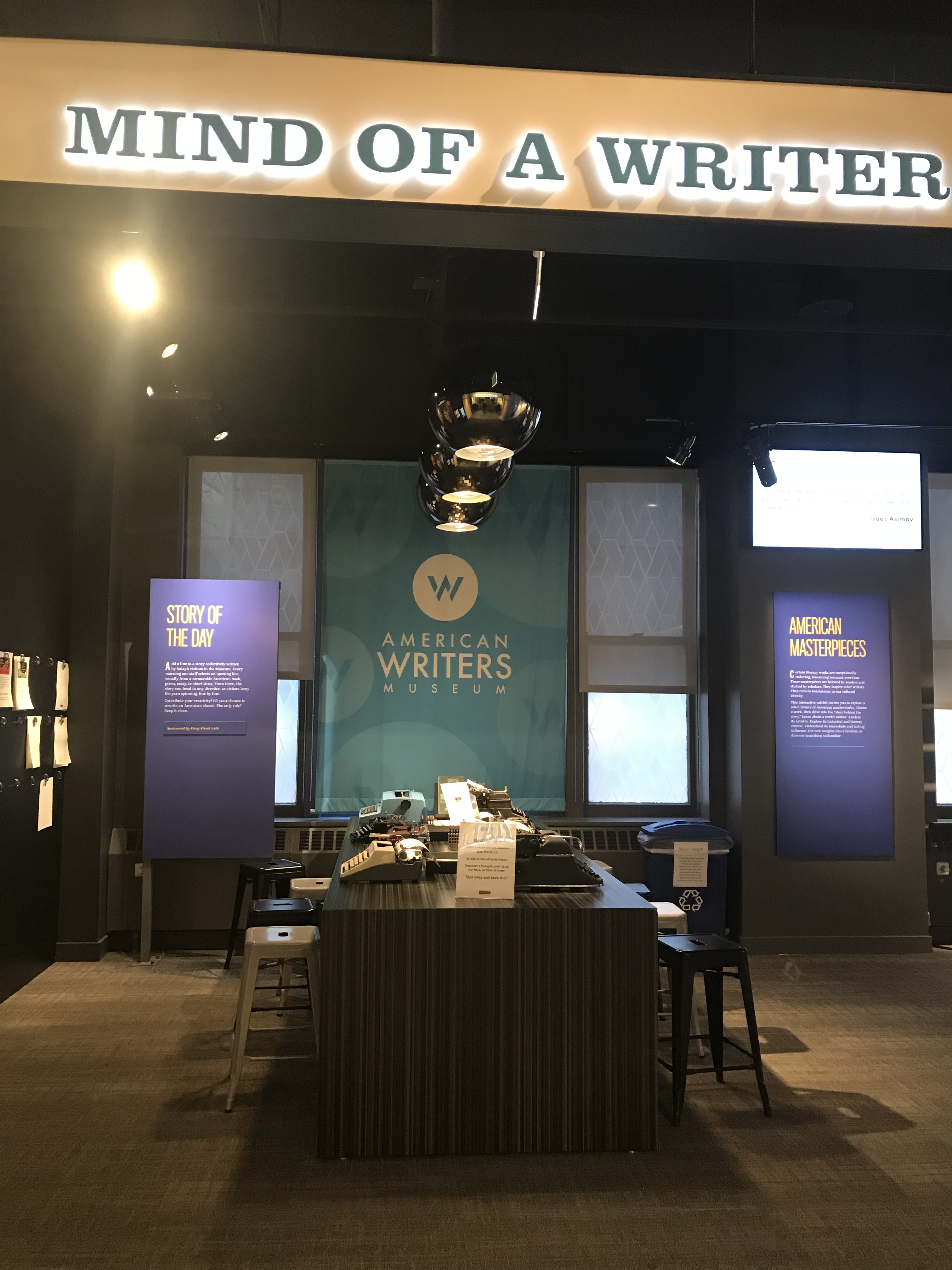
American Writers Museum, Chicago, Illinois

Thank you for visiting! Wishing you a wonderful day, doing exactly what you need and want to do.

With Love Always, Lori

43 Comments

Filed under Authors, Fiction, Gratitude, HIstorical Fiction, Identity, Literary Agents, Publishing, Reading, Research, Uncategorized, Work, World War II, Writing Advice

We are So Far Gone

Book Review

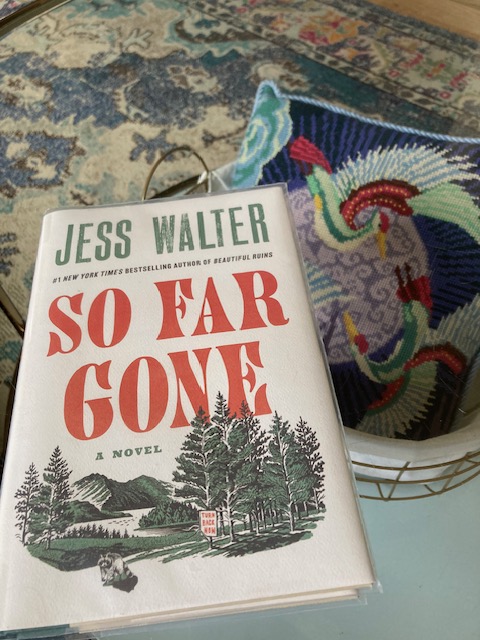
Jess Walter’s latest novel tells the story of Rhys Kinnick, a sad-hearted journalist who punches his son-in-law in the face at Thanksgiving, throws his cell phone out his car window, drops out of society, and goes off to live in the forest. The experience of reading So Far Gone reminded me of the not dissimilar experience of watching a Coen brothers movie such as The Big Lebowski or Fargo—odd ball characters, extreme situations, violence, and humor—often jumbled up together in the same scenes—in an overall story that somehow also manages to convey intelligence and love.

Walters is a master at building complicated characters in vivid, precise strokes. The characters in So Far Gone range from the struggling grandfather protagonist, to his charming grandchildren, his confused daughter, a group of religious zealot gun-toting conspiracy theorists, a bipolar retired cop, an old girlfriend with major attitude, his loyal friends Joanie and Brian, and other colorful characters Rhys meets along the way.

It’s a story about a crumbling America, about people lost and found, a world under siege, and ultimately about small miracles of healing magic fashioned by family and friendship. I found it refreshing, and touching, funny, sometimes outrageous, disturbing . . . and also an interesting look at the way some of us old dreamers and staunch believers in the ideals of fairness, justice, and a better future for all are feeling about and reacting to the twisted reality we now see laid out before us. So Far Gone is the perfect title for a book that describes us, now, today.

18 Comments

Filed under Authors, Books, Commentary, Reading

I Am a Writer

Something I don’t write about much is my writing background. And of course there’s a reason for that. I have spent a significant amount of time, effort, and money over a period of many years on writing, and though I don’t consider any of that effort to be wasted, I do think sometimes, sometimes when the shadows fall a little too dark, a little too thick, that I should have done more with it, this writing thing, by now. That it should have gone somewhere. Perhaps I’m even a bit embarrassed to admit that with a BA in English and an MFA in creative writing, and years of study and teaching under my belt, I still haven’t published a novel.

Have I written a novel? Oh, yes. I wrote my first novel three decades ago. I was teaching English and became active in the National Writing Project, a fantastic program for teachers that encourages us to become writers, ourselves. I wrote a contemporary novel during that time but never attempted to have it published. It was my learning novel, the one that I would never throw away, but also, the one that wouldn’t be good enough to publish. Don’t ask me exactly how I came to this conclusion. I think I read an awful lot of books and articles about writing, and this was my take on first novels. They were like the first pancake, or the first kiss. You just had to do it and get it out of the way. The payoff would be better pancakes and better kisses later. Fluffier, more evenly browned, delicious. Or maybe my own writing just embarrassed me so much that I couldn’t even think of approaching anyone with it. So, I printed it out and boxed it away.

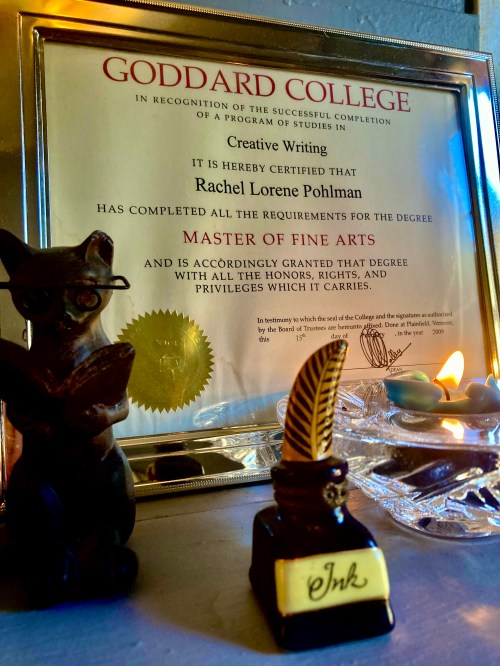
The itch to learn more and to focus more on writing took me to Goddard College next. I continued teaching and worked on my master’s from 2007-2009. During this exciting period, I wrote constantly, including many formal papers for my instructors and my thesis, which was a young adult historical fiction novel about a Catholic Polish teen and his Jewish neighbors during World War II. This one, I thought, I would try to get published. I just didn’t hurry it.

I attended Goddard West in Port Townsend, WA. I have never been to the original campus in Vermont, which has sadly, closed, but I still hope to visit there someday.

After the MFA, I focused on researching agents and publishers and writing queries. Admittedly, I didn’t try very hard. It was excruciating for me to put myself out there—my writing out there—which to me, amounted to putting my inexperience and inadequacy on full display, a neon sign of not-good-enough, flashy and annoying, just begging someone far more hard-working and talented than myself to squash it.

Time went by and I wrote with friends for fun, and to learn more. Shout out to you, Alicia, Lynn, Mike, Maria Elena, and of course all of my amazing students! I thought maybe I needed to put more time between me and my second novel. I started blogging. I was still teaching.

But then I found myself seriously ill with a rare form of cancer, and the world stopped spinning. I lost track of days, weeks. My brother was also ill and had come to live with us. My surgeries were successful. But I felt unwell. Months of chemo took a toll. And my brother. My beautiful brother, my only sibling, died.

I read that the average life span for appendiceal cancer was seven years, and yes, I also read that was not to be taken to mean that I would die in seven years—there were so many factors involved, and it was just an average. Many people died sooner. Others lived for twenty years or more. Blah, blah, blah, I thought. I have seven years.

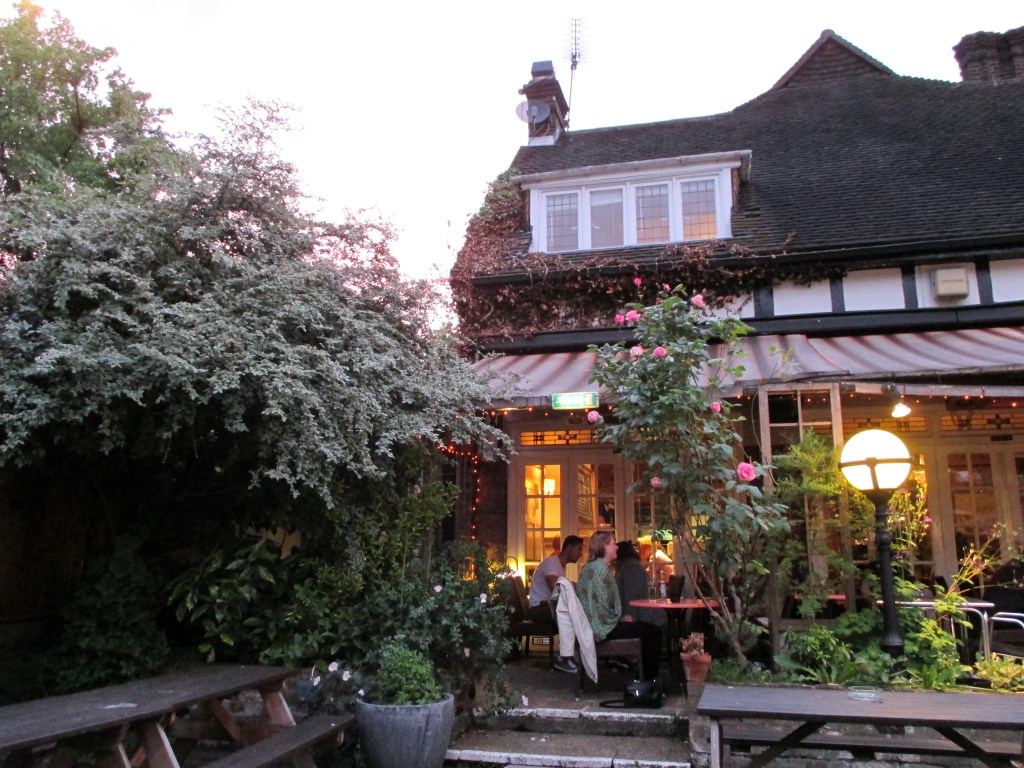
With my husband’s blessing, I cashed in a small savings account and took a short trip to London and Paris (my one and only trip outside the U.S.), and it was wonderful, and I knew I wanted to write. My writing vision could not have been more clear. I came home and worked on a new novel.

East Finchley, Outside London.

A Beautiful Place to Write.

I taught for a couple more years. Other than my family, my teaching career was what I was most proud of and committed to. Still, I felt my energy shifting. I expected an early death. I imagined myself too weak to be the kind of teacher I had always aspired to be, which was the Robin Williams as John Keating kind of teacher from Dead Poet’s Society. That was who I should be, but instead, I felt—I believed, I was tired, in failing health, more Virginia Poe dying slowly of tuberculous while Edgar became ever more prolific than John Keating taking on the entire world of poetry and elevating young minds and spirits. I saw myself settling into an early writing retirement where my husband would continue to work, but I would just be . . . . the quiet writer in residence.

Robin William as the victorious Mr. Keating

The sadly beautiful Mrs. E. A. Poe

And so, I finished my third book. It is not published.

I found I missed gainful employment and have steadily worked part-time since my early retirement, teaching and library work mostly.  I am fighting my hermit-like tendencies, and I’m enjoying getting more involved in actively reading and responding to my fellow writers online, as well as the few writers I know personally. This is a joy and a responsibility. I believe we must support each other, and I am so in awe of all of you! I just finished reading a fellow Goddard graduate’s Sci-Fi thriller, The Regolith Temple, yesterday, and was blown away! Roxana Arama, I will be writing a review for your excellent book very soon!

I am still waiting to hear back from an agent who requested my full manuscript many months ago. I’m considering next steps.

I’m not dead. I stopped going in for cancer scans several years ago. I can’t afford them, and anyway, I’m quite spectacularly healthy. Weirdly! So maybe the seven years thing was really just about itches and actually had nothing to do with my diagnosis. Whatever the reason, I’m grateful, and I’m still in love with this beautiful planet. And pancakes and kisses.

I’m walking every day and working on another novel.

Trying to say it a little more often.

The simple sentence I’ve never felt worthy of.

I am a writer.

41 Comments

Filed under Cancer, Cancer Journey, HIstorical Fiction, Identity, Literary Agents, London, Memories, Personal History, poetry, Relationship, Research, Teacher, Uncategorized, Voice, Writing, Writing Advice

Polished Maple Tables

An early picture of our old house, before renovation.

One of the most enjoyable writing exercises I’ve done lately comes from a biographical poetry template based on a poem by George Ella Lyon. I came across it on Jeannine Quellette’s brilliant Substack, Writing in the Dark. The exercise is familiar to me in a distant way, as though perhaps I’d done it before but lost it. Or perhaps it suited me perfectly this past week because I have been contemplating writing memoir and fictionalized biography, so it seems as though I always had it—a poem about beginnings, and the echoes still heard, the lessons still being learned.

Thank you, Jeannine Quellette, for sharing the lesson! You can visit Jeannine’s website and read her poem, “From Chickweed to Ash,” here: https://writinginthedark.substack.com/p/from-chickweed-and-ash.

Here is my version:

Polished Maple Tables

I am from polished maple tables

From Pall Malls and Folgers

Green grass, Blue water, the whoosh of wind and wings

Flocks of seagulls

I am from Lilies of the Valley, Bleeding Hearts, Lake Michigan’s endless sand and waves

I’m from World War II, Ramblers, and Divorce

From Rachel and Frederick and William and Lorene

From Rae and Bill

I’m from long car rides and listening to albums on the stereo

From Mr. Wonderful and Stop Crying and What did you learn in school today?

I’m from no church, lost pets, and rented houses.

From a mother who scoffed at religious people

And a father who blamed organized religion

For the world’s woes.

But I’m also from Christmas trees and baking cookies, from bunnies and Easter baskets.

And I’m from the hand-written prayers I found in my father’s bedside table when he died.

I’m from Chicago and Kenosha

From Illinois, Wisconsin, and Minnesota

From Scots called Johnstone, and Swedes called Nelson

From ground beef casseroles, navy bean soup, and sour cream raisin pie

From Great Aunt Mary who broke up with her beau when he jumped into a fountain,

Never to wed, who lived with her sister Lorene’s family and then mine until The Divorce when she

Was sent back to Chicago to an old folk’s home

And Mother was hospitalized

I am from women who sewed and worked in libraries

and who cooked and cleaned other people’s houses.

And from men who sought love and adventure and worked on farms and in factories.

I am from Midwestern barefoot summers and sea glass and wandering the West

Restless and yearning for polished maple tables and a place to call home.

                                                                                                             RLP, 2025

If you would like to write your own “I Am From” poem, here is the template. Use it as a springboard. Jump in and adjust it to suit. I hope the writing brings you joy, or something like joy, which is sometimes as simple as finding a way to express the inexpressible past.

Blessings! And please share your poems in the comments!

Kenosha, Wisconsin

                                                          Template: I Am From

I am from ________________ (specific ordinary item)

From ____________ (product name) and _____________ (product name)

____________ (adjective), ______(adjective), _________ (sensory detail)

I am from _____________ (plant, flowers, natural item)

_______________________________________ (description of above item)

I’m from ______________ (family tradition) and _____________ (family trait)

From ___________ (name of family member) and ______________ (another family member)

I’m from the _______________ (description of family tendency) and ________ (another one)

From ______________ (something you were told as a child) and _________ (another)

I’m from __________________ (representation of religion or lack thereof), __________ (further description)

I’m from ___________________ (place of birth and family ancestry)

_______________________ (a food that represents your family), ___________ (another one)

From the ___________ (specific family story about a specific person and detail).

Dad, Lori, and Billy

Early Days in Kenosha

Thanks for visiting! Wishing you all good things. With Love, Lori

40 Comments

Filed under Family, Personal History, poetry, Relationship, Uncategorized, Voice, Wisconsin, World War II, Writing

Escaping Limbo

I have thought a lot lately about the discomfort of being in a perpetual state of waiting for something to happen, of worrying about what the results will be when something finally does happen, and then, wondering if I will navigate any of it well. The word “limbo” is often in my thoughts.

Photo by Jimmy Chan on Pexels.com

2024 brought new health concerns for my husband, and with that a reconsideration of where we should live, since we are currently in a very remote location, three and a half hours by car from the nearest medical center with cardiac care. We responded decisively by putting our house on the market. That decisiveness did not break us out of Limbo, however, as we do not know when or if our home will sell, and we do not know what it will sell for if it does sell. We cannot make plans on where to move until we sell the house. Still, we’re thinking about returning to the Midwest where real estate prices are more reasonable than here in the West and where we can reasonably expect to afford to live in a town with a hospital. But, until we sell, we are in Limbo.

Also, in 2024, I was thrilled to receive an invitation from my dream literary agent to send her my full manuscript, A Fine Suddenness, a World War II historical fiction novel based in Lake Arrowhead, CA. I’ve no idea if she has read it yet. It has been out of my hands for six months now, this after having worked on it pretty consistently for years. Many years. I miss it terribly (it’s an odd thing, really, the attachment I’ve made), and I have no interest in beginning a new novel yet, though at least I am continuing to write. Even so, journaling or posting online, as important and healthy as they are, do not give me the same sense of mission as novel writing does. I wait to hear from the agent, and I do not move forward on a sequel to the book I sent her, nor on some new unrelated novel, because I desperately want her opinion on A Fine Suddenness first. More Limbo.

And 2024, oh my goodness, has been a year of intense worry and anticipation for our nation and the world. We are no longer in the first stage of that particular limbo state, but we are certainly still in a place of transition and uncertainty. So many possible scenarios there, and so little I have control over. More Limbo.

Earliest historical references to Limbo describe a place in-between—not heaven, not hell—a place for deceased unbaptized humans born before the birth of Christ, or who died as infants before baptism, to reside until the second coming of Christ by the Roman Catholic Church, and these begin in the 14th Century. From there, the word limbo (more and more with a lower case “l”) entered usage in less theological contexts: as a place or state of restraint, confinement, neglect, oblivion, uncertainty, or an intermediate or transitional place or state.

Etymology also traces limbo from the English of Trinidad and Barbados limbo “a dance that involves bending backwards under a pole,” related to Jamaican English limba “to bend,” from English limber “flexible” (merriam-webster.com).

Photo by RDNE Stock project on Pexels.com

Which leads us to the dance, or funeral game, which dates back to the mid to late 1800s on the island of Tobago. In the beginning, the game started with the bar at the lowest possible height and the bar was gradually raised, signifying an emergence from death into life (Wikipedia.org). It is possible that the roots of this practice come from the slave experience of being transported across the seas in ships, where the slaves were separated and tried to squeeze through narrow spaces in order to see or touch one another. In some African beliefs, the game reflects the whole cycle of life . . . the players move under a pole that is gradually lowered from the chest level and they emerge on the other side as their heads clear the pole as in the triumph of life over death (Stanley-Niaah, Sonjah “Mapping of Black Atlantic Performance Geographies: From Slave Ship to Ghetto.” Quoted on Wikipedia.org).

The secularization of the dance began in the 1940s where “it became a popular entertainment in Trinidad and was adopted as a physical fitness exercise by American troops,” . . . and is now “considered the unofficial national game of Trinidad and Tobago” (Wikipedia.org). It has become a fun and happy pastime.

Historically, Limbo to limbo, has moved on. Broken free, so to speak. I wonder if my own limbo could progress that way, too. As for human history, perhaps also for me? If I am stuck in the place between heaven and hell right now, will it be possible for me to become limber enough to squeeze myself through the narrow places that block me from reaching the open, even joyful places that still may exist beyond my current ability to see them or experience them?

In order to do that, I would need to understand the constructs of the narrow places. What are they exactly? What are they made of? Are they hard and impervious, like granite? Splintered like rough wood? Flexible and sometimes deadly like serpents? Or are they only real because I make them real in my own paralyzed mind? Maybe I could wish them away, disintegrate them, with new knowledge or some kind of personal epiphany.

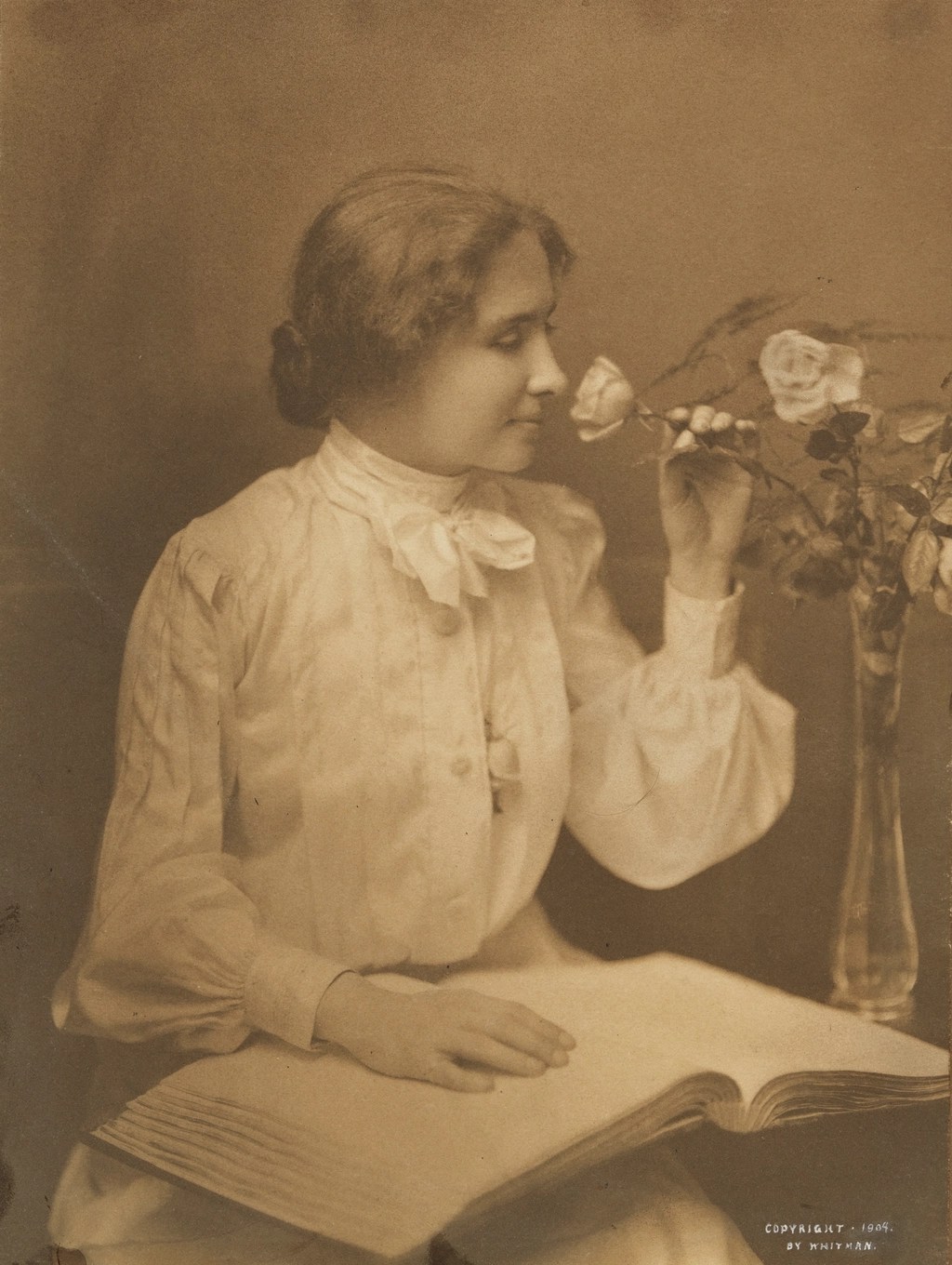
Perhaps there is a way. Perhaps not. But I must strive, at least, to remember Helen Keller’s words, these taken from her open letter in response to Nazi book burnings in Germany on May 9, 1933: “History has taught you nothing if you think you can kill ideas. Tyrants have tried to do that often before, and the ideas have risen up in their might and destroyed them. . .You can burn my books and the books of the best minds in Europe, but the ideas in them have seeped through a million channels and will continue to quicken other minds.”

If Helen Keller believed that ideas and hopes have always “seeped through a million channels,” who am I to deny it? Might not a few of those ideas and hopes, and more likely a multitude, have made their way to us now at the dawning of the year 2025? Might not they sustain us, quicken our minds, and help us find a way out of our narrow places and into the light?

Helen Adams Keller“/ CC0 1.0 from Openverse.

22 Comments

Filed under Advice, Books, Depression, Identity, Lake Arrowhead, Literary Agents, New Year's, Uncategorized, World War II, Writing

Embrace Autumn: October’s Beauty in Nature

Hello, October!

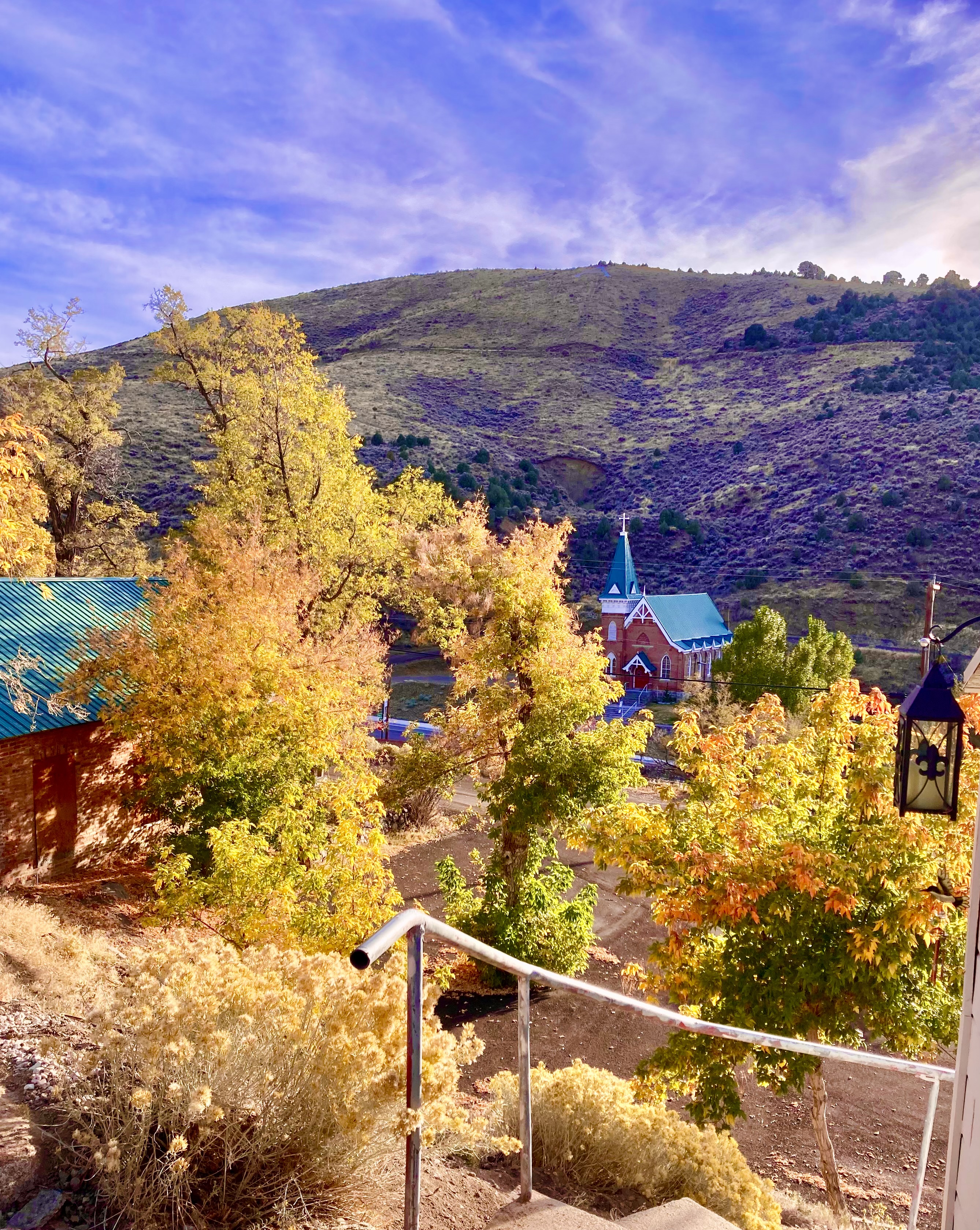
Suddenly the leaves turn red, yellow, and orange; the night temperatures dip into the thirties, and I enjoy sitting in my front yard both in the morning and the early evening. Ahhh . . . those morning coffees and evening wines . . .

The steeple front, right, is on the old Methodist church, now our community center. The steeple across the canyon (you may have to zoom in if the image is too small) is on St. George’s Episcopal church, where I attend. Sunday services have never stopped at St. George’s since the church opened in 1878.

Just a month ago it was much too hot to sit here for any length of time. It is an unusual yard, not yet shaded, one that we created by tearing down an old carport that covered the entire front of our old parsonage for sixty years. This reclaimed space has an incredible view of two one-hundred-plus-year-old church steeples and an impressive hillside on this, the northern end of our section of the Toiyabe Mountains, but no large trees yet. We have planted an oak, a cottonwood, and a blue spruce there, but they are small still.

That evening wine.

Our little town of Austin, Nevada is located in central Nevada’s sparsely-populated, history-rich Lander County in  “. . .the Toiyabe Range, a mountain range in Lander and Nye counties, Nevada, United StatesThe range is included within the Humboldt-Toiyabe National ForestThe highest point in the range is Arc Dome (11,788 feet, 3592 m), an area protected as the Arc Dome WildernessThe Toiyabe Crest Trail runs along the Toiyabe Range for over 70 miles, and is one of the most challenging and secluded trails in the United States.”  U.S. Forest Service, www.fs.us.gov.

In October, we venture out on the mountain trails, we get supplies ready for the long winter to come, and we sit in quiet reverie, grateful for nature’s hush. Enjoying the splendor. Soon, it will be too cold to sit out here without a coat. Soon, there will be more time inside, tending the fire, cooking large pots of soups and stews, reading, and writing.

This gradual gathering of the special autumn light, the relish we feel as we take it in, and our own eventual inner-directed shift is a very great gift as the seasons change, I believe.

Mostly Marigolds! Some of my favorites.

Here is a poem of great beauty by John Keats on the season:

 “To Autumn”

Season of mists and mellow fruitfulness,

  Close bosom-friend of the maturing sun;

Conspiring with him how to load and bless

  With fruit the vines that round the thatch-eves run;

To bend with apples the moss’d cottage-trees,

  And fill all fruit with ripeness to the core;

    To swell the gourd, and plump the hazel shells

  With a sweet kernel; to set budding more,

And still more, later flowers for the bees,

Until they think warm days will never cease,

    For summer has o’er-brimm’d their clammy cells.

Who hath not seen thee oft amid thy store?

  Sometimes whoever seeks abroad may find

Thee sitting careless on a granary floor,

  Thy hair soft-lifted by the winnowing wind;

Or on a half-reap’d furrow sound asleep,

  Drowsed with the fume of poppies, while thy hook

    Spares the next swath and all its twined flowers:

And sometimes like a gleaner thou dost keep

  Steady thy laden head across a brook;

  Or by a cider-press, with patient look,

    Thou watchest the last oozings, hours by hours.

Where are the songs of Spring? Ay, where are they?

  Think not of them, thou hast thy music too,—

While barred clouds bloom the soft-dying day,

  And touch the stubble-plains with rosy hue;

Then in a wailful choir the small gnats mourn

  Among the river sallows, borne aloft

    Or sinking as the light wind lives or dies;

And full-grown lambs loud bleat from hilly bourn;

  Hedge-crickets sing; and now with treble soft

  The redbreast whistles from a garden-croft,

    And gathering swallows twitter in the skies.

Written September 19, 1819; first published in 1820. This poem is in the public domain.

Hello, October! And Welcome!

7 Comments

Filed under Nature, poetry, Reading, Seasons, Uncategorized

Unearthing the Character Behind A Fine Suddenness

Three Months ago, at the beginning of summer, I received an agent request for the full manuscript of my historical fiction novel, A Fine Suddenness. I am told that 3 months is about the time I might begin to expect to hear back from the agent, and so today I am checking my email even more regularly than usual, and I am thinking about the origins of the manuscript.

My Journal

It began in May of 2011 with the glimmer of a character suggested by a signature of ownership in an old red leather-bound book a friend gifted me: The Conqueror, by Gertrude Atherton. My friend Lynn is a librarian, a teacher of history, a seller of used books, and a maker of reclaimed book journals. You can check out her business at brownbagbooks.biz. This book was one of her rescued book journals. The cover was intact, rebound into a smallish wire bound blank journal.

The original inscription inside was simple: Mary Miller 1903. Who was this lady, I wondered? She must have loved her books, I thought, to have signed her name and the year of acquisition on the inside cover, a habit I also have. I usually add the place I acquired the book also, but Mary Miller did not do so. A quick search told me that Gertrude Atherton was a San Francisco author, and The Conqueror had been published in 1902, was about Alexander Hamilton, and was widely acclaimed.

I immediately began writing in Mary’s book-turned-journal, taking on an imagined persona of the unknown lady. It began: “May 8, 1903. Lake Arrowhead, California. I am proposing to tell you a story which I am quite sure you will doubt . . .” Rather quickly it took on the overtones of a ghost story, and I named Mary’s father, described his field of study and stated that her mother had died of influenza when she was a child. All of that came to me very spontaneously. Also, Mary’s husband was dead, but she had a vision of him. So, A Fine Suddenness began as a ghost story. And in some ways perhaps that is what it still is, but not in the way it began.

Eventually, the real Mary Miller, whoever that lady was, disappeared from my mind and became instead a woman who lived in Lake Arrowhead, California during the 1940s—70 years before I read her inscription rather than the actual 108 years. Once I placed Mary in a new time and most certainly a different place than the real Mary had lived, I began to conjure what life was like during World War II on the mountain we shared, not in time, but in place.

All of that pondering gradually grew into a scene of Mary in her yard among her roses, the trees towering in the background. And so, she became real to me, and I wrote her story. She is completely fictional, other than the sense I got from seeing her name, and from the beautiful red and gold embossed cover of a book.

She, I hope, would make her namesake, the real Mary Miller, proud.

24 Comments

Filed under HIstorical Fiction, Lake Arrowhead, Literary Agents, Publishing, Uncategorized, World War II, Writing

Looking for Comps

Photo by Suzy Hazelwood on Pexels.com

     Hello, Readers! I’m putting together my summer reading list, and getting my historical fiction manuscript ready for submission. One part of this process is to read recent books (published within the last few years) that are in some way comparable to mine, so that I can better describe my own manuscript to potential agents, publishers, and booksellers.

     Have you read any recently published fiction set during the 1930s or 1940s? Have you read a novel about a war widow, or a strong woman struggling and coming to grips with some other loss? If so, I’d love to hear about it. My manuscript is set in Lake Arrowhead, California, and the place is integral to the plot, so I’m also interested in any fiction that transports the reader to a specific city, town, or region.

     If any titles come to mind, I’d greatly appreciate your sharing them here. I welcome any and all suggestions. Many thanks!

1 Comment

Filed under Advice, Books, HIstorical Fiction, Lake Arrowhead, Literary Fiction, Publishing, Women's Fiction, World War II, Writing, Writing Advice

But Night Crawler is so much more Evocative

Our yard in May contains the world. Wisconsin teems with life. For many of us living in climates where the temperatures are at or below freezing for so many months of the year, this is a heady experience. One day you’re wearing your jacket and mittens and looking at everything brown and gray, and almost like Dorothy’s arrival in Munchkinland, the next moment goes blindingly Technicolor.

IMG_1086

A Few Minutes Ago…

It is grass that melting snow washes to emerald green. Tiny lime-colored leaves on black branches. Tulips, orange, and pink, and red. Daffodils, deep yellow and apricot. Lilacs, deep purple, lavender, and white.

FallWinter2015Mostly 010

Munchkinland

Robin’s breast russet, and then those impossibly lovely blue shells their babies shed in unexpected places. I find one on the metal chair on the front deck. Cardinals, still here, looking tropical now, the crimson against the green. Red-winged black birds. White herons. Orioles, as orange as the fruit we feed them.

The sky at day, a brilliant blue, at night diamonds and velvet.


My husband calls me out to the yard.
“You have to see this.”
It’s dark and slightly cool. Wet.

“Look.”
He shines a flashlight across the lawn, catching the quiet, clandestine movements of thousands of earthworms.
They are everywhere. The lawn is undulating like the surface of a lake. I’m afraid I’ll hurt them.

He bids me come. “Step slowly. Lightly.”

I’m sure I shouldn’t be out like this, could never tread lightly enough. I say a quick prayer. “Please don’t let me do any harm.”

We stand together watching the glistening movement as the worms slide back into the ground. Everywhere the light hits them, they move. We talk about what they are doing. We’ve never learned.

I suspect they come up out the earth and the rich dark loom to gulp in the sweet, sweet air. My husband suspects it’s for sex.

We know very little about the life of worms. Such a common thing to know so little about. We feel silly, and are sure these must be things our parents were born knowing. Like the call of a mockingbird.

Then, a voice inside me says, Thibookworm-151738__180s is why they’re called night crawlers, Lori. And I know I am a complete dolt. How could this simple fact have escaped my attention all these years? Though it’s no excuse, night crawlers is not a term I ever remember being used in my family. Just earthworms, or simply worms. We didn’t fish, and we didn’t garden much. Out of sight, out of mind.

But “Night crawlers” is so much more evocative. Briefly, I picture little worm-sized, worm-shaped zombies crawling out of tiny worm-graves, marked by little crosses and a mausoleum or two—“Here lies Squirmy, Beloved Father and Husband”—our entire lawn a movie set for a new Tim Burton story.

graveimage                   How could I miss this?

“They’re good for the garden,” I say. (We’ve just planted tomatoes, peas, beets, onions, peppers, lettuce, and broccoli.)
“Yes.”
As we walk back to the house, I think, “And fireflies will be next.”


Rachel “Lori” Pohlman, Copyright 2016

*For some interesting facts on worms, such as the fact that, yes, there is some sex involved in night crawling (but that’s not all they do), go to: http://blog.nwf.org/2014/02/ten-things-to-know-about-earthworms/.

4 Comments

Filed under Humor, Nature, Night Crawlers, Seasons, Uncategorized, Wisconsin, Worms, Writing