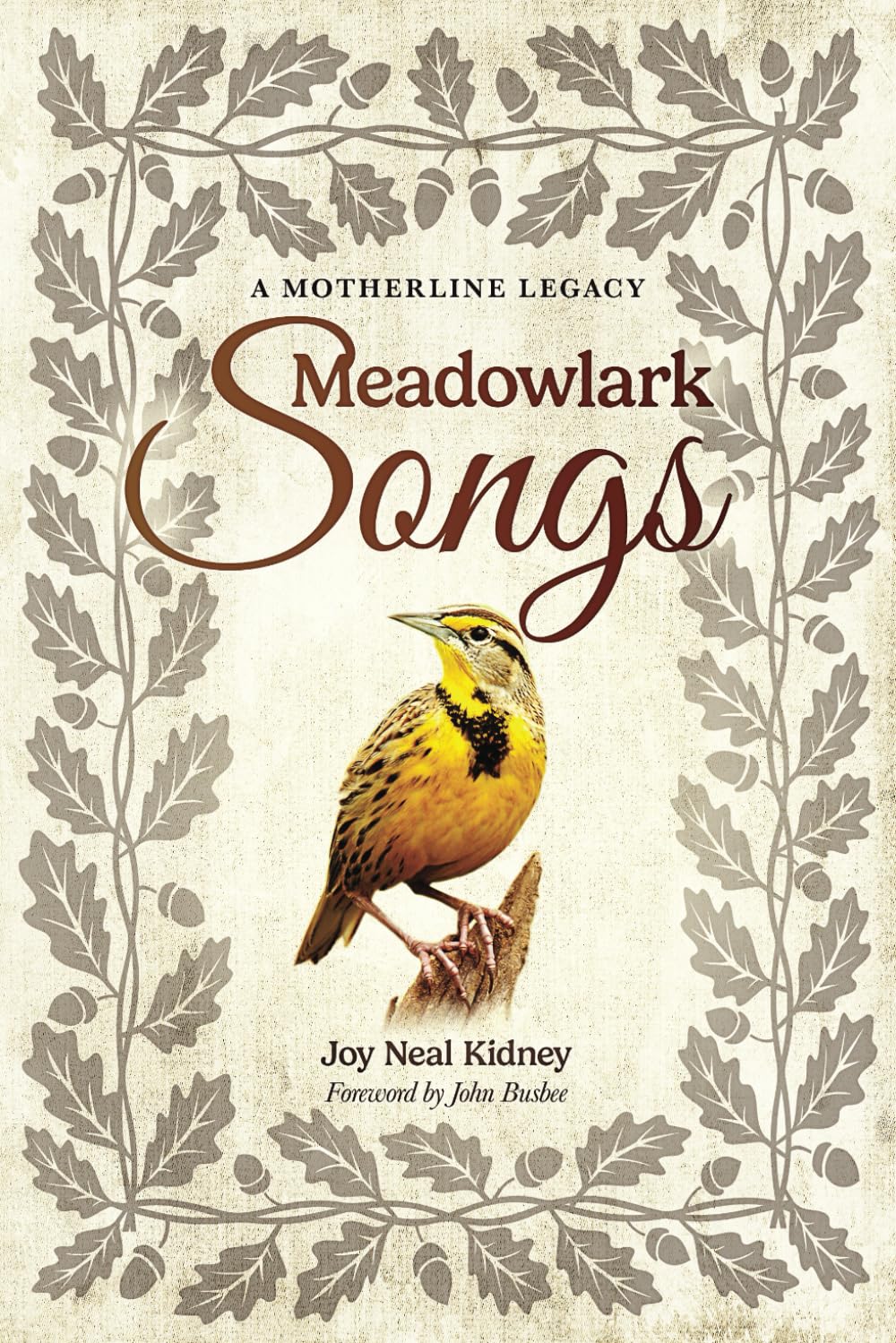
Joy Neal Kidney’s treasury of family stories traces the lives of seven generations of her ancestors– their joys, their hardships, and their enduring faith.
The short, lyrical portraits of the lives of these women along with their husbands, sons, and daughters begin with Jane (Watson) Branson who was born in 1782 and end with Joy, herself, the memory keeper who researched, gathered photographs, recorded and wrote the lovely tributes, poetry, and historical details, and brought it all together for her family—and for her readers.
This charming volume gives all of us a delightful and heartfelt glimpse into the way our ancestors give us life, tradition, strength, and love, while reminding us of the many reasons we should honor them and remember them.
It’s a beautiful little gem of a book. Highly recommended!
Jess Walter’s latest novel tells the story of Rhys Kinnick, a sad-hearted journalist who punches his son-in-law in the face at Thanksgiving, throws his cell phone out his car window, drops out of society, and goes off to live in the forest. The experience of reading So Far Gone reminded me of the not dissimilar experience of watching a Coen brothers movie such as The Big Lebowski or Fargo—odd ball characters, extreme situations, violence, and humor—often jumbled up together in the same scenes—in an overall story that somehow also manages to convey intelligence and love.
Walters is a master at building complicated characters in vivid, precise strokes. The characters in So Far Gone range from the struggling grandfather protagonist, to his charming grandchildren, his confused daughter, a group of religious zealot gun-toting conspiracy theorists, a bipolar retired cop, an old girlfriend with major attitude, his loyal friends Joanie and Brian, and other colorful characters Rhys meets along the way.
It’s a story about a crumbling America, about people lost and found, a world under siege, and ultimately about small miracles of healing magic fashioned by family and friendship. I found it refreshing, and touching, funny, sometimes outrageous, disturbing . . . and also an interesting look at the way some of us old dreamers and staunch believers in the ideals of fairness, justice, and a better future for all are feeling about and reacting to the twisted reality we now see laid out before us. So Far Gone is the perfect title for a book that describes us, now, today.
Friends! I have been remiss! I apologize for getting so far behind in reading and responding to your posts. I hope you are all well and I’m looking forward to catching up!
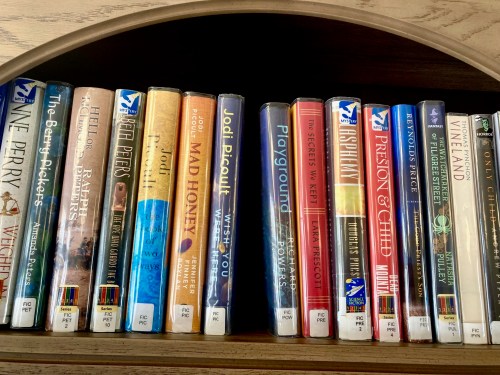
Austin Library, Lander County, Nevada
I’ve been busy of late with revising my historical fiction manuscript after receiving feedback from an agent and a publisher. It’s been fun, in that odd way that perhaps only other writers can understand—a challenge, a wrestling with words, a content shift—all of it within a world that was once mine alone and that now I must share if it is ever to come to fruition as a novel that lives in the world.
Field Trip! I can’t remember where I saw this exercise in visualization. It was likely from one of you, so please accept my apologies for not remembering the source, and let me know if it was you. I love the idea: Go to a book store or a library and find the spot on the shelf where your book would be shelved if it were published. Make a space for your beautiful creation and take a picture. What books will be nestled up to yours?
In the Austin, Nevada library, my book would be shelved right next to Jodi Picoult’s if it were published today!
Your Turn! I’d love to see your spaces! And if you already have a book or books out there, it would be wonderful to see where they sit on the shelf. Please share!
From Top to Bottom: Sierra Boggess and Emily Jewel Hoder in the revival production of “The Secret Garden” at Center Theatre Group / Ahmanson Theatre February 19 through March 26, 2023. Photo credit: Matthew Murphy of MurphyMade
As a way to identify the activities that bring me joy and find ways to incorporate more of them—more often—into my daily life, I recently completed a writing exercise. It morphed into several disparate, yet ultimately connected and delightful experiences. I had so much fun with it, I just had to share!
Here is the prompt: “Write a letter to your childhood hero. You won’t actually send this letter. Tell them about what has brought you the most joy in each decade of your life. Don’t think too hard about the answers. Write the first things that come to mind. Reread the letter. Do you see common threads?” -Brittany Polat, PhD. Journal Like a Stoic, c2022.
Choosing who to write to was an intriguing part of the process. Who, I asked my little girl self, is your hero? The name that sprang spontaneously to mind was Frances Hodgson Burnett. Of everyone I could have chosen, for some reason I chose a lady author, a woman I’d never met and in fact could never have met because she died thirty-two years before I was born. She may have left the earthly realm, but she was very alive to me. She spoke to me through her books. The Secret Garden was my favorite, and I have continued to love it my whole life, cherishing it through rereads, watching all of the movie versions, and attending the play.
Before writing my letter to Frances, I did a bit of research on her life, and what a full life it was! Born in 1849 in England, impoverished at age four after her father’s death, Frances eventually traveled with her mother to live in a log cabin in Tennessee during the American Civil War. It was writing that finally lifted her out of poverty. She was a highly regarded author who published fifty-three novels and owned homes in both England and America (Gerzina, Gretchen H. “In the Garden: The Life of Frances Hodgson Burnett.” Shakespeare Theatre Company, c2024).
This research into Frances’s life inspired me as I wrote to her about the greatest joys in my own life. The common threads became very clear. Family, friends, nature, wildlife, pets, reading, writing, and learning showed up consistently throughout the decades. These are the things that spark the most joy for me.
Frances with her sons
With this in mind, I agreed to an unplanned day-long trail ride with my husband on a day I had planned to spend doing laundry and vacuuming the house. Seems like an easy choice, venturing out into nature with my guy rather than doing chores, but I honestly might not have agreed to drop everything and go if I hadn’t just completed my “joy inventory.”
Though housekeeping and organization didn’t make themselves known in my letter to Frances, they are important to me, nonetheless. I find it difficult to get to joy in any kind of untidy environment, whether in my own home or anywhere else. Still! I managed to say yes. As a bonus, I thought I could write about it afterwards, thereby including another of my favorite activities in the event.
Here is the result:
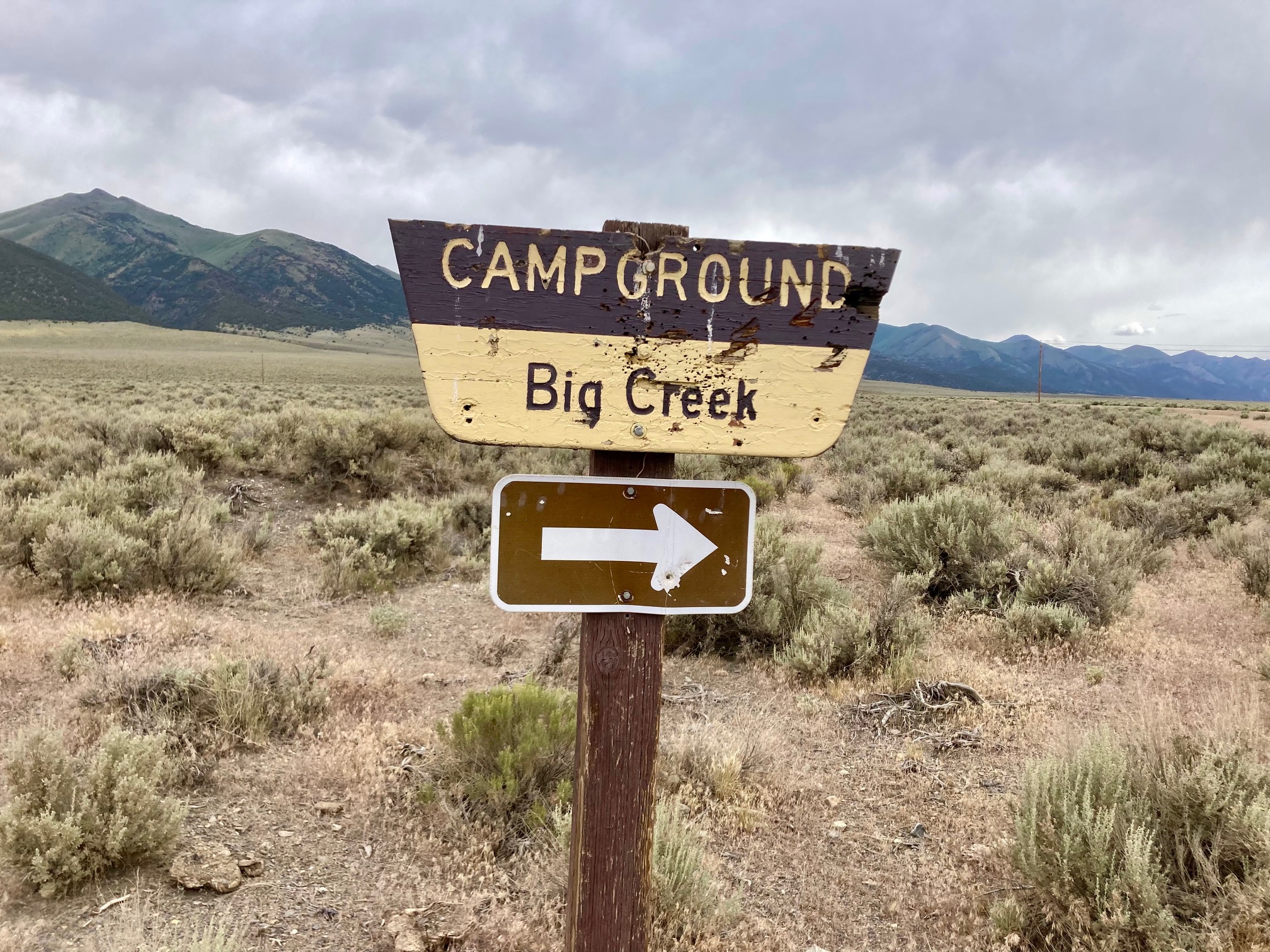
Off highway vehicle trails abound in the high elevation areas of the entire Toiyabe Mountain range and extend down into the valleys and basin below. We have an old side-by-side Rhino that can climb just about anything at very low speeds and peaks at 30 miles per hour on a flat road going downhill (a situation not often experienced here). Our chosen route for the day was to begin at our home in Austin, travel to Big Creek Campground, and then continue over the mountains into the adjacent valley to the east.
My guy and the Rhino
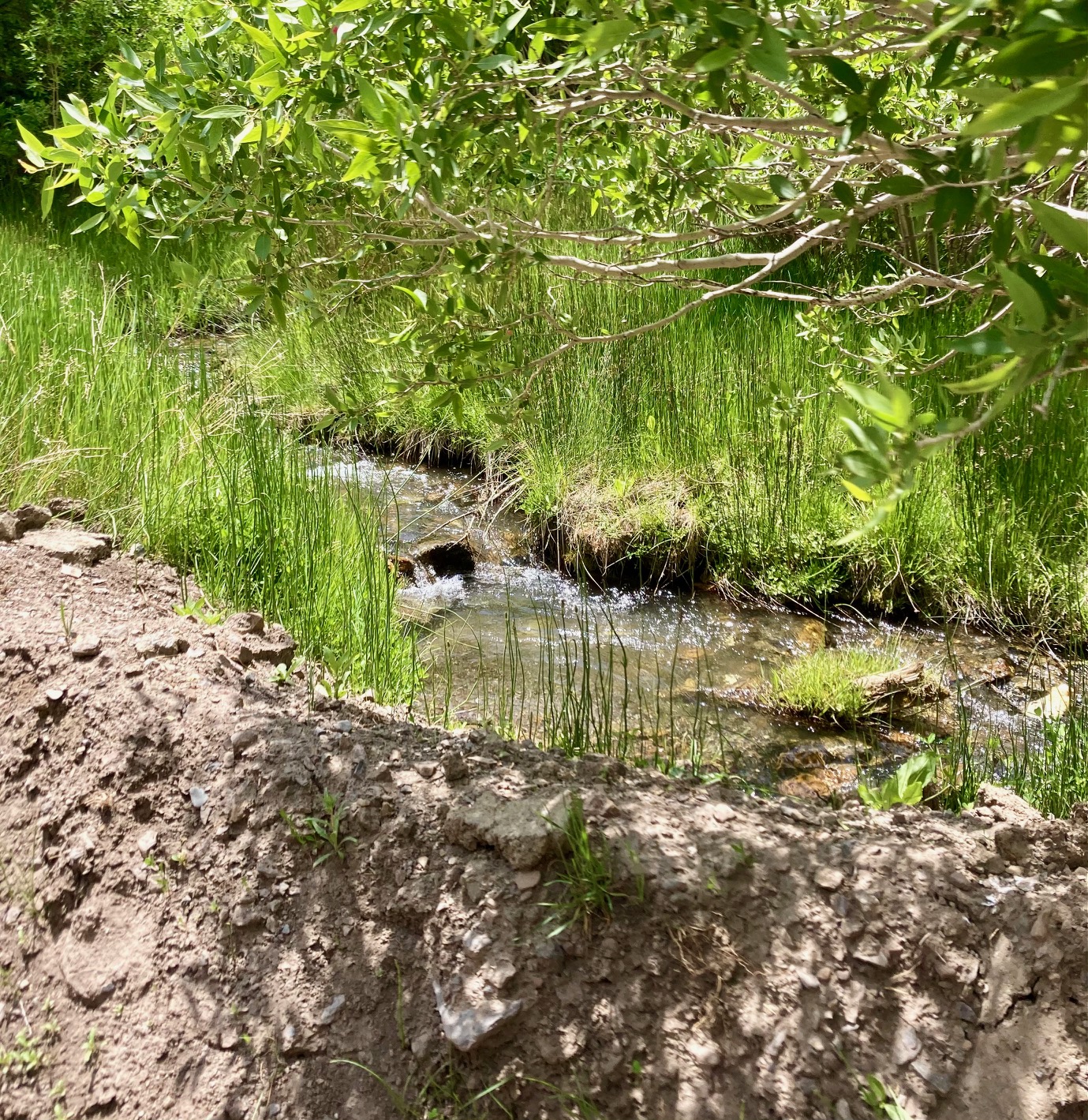
Big Creek
Soon to be up and over the top!
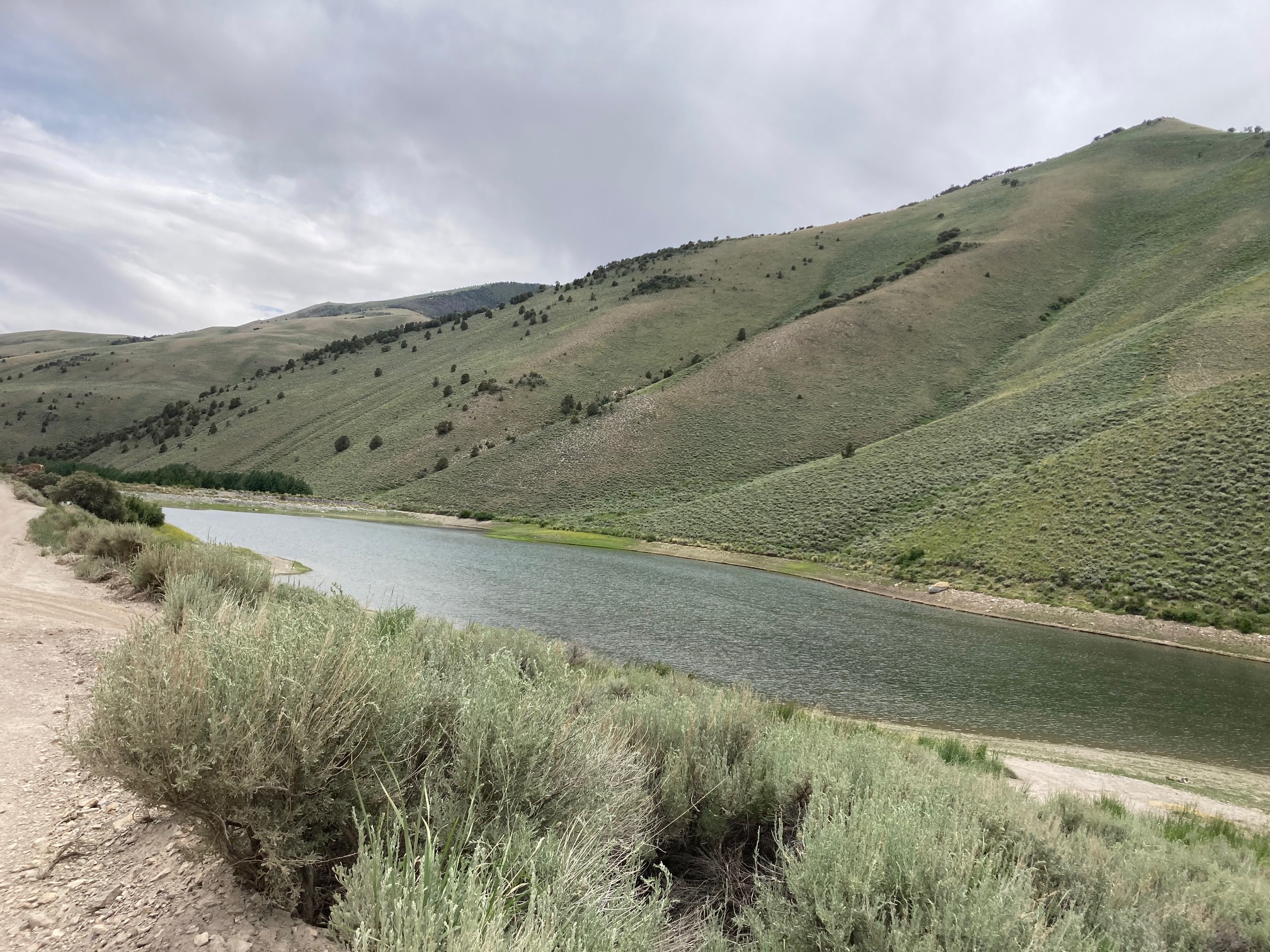
Groves Lake
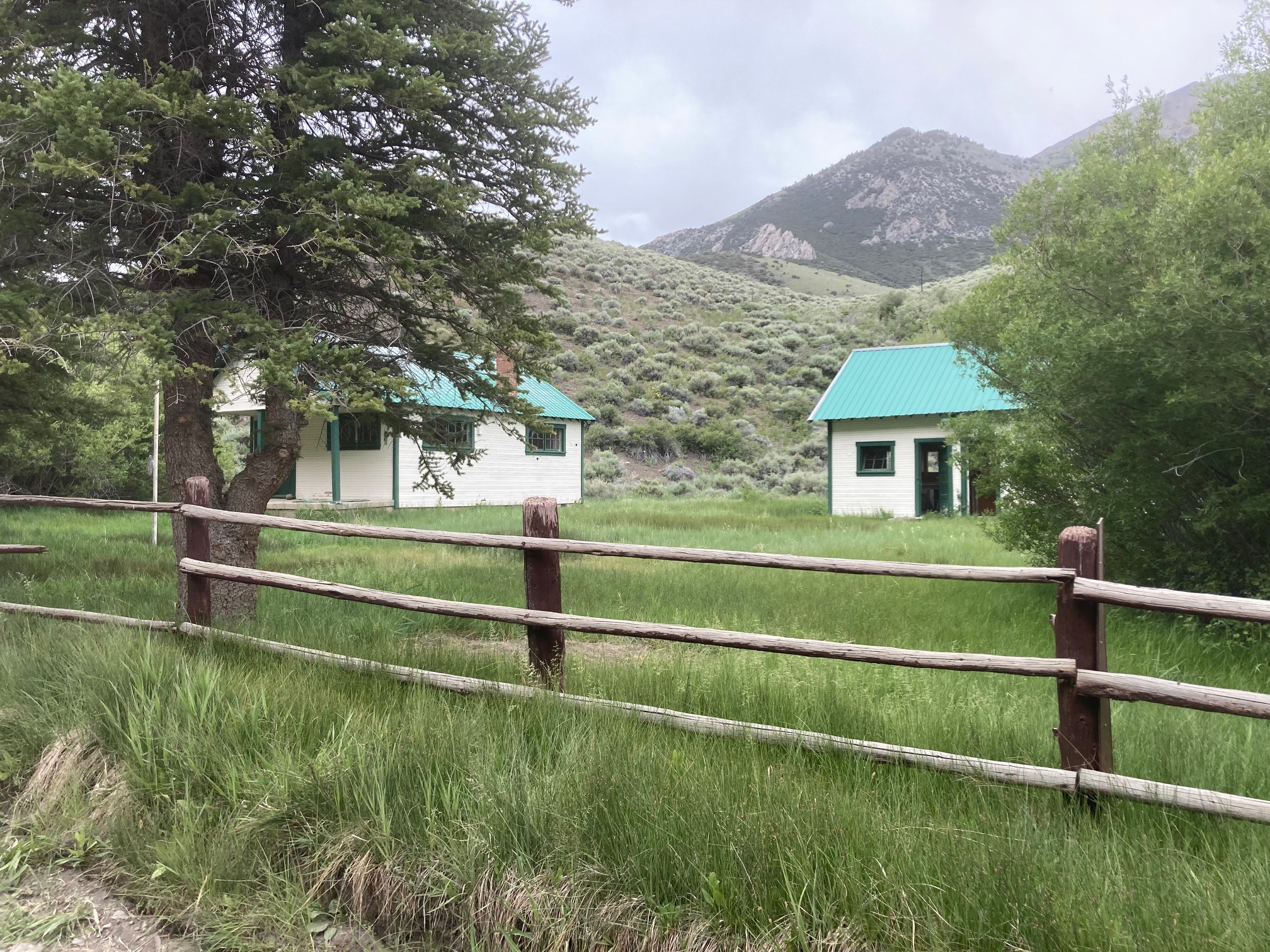
Along the way we experienced the expanse of the Reese River Valley over exposed rocky trails and into and over the mountains with multiple stream crossings, aspen groves, meadows, and significant elevation change. We passed by two campgrounds (Big Creek Campground and Kingston Campground) and Groves Lake, winding up in the charming Kingston community where we were welcomed by the wonderful ladies of a Monday Mahjong groups that meets at our friend Linda’s house. There we were treated to a delicious lunch and lively conversation before heading back over the mountain. Friendship, another joy inducing ingredient added! It was a lovely day.
Old Kingston Ranger Station
Linda and the Mahjong Ladies welcomed us in!
From the initial moments spent reading the prompt in my journal it was indeed a joy to experience the results of contemplating a childhood hero, writing to her, thinking about my life in decades, and saying yes to an impromptu adventure.
It would be wonderful to read about your hero, and the joys of your decades. Who would you write to? What insights about joy might your letter reveal? If the spirit moves you, please do give this little project a go! You might find yourself delighted by the results, as I have done. Looking forward to hearing from you!
Two consecutive snowstorms, and the sun sparks diamonds on the snow-hushed surfaces here in Austin and in the Reese River Valley just below us, giving us time to read, to wander, to cook, and to write.
Walking after a snowstorm is one of my favorite activities, along with walking in a warm rain, or on a starry night, or along a tree-lined lane at the height of autumn. It’s like walking inside a dream, a vision, a movie . . . all of it a magical changing work of art. This has been that kind of a weekend. An appreciated and needed balm for the eyes, ears, heart, mind and soul.
Our footprints going down our driveway last winter after a similar storm in Austin, NV. My photo.
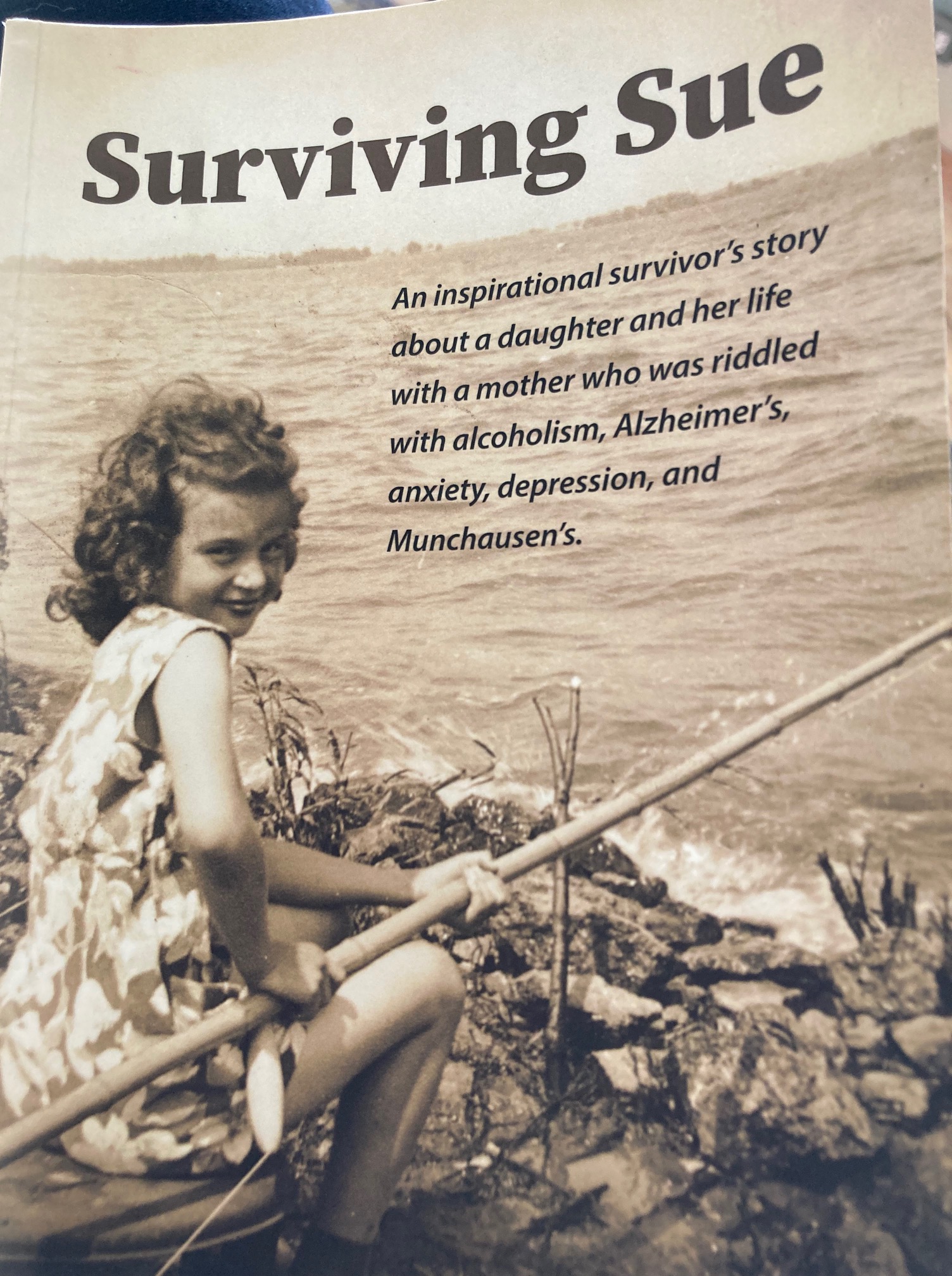
After today’s walk, I finished reading Dr. Vicki Atkinson’s memoir, Surviving Sue: An Inspirational Survivor’s Story About a Daughter and her Life with a Mother Who was Riddled with Alcoholism, Alzheimer’s, Anxiety, Depression, and Munchausen’s. Vicki is a fellow blogger, one I follow and read with pleasure, always knowing I will find something positive, real, and insightful in her posts. Vicki is generous with her readers, sharing of herself, her humor, her highs and lows with an empathic interest in our perspectives.
This is Vicki’s voice, and it shines on the pages of her book. She is a profoundly kind-spirited woman who grew up learning how to turn the injury and injustice of her mother’s mental illness into something bigger than her own pain. With keen intelligence, her father’s and sister’s love, and later through her own family and probably also due to her dedication to her studies, Vicki survives and thrives, and she does it without ever compromising her own values.
Vicki’s Wonderful Memoir
Vicki’s compassion for her mother is more than challenged over the years, but somehow, she stays the course of doing what she believes is best for everyone concerned. For those who don’t know Vicki or haven’t read Surviving Sue, I’d like to stop here to encourage you to read it for yourself. This story is worth your time. It may even affect the ways you view some of your own experiences, past or present. It may soften your heart. It’s a beautiful book, and an engaging read.
I write this on January 9, 2025, the day of President Jimmy Carter’s funeral. Jimmy Carter died on December 29th, 2024. He was 100 years old, a recipient of the Nobel Peace Prize, a dedicated man who worked alongside his wife in public service and advocacy for human rights and humanitarian causes throughout his life (Habitat for Humanity being only one of them).
He graduated from the United States Naval Academy in Annapolis, Maryland in 1946 with the distinction of being in the top ten percent of his class. His service in the US Navy included being selected to join the nuclear submarine program, where he and 23 other sailors opted to expose themselves to radiation to rectify a partial meltdown of an experimental nuclear reactor at Chalk River Labs in Ottaway, Ontario, Canada. As a result, the core of the reactor was successfully removed. Source: (https://www.warhistoryonliune.com/featured/jimmy-carter-us-navy.html).
Jimmy Carter was a humble man of faith who continued to teach Sunday school during his presidency. These are just a few examples of his character and place in our country.
This post is both meant as a tribute to President Carter and as a question for my community. You see, Mr. P. and I just returned from a tour of our town and were not able to spot a single American flag flying at half-staff. We were not out on a mission to check on flags. It is our usual practice to get out and about on our days off together, and today I was not working at the library because it was closed in remembrance of President Carter.
We were out in the cold bright light of a January day to take in the beauty of our town and the mountain trails and to get a little exercise.
Driving through the park at the top end of town I remarked, “Look. Someone forgot to place the flag at half-mast.” It didn’t strike me as that odd, just an oversight perhaps. Afterall, county workers had the day off, perhaps they had forgotten.
But after our walk we were intrigued enough to actually look for American flags being flown at half-mast. We did not find a single one anywhere in our town. There were a few empty flag poles. All the rest of the American flags were flying high.
I am deeply hurt. Why is not one American in this town following protocol?
“An easy way to remember when to fly the United States flag at half-staff is to consider when the whole nation is in mourning. These periods of mourning are proclaimed either by the president of the United States, for national remembrance, or the governor of a state or territory, for local remembrance, in the event of a death of a member or former member of the federal, state or territorial government or judiciary. The heads of departments and agencies of the federal government may also order that the flag be flown at half-staff on buildings, grounds and naval vessels under their jurisdiction. On Memorial Day the flag should be flown at half-staff from sunrise until noon only, then raised briskly to the top of the staff until sunset, in honor of the nation’s battle heroes. In the early days of our country, no regulations existed for flying the flag at half-staff and, as a result, there were many conflicting policies. But on March 1, 1954, President Dwight Eisenhower issued a proclamation on the proper times. The flag should fly at half-staff for 30 days at all federal buildings, grounds, and naval vessels throughout the United States and its territories and possessions after the death of the president or a former president. It is to fly 10 days at half-staff after the death of the vice president, the chief justice or a retired chief justice of the United States Supreme Court, or the speaker of the House of Representatives. For an associate justice of the Supreme Court, a member of the Cabinet, a former vice president, the president pro tempore of the Senate, the majority leader of the Senate, the minority leader of the Senate, the majority leader of the House of Representatives, or the minority leader of the House of Representatives the flag is to be displayed at half-staff from the day of death until interment. The flag is to be flown at half-staff at all federal buildings, grounds and naval vessels in the Washington, D.C., area on the day and day after the death of a United States senator, representative, territorial delegate, or the resident commissioner from the Commonwealth of Puerto Rico. It should also be flown at half-staff on all federal facilities in the state, congressional district, territory, or commonwealth of these officials. Upon the death of the governor of a state, territory or possession, the flag should be flown at half-staff on all federal facilities in that governor’s state, territory or possession from the day of death until interment.The president may order the flag to be flown at half-staff to mark the death of other officials, former officials, or foreign dignitaries. In addition to these occasions, the president may order half-staff display of the flag after other tragic events. The flag should be briskly run up to the top of the staff before being lowered slowly to the half-staff position.”
So, I’m disappointed enough to ask . . .
Why is there not one American flag flying at half-mast in Austin today?
This past week I read Tom Booth’s charming picture book, This is Christmas, at our December library story time. Of the seven young children in attendance, none of them thought they’d ever seen a chipmunk in our town/area. I have only lived here for four years and am no expert on the local wildlife, but I have spotted a few (very few) chipmunks. Never a squirrel though. This is the only squirrel-free zone I’ve ever lived in, and I can tell you it’s a bit unnerving. I can only surmise that the trees are too small (mostly pinion pine), the spaces in between them too distant, and the rain too infrequent to sustain squirrels. . . I’ve read that the forest in our mountain range, the Toiyabes, is referred to as a dwarf forest, because it’s in the shadow of the great Sierra Nevadas. That could be why I haven’t seen squirrels here, but I don’t really know. But I digress.
Anyway, here in Austin, Nevada, which is located in the center of the state and sits at 6,555 feet elevation, the mammals I’ve noticed include: some humans (not a lot!), many feral cats (a few of which now live inside my house, so they are not quite so feral these days), a plethora of mule deer, occasional groups of antelope and wild horses in the valley below, maybe two bunnies, and perhaps a dozen chipmunks.
So when I spotted these tracks in the snow on one of the trails outside town on today’s walk, I had to take a picture to show my library friends. Definitely, chipmunk prints, right?
Tiny and perfect little lightfooted creature prints compared to Mr. P’s boot.
So I came home and asked Mr. Googly what chipmunk prints look like and they look just like my picture, I think . . . but I guess they could be mouse prints, too, and come to think of it, I have seen a few mice over the past few years (sadly, they have usually been the victims of the aforementioned feral/not-so-feral cats).
Regardless! We had a lovely trail ride today, and the prints charmed us. I’ll definitely report my finding to my little library patrons and tell them to keep a sharp eye out for chipmunks.
I have thought a lot lately about the discomfort of being in a perpetual state of waiting for something to happen, of worrying about what the results will be when something finally does happen, and then, wondering if I will navigate any of it well. The word “limbo” is often in my thoughts.
2024 brought new health concerns for my husband, and with that a reconsideration of where we should live, since we are currently in a very remote location, three and a half hours by car from the nearest medical center with cardiac care. We responded decisively by putting our house on the market. That decisiveness did not break us out of Limbo, however, as we do not know when or if our home will sell, and we do not know what it will sell for if it does sell. We cannot make plans on where to move until we sell the house. Still, we’re thinking about returning to the Midwest where real estate prices are more reasonable than here in the West and where we can reasonably expect to afford to live in a town with a hospital. But, until we sell, we are in Limbo.
Also, in 2024, I was thrilled to receive an invitation from my dream literary agent to send her my full manuscript, A Fine Suddenness, a World War II historical fiction novel based in Lake Arrowhead, CA. I’ve no idea if she has read it yet. It has been out of my hands for six months now, this after having worked on it pretty consistently for years. Many years. I miss it terribly (it’s an odd thing, really, the attachment I’ve made), and I have no interest in beginning a new novel yet, though at least I am continuing to write. Even so, journaling or posting online, as important and healthy as they are, do not give me the same sense of mission as novel writing does. I wait to hear from the agent, and I do not move forward on a sequel to the book I sent her, nor on some new unrelated novel, because I desperately want her opinion on A Fine Suddenness first. More Limbo.
And 2024, oh my goodness, has been a year of intense worry and anticipation for our nation and the world. We are no longer in the first stage of that particular limbo state, but we are certainly still in a place of transition and uncertainty. So many possible scenarios there, and so little I have control over. More Limbo.
Earliest historical references to Limbo describe a place in-between—not heaven, not hell—a place for deceased unbaptized humans born before the birth of Christ, or who died as infants before baptism, to reside until the second coming of Christ by the Roman Catholic Church, and these begin in the 14th Century. From there, the word limbo (more and more with a lower case “l”) entered usage in less theological contexts: as a place or state of restraint, confinement, neglect, oblivion, uncertainty, or an intermediate or transitional place or state.
Etymology also traces limbo from the English of Trinidad and Barbados limbo “a dance that involves bending backwards under a pole,” related to Jamaican English limba “to bend,” from English limber “flexible” (merriam-webster.com).
Which leads us to the dance, or funeral game, which dates back to the mid to late 1800s on the island of Tobago. In the beginning, the game started with the bar at the lowest possible height and the bar was gradually raised, signifying an emergence from death into life (Wikipedia.org). It is possible that the roots of this practice come from the slave experience of being transported across the seas in ships, where the slaves were separated and tried to squeeze through narrow spaces in order to see or touch one another. In some African beliefs, the game reflects the whole cycle of life . . . the players move under a pole that is gradually lowered from the chest level and they emerge on the other side as their heads clear the pole as in the triumph of life over death (Stanley-Niaah, Sonjah “Mapping of Black Atlantic Performance Geographies: From Slave Ship to Ghetto.” Quoted on Wikipedia.org).
The secularization of the dance began in the 1940s where “it became a popular entertainment in Trinidad and was adopted as a physical fitness exercise by American troops,” . . . and is now “considered the unofficial national game of Trinidad and Tobago” (Wikipedia.org). It has become a fun and happy pastime.
Historically, Limbo to limbo, has moved on. Broken free, so to speak. I wonder if my own limbo could progress that way, too. As for human history, perhaps also for me? If I am stuck in the place between heaven and hell right now, will it be possible for me to become limber enough to squeeze myself through the narrow places that block me from reaching the open, even joyful places that still may exist beyond my current ability to see them or experience them?
In order to do that, I would need to understand the constructs of the narrow places. What are they exactly? What are they made of? Are they hard and impervious, like granite? Splintered like rough wood? Flexible and sometimes deadly like serpents? Or are they only real because I make them real in my own paralyzed mind? Maybe I could wish them away, disintegrate them, with new knowledge or some kind of personal epiphany.
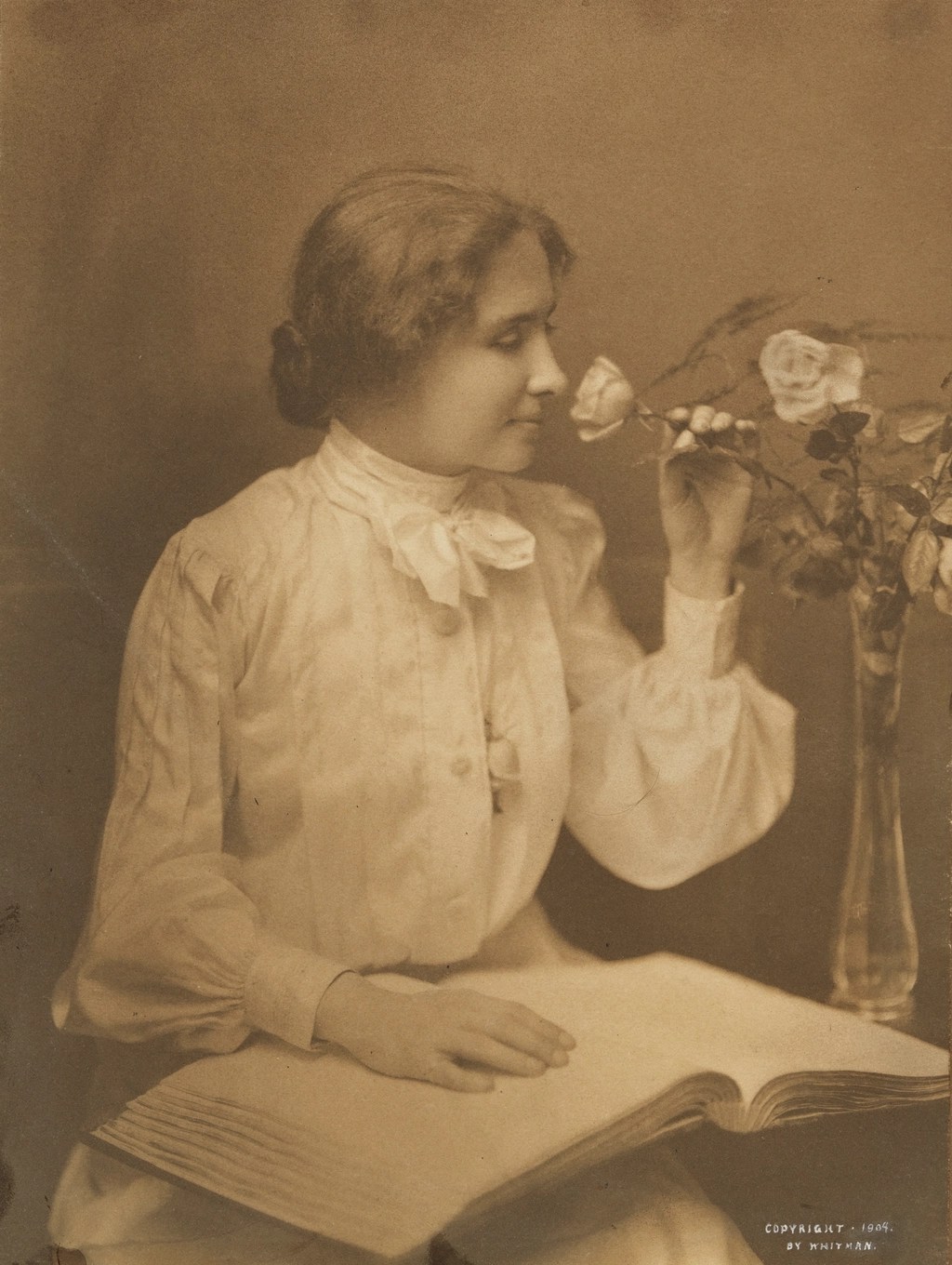
Perhaps there is a way. Perhaps not. But I must strive, at least, to remember Helen Keller’s words, these taken from her open letter in response to Nazi book burnings in Germany on May 9, 1933: “History has taught you nothing if you think you can kill ideas. Tyrants have tried to do that often before, and the ideas have risen up in their might and destroyed them. . .You can burn my books and the books of the best minds in Europe, but the ideas in them have seeped through a million channels and will continue to quicken other minds.”
If Helen Keller believed that ideas and hopes have always “seeped through a million channels,” who am I to deny it? Might not a few of those ideas and hopes, and more likely a multitude, have made their way to us now at the dawning of the year 2025? Might not they sustain us, quicken our minds, and help us find a way out of our narrow places and into the light?
I finished several books recently, one of which I had been reading for months in between other, less hefty titles. The hefty one is an older release (c1987), WWII historical fiction, Marge Piercy’s Gone to Soldiers. A wonderful book—rich in authentic detail—an amazing amount of research had to have gone into this devastating and sweeping novel. Having written two (as yet unpublished) WWII era novels, myself, I am beyond impressed with everything Piercy brings to life here.
Gone to Soldiers tells the stories of ten men and women who served in America, Europe, and the Pacific in vastly different ways: a war correspondent, an intelligence office for the OSS, a Japanese code breaker, a Women’s Airforce Service Pilot, an artist who fights with the Resistance in France, a woman who leads Jewish children to safety over the Pyrenees, a Marine struggling to stay alive in the Pacific, a Jewish teen from Paris sent to America before France fell, and her American cousin.
I have read a lot of WWII and Holocaust related fiction and nonfiction over the years, but somehow I missed this one. My brilliant friend, Sandy, sent me a copy, and I am so glad she did. It is not an easy book to read. Many of the scenes are incredibly vivid and tragic. Some of them were known to me from other sources, but a couple of them depicted battles or situations of which I was not aware.
I was particularly affected by the scenes in the Pacific, I believe, because my father served in the Pacific theatre, but talked about it so little that I never had a clear picture of what he went through. This book made me more aware of the horror he faced and makes me want to know more about his service.
I recommend Gone to Soldiers for its unblinking portrayal of the realities of war, ignorance, prejudice, love, and loss. It is an important book for men and women who seek to understand and remember our shared history—to mourn and honor those lost, to refuse to fall back into dangerous patterns of racism, prejudice, and misogyny, and to continue to work toward the vision of a safe, equitable, and free land for everyone.
“TODAY THE GUNS ARE SILENT. A GREAT TRAGEDY HAS ENDED. A GREAT VICTORY HAS BEEN WON. THE SKIES NO LONGER RAIN DEATH – THE SEAS BEAR ONLY COMMERCE – MEN EVERYWHERE WALK UPRIGHT IN THE SUNLIGHT. THE ENTIRE WORLD IS QUIETLY AT PEACE.”
GENERAL DOUGLAS MACARTHUR
Radio address to the American people from the USS Missouri, following the Japanese surrender ceremony, September 2, 1945 (FROM WWW.NPS.GOV)
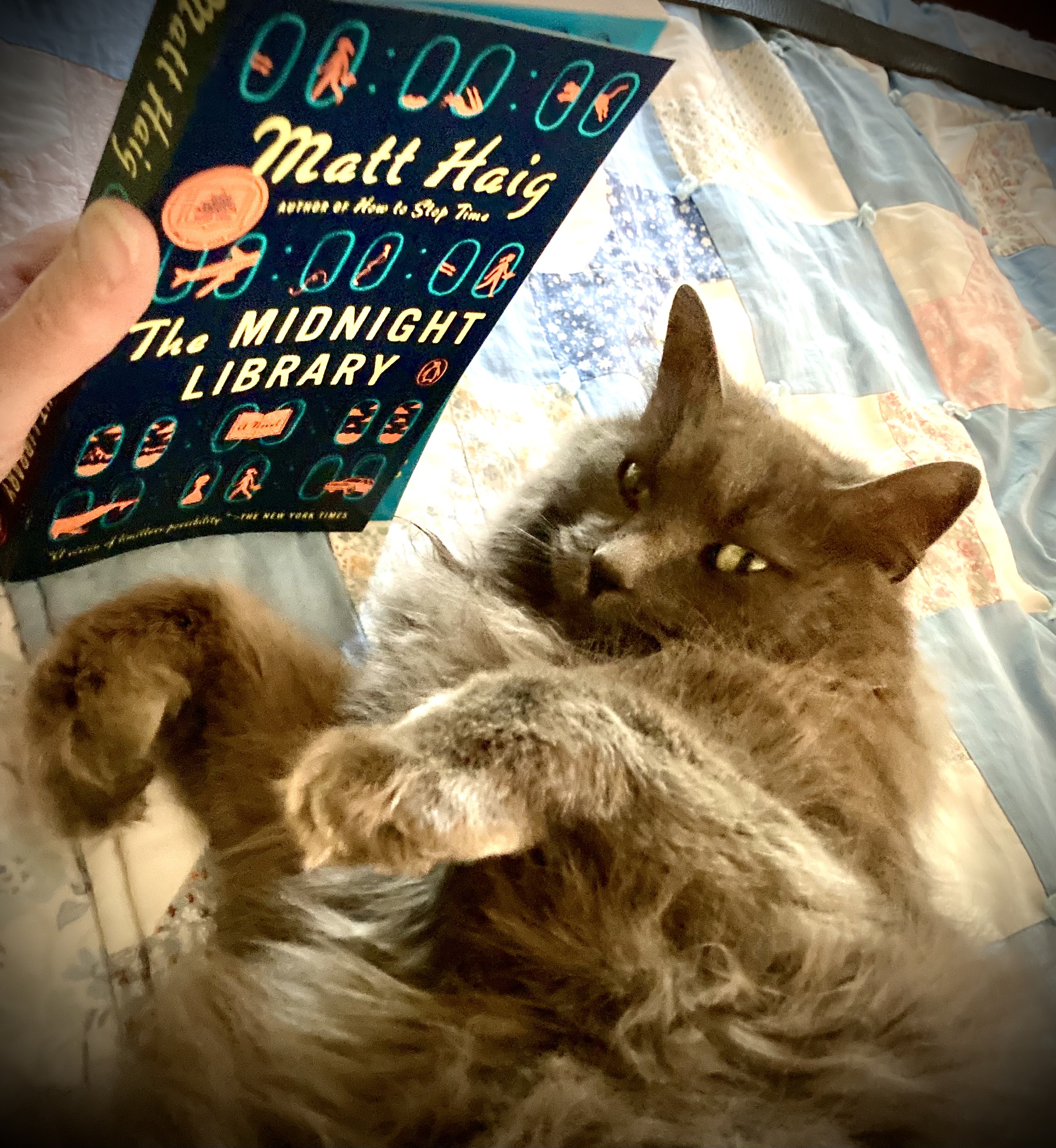
Hello, Readers! I just finished The Midnight Library and wanted to linger over it a while longer. One way to preserve and examine a recent experience is to write about it. Another way would be to get together with my friends at the Austin Ladies Book Club, but it’s been a busy summer and we are on hiatus. Here then, is my short take on Matt Haig’s “whimsical” novel (as The Washington Post aptly calls it).
It’s an intriguing little book, chockful of tiny little chapters, each one the piece of a puzzle containing alternate lives for our damaged, yet clever and likable heroine, Nora Seed. It’s midnight, and as Nora’s consciousness flickers between life and death, a wise and kind librarian directs Nora to endless books of possibilities—the myriad different paths her choices may have led her, and may lead her still.
This is a puzzle many of us have played in our minds, and often, as in The Midnight Library, we move these pieces around in the wee hours of the night.
Imagine if I had… What if I hadn’t… If only I could go back and change…
Regrets. Lost opportunities.
Shame.
Like Nora Seed, I’ve had plenty of these, and being the imperfect human I am, I continue to accrue new ones regularly. It can be a heavy load. The nights can be very dark.
Sometimes, a book can help. Some night soon when I drift off to sleep, perhaps I will find myself in a magic library like Nora’s. After all, I often have vivid dreams where things I experience in my waking hours revisit me in interesting and revealing ways (sometimes horrifying ways, too, but this isn’t that kind of book, thank goodness). So it could happen. Maybe tonight.
The Midnight Library is an obvious win-win for me, the lady lucky enough to run the local library and the lady who finds reading and writing endlessly captivating. It is wonderful for all the right reasons. Fun, and funny, too. Sweet, sad, insightful, and smart—it’s a little volume that may just lighten your heart.
"Two roads diverged in a wood and I - I took the one less traveled by, and that has made all the difference" With those 22 words, Robert Frost concisely summarized my life. The road I chose has been rift with rabbit trails which, more oft than not, my innate impulsive, adventurous spirit couldn’t resist exploring. Therein lies my life's greatest joys and sorrows . . . triumphs and trails. Such were my yesterdays, now buried in the past. The future owns all my unknown tomorrows. Today alone is God's gift to embrace, explore and enjoy. Perhaps Amy Charmichael penned my life’s credo . . . "Love to live, live to love" After 8 decades I've finally begun to grasp the serene simplicity of Amy's 6 words which, when truly embraced, convey tranquil comfort, soul soothing joy, and mystical peace. I’m truly blessed to still be able to "Love to live" wandering through the wilderness and climbing among my Creator’s majestic mountain cathedrals, astounded in wonder by its utter magnificence. "Love to live" is my portion to joyfully grasp with both hands each new day. "Live to love" is my portion to share with open hands each new day. My prayer is amidst my musings and ‘creationscapes’ my camera captures, someone may glimpse a "Love to live, live to love" moment that will brighten their day. Keep Looking Up ^ . . . His Best is Yet to Come! Fred D





























We are So Far Gone
Jess Walter’s latest novel tells the story of Rhys Kinnick, a sad-hearted journalist who punches his son-in-law in the face at Thanksgiving, throws his cell phone out his car window, drops out of society, and goes off to live in the forest. The experience of reading So Far Gone reminded me of the not dissimilar experience of watching a Coen brothers movie such as The Big Lebowski or Fargo—odd ball characters, extreme situations, violence, and humor—often jumbled up together in the same scenes—in an overall story that somehow also manages to convey intelligence and love.
Walters is a master at building complicated characters in vivid, precise strokes. The characters in So Far Gone range from the struggling grandfather protagonist, to his charming grandchildren, his confused daughter, a group of religious zealot gun-toting conspiracy theorists, a bipolar retired cop, an old girlfriend with major attitude, his loyal friends Joanie and Brian, and other colorful characters Rhys meets along the way.
It’s a story about a crumbling America, about people lost and found, a world under siege, and ultimately about small miracles of healing magic fashioned by family and friendship. I found it refreshing, and touching, funny, sometimes outrageous, disturbing . . . and also an interesting look at the way some of us old dreamers and staunch believers in the ideals of fairness, justice, and a better future for all are feeling about and reacting to the twisted reality we now see laid out before us. So Far Gone is the perfect title for a book that describes us, now, today.
Share this:
18 Comments
Filed under Authors, Books, Commentary, Reading
Tagged as Book Review, Fiction