Monthly Archives: October 2026

Creativity, Confidence, and Growing Your Soul

Photo by Samer Daboul on Pexels.com

According to American novelist, Kurt Vonnegut, “Practicing an art, no matter how well or badly, is a way to make your soul grow, for heaven’s sake.” I agree with him, because I have experienced it personally nearly every time I practice my writing, that soul growing. I also especially love that he uses the words practice and well or badly, which allows any earnest effort, good or bad, an equal share of the extraordinary quality he describes as soul growth. The art that we create need not be miraculous itself in order for our hearts and minds and sense of being to blossom and grow. It is the practice of creating art that matters.

For some of us that practice will eventually lead us closer and closer to creating art that we can be proud of, confident in, willing even, to share with others. That is what I’ve been thinking about today. Am I confident enough to share?

Confidence is a very subjective term when it comes to writers, I have found. Personally, I swing between states of certainty that what I’ve written is… Barely passable, like maybe my mom would like it if she were alive, … to This is absolute garbage. Mom would tell me to burn it, … to Well, maybe it might be interesting to one or two people if they happened to have something in common with the protagonist, … to By golly! I think I got that right. I think it would appeal to a large audience, … to What the heck was I thinking? It’s rubbish! It’s good! It’s drivel! It’s brilliant!

And round and round it goes.

So, what does it take to keep going?

A January 6, 2026 article in Psychology Today offers some insight: “Creative confidence is the engine of creativity. But just as in the story of The Little Engine that Could, the Yes, I can conviction does not have to be a certainty. The Little Engine did not chug over the mountain with cheerful self-assurance. Rather, it kept repeating, “I think I can” and, after succeeding, concluding with, “I thought I could”. Those statements are ones of trust sufficient to start the Engine, get it going, and gain momentum.”

Photo by Natali Smirnova on Pexels.com

“When we get going, we can build creative confidence by reflecting on our own progress, identifying with others who become role models, getting encouragement along the way, and noticing positive feelings of small successes. Then, the creative confidence we build becomes a resource for the future.” How to Build Creative Confidence | Psychology Today

I identify with the Little Engine every bit as much today as I did when my mom read me the story when I was a little girl.
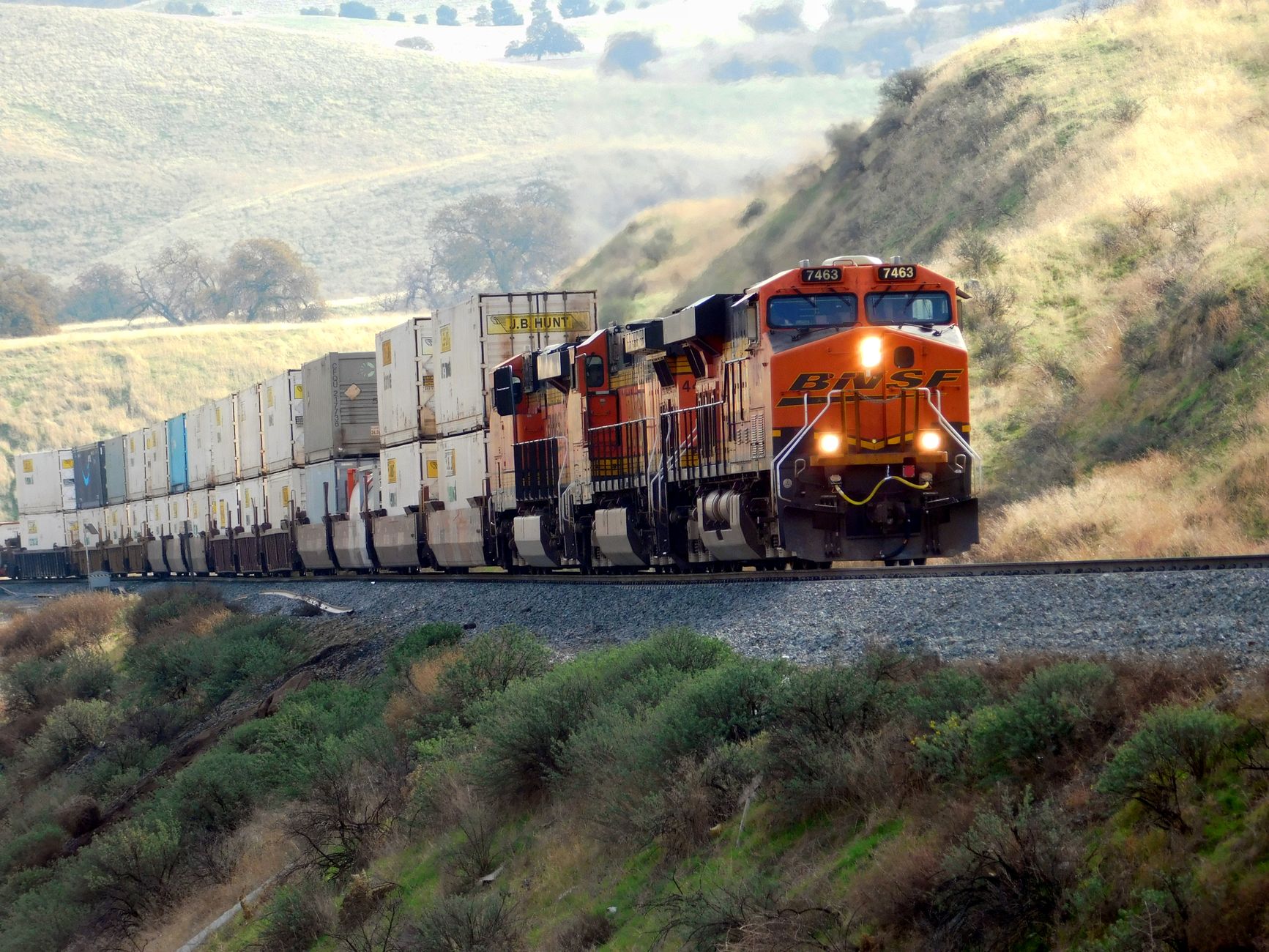
Photo by Bill Silveira on Pexels.com

If you’ve been here before you may remember my mentioning my manuscript and that it was with an editor. This was actually the second complete professional edit for this particular manuscript. The first one I initiated and paid for prior to sending out my last round of queries. I had been querying agents and then small publishers for over two years and hadn’t gotten a solid offer, so I decided the investment was necessary. I enjoyed working with my editor, who addressed both developmental issues and regular copy editing, and the manuscript definitely came out the better for our collaboration. I felt it was ready to get back out there after that, and began submitting it with renewed confidence.

And then I got an offer to publish. I haven’t spoken of it much, partly because I think I doubted it would go further. Something, I expected, would surely go wrong. And it did, in a way, right at the beginning, because the publisher was new and had gotten a poor review which scared me, and also because an editor I spoke to about it warned me. A traditional publisher never asks for payment from the author, she said, and I had read that over and over for years and knew it to be true. Yet the publisher who offered to publish my book did ask for money. They are a new press and although they take care of all of the other costs associated with publishing a book—the printing, cover art, formatting, ISBN, printing, distribution, and marketing (minimal as that is)—they wanted me to pay for another editor (their preferred editor) to go over it before sending me a contract.

Hybrid publishers are different. Their business structure is such that the author and the publisher both invest in the book project. There are wonderful hybrid publishers out there, but I found that I couldn’t afford any of them. Self-publishing was not something I seriously considered. I looked at it, but knowing my poor business skill set, my horror of numbers and marketing and technology—well, let’s just say I knew better than to try. Plus, I would have always wondered if I published it myself: Was it really any good? At least with a reputable hybrid publisher or a traditional publishing house, I would know that someone believed in my work.

But this new publishing house, was it truly a serious traditional business?

I weighed my options, which were nil. I thought about the number of years I’d worked on the manuscript. The number of years I’d spent writing other manuscripts and taking courses and studying creative writing. The cost of my MFA. I thought about my age.

In the end, I signed their contract.

I’m now 200 pages in on my final reading after their editor went through it, and when I finish and send it back in, it will be in their hands entirely.

I don’t know how long the process will take, but if all goes well, I’ll be making an announcement to all of you one day about the manuscript finally metamorphosing into a book. If it doesn’t work out, I’ll make an announcement about that, too. Either way, thank you for reading. Thank you for caring. And keep on creating. Don’t forget that “I think I can,” does sometimes turn into “I thought I could.”

Either way, your soul is growing.
Photo by Akil Mazumder on Pexels.com

87 Comments

Filed under Art, Authors, Books, Fiction, Literary Agents, Personal History, Publishing, Reading, Uncategorized, Writing, Writing Advice

Wild Horses

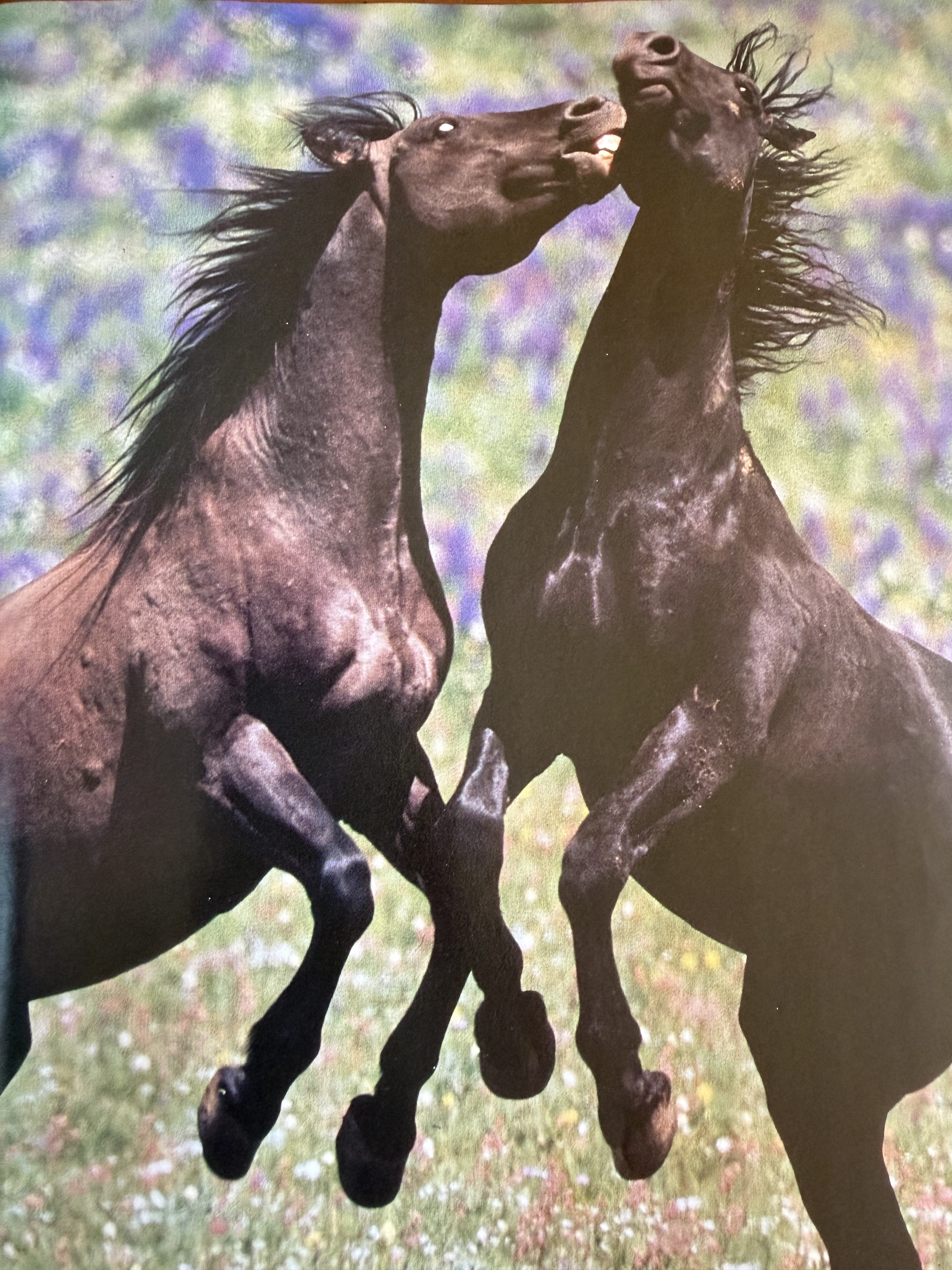
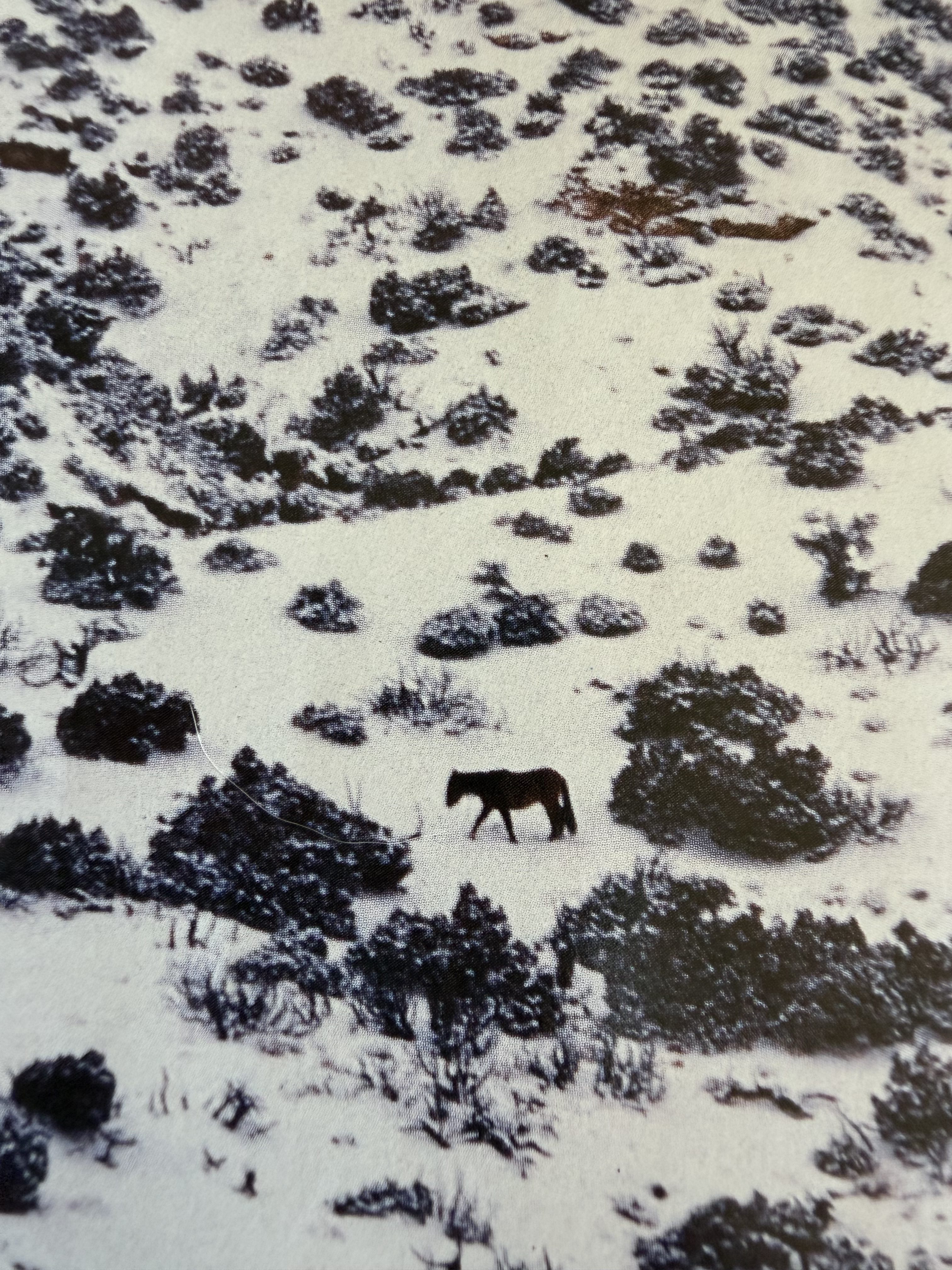
Photograph by Yva Momatiuk & John Eastcott, “Mustangs on the Move” Smithsonian, November 1997

Last Sunday, in honor of St. Francis of Assisi and because it was Holy Trinity Episcopal Church’s and the Almost Home Animal Shelter’s annual Blessing of the Animals Day, we sang a song in church, “All Things Bright and Beautiful.” The song “is an Anglican hymn, also sung in many other Christian denominations. The words are by Cecil Frances Alexander and were first published in her Hymns for Little Children of 1848.” All Things Bright and Beautiful – Wikipedia.

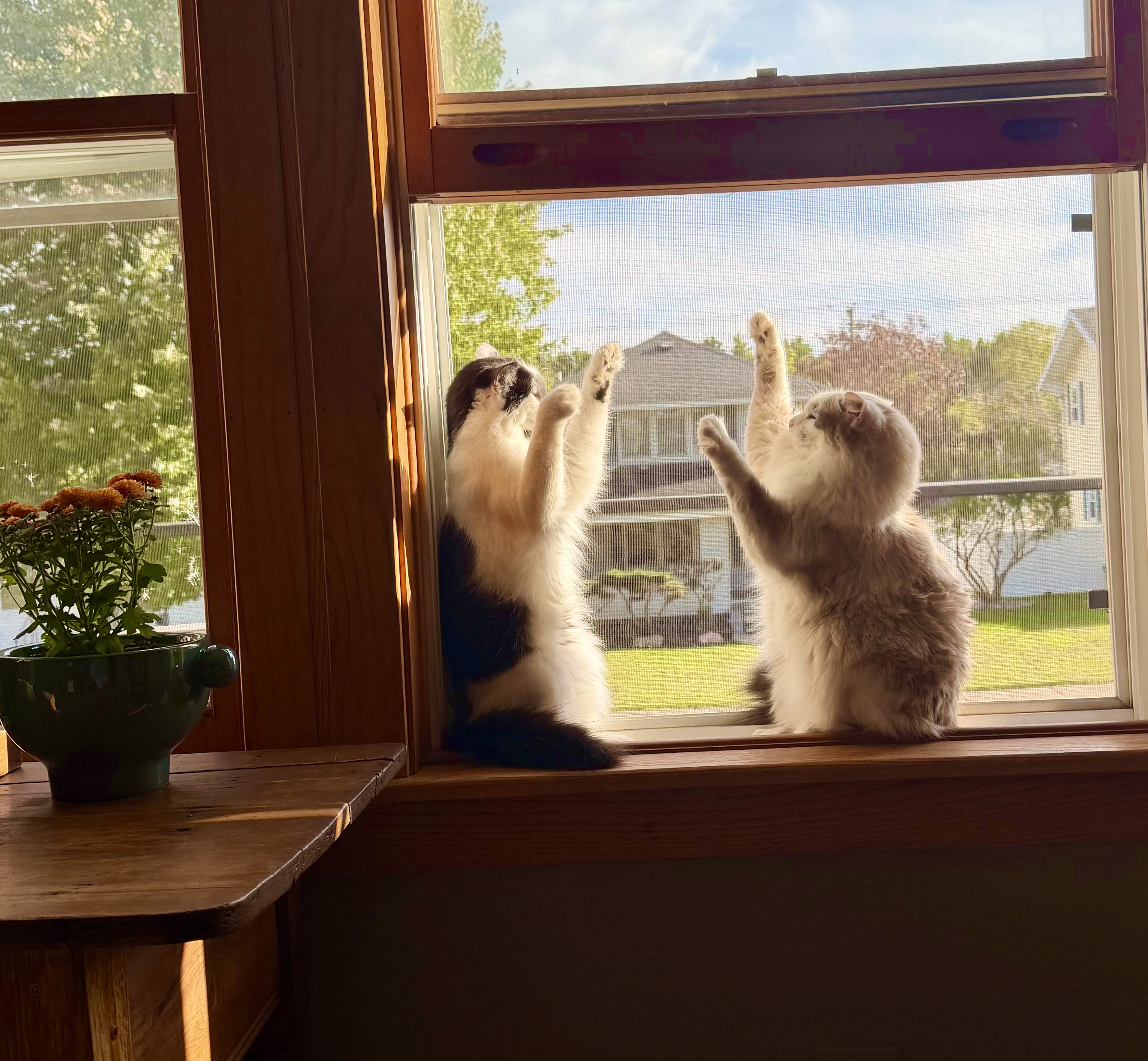
Scout and Gremlin, our own wild kittens of Nevada now domesticated in the U.P. I couldn’t help but notice the similarity to the Mustangs. (: My photo.

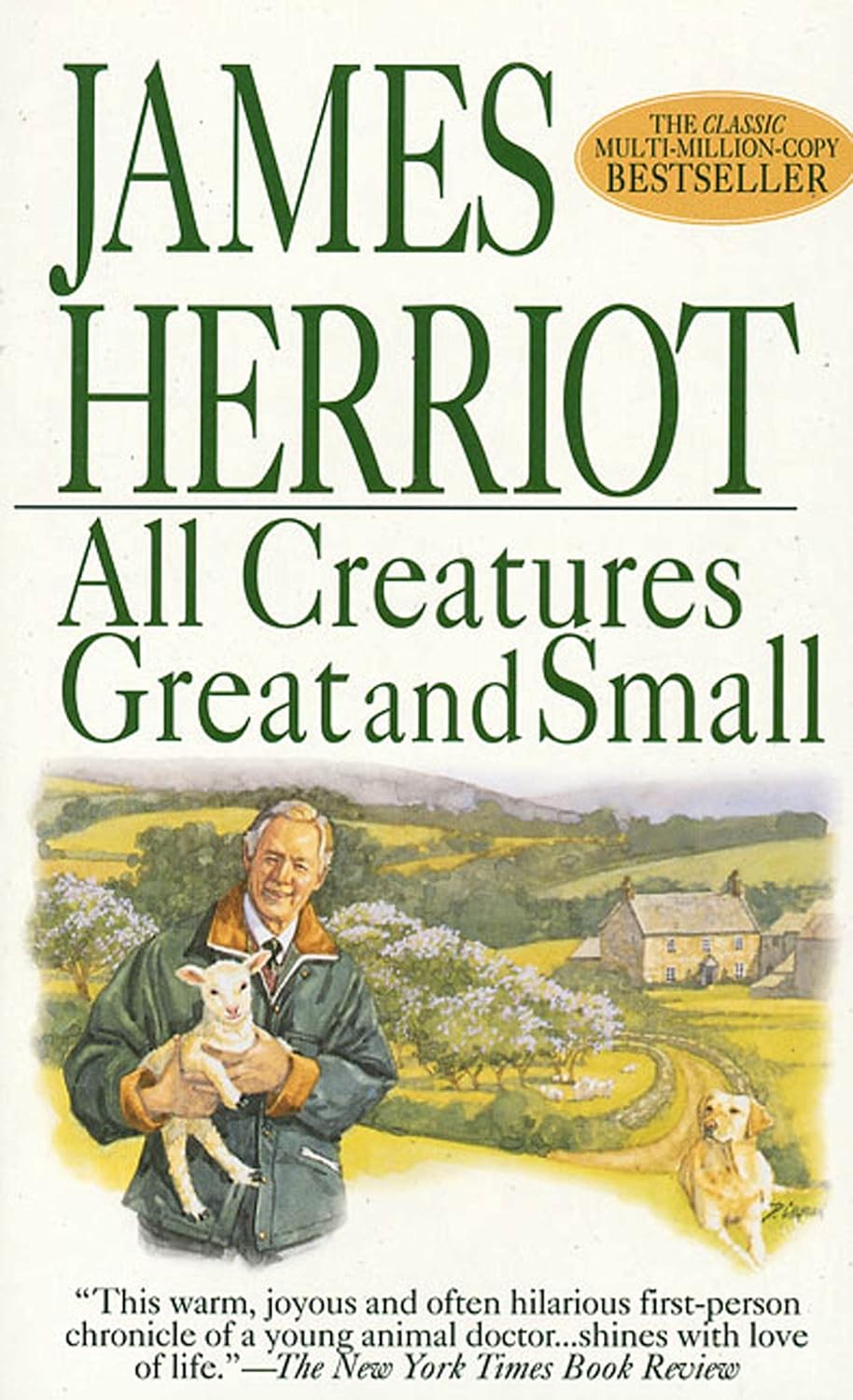
Not having been reared by churchgoers, my first reference to these words came from the wonderful James Herriot books I read as a teen, beginning with All Creatures Great and Small. Later, I learned there was a song. Yes, I was woefully undereducated! Anyway, after church I couldn’t stop thinking about the song, and about all the beautiful things in the world, and I went online to listen to various versions.

And then my mind and heart and writer’s brain led me back to Nevada, a state where I lived briefly as a child and then again from the autumn of 2020 until the spring of 2026, a state filled with many things bright and beautiful.

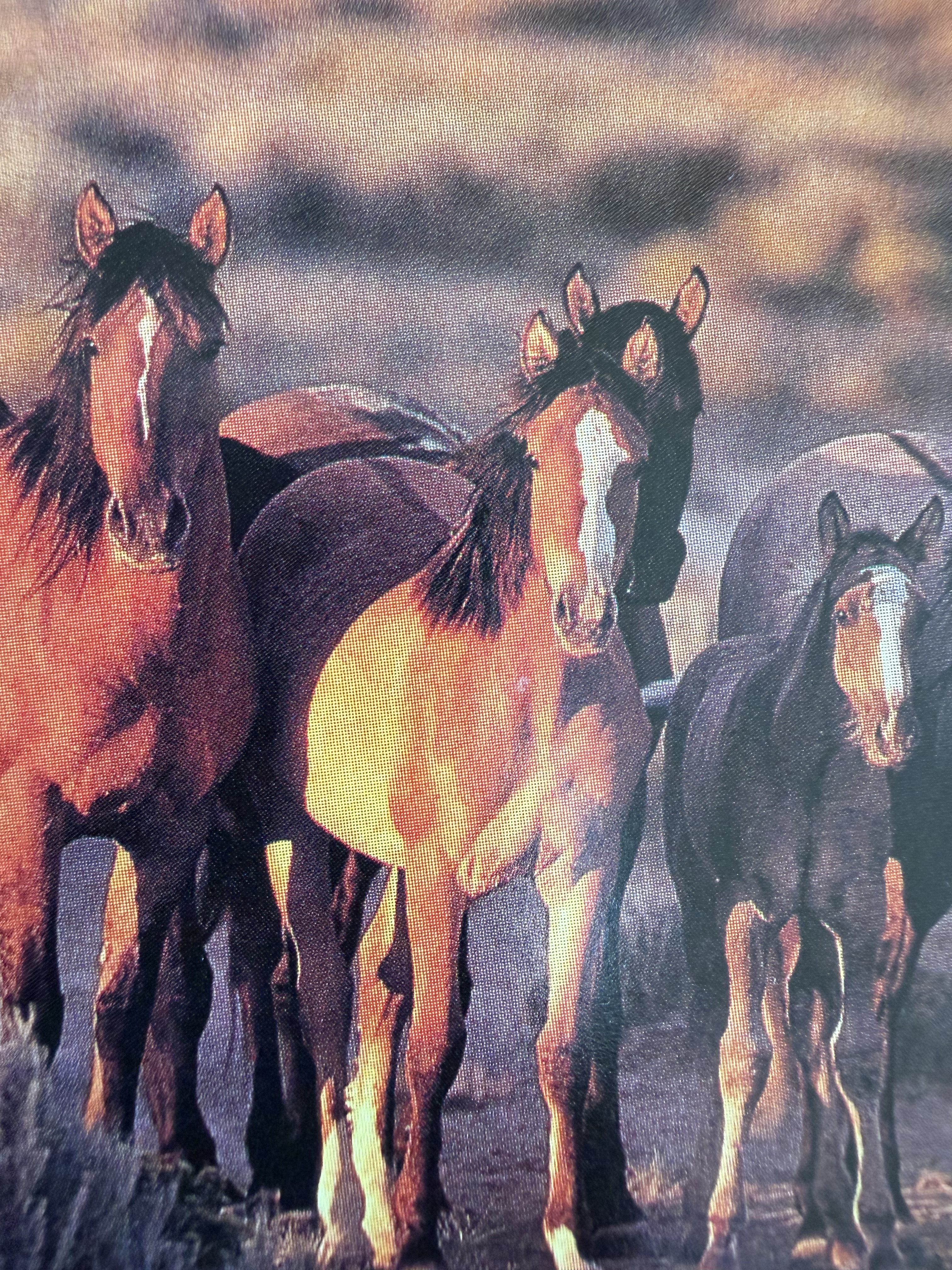
Living in Nevada, I often saw wild horses. I will never forget my first sight of them, a band of maybe nine or ten, their glossy dark flanks shining in the sun, tails and manes flying as they raced along the edge of the Truckee River down in the canyon below the freeway. I was on my way to my new home, still a part of the crowd of humans in the vehicles speeding away from Reno, going on to our disparate destinations, while just below, past a short guardrail and down a steep embankment, water sparkled, aspens glowed golden in the autumn sun, and the mustangs ran, as if in another world, a parallel universe. I was awestruck.

I moved to a remote area, far away from any freeway, and spotting wild horses became more familiar, though I would never call it common. The sight of them always caught me, tugged at me, seemed sacred. Yet, I soon learned that these horses are not entirely free. A number of them are rounded up by the Bureau of Land Management each year in an effort, according to the BLM, “to protect the health of the animals and health of our nation’s public rangelands. In some locations, the BLM also uses birth control to slow the growth of wild horse herds. Absent management and natural predators, wild horse herds can double in just 4-5 years and quickly outgrow the ability of the land to support them” Nevada – Gathers & Removals | Bureau of Land Management.

Photograph by Yva Momatiuk & John Eastcott, “Mustangs on the Move” Smithsonian November 1997

According to The Cloud Foundation, a Colorado non-profit that aims to protect wild herds, The BLM’s 2026 roundup plan targeted 14,830 wild horses and burros for removal, The Cloud Foundation. What happens during and after these roundups is beyond my ability to describe. There are many good sources of information on this topic online and through libraries. What I at first saw as a kindness to the animals I eventually came to see as something much more complex, and even, in its execution and outcome, cruel. I do not claim expertise.

Additionally, I learned that wild horses were not universally revered. Because I regarded them with awe, I expected everyone else would, too. Sort of like when a group of people are gathered together on a beach at sunset, you just assume everyone there appreciates the beautiful display in some similar fashion to the way you do. That’s why they are all taking pictures, right? It seems universal.

I suppose I should have known better, but I am often taken by surprise. I was absolutely stunned to learn that some people, people who loved the wild and lightly populated land of central Nevada—probably more than I as a newcomer ever could–did not see the breathtaking beauty of the wild horses, but instead saw “trash” animals, “no good for anything.” Or so I was told by an old cowboy not long after I arrived. I don’t know if his was a widely held opinion in the area. Frankly, that conversation so saddened me that I didn’t want to know.

Photograph by Yva Momatiuk & John Eastcott, “Mustangs on the Move” Smithsonian, November 1997

I did some reading and came to the conclusion that, in this, as in so many other aspects, humanity is capable of great love, and also of perfect disdain. While some people care deeply about wildlife, others either take it for granted, see it as a hindrance, want to own it, dominate it, tame it, eat it, turn it into a trophy—or even downright despise it. I don’t understand it, don’t have the perspective needed to grasp it, because, some might say, I’ve never had to compete with another creature for land or food or water. Maybe that’s it. I don’t know.

When it comes to wild horses, I still wonder how anyone could not care about such gorgeous creatures, creatures whose only wish is to live? What other value do they need? What value does any creature need? The horse, the bear, the deer, the eagle, the salmon? And what value do flowers need? Or trees?

Sometimes life hurts. You may see the beauty around you with clear eyes, and that sustains you. I hope you do. Usually, these days, for me, that means noticing the splendor of nature. It is in nature that I seek solace, and also renewal. You may appreciate the beauty you find in nature, or in your child’s eyes, or in a piece of music, or a work of art, and revere it—yet still, you weep as I have. And sometimes, it is beauty itself that sparks the weeping. For me, today as I write this, the beauty I weep for is the beauty of the horses.
Here is a link to one of the Tabernacle Choir’s performances of “All Things Bright and Beautiful.” I hope you enjoy it.

And the lyrics:


All things bright and beautiful,
All creatures great and small,
All things wise and wonderful,
The Lord God made them all.

Each little flower that opens,
Each little bird that sings,
He made their glowing colours,
He made their tiny wings.
 

The rich man in his castle,
The poor man at his gate,
God made them, high or lowly,
And ordered their estate.

The purple-headed mountain,
The river running by,
The sunset and the morning,
That brightens up the sky.

The cold wind in the winter,
The pleasant summer sun,
The ripe fruits in the garden,−
He made them every one:

The tall trees in the greenwood,
The meadows where we play,
The rushes by the water,
We gather every day;−

He gave us eyes to see them,
And lips that we might tell,
How great is God Almighty,
Who has made all things well.

All things bright …

(Amen)

The United Church of Canada includes a fourth verse:[14]

The rocky mountain splendour,
The lone wolf’s haunting call,
The 
Great Lakes and the prairies,
The forest in the fall.

And here I am back in The Great Lakes, in the forest, in the fall.

Thank you, Lord God, for them all.

55 Comments

Filed under Gratitude, Nature, Personal History, Preservation, Uncategorized, Wildlife, Worship