
Tatiana De Rosnay’s Historical Fiction Novel, Sarah’s Key, A Review
Sarah’s Key tells the intertwined stories of two fictional inhabitants of Paris; Sarah, a ten-year-old girl caught in the terror of Nazi-occupied France, an innocent Jewish child desperate to protect her little brother, and Julia, the journalist destined to discover Sarah’s story sixty years later. Though Sarah and Julia are fictional characters, the situations of the story are sadly all too real.
Before reading Sarah’s Key, I hadn’t known of the Velodrome d’Hiver roundup, which was ordered by Nazis, and carried out by French police officers, but as with all events relating to this terrible time of human history, the story is by equal measure unimaginably catastrophic and yet characteristically illustrative of the horrors of the systematic application of the NAZI party’s stated objective to eradicate Jews in what they termed “A Final Solution to the Jewish Question” at the Wannsee Conference on January 20, 1942.
The Velodrome d’Hiver roundup in Paris, France is one example of the implementation of that horrific policy.
Here is a brief summary of the real events:
“Beginning in the early hours of July 16 [1942], French police rounded up thousands of men, women, and children throughout Paris. By the end of the day, the police had taken 2,573 men, 5,165 women, and 3,625 children from their homes. The roundup continued the following day, but with a much smaller number of arrests.
Approximately 6,000 of those rounded up were immediately transported to Drancy, in the northern suburbs of Paris. Drancy was at that point a transit camp for Jews being deported from France. The rest of the arrestees were detained at the Vélodrome d’Hiver (Winter Cycling Track), an indoor sporting arena in Paris’s fifteenth arrondissement.
After five days, Jews incarcerated at the Vél d’Hiv were transferred to other transit camps outside Paris. At Drancy, Pithiviers, and Beaune-la-Rolande, French police guarded these men, women, and children until transport to concentration camps and killing centers in the east. At the end of July, the remaining adults were separated from their children and deported to Auschwitz.
Over 3,000 children remained interned without their parents until they were deported, among adult strangers, to Auschwitz as well.
German authorities continued the deportations of Jews from French soil until August 1944.
In all, some 77,000 Jews living on French territory perished in concentration camps and killing centers—the overwhelming majority of them at Auschwitz.”
From: United States Holocaust Memorial Museum, “The Velodrome D’Hiver (Vel d’ Hiv) Roundup”. Holocaust Encyclopedia. https://encyclopedia.ushmm.org/content/en/article/the-velodrome-dhiver-vel-dhiv-roundup#july-2. Accessed on May 20, 2023.
De Rosnay’s novel expertly weaves the stories of her two heroines, as one suffers through the event and the other learns of it in a surprisingly intimate way many years later. This book reminds me of the importance of historical scholarship—true scholarship that doesn’t shy away from the painful realities of the past—and of the absolute necessity of bearing witness to the suffering of the innocent—as a way to honor them, of course, and also as a way to teach each new generation the lessons that seem so easy to forget, so fragile, and always under attack. We need to hear the stories. We cannot be allowed to forget.
Sarah’s Key is one of those books that takes us on an unforgettable journey, touches our hearts and souls, and joins us to the hearts and souls of others who were forced from this world before their natural times, and in terrible ways. It is both deeply dark and sweetly hopeful. A strange truth about literature, and part of its magic, is that you can enjoy it even while it is hurting you. Sarah’s Key is worth it.
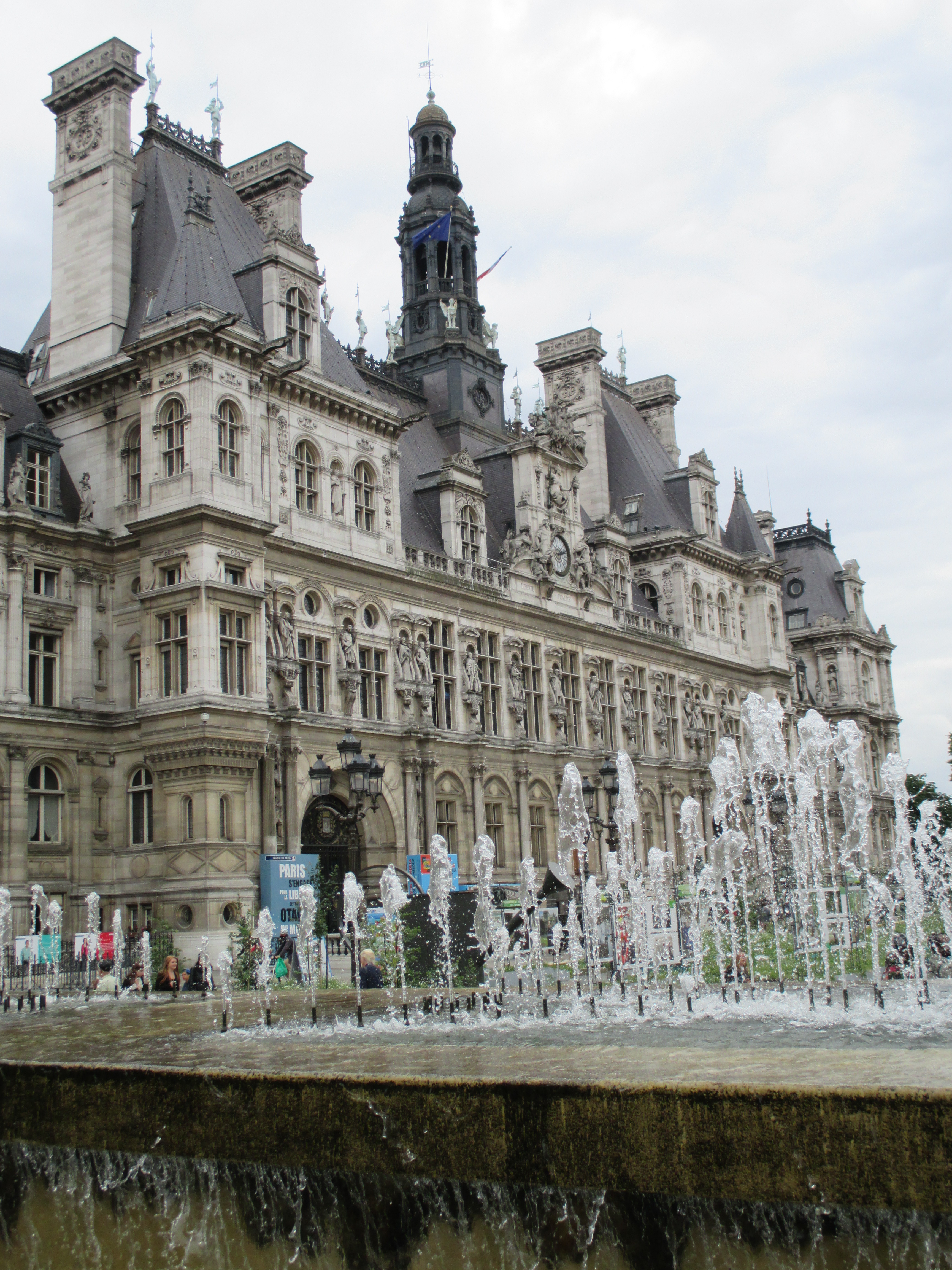
Paris Photos by Lori Pohlman


















 LakeArrowheadLadyWriter
Will Definately have to read it.
LikeLiked by 2 people
You put everything into words so beautifully. I can feel your anguish as you write. Keep on informing us of what you see and feel. No one does it better.
LikeLiked by 2 people
Thank you, Sandra. Your opinion means so much. I always love your reading suggestions.
LikeLike
Well written,history still has our attention. Keep up with your writing skills, thanks
LikeLiked by 2 people
this sounds wonderful. thanks for letting us know!
LikeLiked by 1 person
It is truly well written and worth reading.
LikeLike