
The Journey Begins When You Open the Door
You’ve just been given a cancer diagnosis. Often, this news comes as a complete and unexpected blow to you, as it did for me. Other times, as it may have done for you, it comes after nervous days, weeks, or months of wondering what’s wrong, suspecting the worst, praying that it isn’t, going to doctors, and hoping the cough or the pain or the patch of scaly skin you have is anything—anything—but cancer.
Whichever way it happens, anyone who hears the words, “You have caner,” is in for a universally brain numbing and heart stopping experience. After those words, you know your life is suddenly changed in ways you fear and do not understand.
Here’s what I want you to know: many others have been through this, consequently, you are not alone. There are some simple things you can do to soften the shock, and to construct a small space of comfort to hold onto. You will need to prepare.
In July of 2011, I walked out of my surgeon’s office smiling bravely, barely feeling the ground beneath me, holding my five year old granddaughter’s tiny hand, and wondering if I was imagining what I had just been told. I had gone to the post op appointment feeling giddy. Just having survived and quickly recovered from an emergency appendectomy, I felt I had undergone nothing more than a small hiccup, an interruption that was going away as quickly as it had arrived, leaving me stronger than ever. After all, I had done remarkably well. I was already back to running around with my grandkids a bare two weeks after surgery. No need to cancel summer babysitting plans, I thought.
That was why I took my granddaughter with me, and how she was sitting right next to me when I heard, not, how beautifully I was doing, but, that the lab had tested my appendix. I had appendiceal cancer, a disease I’d never heard of and soon learned was rare, what is called an “orphan cancer” because so few people contract it that it doesn’t garner much research
Perhaps, like me, you went immediately to see a family member, or maybe called a loved one on the phone. You might have already been in a hospital. In my case, I checked my watch and saw that it was about time for my daughter to get off work, and since her office was in the same building as my surgeon’s, I dropped in on her. I could deliver my granddaughter to her there rather than at home.
“It’s strange,” I said. “The doctor thinks I have cancer.” Thinks, I said. Because how could that be? I’d never even heard of appendiceal cancer. It was too soon for tears, I guess, and definitely too soon for me to come up with a kinder way to inform my daughter. I wasn’t my usual self. Not at all.
My daughter looked at me as if I’d just told her I wasn’t her real mother, or something equally stunning. “It’s all going to be fine,” I said. I hugged her, spun my granddaughter in the air, and said goodbye.
Oddly, I then stopped off at the school where I taught, though it was summer break and I was off. My friend, Alicia, whose birthday concert I had missed a couple of weeks earlier due to my appendectomy, was there teaching summer school. The hallways seemed unfamiliar and I didn’t know many of the kids. I felt like a stranger. It was not even fully one hour since I’d heard my diagnosis, yet I believed I had already been transported into a new life. Suddenly, I wasn’t only a grandmother or a wife or a teacher or a writer, I was a woman with cancer.
It is in that fog-like state that I had to make decisions about treatment, and struggled to maintain the life I’d had just the day before, figuring out new ways to make the most of tomorrow. How would my husband take it? What about my brother, who was ill and living with us. I was his caregiver! You may feel things are happening too fast. They are. While you may have to accept that and many other unpleasant aspects of the journey at the beginning, remember, having cancer does not make you into a victim.
The American Cancer Society says that everyone who has been told they have cancer should immediately be referred to as a survivor. They print out new purple “Survivor” t-shirts every year. The ACS does lots of good things: provide rides for people who need to get to treatments, wigs for those who lose their hair, pump a great deal into research for cancer of all types. A part of me loves that they call me a survivor, but another part, the teacher part, perhaps, thinks: The opposite of victim is survivor. I don’t want to be either of those things. I’m also a teacher of the Holocaust, and I can’t help but think of the Holocaust survivors I’ve known or learned about. My survival is something very different from theirs. And then there is this: Some people find the survivor label to be insensitive in regards to the loved ones of patients who died. Did they not fight hard enough? Were they not brave enough? Though I know this isn’t the intent of the label, I wonder about using it. I do wear the purple shirt when I attend a Relay for Life event, but I’m really not sure I should.
All I know for sure is, You Are Not a Victim!
We all do our best. You may or may not have excellent health insurance. You may or may not live near a state of the art cancer center, such as one of our few national cancer centers in the U.S. Even if you do live near such a place, your insurance may not cover it. You have so much to learn, particularly if your particular kind of cancer is rare. My insurance company sent me to a small clinic about an hour away from my rural home that I’d never heard of. I petitioned for (and won) permission to get an expert opinion at The City of Hope in California. My clinic then used City of Hope’s treatment plan, and I began to relax a bit.
Within hours, if not minutes of diagnosis, you and your caregiver (spouse, parent, friend, or adult child who will sign on to go with you on your arduous journey) will be responsible for learning a new language, becoming an expert medical researcher—tech savvy enough to search and set up informational networks for the other important people in your life… and the list goes on.
Make no mistake about it, a cancer diagnosis means you’re going on a journey, perhaps not to Paris (although that’s not out the realm of possibility!). There might be a really good doctor in Paris, one who is the world’s most renowned specialist in your cancer. Your specialist, and I strongly urge you to find one, could be hundreds, or even thousands of miles away. Wherever you travel, either metaphorically or concretely, you will benefit greatly from a well-stocked gear bag.
Coming Tomorrow: The Gear Bag and All of Its Contents
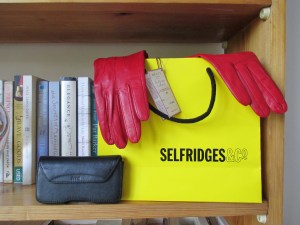
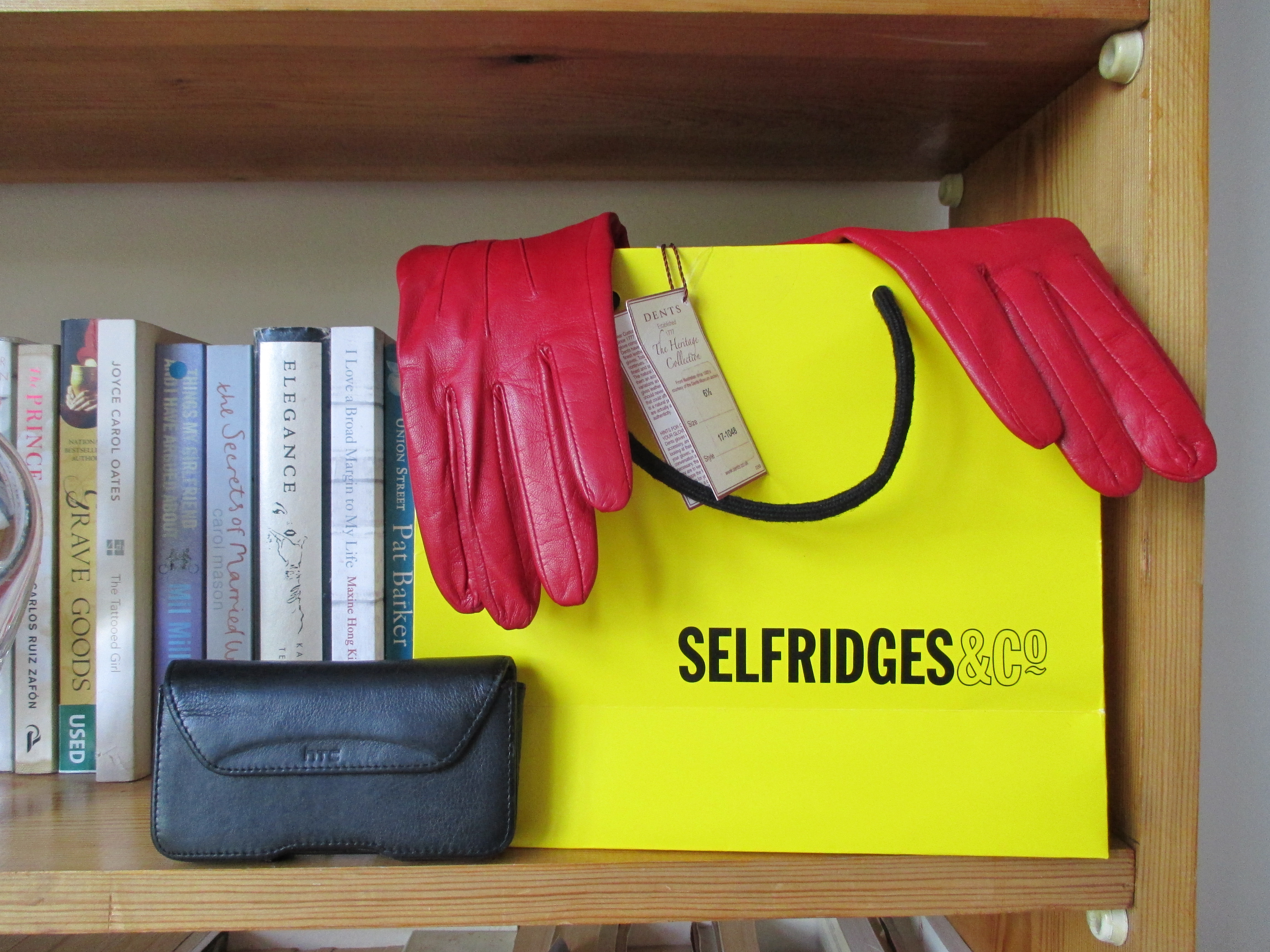
Is this the kind of bag I mean? Well, almost as much fun.













 LakeArrowheadLadyWriter
“Reading with Ghosts” Some thoughts on a post by Jenny Lawson, The Bloggess: “Sometimes tattered and worn = loved” August 9, 2016
Like Jenny, I love used books, books that have a history of relationship with other readers that I can see and hold in my hands. The cover doesn’t need to be in great shape. There should be a name written in long hand somewhere within the first pages. Notes written in the margins. Words, phrases, paragraphs underlined. Exclamation marks, hearts, question marks in the margins. Old shopping lists stuck between the pages. Dedications to lovers, children, grandchildren, friends on the title page. This book reminds me of how very much I love being your mom.
Despite my librarian grandmother, my own library training and teacher training, and my years working in libraries and public schools, I’ve always been much more of a book sharer than a book protector. This doesn’t mean I condone random doodling, especially not of the tasteless variety, or nasty vulgarisms of any sort in any book (and I’ve seen plenty of those, believe me). And I am not advocating writing in any book that you do not own—please, respect all library books, and school texts! But I do appreciate a pithy comment that pertains to the content. I love knowing that I am sharing the experience of reading a particular piece with someone who found something striking enough to comment on right then and there, in the moment.
Jenny Lawson says, “…reading those found books is like reading with ghosts, ones who eagerly point out their favorite passages or share their thoughts or questions in the margins.”
Books that I can remember writing in that are sitting around my house right now include:
Jane Eyre, A Prayer for Owen Meany, The Catcher in the Rye (probably my first!), The Diary of Anne Frank, Man’s Search for Meaning, Teacher Man, Rebecca, Atonement, Prodigal Summer, The Glass Castle, Learning to Walk in the Dark, and lots of poems—“The Raven” comes to mind along with some of Shakespeare’s sonnets. And memorably, the teacher edition of a literature anthology I used in my classroom for many years (not sure if this qualifies as defacing a public school text, but it did raise a few eyebrows during department meetings).
Funny story there. I was told, “That’s not your book! You can’t write in that!” back in 1998 by a wonderful teacher I respected and admired. Even so, I continued to write in the book. I planned on outlasting the book adoption cycle, and I wanted to remember what worked, what went flat, what insights, funny or touching, or what “light bulb” moments were expressed by my kids. When I retired in 2014 a young English teacher retrieved the same teacher anthology from the school library that I had written notes in for years. There hadn’t been a new book adoption in all of those years because the budget was just too tight for the district to purchase a new anthology. This new teacher wrote me a letter. “What a treasure!” she said. “Thank you for writing all of that down.”
A reader after my own heart. A teacher after my own heart. I hope she never forgets to write in the margins.
Share this:
Leave a comment
Filed under Books, Commentary, HIstorical Fiction, Humor, Jenny Lawson's Blog, Literary Fiction, Teacher, Used Books, Writing, Writing Advice
Tagged as Annotating, Humor, Jenny Lawson, Library Books, Reading, School Books, Teacher Anthology, Used Books, Writing