Tag Archives: Nevada

Books Get Me Through The Great Alone

It’s been two weeks since I left Nevada and one week since I arrived at my new Michigan home. All of these days have been solo; I drove alone, I arrived alone to an empty house, I spend my days here alone. There’s a theme building . . . For now!

The Way In

But husband and kitties will be joining me soon.

The Dreaded Cot (I do not love it)
A Lonely Room (but I love it!)

As an introvert, this hasn’t been particularly tough. I love people, but I also love solitude. I just got the internet yesterday, and that’s fun because now I can write and publish my writing more easily. No TV here yet. No furniture to speak of. I have one little lamp table that fit in my car, a folding camp chair, and a cot. That’s it. Everything else will come in the moving van next week. So, what do I do all day?

I clean and I read. Often, at the same time, by listening to audiobooks using the Libby library App. One of the books I’ve enjoyed so far during this extended period of solitude is aptly The Great Alone by Kristin Hannah. It’s a tough book about a tough time and a tough place, but I liked it. Alaska in the 1970s, mental illness, abuse . . . it’s got it all, but it isn’t only that, of course. It’s also a book filled with nostalgia, love, and the awesomeness of nature.

Other books I read either just prior to moving, during the drive, or since my arrival are: We All Live Here, Moyes; Sandwich, Newman; The Secret Book of Flora Lea, Henry; Remain, Spark and Shyamalan; The Missing Half, Flowers and Kiester; and currently, The Island of Sea Women, See. Each book has its merits.

I found both We All Live Here and Sandwich charming and humorous. Both are light, contemporary novels with women protagonists wrestling with life changing events and the love of family.

The Secret Book of Flora Lea took me to one of my favorite historical settings, World War II England, in the countryside and also to London in the 1960s. It’s a delightful book about sisters, families, love, and the importance of stories.

Remain and The Missing Half are mysteries, with Remain being the more entertaining of the two for me. The Missing Half helped pass the time, but Remain’s ghostly love story captivated me at times, including during several memorable scenes that made me shiver.

And now I’m listening to The Island of Sea Women. It’s taken me to a part of the world I know very little about, which I love, because I am learning so much. It’s set in Korea from the story’s beginning in the 1930s and will move through the war years and take me to the present day. It’s about women sea divers (an amazing group of female divers who earn the money for their families while their husbands care for the children), and it’s the story of two friends Mi-ja and Young-sook.   

As you can see, I’ve not been alone, not really, for I’ve been traveling through time and place along with the characters created by the authors of these varied and appealing novels, carried away by their stories. It’s a kind of magic really, the way a reader lives both inside and outside of a book—simultaneously in the room, and also somewhere else far away.

I love this line about reading from Stephen Chbosky from his young adult novel, The Perks of Being a Wallflower:

“Sometimes, I read a book, and I think I am the people in the book.”

Exactly.

33 Comments

Filed under Authors, Books, Commentary, Fiction, HIstorical Fiction, Home, Identity, Literary Fiction, Nature, Personal History, Reading, Uncategorized, Winter, World War II

Dreamy Forest Music and Afternoon Spritzers

My Family Spelling of the Name Has an “E” at the End: Johnstone. (candle/ image courtesy of scotstee.com)

Welcome to Billings, Montana, where I have hunkered down to avoid driving on the Interstate during one of the many reported snowstorms traveling around the US of late. If I had planned better, I would have chosen a cozier hotel to get stuck in, and I would have paid attention to where my husband stored the ice scraper in my fully packed Jeep, and I would have brought socks. And I should have planned better because Nunquam Non Paratus—Never Not Prepared—is the ancient motto of my family. I was raised under the plaid and the crest and the motto, yet here I am, sockless in Billings, Montana (not exactly sockless, but the pair I had on when I left Austin, Nevada several days ago needs a good washing, which I will give it, in the sink with my tiny bottle of shampoo. That might mean I’m a little bit prepared).

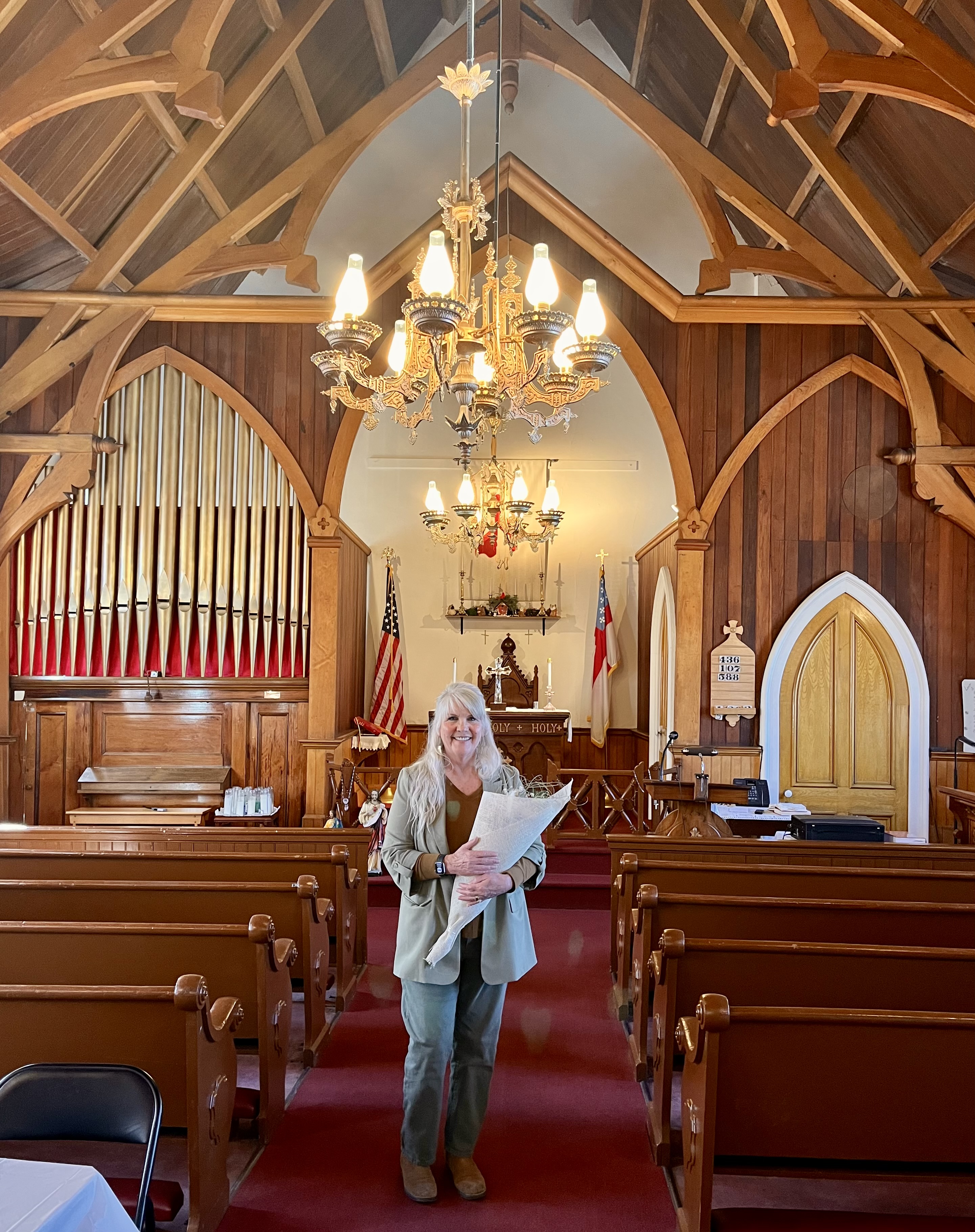
I haven’t driven much since moving to Austin over five years ago, as it is a compact town and I could walk to my part-time library job and to my beautiful historic church. Also, my guy always drives when we go “to town” to get groceries and supplies in Fallon, a mere 112 miles away. Ah, the open road!

As I mentioned in an earlier post though, Mr. P and I have sold our home in Austin and we’re moving to Michigan. Hence my solo interstate journey. Mr. P and his heroic childhood friend will be coming soon with the moving van, but they will be driving tandem (?), I guess, taking turns sleeping and driving and only stopping for gas and food. I left earlier because I am the world’s slowest driver, and I refuse to drive after dark when everything goes all fuzzy and weird, and also, I am not a morning person. So, I don’t get too far within the slow-motion window of light between say, 11 AM and 6 PM (this time of year).
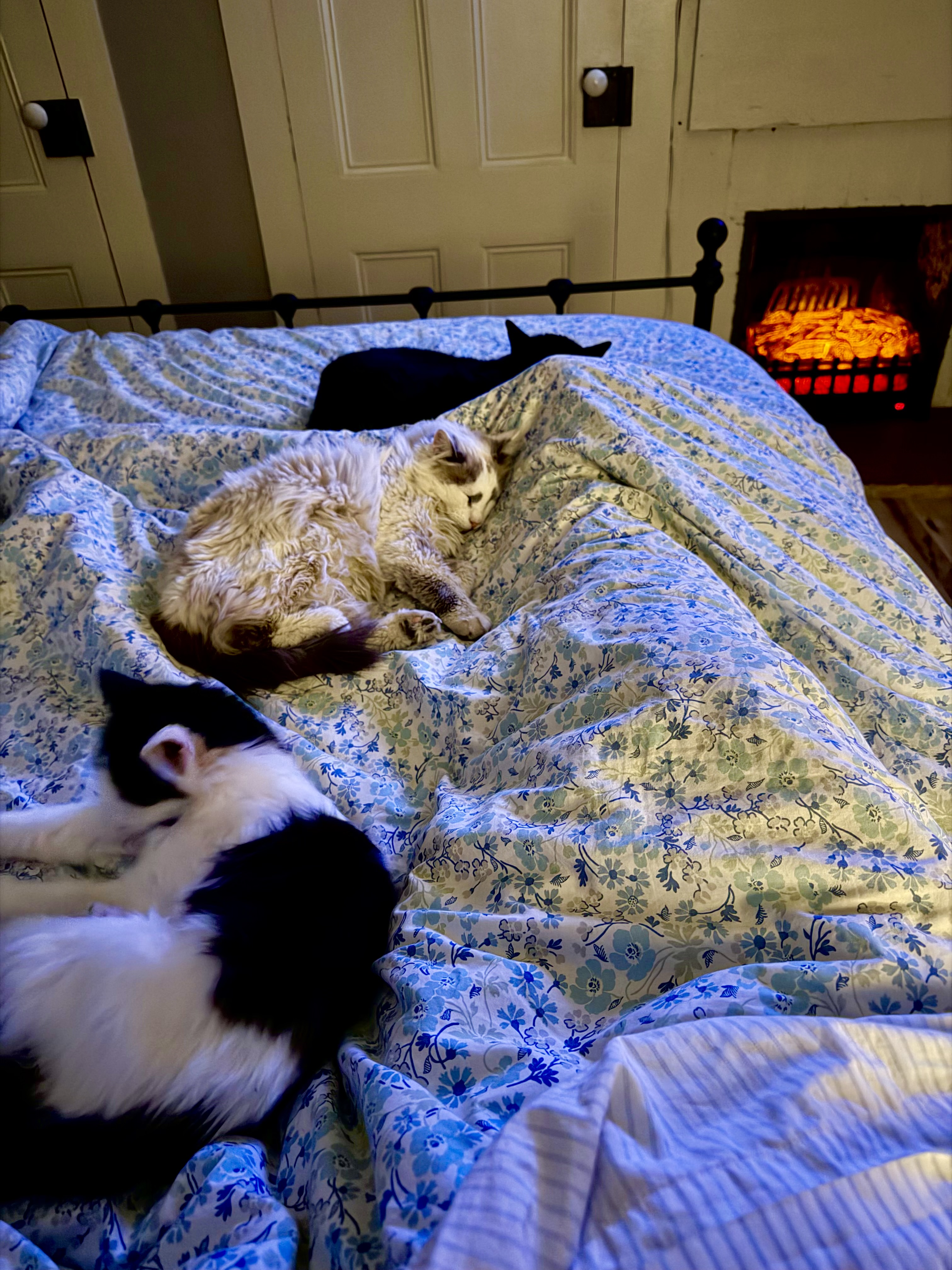
The Kitties Will Be Coming to Michigan Soon!

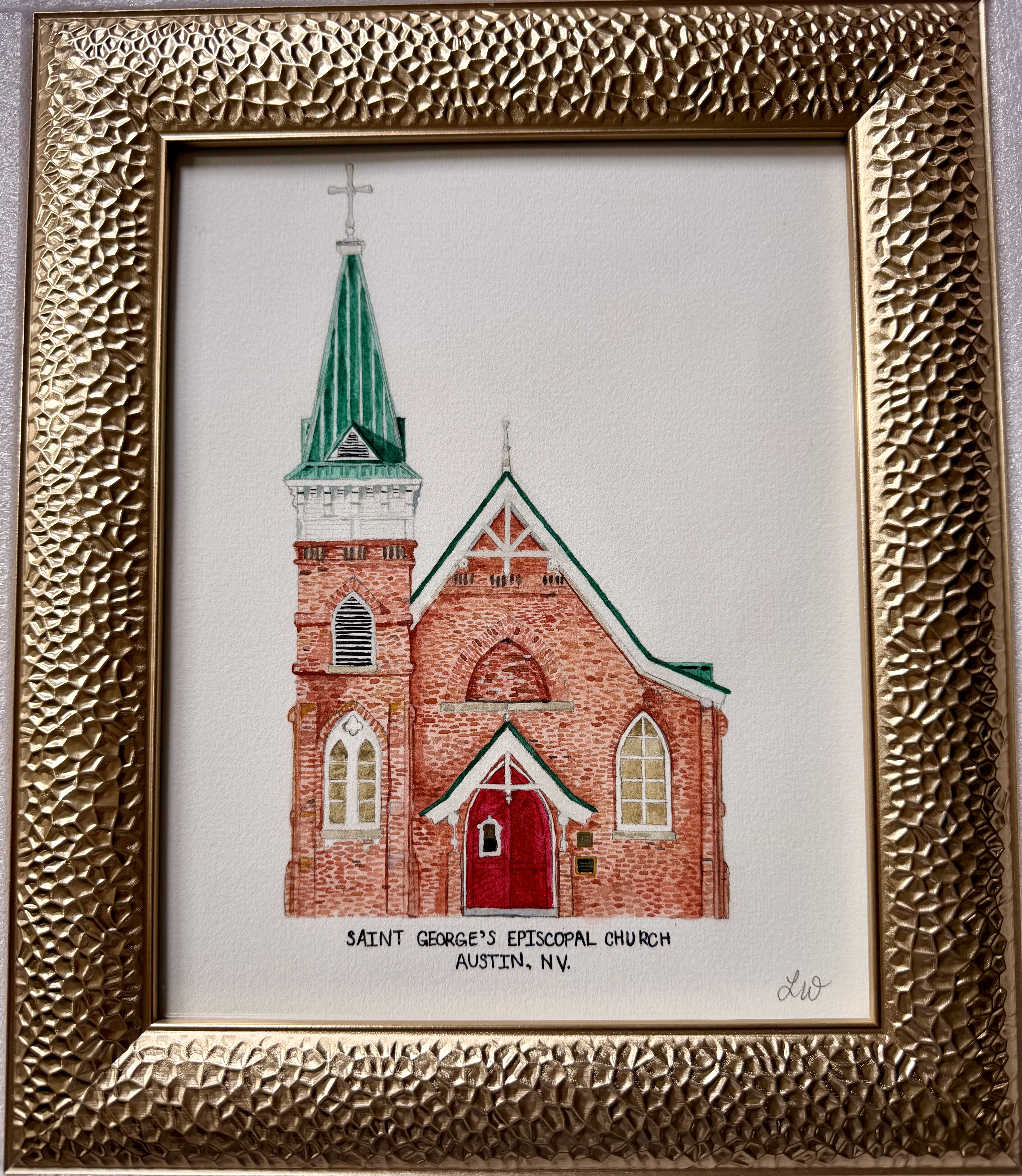
It was a deeply emotional parting, my leaving Austin. There were library patron visits, homemade cards and cookies, a sumptuous church luncheon, and these amazing gifts (I’m keeping names private as I haven’t asked permission to share):
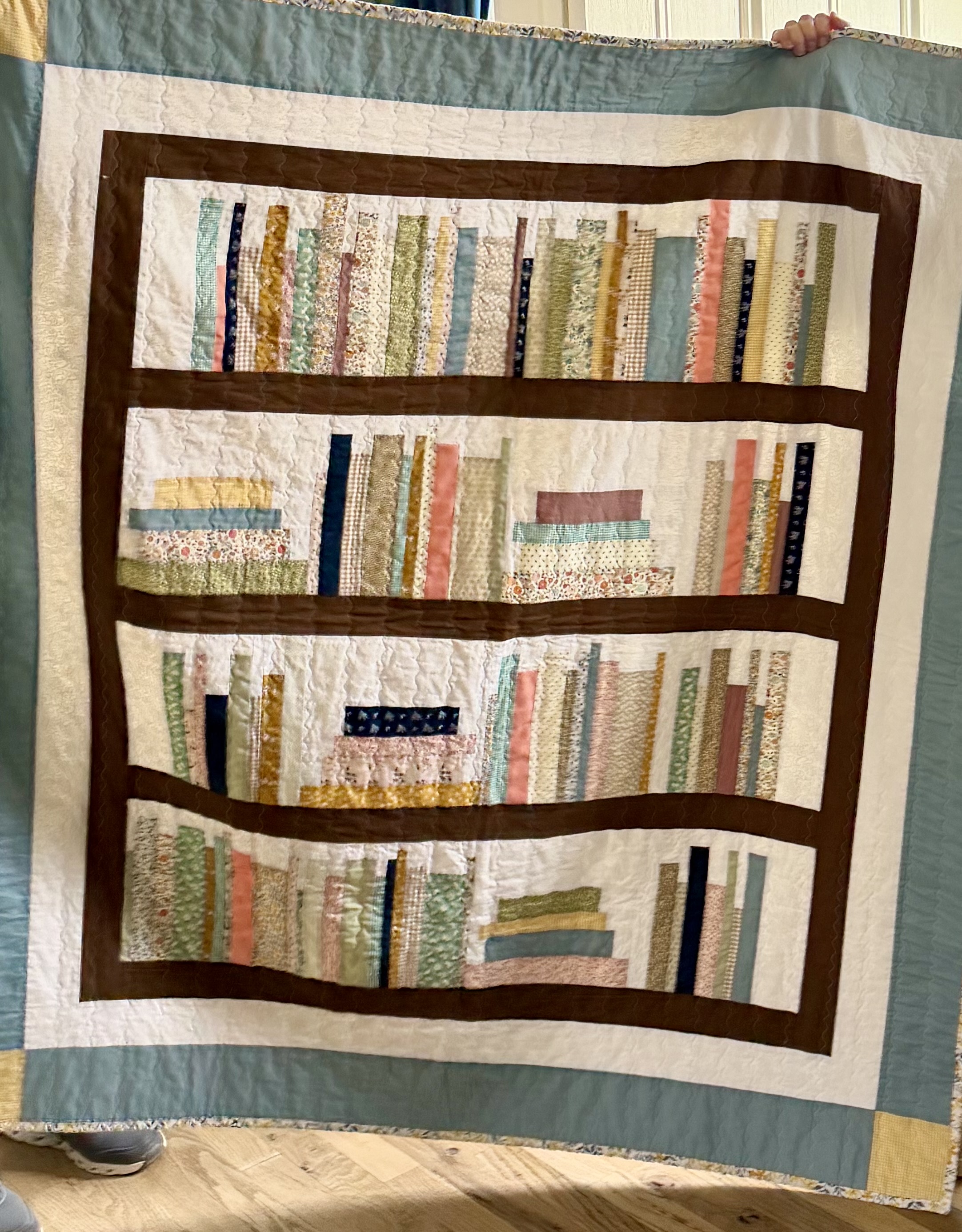
Book Quilt Made by Dear Friends, My photo

Saint George’s Episcopal Church Original Painting by Dear Friend
Austin Library Original Painting by Dear Friend
Flowers!
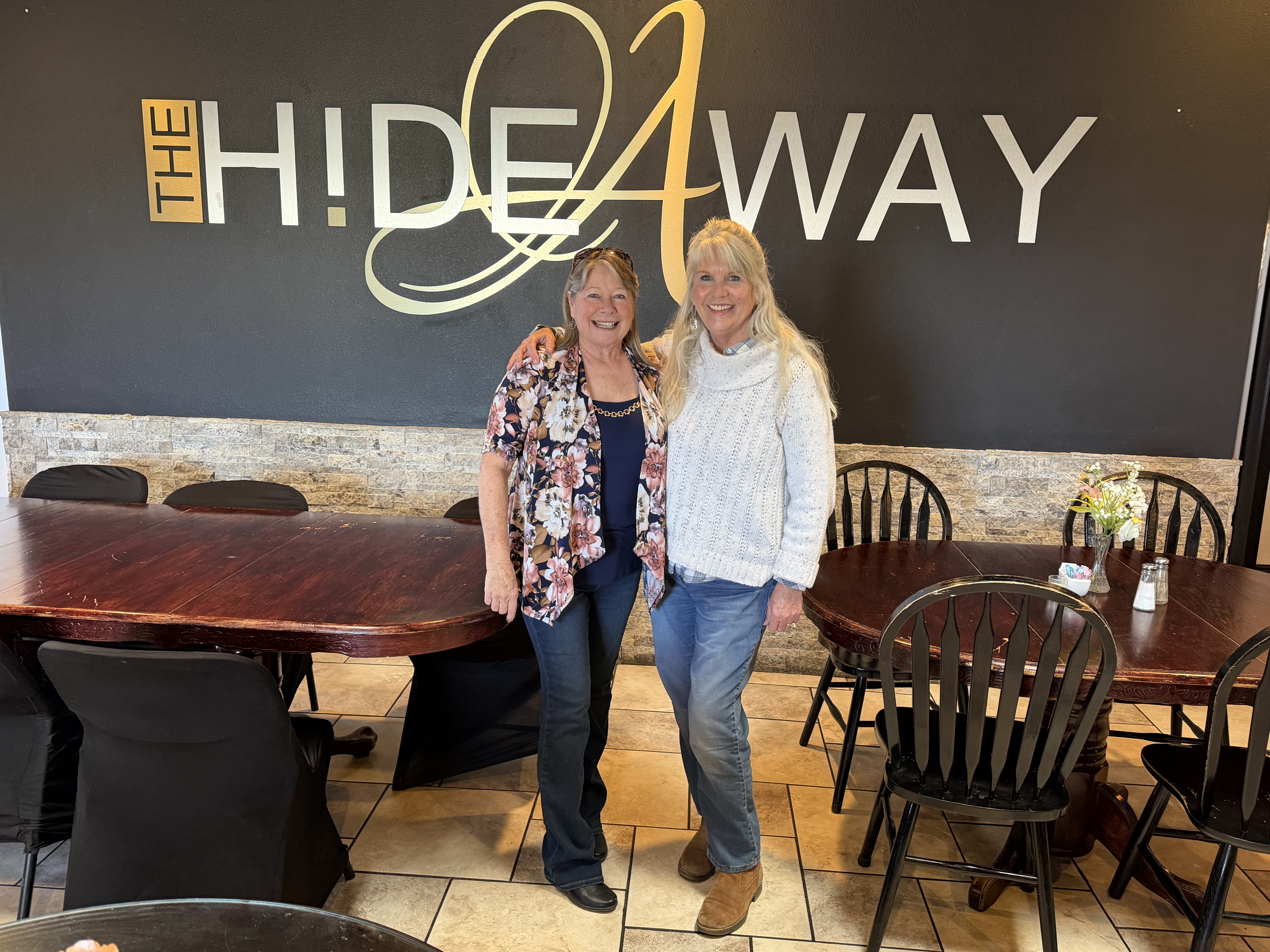
A Special Friend Luncheon in Fallon, NV

And now we’ve arrived at the Dreamy Forest Music and Afternoon Spritzers portion of the post, which is a radio station and a white wine spritzer in a plastic glass, but it is lovely, and I feel loved, and safe, and scared and excited all at the same time, because I have left a wondrous place, and I’m off to a new unknown. Wish me luck?
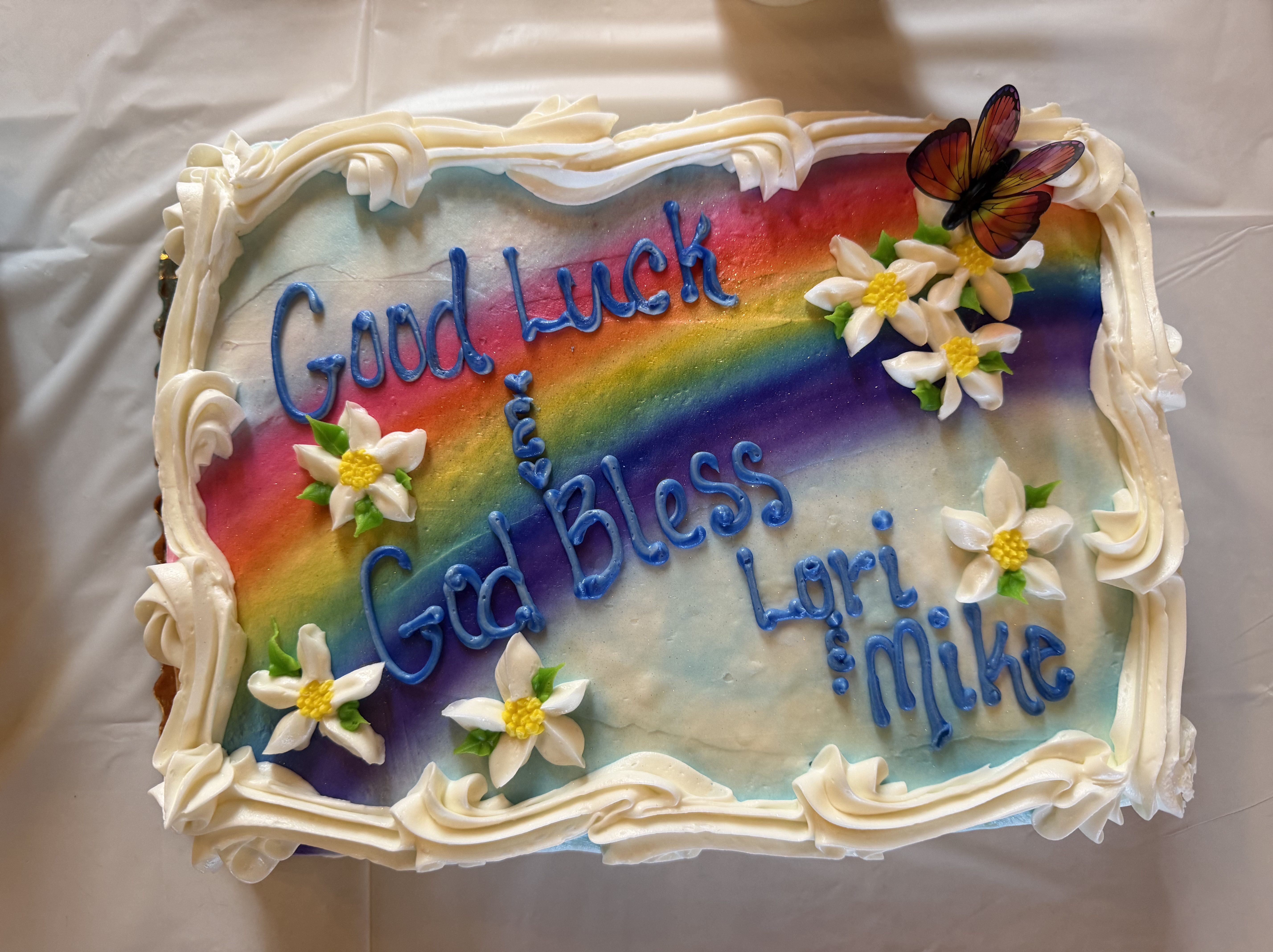
Cake!

Thanks for the Memories! Remember Bob Hope singing that? It always moistens the eyes. We are all so lucky, you know, to have each other and love each other for as long and as well as we can.

Be well everyone, and safe! I am so grateful for your visit. Where are you, in this wild, wild, harsh and beautiful, sweet and mixed-up world? I’d love to hear about it!
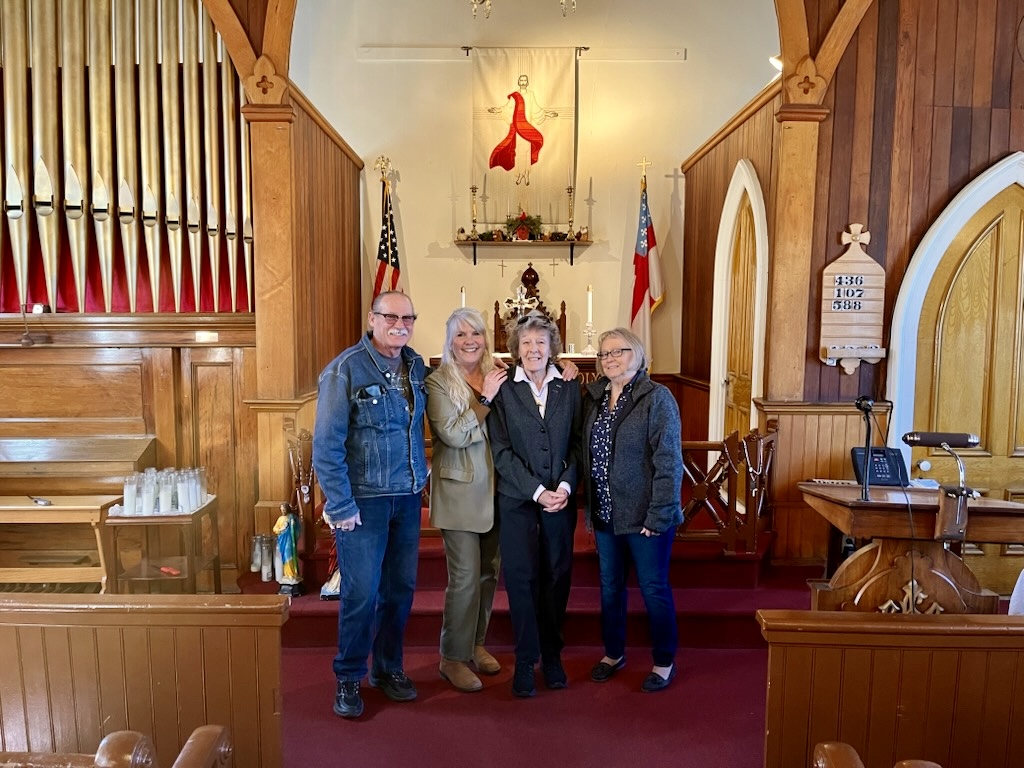
Beloved Friends and Priests

59 Comments

Filed under Travel, Uncategorized

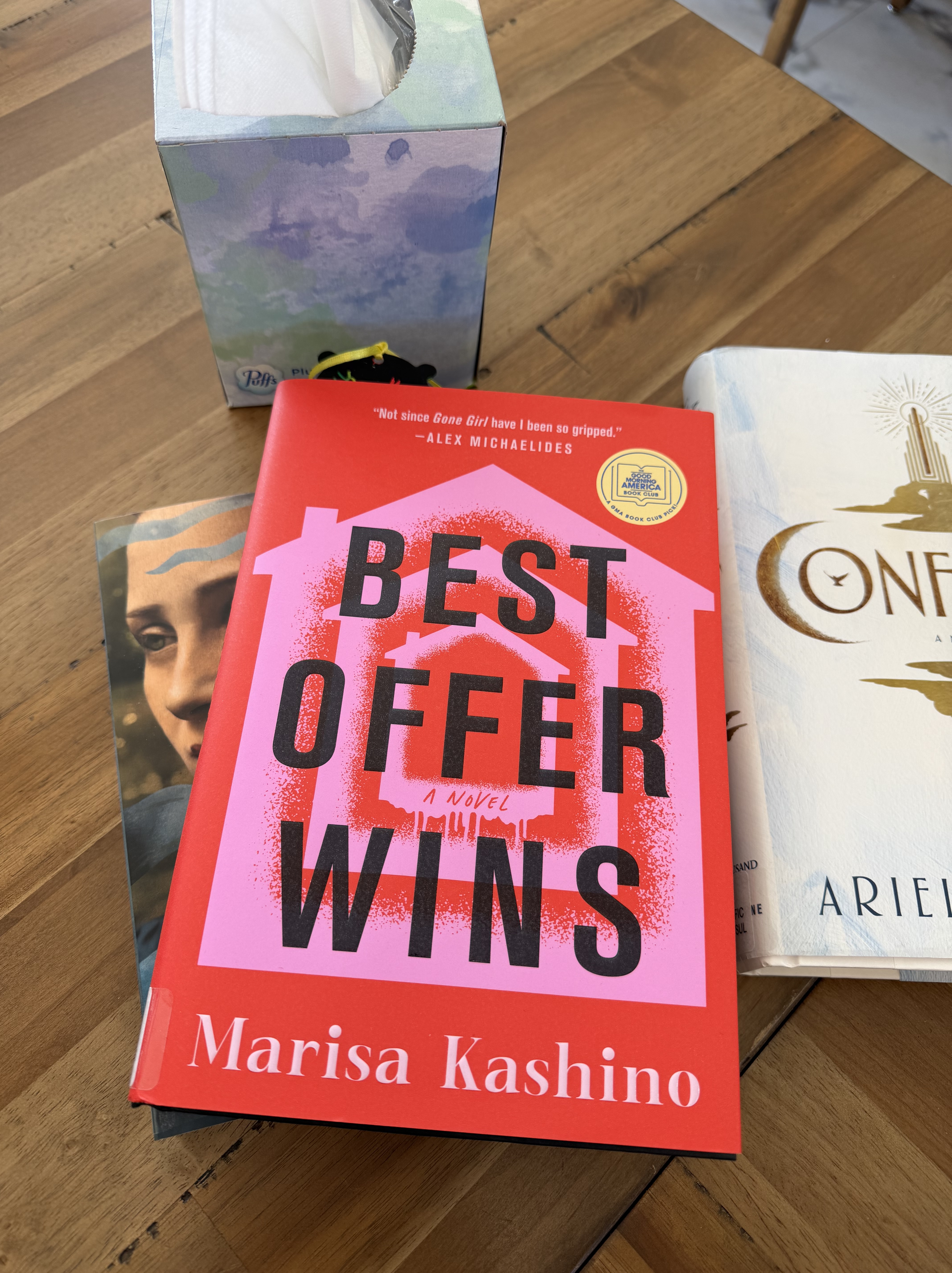
Best Offer Wins?

“In his witty and thought-provoking manner, Mark Twain once famously said, ‘It’s no wonder that truth is stranger than fiction. Fiction has to make sense.’” https://www.socratic-method.com

Sometimes, though, truth is not stranger than fiction. And thankfully, sometimes truth is kinder than fiction, too. Recently a friend and I had both just finished books that bothered us in various ways, which isn’t to say books shouldn’t bother us—it’s quite often important that they do—it was just that in the case of these books, the way we’d been bothered had less to do with subject matter and more to do with the marketing expectation that readers would respond positively to the various dastardly deeds of the protagonists, and that, indeed, there did seem to be plenty of readers out there who backed up that claim—readers who “loved” these books (and so maybe by extension that means they loved the protagonists? Maybe?).

I don’t remember the title of the book my friend was referring to; she said it was something about killers who were in love and only killed bad people—sounded like a Dexter type theme, and I know that was a highly watched television series, so I guess there’s an audience for that. I can’t claim to be someone who is above consuming questionable content. I’ve read hundreds of books in most genres and not all of them have been particularly elevating. That said, I have seldom read a novel with a less likable protagonist than the one Marisa Kashino gives us in Best Offer Wins (With the possible exception of Humbert Humbert, the protagonist/narrator of Vladimir Nabokov’s Lolita).

Best Offer Wins is a Good Morning America Book Club Pick and was published by Celadon Books in 2025. From the book jacket: “…Margo will prove again and again that there’s no boundary she won’t cross to seize the dream life she’s been chasing. The most unsettling part? You’ll root for her, even as you gasp in disbelief.”

Uh. No. But let me take you back to the reason I read that blurb and took the bait. Coincidentally, on the same day my husband and I were submitting a bid on a house we wanted, Marisa Kashino’s thriller about a woman who will stop at nothing to get her dream house came across my desk at the library. It was a new purchase, and my job was to catalog it and get it ready for patron check-outs. I joked with my realtor that I hoped I wouldn’t become as obsessed with home buying as the teaser on the book jacket hinted the book’s protagonist, Margo, did.

Truth being, in this case anyway, less strange than fiction, I didn’t. Thank goodness. But I did check the book out and take it home to read over the weekend. I’m not normally inspired to write reviews about books I don’t like, but there’s something about this one that pushes me. What that tells me is that I did find it engaging, at least enough to finish it, but that, also, it troubled me. I think I kept reading to see if it would be possible to “root for her even as [I] gasped in disbelief.”

That stage never arrived. The backstory on Margo did indicate she’d had very tough breaks, enough of them, too, and that would normally soften a reader’s judgement and bring her to life in a way that would help the reader to care about her, but Margo’s behavior was so egregious that she remained not only unlikable, but monstrous. And I don’t mean monstrous in the sad way that Frankenstein was a monster because he was a victim and you felt sorry for him. Margo’s kind of monstrous is the carefully calculated kind that lacks any hint of personal responsibility or remorse.

I’m not sure what it says about me that I read the whole book anyway, and that gives me pause. I think perhaps my weird fascination with the book represents a part of contemporary America to me that I don’t understand and cannot accept, but that I still keep trying to fathom. I want people to have homes. I want people to care for each other. I want to love my neighbors as myself.

Each turn of the page offered hope, however slight, that Margo would learn some kind of moral lesson or would offer her a kernal of insight, forgiveness, or redemption, but in the end, there was none. No tenderness. No justice. Just a sad expose of a society where dreams can become as dangerous as despair, and the only thing that matters is the win.

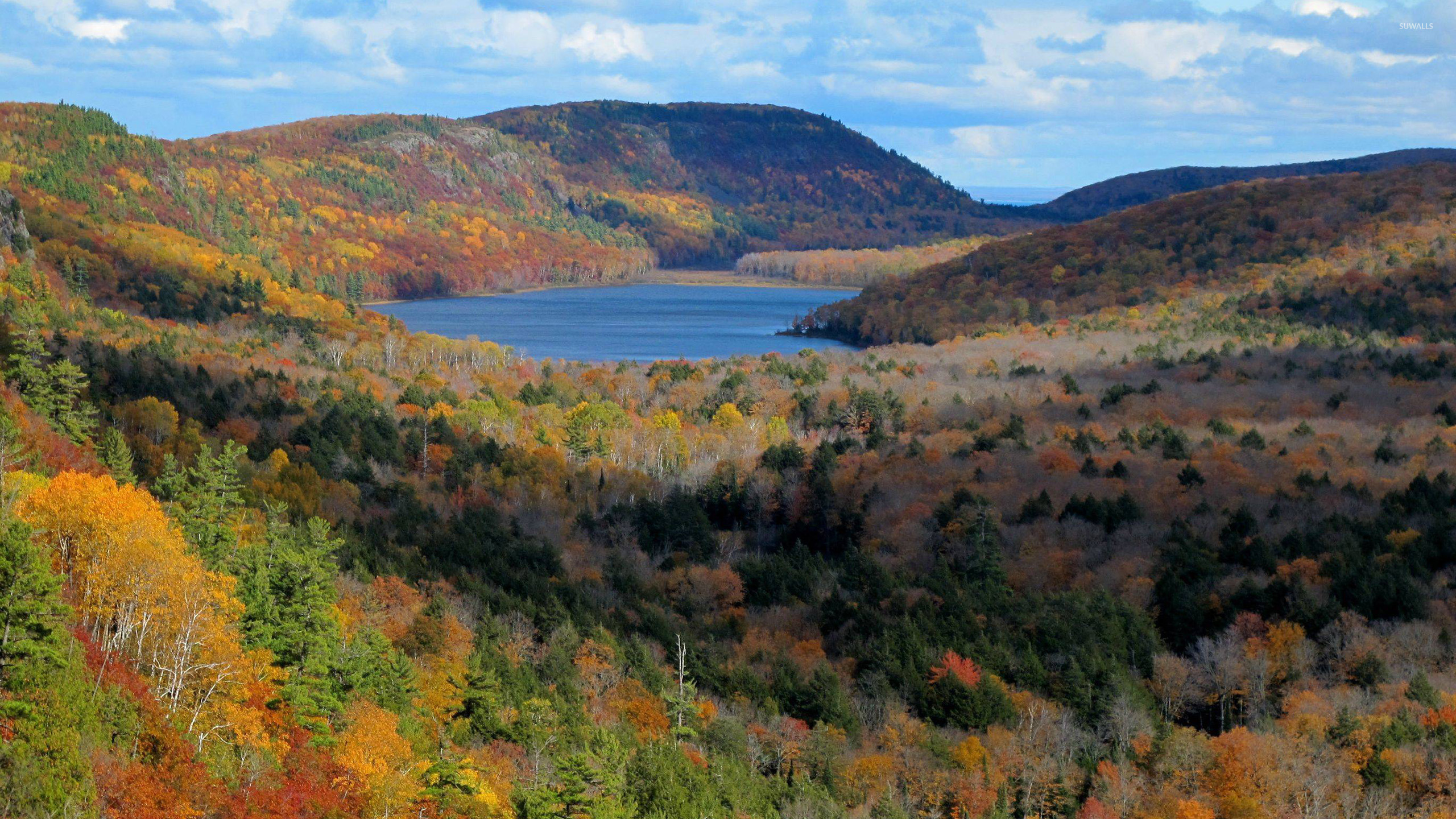
In that way, the book is a success, I guess. A pretty good satire. Excellent social criticism, and social criticism is very much in order these days in my opinion. With Best Offer Wins out of the way, I’m happy to announce that Mr. P and I purchased a delightful home in the beautiful UP—the upper peninsula—in the lovely U.S. state of Michigan. We will be off to a new chapter there soon and leaving the awe-inspiring West and central Nevada behind with love for all we’ve learned and the friendships we treasure. By the way, we accomplished the purchase of the Michigan house without any nefarious activities nor bidding war mayhem.  Sometimes, you see, truth is not stranger than fiction, and sometimes it is kinder.

Wishing you all happy days and cozy nights as we move through February and into March. Be Well!

The Upper Peninsula, Michigan, U.S.

58 Comments

Filed under Books, Commentary, Fiction, Home

Common Threads Lead to Joy

From Top to Bottom: Sierra Boggess and Emily Jewel Hoder in the revival production of “The Secret Garden” at Center Theatre Group / Ahmanson Theatre February 19 through March 26, 2023.
Photo credit: Matthew Murphy of MurphyMade

As a way to identify the activities that bring me joy and find ways to incorporate more of them—more often—into my daily life, I recently completed a writing exercise. It morphed into several disparate, yet ultimately connected and delightful experiences. I had so much fun with it, I just had to share!

Here is the prompt: “Write a letter to your childhood hero. You won’t actually send this letter. Tell them about what has brought you the most joy in each decade of your life. Don’t think too hard about the answers. Write the first things that come to mind. Reread the letter. Do you see common threads?” -Brittany Polat, PhD. Journal Like a Stoic, c2022.

Choosing who to write to was an intriguing part of the process. Who, I asked my little girl self, is your hero? The name that sprang spontaneously to mind was Frances Hodgson Burnett. Of everyone I could have chosen, for some reason I chose a lady author, a woman I’d never met and in fact could never have met because she died thirty-two years before I was born. She may have left the earthly realm, but she was very alive to me. She spoke to me through her books. The Secret Garden was my favorite, and I have continued to love it my whole life, cherishing it through rereads, watching all of the movie versions, and attending the play.

Before writing my letter to Frances, I did a bit of research on her life, and what a full life it was! Born in 1849 in England, impoverished at age four after her father’s death, Frances eventually traveled with her mother to live in a log cabin in Tennessee during the American Civil War. It was writing that finally lifted her out of poverty. She was a highly regarded author who published fifty-three novels and owned homes in both England and America (Gerzina, Gretchen H. “In the Garden: The Life of Frances Hodgson Burnett.” Shakespeare Theatre Company, c2024).

This research into Frances’s life inspired me as I wrote to her about the greatest joys in my own life. The common threads became very clear. Family, friends, nature, wildlife, pets, reading, writing, and learning showed up consistently throughout the decades. These are the things that spark the most joy for me.

Frances with her sons

With this in mind, I agreed to an unplanned day-long trail ride with my husband on a day I had planned to spend doing laundry and vacuuming the house. Seems like an easy choice, venturing out into nature with my guy rather than doing chores, but I honestly might not have agreed to drop everything and go if I hadn’t just completed my “joy inventory.”

Though housekeeping and organization didn’t make themselves known in my letter to Frances, they are important to me, nonetheless. I find it difficult to get to joy in any kind of untidy environment, whether in my own home or anywhere else. Still! I managed to say yes. As a bonus, I thought I could write about it afterwards, thereby including another of my favorite activities in the event.

Here is the result:

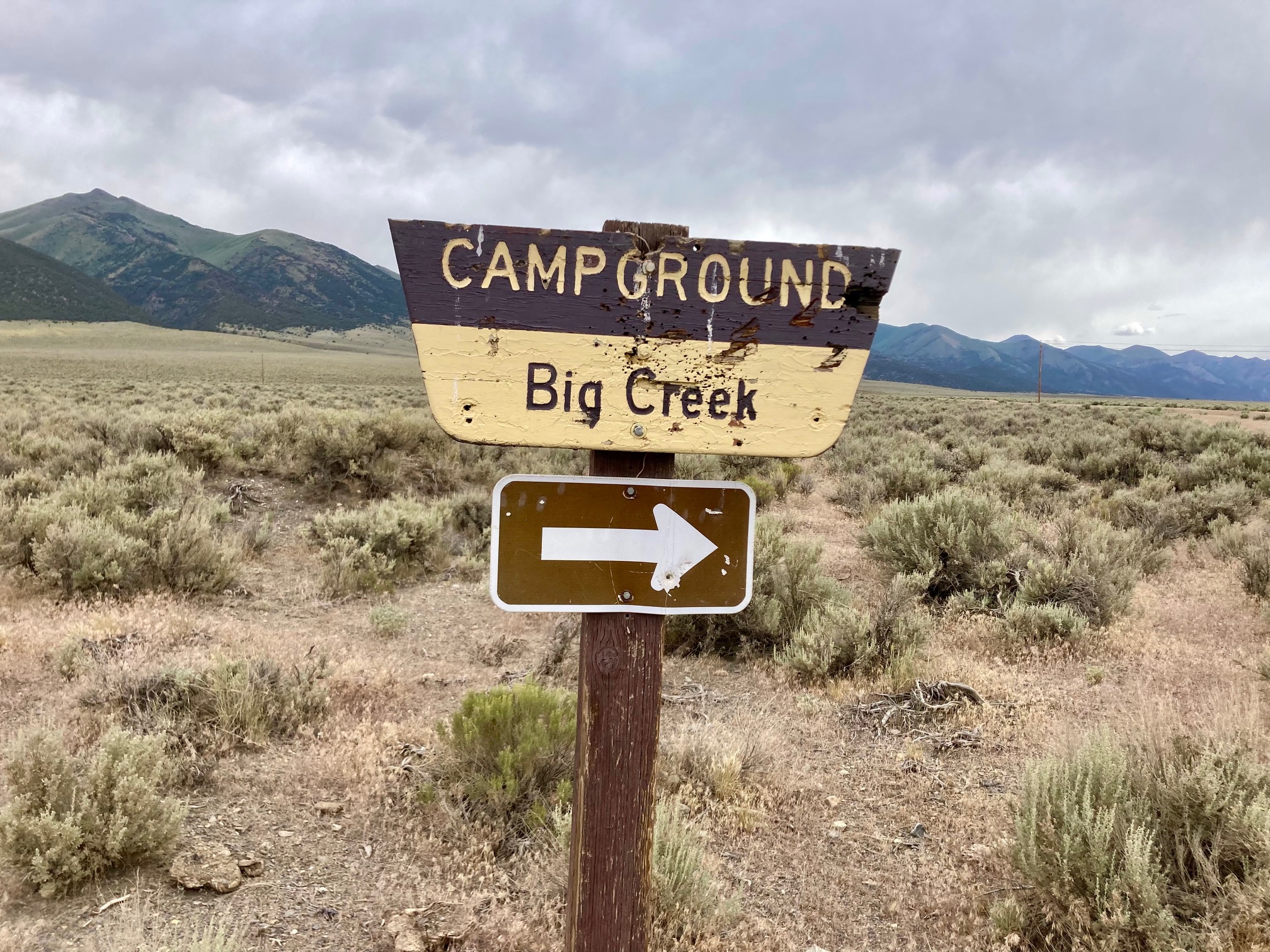
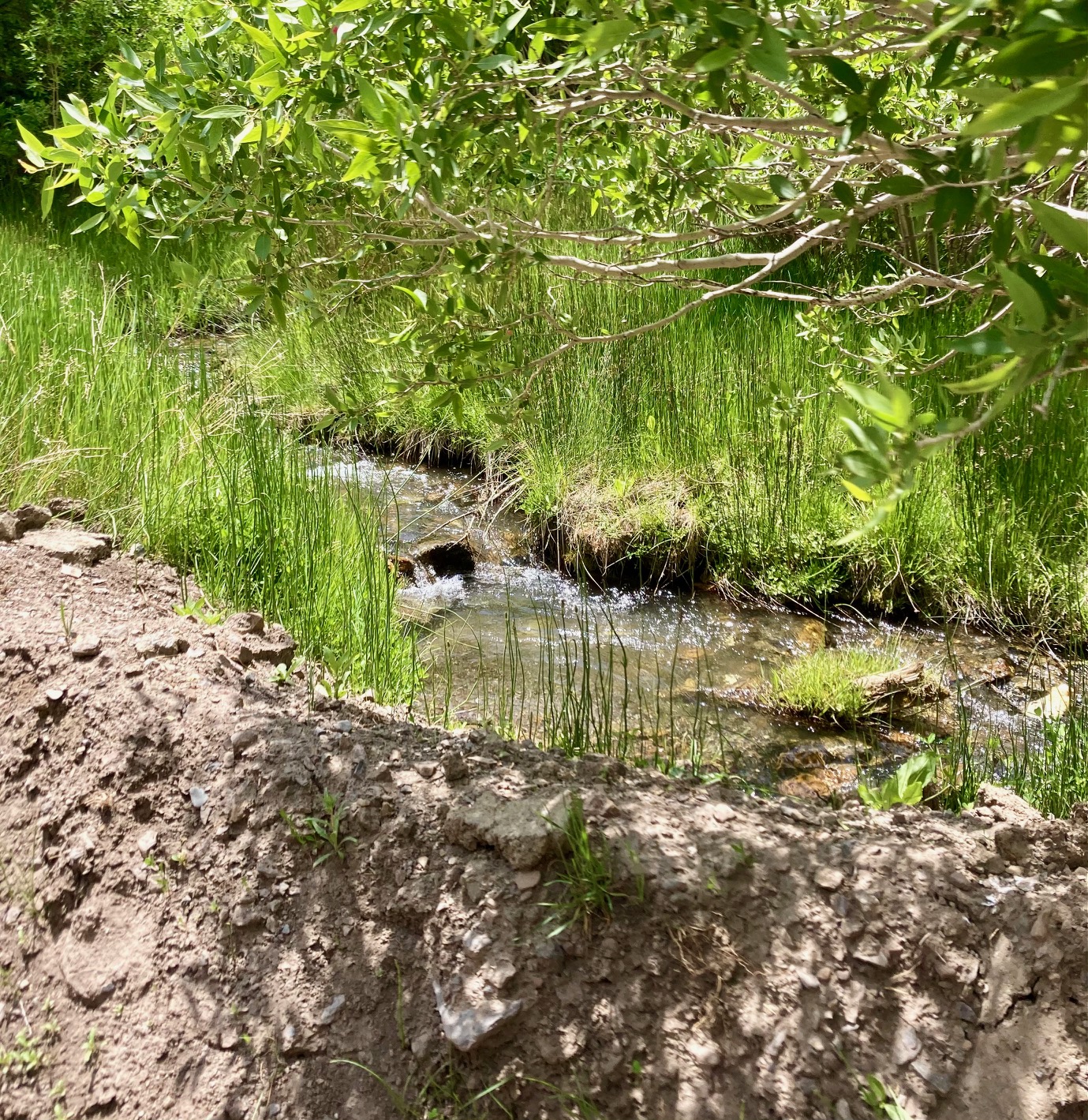
Off highway vehicle trails abound in the high elevation areas of the entire Toiyabe Mountain range and extend down into the valleys and basin below. We have an old side-by-side Rhino that can climb just about anything at very low speeds and peaks at 30 miles per hour on a flat road going downhill (a situation not often experienced here). Our chosen route for the day was to begin at our home in Austin, travel to Big Creek Campground, and then continue over the mountains into the adjacent valley to the east.

My guy and the Rhino
Big Creek
Soon to be up and over the top!
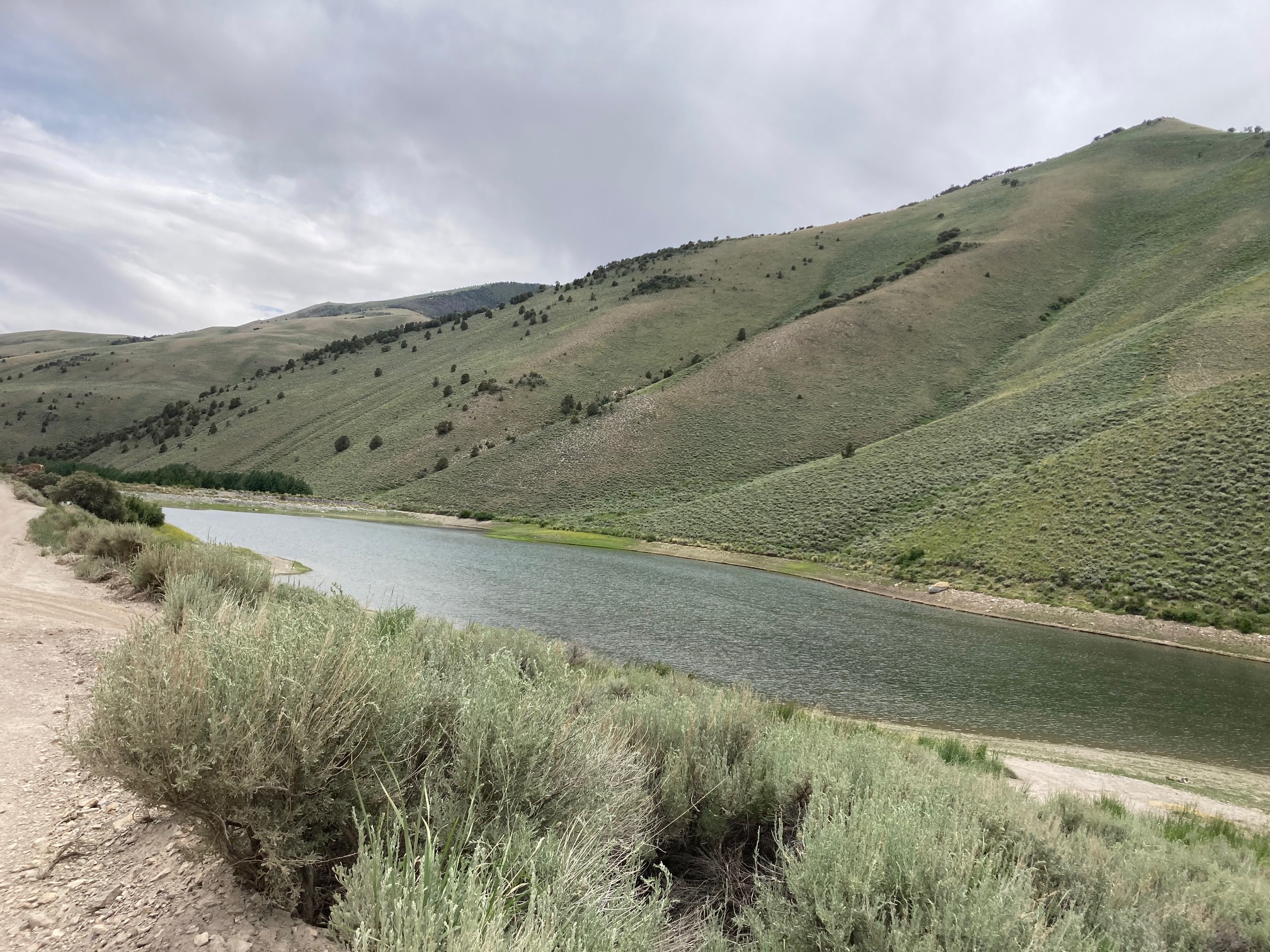
Groves Lake

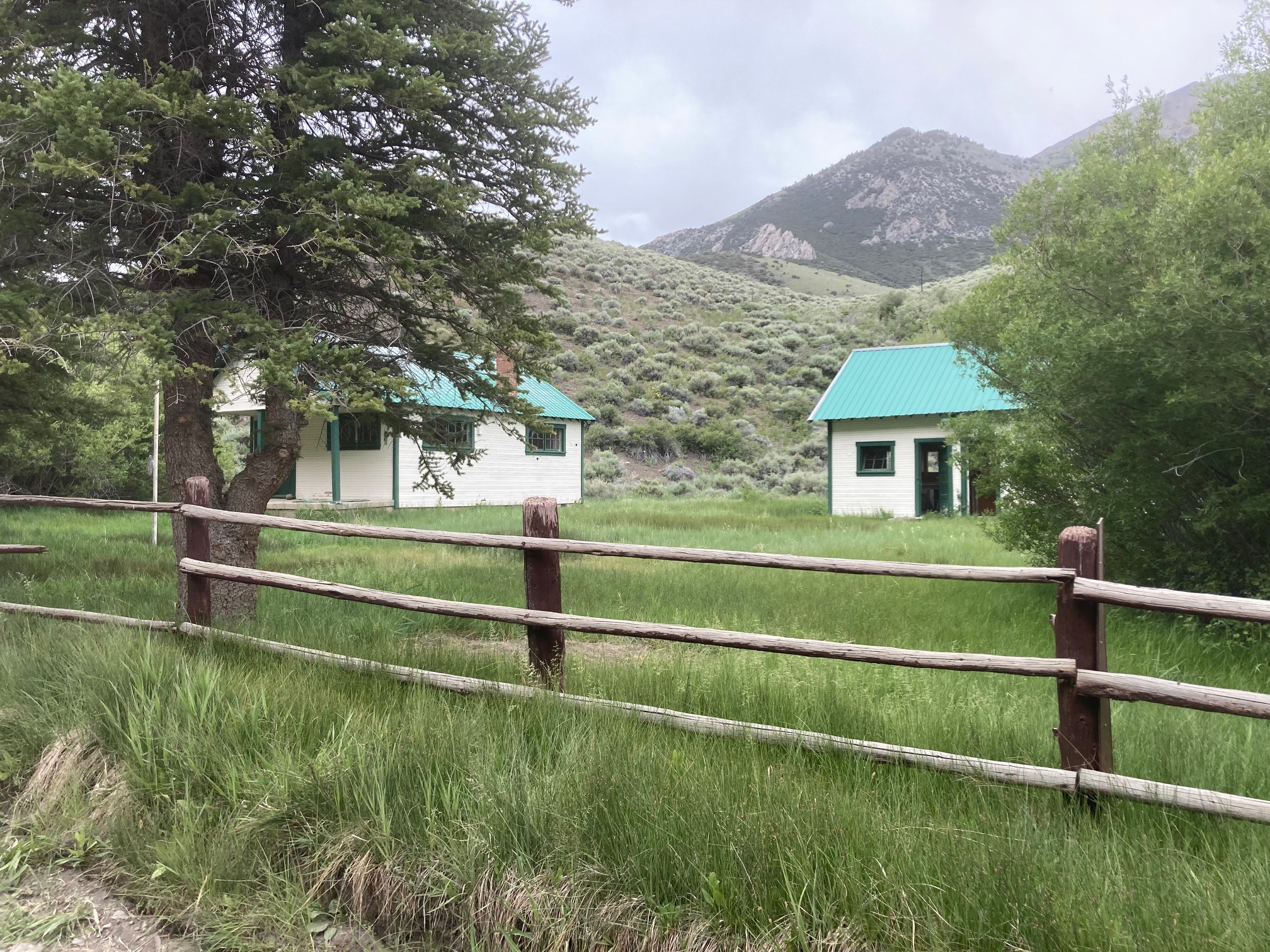
Along the way we experienced the expanse of the Reese River Valley over exposed rocky trails and into and over the mountains with multiple stream crossings, aspen groves, meadows, and significant elevation change. We passed by two campgrounds (Big Creek Campground and Kingston Campground) and Groves Lake, winding up in the charming Kingston community where we were welcomed by the wonderful ladies of a Monday Mahjong groups that meets at our friend Linda’s house. There we were treated to a delicious lunch and lively conversation before heading back over the mountain. Friendship, another joy inducing ingredient added! It was a lovely day.

Old Kingston Ranger Station
Linda and the Mahjong Ladies welcomed us in!

From the initial moments spent reading the prompt in my journal it was indeed a joy to experience the results of contemplating a childhood hero, writing to her, thinking about my life in decades, and saying yes to an impromptu adventure.

It would be wonderful to read about your hero, and the joys of your decades. Who would you write to? What insights about joy might your letter reveal? If the spirit moves you, please do give this little project a go! You might find yourself delighted by the results, as I have done. Looking forward to hearing from you!

Happy Writing!

Joy and Adventure live inside–
and out!

Lori

36 Comments

Filed under Books, childhood, Family, Identity, Nature, Reading, Uncategorized, Writing, Writing Advice

Surviving Sue Review and Traces in the Snow

Today in the Reese River Valley. My photo.

Two consecutive snowstorms, and the sun sparks diamonds on the snow-hushed surfaces here in Austin and in the Reese River Valley just below us, giving us time to read, to wander, to cook, and to write.

Walking after a snowstorm is one of my favorite activities, along with walking in a warm rain, or on a starry night, or along a tree-lined lane at the height of autumn. It’s like walking inside a dream, a vision, a movie . . . all of it a magical changing work of art. This has been that kind of a weekend. An appreciated and needed balm for the eyes, ears, heart, mind and soul.

Our footprints going down our driveway last winter after a similar storm in Austin, NV. My photo.

After today’s walk, I finished reading Dr. Vicki Atkinson’s memoir, Surviving Sue: An Inspirational Survivor’s Story About a Daughter and her Life with a Mother Who was Riddled with Alcoholism, Alzheimer’s, Anxiety, Depression, and Munchausen’s. Vicki is a fellow blogger, one I follow and read with pleasure, always knowing I will find something positive, real, and insightful in her posts. Vicki is generous with her readers, sharing of herself, her humor, her highs and lows with an empathic interest in our perspectives.

This is Vicki’s voice, and it shines on the pages of her book. She is a profoundly kind-spirited woman who grew up learning how to turn the injury and injustice of her mother’s mental illness into something bigger than her own pain. With keen intelligence, her father’s and sister’s love, and later through her own family and probably also due to her dedication to her studies, Vicki survives and thrives, and she does it without ever compromising her own values.

Vicki’s Wonderful Memoir

Vicki’s compassion for her mother is more than challenged over the years, but somehow, she stays the course of doing what she believes is best for everyone concerned. For those who don’t know Vicki or haven’t read Surviving Sue, I’d like to stop here to encourage you to read it for yourself. This story is worth your time. It may even affect the ways you view some of your own experiences, past or present. It may soften your heart. It’s a beautiful book, and an engaging read.

Surviving Sue, Eckhartz Press, Chicago. Copyright © 2023. Vicki’s Blog is victoriaponders.com. Vicki also shares a podcast with her friend and colleague, Wynne Leon of Surprised by Joy (Blog). Their podcast, The Heart of the Matter can be found at sharingtheheartofthematter.com.

Now it’s time for the cooking part of the day. I’ve got an eggplant, lots of spices, cheese, pasta, greens, and tomatoes. Oh, and wine.

Should be a beautiful night.

Photo by Pixabay on Pexels.com

24 Comments

Filed under Books, Commentary, Nature, Reading, Seasons, Uncategorized, Voice, Winter, Writing

Thirteen Days Early / Nevada, USA / Are These the Ides of March?

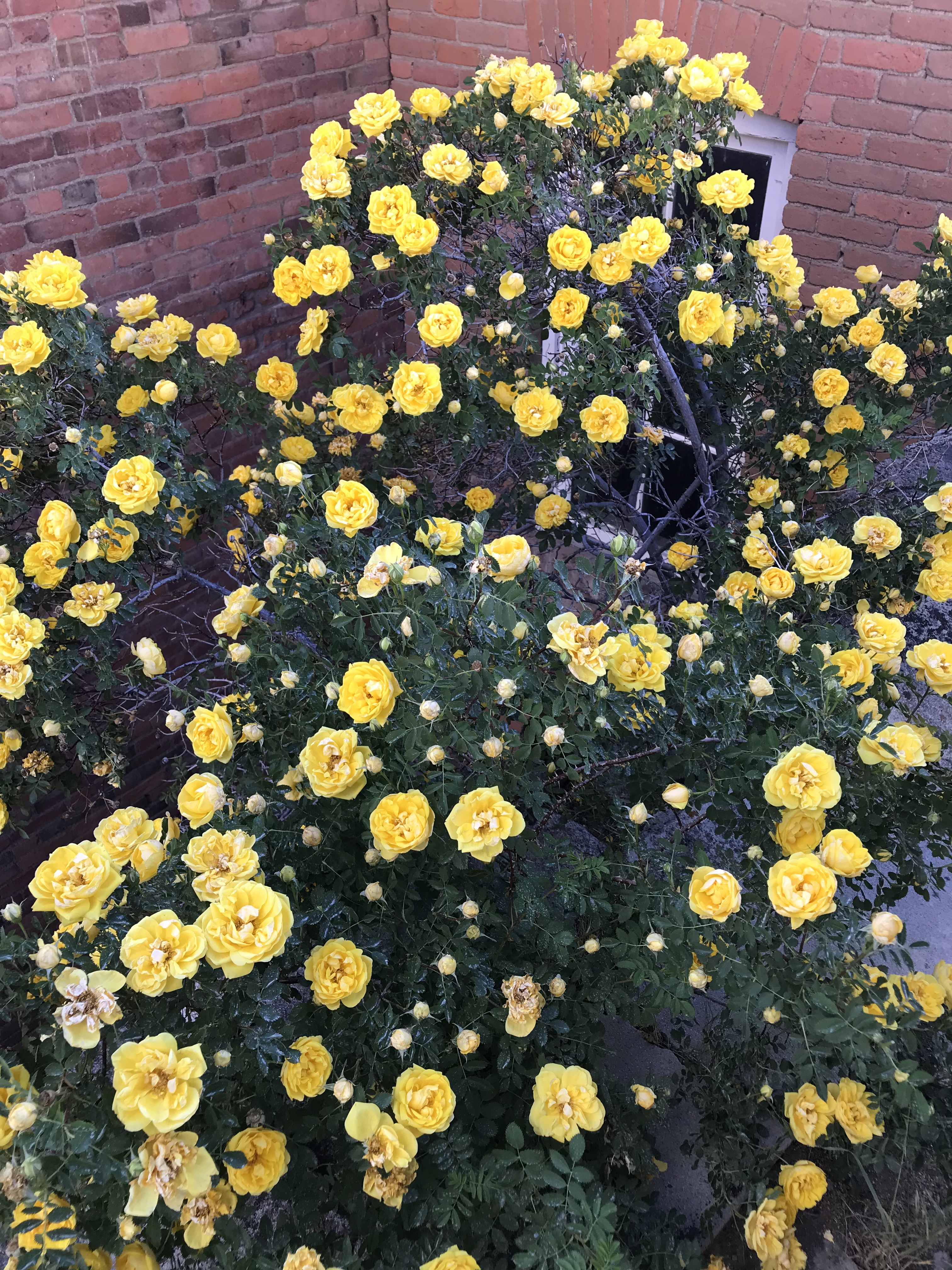
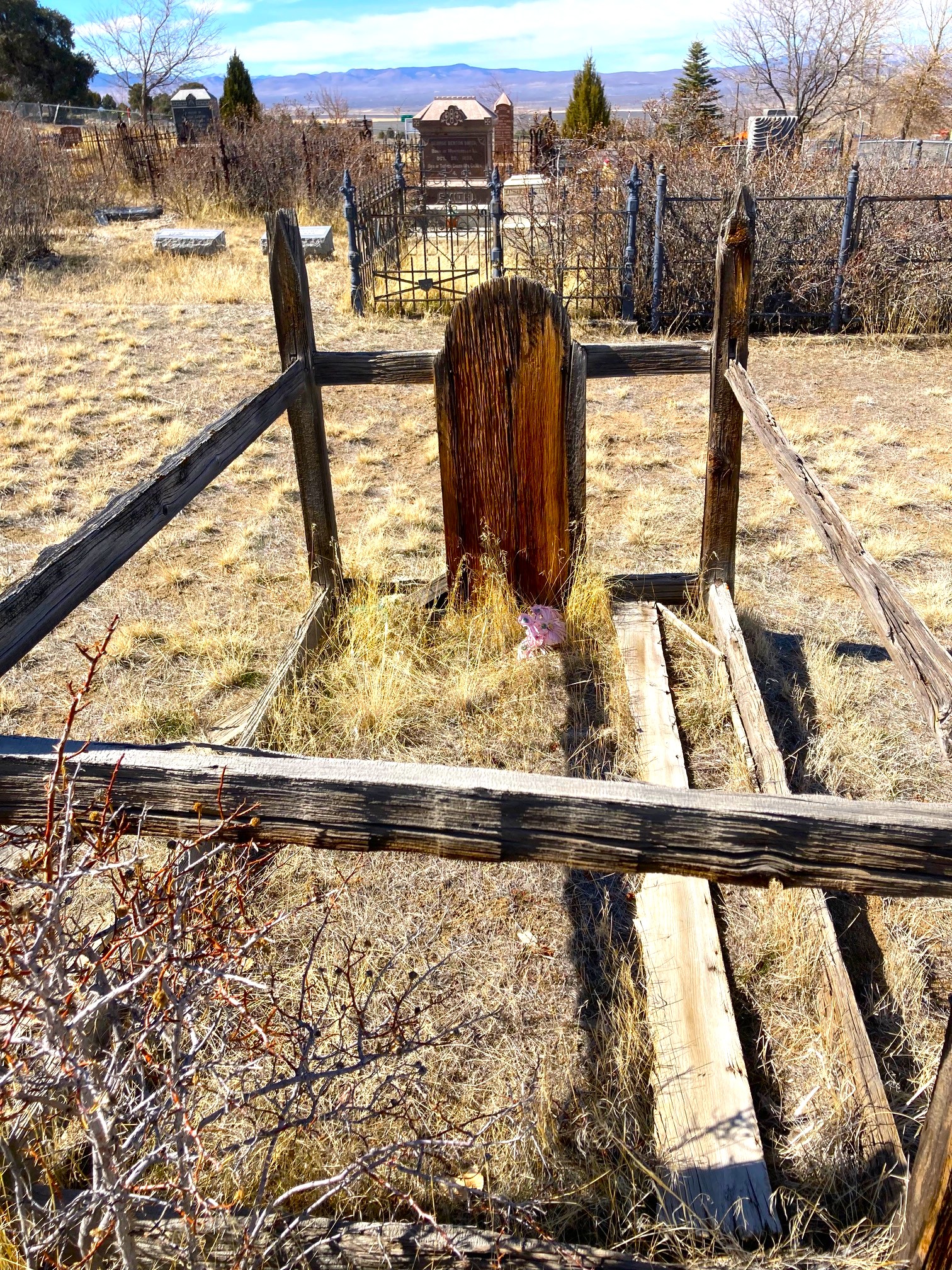
Austin, Nevada. Yesterday. A Walk Through the Cemetery. The thorny branches covering the grave will burst into bloom this summer. I find that comforting.
These are the same type of wild roses. This is the June bloom in our yard.

The “Ides of March,” is day in the ancient Roman calendar that falls on March 15 and is associated with misfortune and doom. It became renowned as the date on which Roman dictator Julius Caesar was assassinated in 44 bce and was further immortalized in the tragedy Julius Caesar by English dramatist William Shakespeare. In the play, a soothsayer warns Caesar to “beware the Ides of March.”                Ostberg, René. “Ides of March”. Encyclopedia Britannica, 23 Oct. 2024, https://www.britannica.com/topic/Ides-of-March. Accessed 2 March 2025.

Yesterday, Austin, Nevada was bathed in sunshine and warm temperatures. Today Austin is buried in snow. It’s mostly awesome, not really a misfortune or doom, and we knew it was coming. Thank you, meteorologists!

Austin History, March 1, 2025
Austin Yesterday
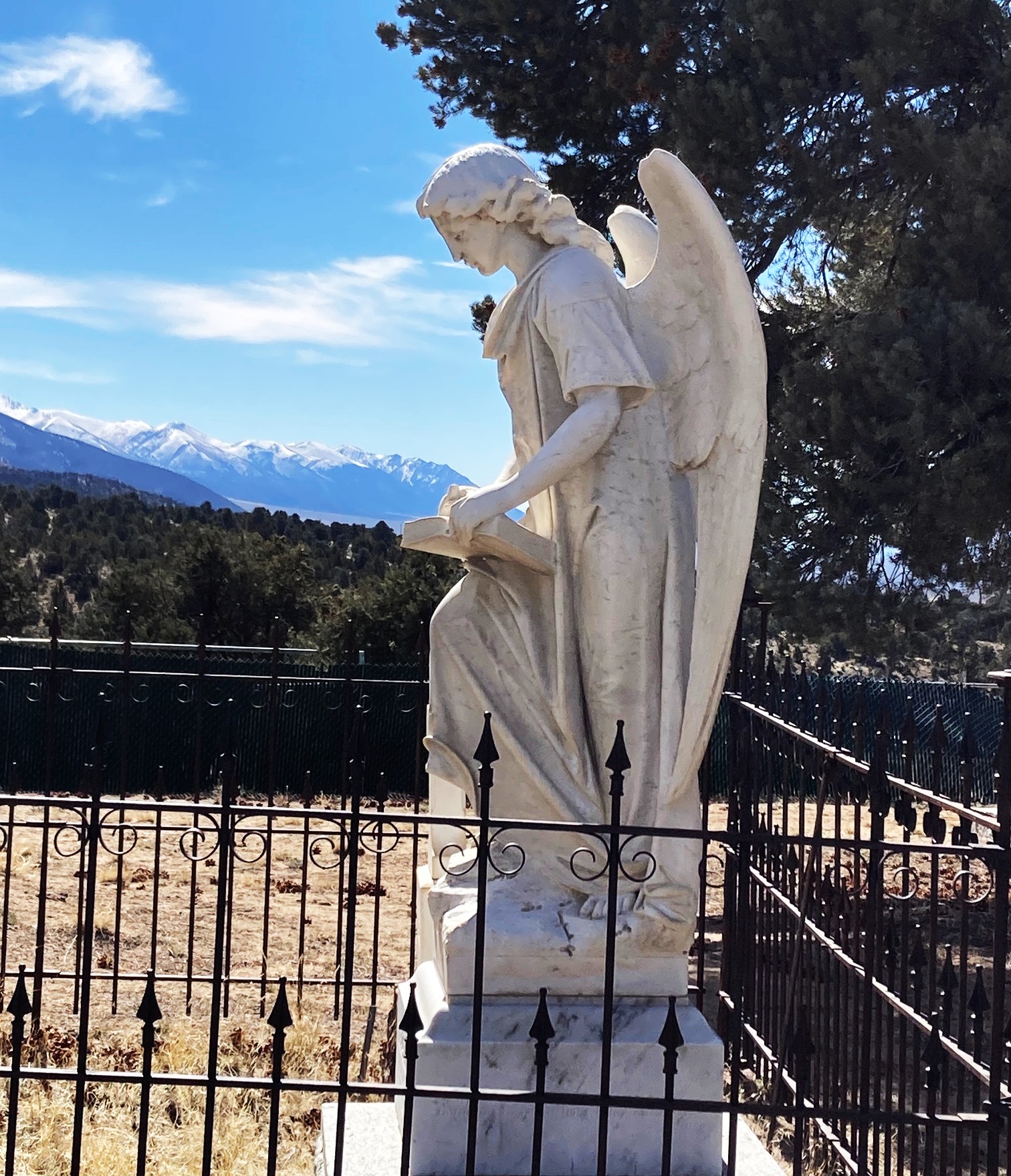
Nearer My God To Thee, Nearer to Thee

We needed snow. We had a dry winter.

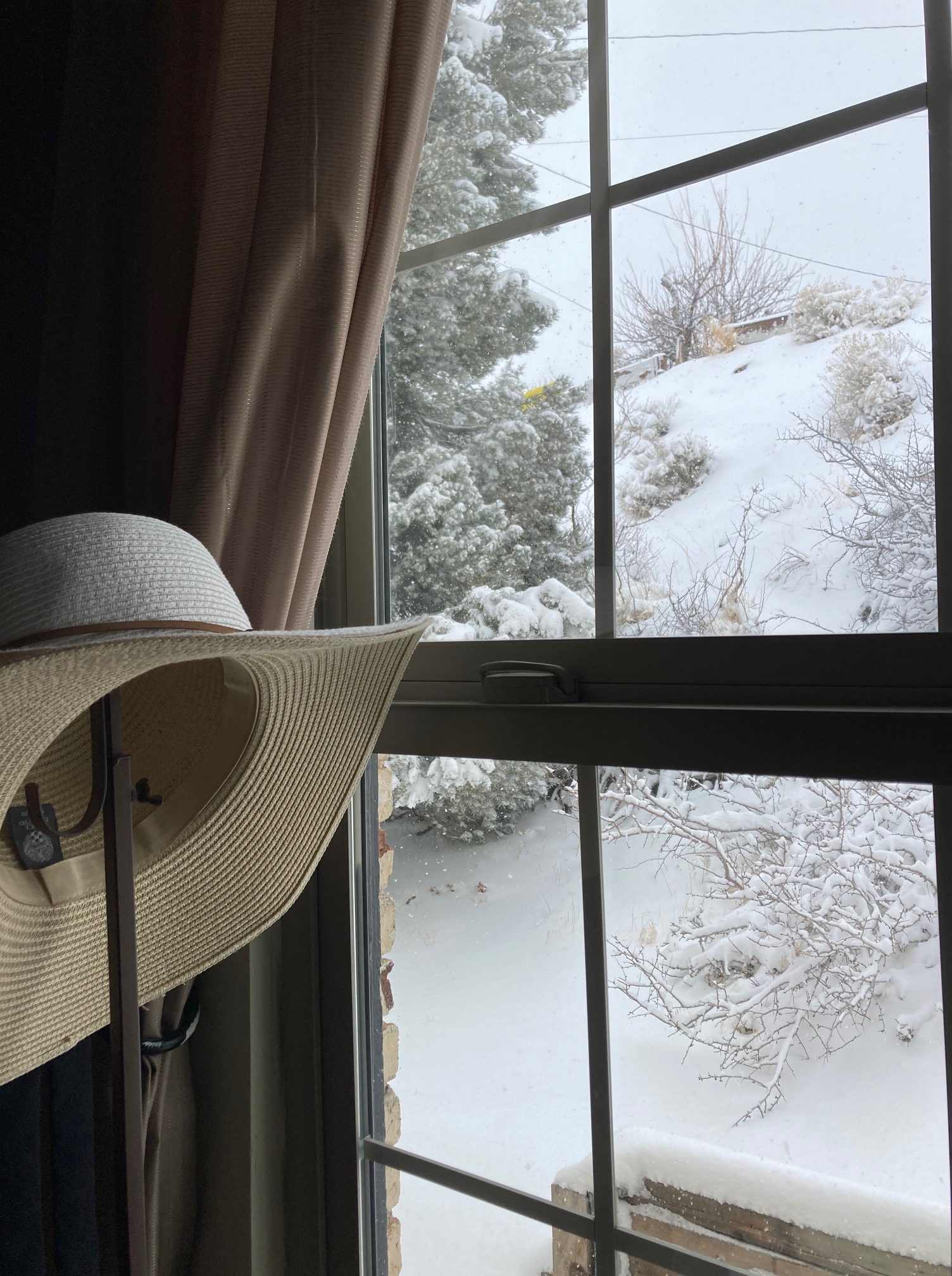
Today

As the snow continues . . .

Weather is life. No doubt this is the reason it is so often the topic of small talk. It’s life.

Weather is also death. I fear for our friend who left town just as the snow started, heading west on Highway 50 directly into its path.

And it affects all of us. Humans and nonhumans alike.

Here then is a tiny presentation of the weather in Austin, Nevada, USA, over a two-day period. Life and death. Ironic juxtaposition that the photos with elements of death are awash in sunshine? It was not intended. And that is telling.

It stopped snowing for a bit. But it’s starting again.

Whatever the weather where you are, I hope you are safe and always, always, rolling with the changes. Happy Spring–Soon!

9 Comments

Filed under Nature, Seasons, Uncategorized, Winter

All Those Years

Just before Christmas, Mr. P and I drove to the Hickison Petroglyph Recreation Area, which is located a short drive from our home over the Austin Summit on Highway 50, “The Loneliest Road in America.” I love nature and history, as well as walking and exploring new (to me) places, and this little day trip exceeded my expectations. As soon as we arrived, I was surprised that I had not heard much about the place in the four-plus years we have lived in Austin. Only one person had ever mentioned the spot to me, and that was a traveler who stopped in to see our historic general-store-turned-library and told me he had camped there the night before. I imagine the locals have all been there, and they have been good at telling us about other wonderful places to explore in the area, so it mystifies me that no one thought to suggest this historically and scenically stunning spot to visit.

Therefore, I will do so. If you travel Highway 50, be sure to make this one of your stops!

Some history:

“The Hickison Petroglyph Recreation Area provides public access to petroglyphs created by prehistoric people living near Hickison Summit at the north end of the Toquima Range and the south end of the Simpson Park Mountains in the U.S. state of Nevada. . . In the general vicinity of Hickison Summit are multiple prehistoric hunting and living sites dating to 10,000 B.C. as well as more recent sites such as mining camps and ranches.

Trails used by mid-19th century explorers John C. Fremont and James H. Simpson pass through the area as do the routes of the Pony Express and the Overland Stages. At the time of the earliest prehistoric sites, the Great Basin contained large lakes, including Lake Toiyabe and Lake Tonopah in the Big Smoky Valley west of the summit. As the climate became drier, the lakes evaporated, and the former lake dependent cultures were replaced by hunter-gatherers. When the first European-Americans arrived in about 1850, Western Shoshone people lived in the region” (https://en.wikipedia.org/wiki/Hickion_Petroglyph_Recereation_Area).

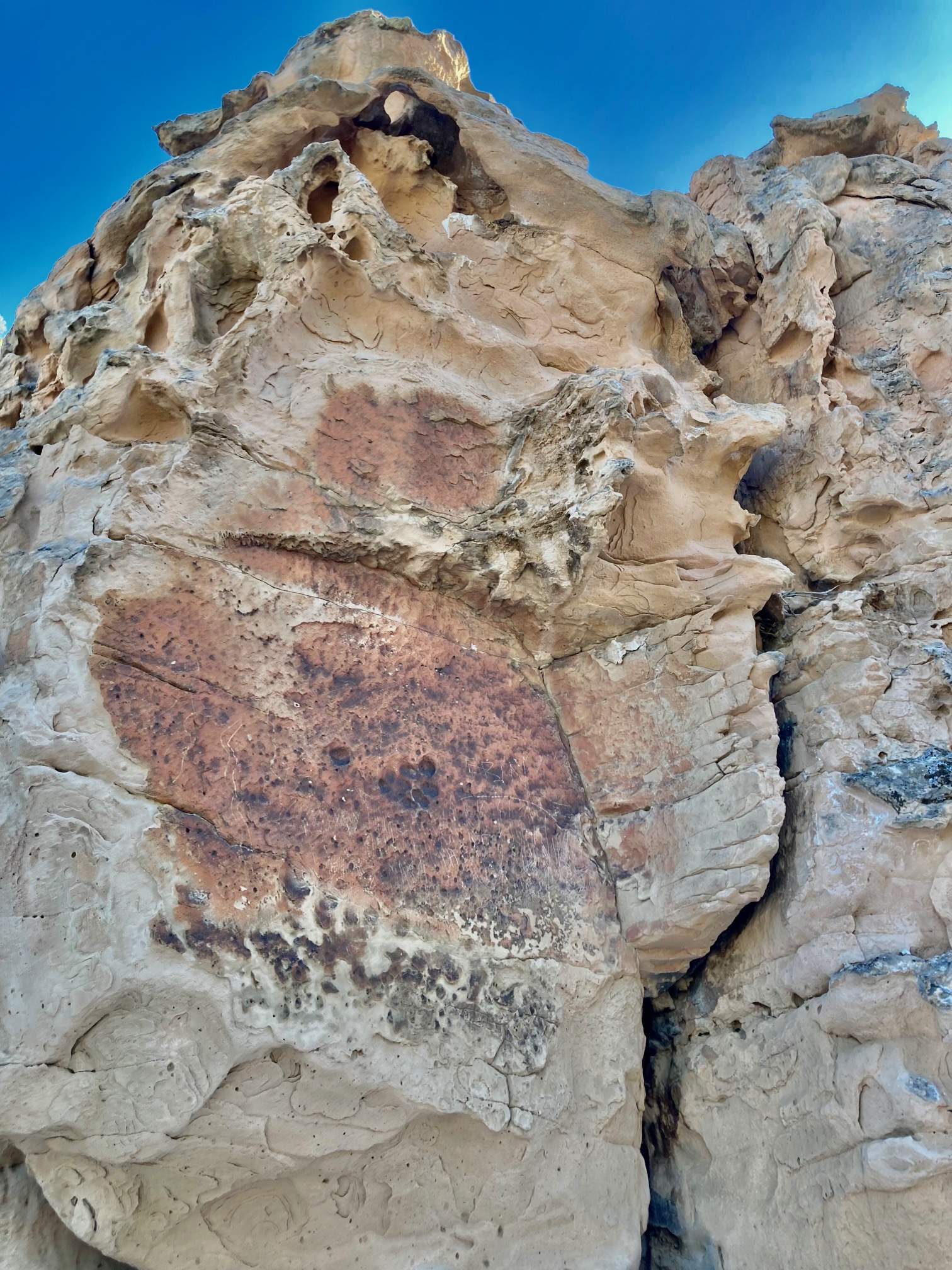
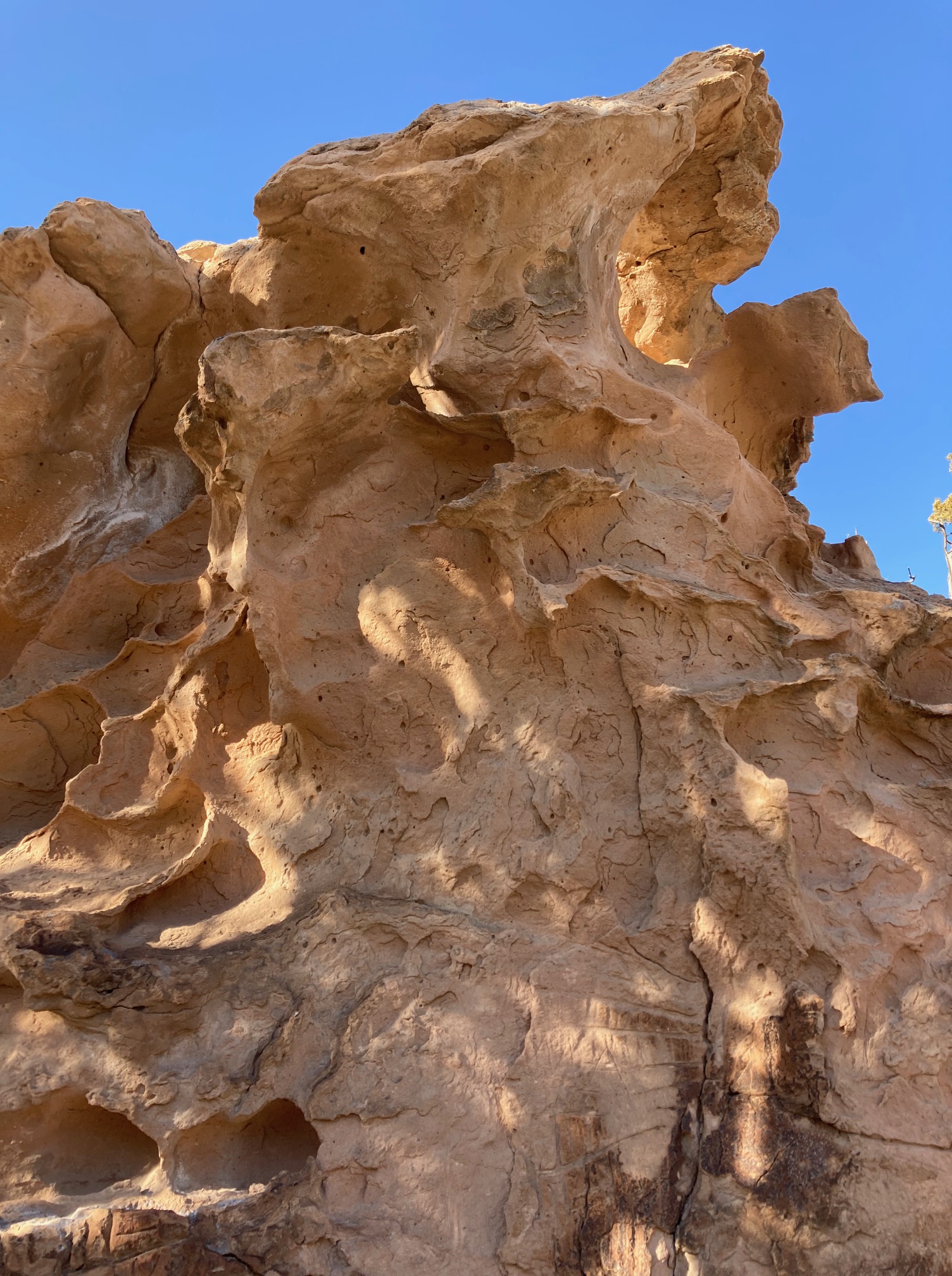
Wow, right? My dear friend, Cheryl, just informed me that when you see faces in things, it’s called pareidolia. I definitely see a face here, and a neck as graceful as Audrey Hepburn’s.

Here is the proposed text for the marker plate, State Historical Marker No. 137, from the Nevada State Historic Preservation Office:

The summit is named after rancher John Hickison because the road to his ranch passed over the summit. About one-mile northwest lies Hickison Summit, a natural pass between two low buttes. Passes and canyons were common Native American hunting locations for funneling and ambushing bighorn sheep and deer herds. Archaeological sites in the region reveal a dominance of bighorn bones and horn, reflecting the bighorn’s importance to Native Americans as food and raw material for tool production. The bighorn lacked resistance to diseases introduced by domestic sheep in the nineteenth century, and this resulted in catastrophic bighorn population declines through the West. Prehistoric native American petroglyphs, images and designs are carved into rock surfaces and are interpreted along a short hiking trail. Archaeologists hypothesize that the meanings for these designs include ceremonial, female puberty markers, ritual hunting magic symbols, and rock art or simply graffiti.

On the day we went, there were no interpretive booklets available, and other than a lone camper, no other people, so we didn’t learn as much as we would have liked. Still, it was stunning, and felt somehow sacred. The park was silent and isolated enough that all the years of this century easily fell away, and then echoes of past centuries offered themselves to our quieted minds. I was saddened, too, as I often am, thinking of how much is lost in the mists of history. What a stunning sight it must have been, all those herds of bighorn sheep and deer, and what a shame that diseases introduced by newcomers decimated the population even unto today.

Standing here, looking across the Great Smoky Valley to the Toiyabe Mountains, blue in the distance, I felt connected to all those who came before me. . . human, bird, mammal. . . all.

Such an amazing planet. Such an amazing gift to live here. Sending love and best wishes for a healthy, joyful, and adventurous 2025. Happy New Year!

14 Comments

Filed under Camping, Gratitude, Nature, New Year's, Relationship, Uncategorized

Tracks in the Snow

This past week I read Tom Booth’s charming picture book, This is Christmas, at our December library story time. Of the seven young children in attendance, none of them thought they’d ever seen a chipmunk in our town/area. I have only lived here for four years and am no expert on the local wildlife, but I have spotted a few (very few) chipmunks. Never a squirrel though. This is the only squirrel-free zone I’ve ever lived in, and I can tell you it’s a bit unnerving. I can only surmise that the trees are too small (mostly pinion pine), the spaces in between them too distant, and the rain too infrequent to sustain squirrels. . . I’ve read that the forest in our mountain range, the Toiyabes, is referred to as a dwarf forest, because it’s in the shadow of the great Sierra Nevadas. That could be why I haven’t seen squirrels here, but I don’t really know. But I digress.

Anyway, here in Austin, Nevada, which is located in the center of the state and sits at 6,555 feet elevation, the mammals I’ve noticed include: some humans (not a lot!), many feral cats (a few of which now live inside my house, so they are not quite so feral these days), a plethora of mule deer, occasional groups of antelope and wild horses in the valley below, maybe two bunnies, and perhaps a dozen chipmunks.

So when I spotted these tracks in the snow on one of the trails outside town on today’s walk, I had to take a picture to show my library friends. Definitely, chipmunk prints, right?

Tiny and perfect little lightfooted creature prints compared to Mr. P’s boot.

So I came home and asked Mr. Googly what chipmunk prints look like and they look just like my picture, I think . . . but I guess they could be mouse prints, too, and come to think of it, I have seen a few mice over the past few years (sadly, they have usually been the victims of the aforementioned feral/not-so-feral cats).

Regardless! We had a lovely trail ride today, and the prints charmed us. I’ll definitely report my finding to my little library patrons and tell them to keep a sharp eye out for chipmunks.

It is after all, the little things.

Stay warm, and enjoy nature’s many gifts!

11 Comments

Filed under Books, Nature, Uncategorized, Winter

Cold Comfort in Austin, Nevada

November 15, 2024.

Today we were going to Fallon, NV. It is 112 miles away, but we go there quite often for groceries and other necessities, such as pellets for the stove in winter. We also had a date with the hairdresser, one that we both look forward to as a luxury, and to moderate the ill effects of our unmanageable hair. Also, in Fallon we can go out to lunch (with our new haircuts), which I adore.

My first look out the front door this morning.

But we woke up to snow. A lot of snow. And the 112 drive to Fallon involves, well, 112 miles of road—on Highway 50, the loneliest road in America. Over three mountain passes. The weather service (which, thank goodness we still have, for now) predicted more snow throughout the day. No hope of everything clearing up soon.

So, we cancelled our trip to Fallon. But the day was far from lost.

I read an article with my morning coffee: “Cold Comfort: You Can Loathe Winter, Or You Can Embrace It with These Cool Strategies” by Amy Maclin (Real Simple, November 2024, 43-44). I have never loathed winter, but I realize it is a thing some people do, so I am always intrigued by the concept. This article briefly describes the research of Kari Leibowitz, PhD, “a confirmed winter hater.” The result of her research is her book, How to Winter: Harness Your Mindset to Thrive on Cold, Dark, or Difficult Days.

Three main points of the “survival guide” are: 1. Focus on Opportunities, Not Obstacles. 2. Don’t Assume Winter & Depression Go Hand in Hand. 3. Make Sure You Get Outside.

I already pretty much have #1 & #2 managed. Always have. Opportunities to read more, write more, bake more, make chili and soup more, light candles and fires more, wear cozy thick socks and turtleneck sweaters more, drink eggnog more … (I could go on…). Check. As for assuming winter would make me depressed. No. I realize that seasonal affective disorder is real, it is just not one of my personal disorders (I have a few of those, but none of them are cold/snow/winter/holiday related!).

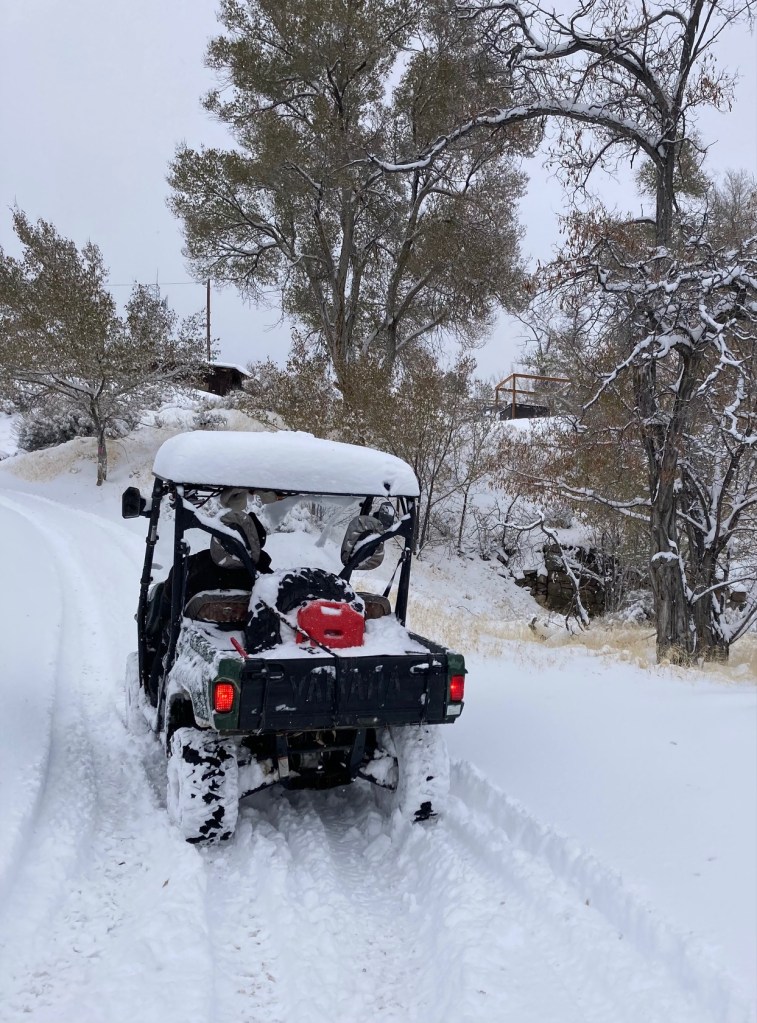
#3 is the one that spoke to me today. I do go outside in the winter. I really do! I usually walk every day, or almost every day, but I also love to lounge around the house in my pajamas. Anyway, this morning after reading admonition #3, Mr. P and I pulled out our ski pants from storage and started up the Rhino, our old side-by-side 4-wheel trail vehicle. We have only ever used it in the spring, summer and fall before, around town and out on the mountain trails across the road. Never in the winter. Today seemed like a good day to try it out in the snow.

The Rhino just getting started! It performed beautifully even up on the higher trails outside of town.

Breaking a fresh trail over the first ridge of the mountain was exhilarating! What a wonderful ride. It was not unlike snowmobiling. And we were the only ones out there. The only trails we saw were deer tracks once we passed the first half mile. It was more than wonderful to get outside!

And, of course, it’s ever so lovely to come back inside to a warm house, a fire, and your lounging cats.

The perfect warm snack when we arrived home (I think that falls under #1. Focus on Opportunities….)

Wishing you all the most beautiful of days and nights, whatever that means for you. Much love, Lori

12 Comments

Filed under Nature, Seasons, Winter

Embrace Autumn: October’s Beauty in Nature

Hello, October!

Suddenly the leaves turn red, yellow, and orange; the night temperatures dip into the thirties, and I enjoy sitting in my front yard both in the morning and the early evening. Ahhh . . . those morning coffees and evening wines . . .

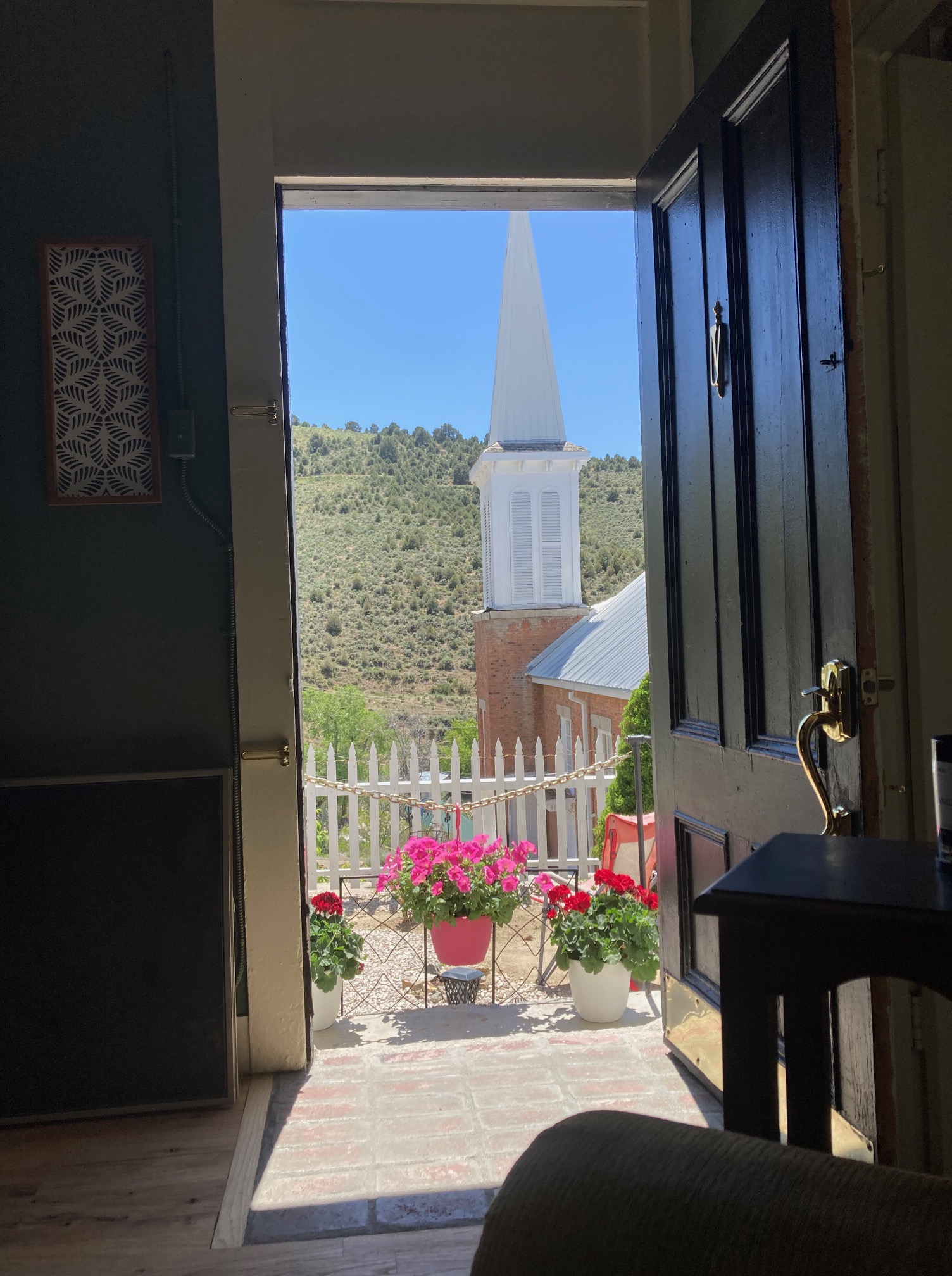
The steeple front, right, is on the old Methodist church, now our community center. The steeple across the canyon (you may have to zoom in if the image is too small) is on St. George’s Episcopal church, where I attend. Sunday services have never stopped at St. George’s since the church opened in 1878.

Just a month ago it was much too hot to sit here for any length of time. It is an unusual yard, not yet shaded, one that we created by tearing down an old carport that covered the entire front of our old parsonage for sixty years. This reclaimed space has an incredible view of two one-hundred-plus-year-old church steeples and an impressive hillside on this, the northern end of our section of the Toiyabe Mountains, but no large trees yet. We have planted an oak, a cottonwood, and a blue spruce there, but they are small still.

That evening wine.

Our little town of Austin, Nevada is located in central Nevada’s sparsely-populated, history-rich Lander County in  “. . .the Toiyabe Range, a mountain range in Lander and Nye counties, Nevada, United StatesThe range is included within the Humboldt-Toiyabe National ForestThe highest point in the range is Arc Dome (11,788 feet, 3592 m), an area protected as the Arc Dome WildernessThe Toiyabe Crest Trail runs along the Toiyabe Range for over 70 miles, and is one of the most challenging and secluded trails in the United States.”  U.S. Forest Service, www.fs.us.gov.

In October, we venture out on the mountain trails, we get supplies ready for the long winter to come, and we sit in quiet reverie, grateful for nature’s hush. Enjoying the splendor. Soon, it will be too cold to sit out here without a coat. Soon, there will be more time inside, tending the fire, cooking large pots of soups and stews, reading, and writing.

This gradual gathering of the special autumn light, the relish we feel as we take it in, and our own eventual inner-directed shift is a very great gift as the seasons change, I believe.

Mostly Marigolds! Some of my favorites.

Here is a poem of great beauty by John Keats on the season:

 “To Autumn”

Season of mists and mellow fruitfulness,

  Close bosom-friend of the maturing sun;

Conspiring with him how to load and bless

  With fruit the vines that round the thatch-eves run;

To bend with apples the moss’d cottage-trees,

  And fill all fruit with ripeness to the core;

    To swell the gourd, and plump the hazel shells

  With a sweet kernel; to set budding more,

And still more, later flowers for the bees,

Until they think warm days will never cease,

    For summer has o’er-brimm’d their clammy cells.

Who hath not seen thee oft amid thy store?

  Sometimes whoever seeks abroad may find

Thee sitting careless on a granary floor,

  Thy hair soft-lifted by the winnowing wind;

Or on a half-reap’d furrow sound asleep,

  Drowsed with the fume of poppies, while thy hook

    Spares the next swath and all its twined flowers:

And sometimes like a gleaner thou dost keep

  Steady thy laden head across a brook;

  Or by a cider-press, with patient look,

    Thou watchest the last oozings, hours by hours.

Where are the songs of Spring? Ay, where are they?

  Think not of them, thou hast thy music too,—

While barred clouds bloom the soft-dying day,

  And touch the stubble-plains with rosy hue;

Then in a wailful choir the small gnats mourn

  Among the river sallows, borne aloft

    Or sinking as the light wind lives or dies;

And full-grown lambs loud bleat from hilly bourn;

  Hedge-crickets sing; and now with treble soft

  The redbreast whistles from a garden-croft,

    And gathering swallows twitter in the skies.

Written September 19, 1819; first published in 1820. This poem is in the public domain.

Hello, October! And Welcome!

7 Comments

Filed under Nature, poetry, Reading, Seasons, Uncategorized