Joy Neal Kidney’s treasury of family stories traces the lives of seven generations of her ancestors– their joys, their hardships, and their enduring faith.
The short, lyrical portraits of the lives of these women along with their husbands, sons, and daughters begin with Jane (Watson) Branson who was born in 1782 and end with Joy, herself, the memory keeper who researched, gathered photographs, recorded and wrote the lovely tributes, poetry, and historical details, and brought it all together for her family—and for her readers.
This charming volume gives all of us a delightful and heartfelt glimpse into the way our ancestors give us life, tradition, strength, and love, while reminding us of the many reasons we should honor them and remember them.
It’s a beautiful little gem of a book. Highly recommended!
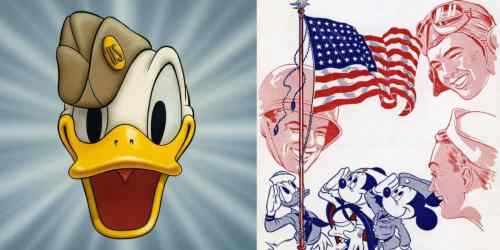
Disney’s Donald Duck, WWII. I can see why Dad chose to imitate this particular character. He was very proud of his Scottish roots!
Some time ago I responded to a fellow blogger, GP, Pacific Paratrooper, a WordPress.com site of Pacific War era information (https://wordpress.com/reader/feeds/4440944/posts/5114548606) about his article, “Disney and WWII,” posted Feb. 12, 2024. The post both tickled my fancy and triggered positive childhood memories, but also, delivered a good dose of regret. I knew so little about my dad’s service, and there was no one living I could ask.
Here is a record of our brief exchange:
Me: My dad was a WWII Marine. I didn’t think it was odd that he could speak to my brother and me in full Donald Duck voice because he just did. He never spoke about why. He did drive us from Wisconsin to California to visit Disneyland when it opened. So much I wish I could ask him now.
GP: May I ask what unit he was in? There might just be a good reason. Disney made training videos, etc. too.
Me: I am ashamed to say that I don’t know his unit.
GP: So many of us have questions we wished we had asked.
As the days passed, I kept going back to GP’s article. I couldn’t reconcile the fact that I had practically no knowledge whatsoever of my father’s service in World War II with who I believed I was: a loving daughter, a lover of history, a teacher of literature, writing, and the Holocaust, a writer of historical fiction, a devoted library worker . . . how was it that I knew so little about my own father’s relationship to such tremendously important world events?
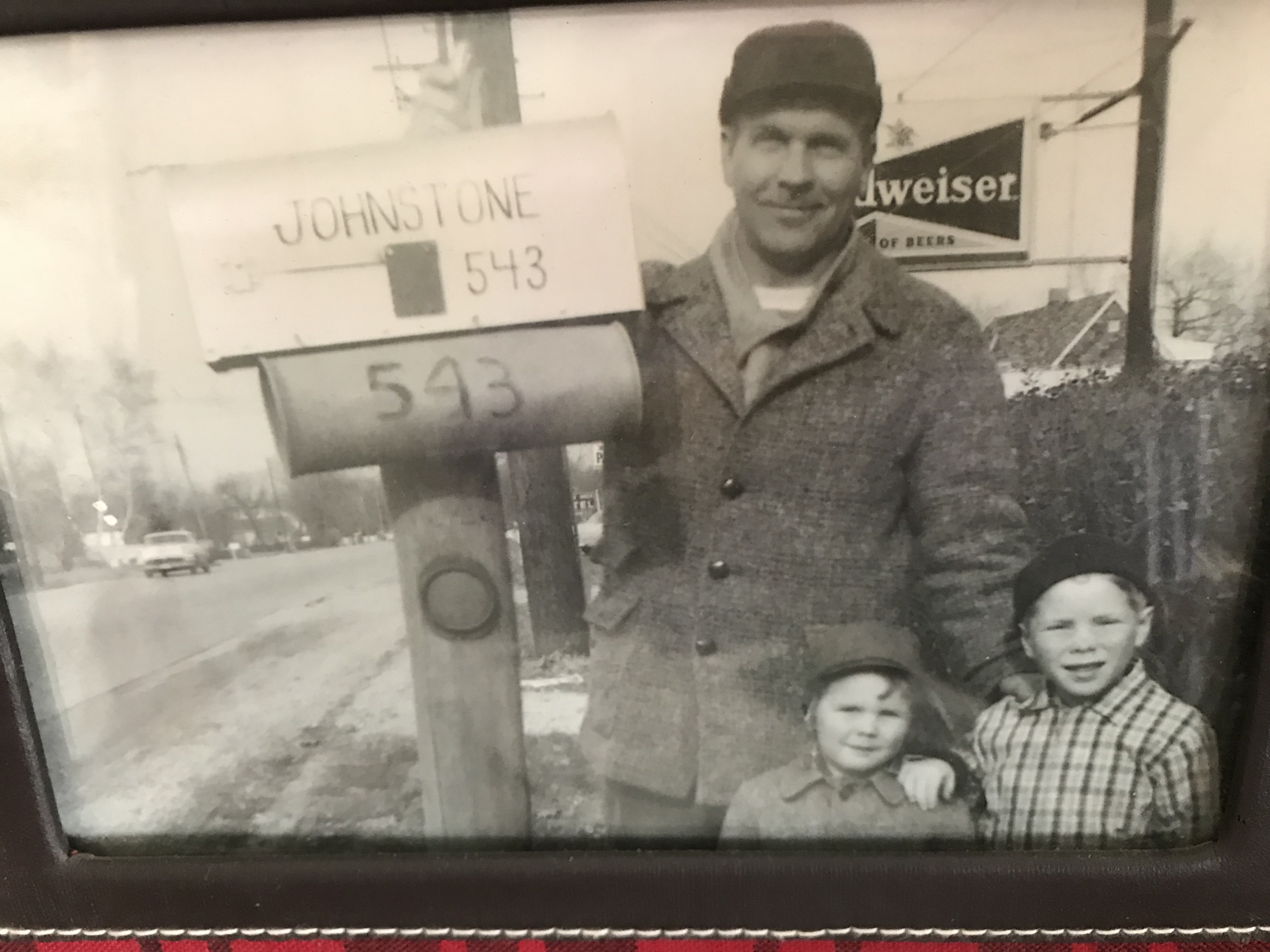
Dad, Lori and Billy. About 1959.We lived next door to a bowling alley, but Lake Michigan was in our backyard!
An online search informed me that I could request my father’s United States Marine Corps Separation Documents and Personnel Records from the National Personnel Records Center at the National Archives, www.archives.gov. I did so, and some months later I received a short stack of copied documents dating back to my father’s voluntary enlistment the day after the Pearl Harbor attack.
I did remember that. It was one of the few stories Dad repeatedly told my brother and me, that he had waited in a line two blocks long in his hometown of Chicago, Illinois to join the Marines the day after Pearl Harbor. It painted a picture of patriotism that stayed with me. I have heard myself repeat it many times throughout my life. My dad, the story revealed, was one of the true heroes of The Greatest Generation.
Here is the rest of the story, as much as I was able to glean from the archives:
Pearl Harbor Attack. World War II Facts.org
When Pearl Harbor was attacked (December 7, 1941), William Harold Johnstone was 21 ½ years old. He had turned 21 on his Flag Day birthday, June 14, 1941. He began active duty on January 5, 1942. He was a high school graduate, and he had completed one year of college. His stated major was Pre Med. Qualified sports listed were track, football, basketball, and swimming. It was also noted that he sang in the church choir. He worked at Montgomery and Ward Co. as a silk screen printer.
I do remember my mom telling me Dad had wanted to be a doctor but that after his war injuries he had never gone back to college. I know he was always interested in medicine. Also, I remember a story about how he swam out and back to a pier or perhaps a buoy some distance off the shore of Lake Michigan and back as a teen, which I gather was somewhat of a feat / badge of honor. Also, he mentioned that at one time he had the nickname “Johnny Rock” — perhaps an homage to both his last name (Johnstone) and his physical fitness. His record shows he was 5 foot, 8 inches tall and he weighed 136 pounds. Not a big man, but strong.
Dad’s father, an immigrant from Scotland, had died when Dad was only four-years-old, so he was raised by his mother, Lorene, and her sister, Mary, along with his older brother, Donald. Tragically, Donald died at age twelve. It was then, my dad told me that he knew he had to give up childish games and work to help his mother and his aunt.
This then, is a portrait of the twenty-one-year-old man who entered the military.
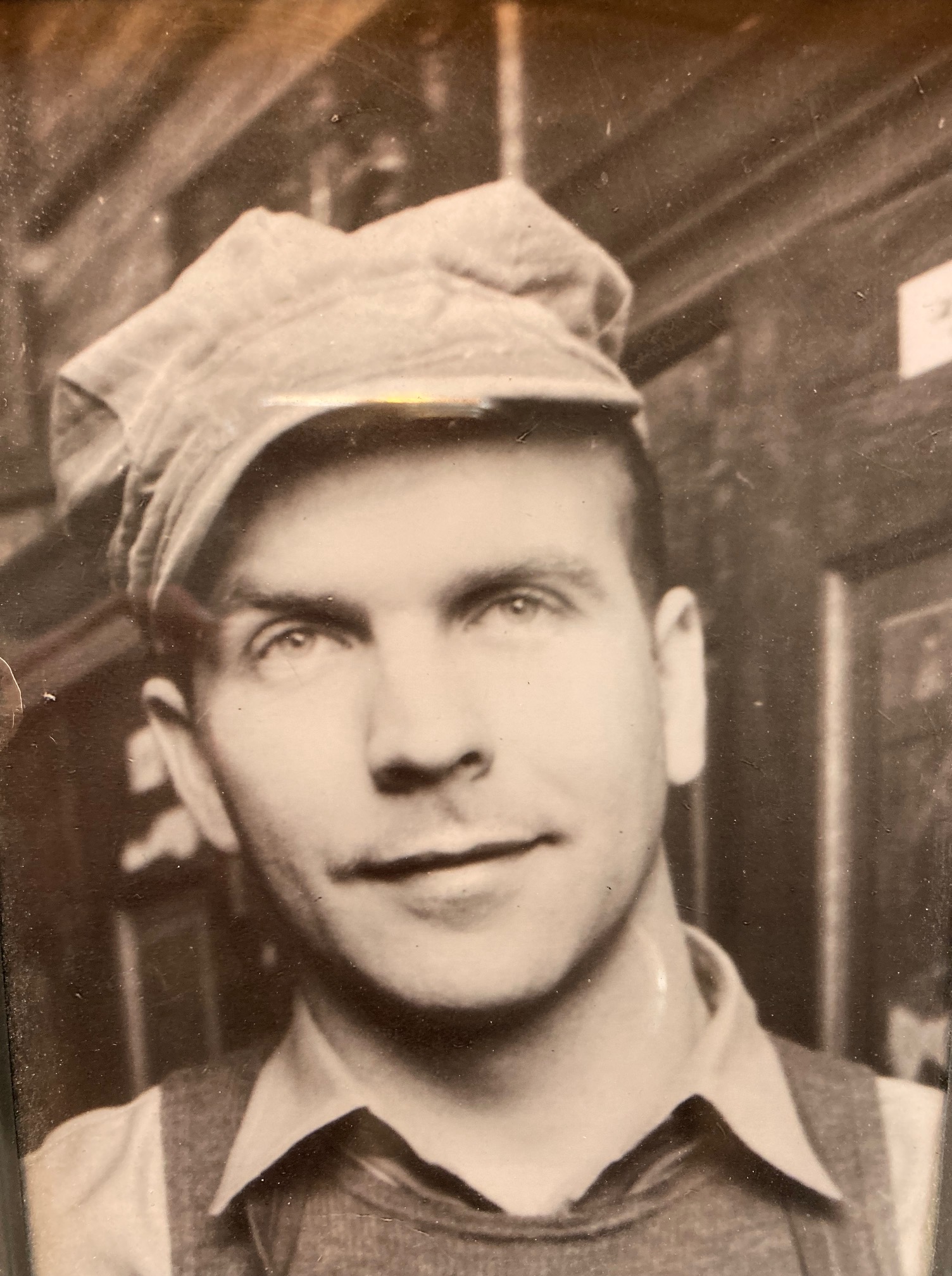
My Handsome Dad
Dad’s original principle military duty early on was Surveyor 227 Rank Private First Class. USMC, 19th Marines Engineer, 3rd Marine Division Fleet Marine Force, Camp Elliott, San Diego, CA.
Later I see him listed as Private 1st Class, 339815, “I” Company, Third Battalion, 22nd Marines, Sixth Marine Division.
After his initial training, it seems Dad shipped out. The reports are difficult to decipher, but they contain notes of his being in Pearl Harbor, Hawaii; Auckland, New Zealand; Guam, Marianas Islands; Guadalcanal Island, Solomon Group; and Okinawa, Ryukyu Islands, Japan. The only detailed reports refer to Guam and Okinawa.
Guam in World War II, National Park Service
Here is Guam:
From James Forrestal, The Secretary of the Navy, Washington
The Secretary of the Navy takes pleasure in commending the First Provisional Marine Brigade for service as follows:
“For outstanding heroism in action against enemy Japanese forces, during the invasion of Guam, Marianas Islands, from July 21 to August 10, 1944. Functioning as a combat unit for the first time, the First Provisional Marine Brigade forced a landing against strong hostile defenses and well camouflaged positions, steadily advancing inland under the relentless fury of the enemy’s heavy artillery, mortar and small arms fire to secure a firm beachhead by nightfall.
Executing a difficult turning movement to the north, this daring and courageous unit fought its way ahead yard by yard through mangrove swamps, dense jungles and over cliffs and, although terrifically reduced in strength under the enemy’s fanatical counterattacks, hunted the Japanese in caves, pillboxes and foxholes and exterminated them.
By their individual acts of gallantry and their indomitable fighting teamwork throughout this bitter and costly struggle, the men of the First provisional Marine Brigade aided immeasurably in the restoration of Guam to our sovereignty.”
All personnel serving the First Provisional Marine Brigade, comprised of: Headquarters Company; Brigade Signal Company; Brigade military Police Company; 4th Marines, Reinforced; 22nd Marines, Reinforced; Naval Construction Battalion Maintenance Unit 515, and 4th Platoon, 2nd Marine Ammunition Company, during the above mentioned period are hereby authorized to wear the NAVY UNIT COMMENDATION Ribbon.
My dad never described any of these experiences to me, and I don’t remember ever seeing that Commendation Ribbon. I hope he was able to talk about it with someone, but I do not know if that was the case. It grieves me.
On Okinawa:
The next specific report in the records begins with a Report of Combat Casualties, which states that William H. Johnstone of the Twenty Second Marines, Sixth Marine Division was Wounded in Action on May 12, 1945 on the island of Okinawa, Ryukyu Islands. Recorded on 13 May 1945. Diagnosis: Wound Fragment Face. Prognosis: Serious.
On 18 May 1945, U.S. Fleet Hospital No. 111 reports William H. Johnstone, Wounds, Multiple. Wounded in action against an organized enemy. Shell struck near patient causing injury.
A U.S. Fleet Hospital letter to my grandmother, written July 1, 1945 reports Dad’s condition as good, and states that he will be returned to active duty in the near future, so it looks like he was hospitalized for approximately a month and a half.
The record states:
In the name of the President of the United States, and by direction of the Commander in Chief, U.S. Pacific Fleet, the Purple Heart is awarded by the Medical Officer in Command, U.S. Fleet Hospital Number One Hundred and Eleven to: William H. Johnstone, Private 1st Class, USMC for wounds received in action against an enemy of the United States on 14 May 1945.
The battle of Okinawa “was one of the bloodiest in the Pacific War, claiming the lives of more than 12,000 Americans and 100,000 Japanese, including the commanding generals on both sides. In addition, at least 100,000 civilians were either killed in combat or were ordered to commit suicide by the Japanese military (Battle of Okinawa | Map, Combatants, Facts, Casualties, & Outcome | Britannica).
Battle of Okinawa, Brittanica
I do remember seeing the Purple Heart. My father gave it to my brother. Unfortunately, it was lost during my brother’s divorce, and it was never returned to the family.
I would like to thank GP and his Pacific Paratrooper WordPress blog for getting me started on this mission of discovery. Without his article on Disney in the Military and my memories of a loving father amusing my brother and me with an array of his silly Donald Duck performances, I doubt that I would have been able to share this information with my children and grandchildren. So, thank you, GP!
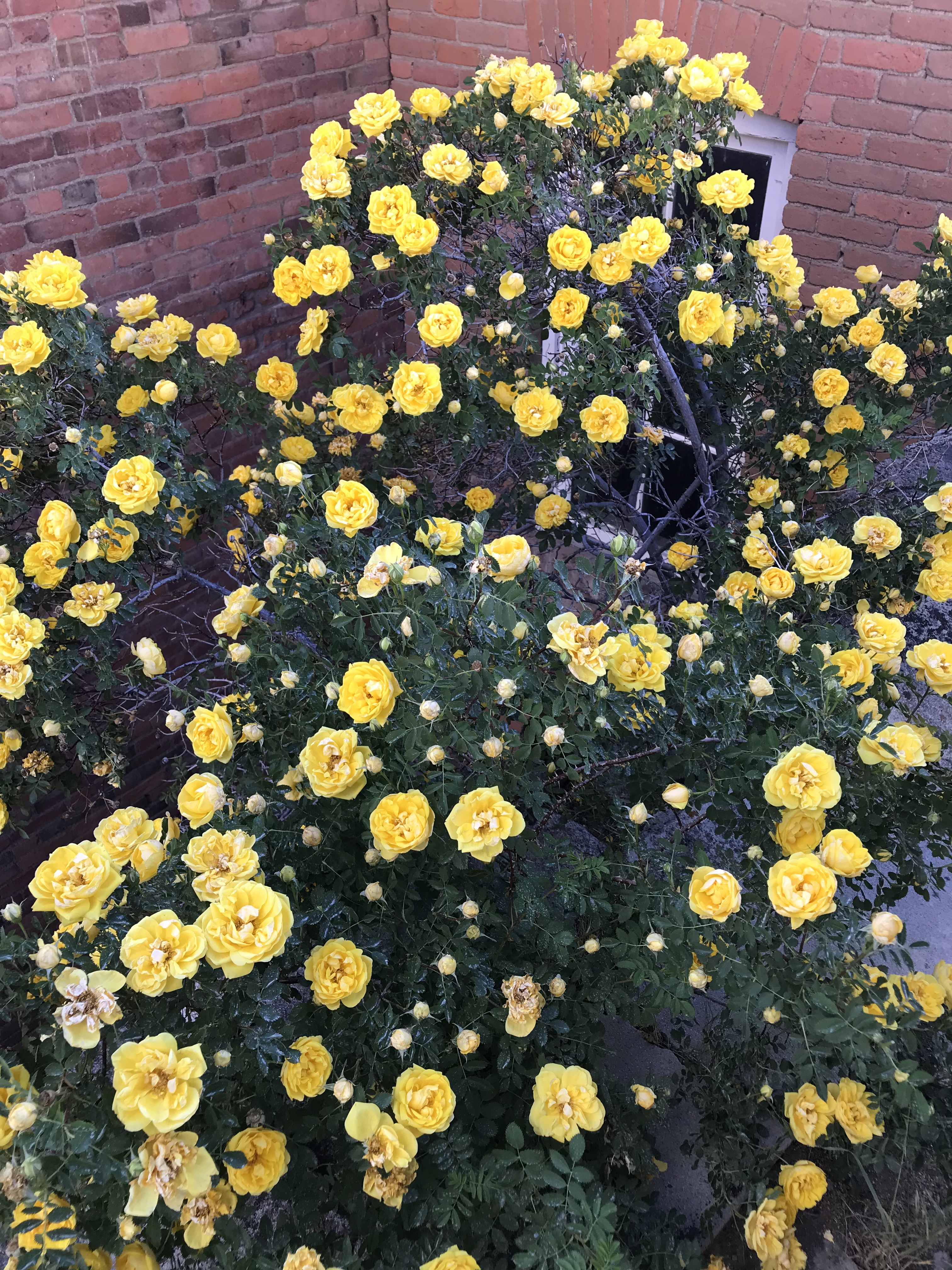
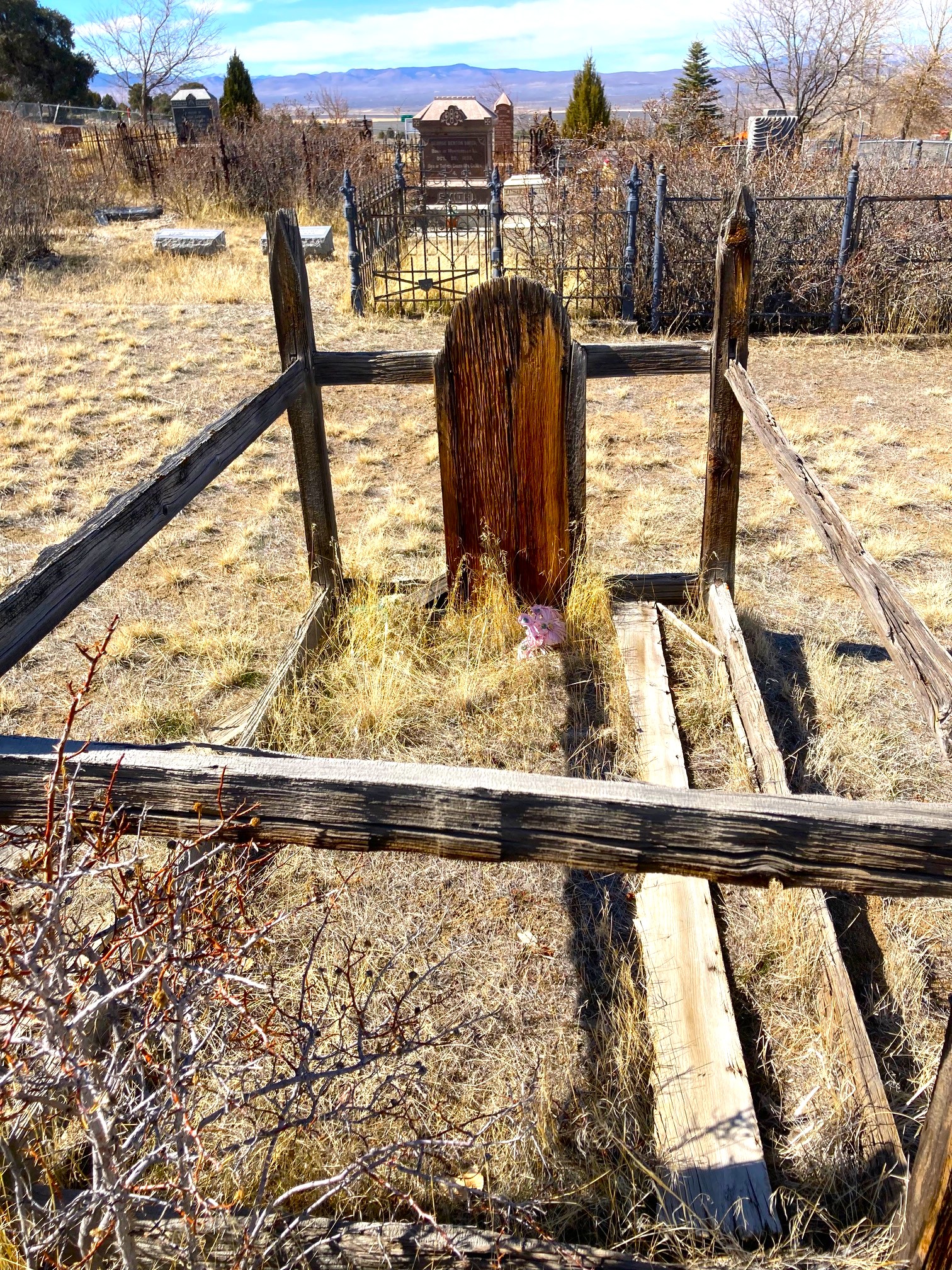
Austin, Nevada. Yesterday. A Walk Through the Cemetery. The thorny branches covering the grave will burst into bloom this summer. I find that comforting.These are the same type of wild roses. This is the June bloom in our yard.
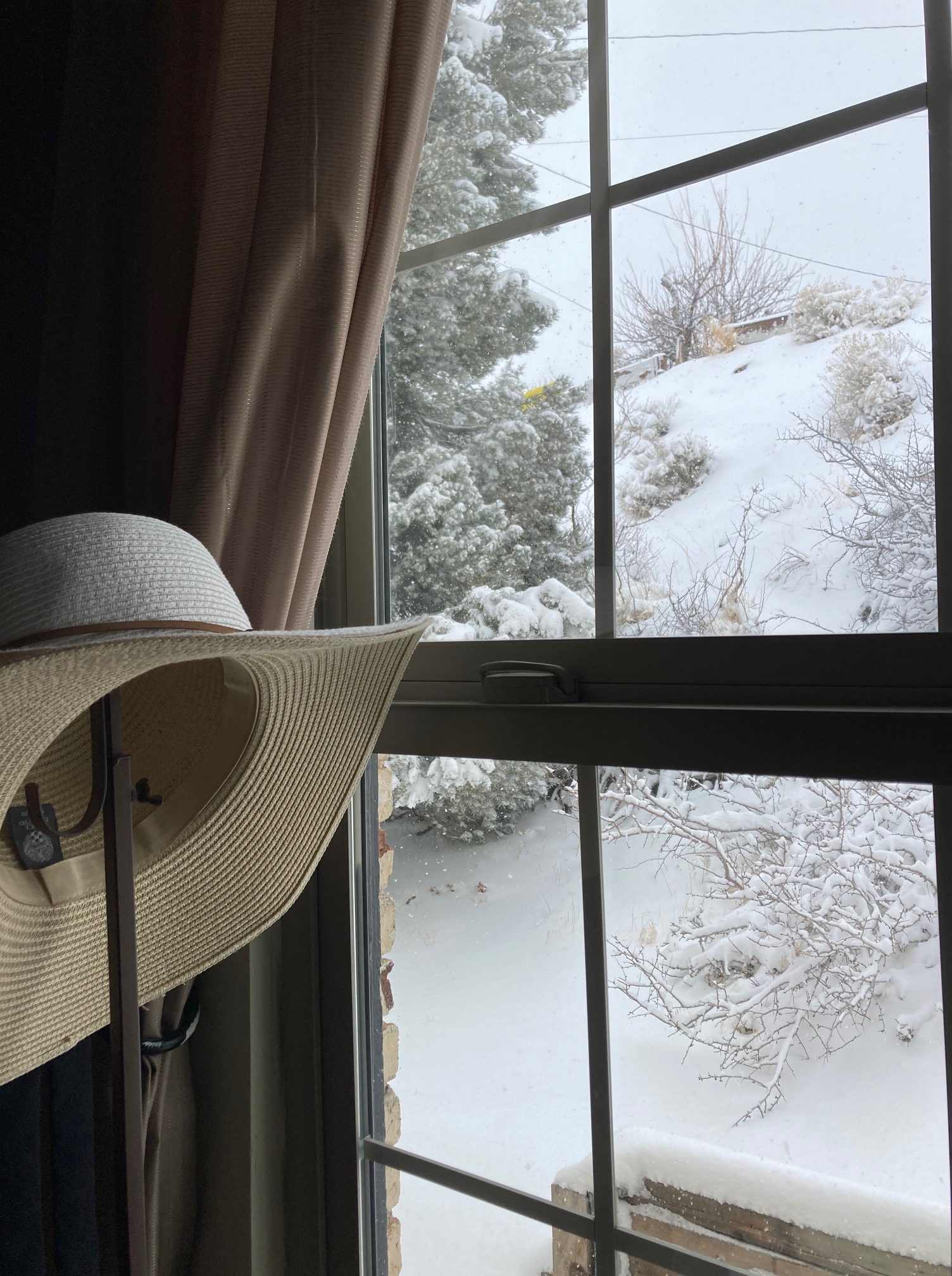
Yesterday, Austin, Nevada was bathed in sunshine and warm temperatures. Today Austin is buried in snow. It’s mostly awesome, not really a misfortune or doom, and we knew it was coming. Thank you, meteorologists!
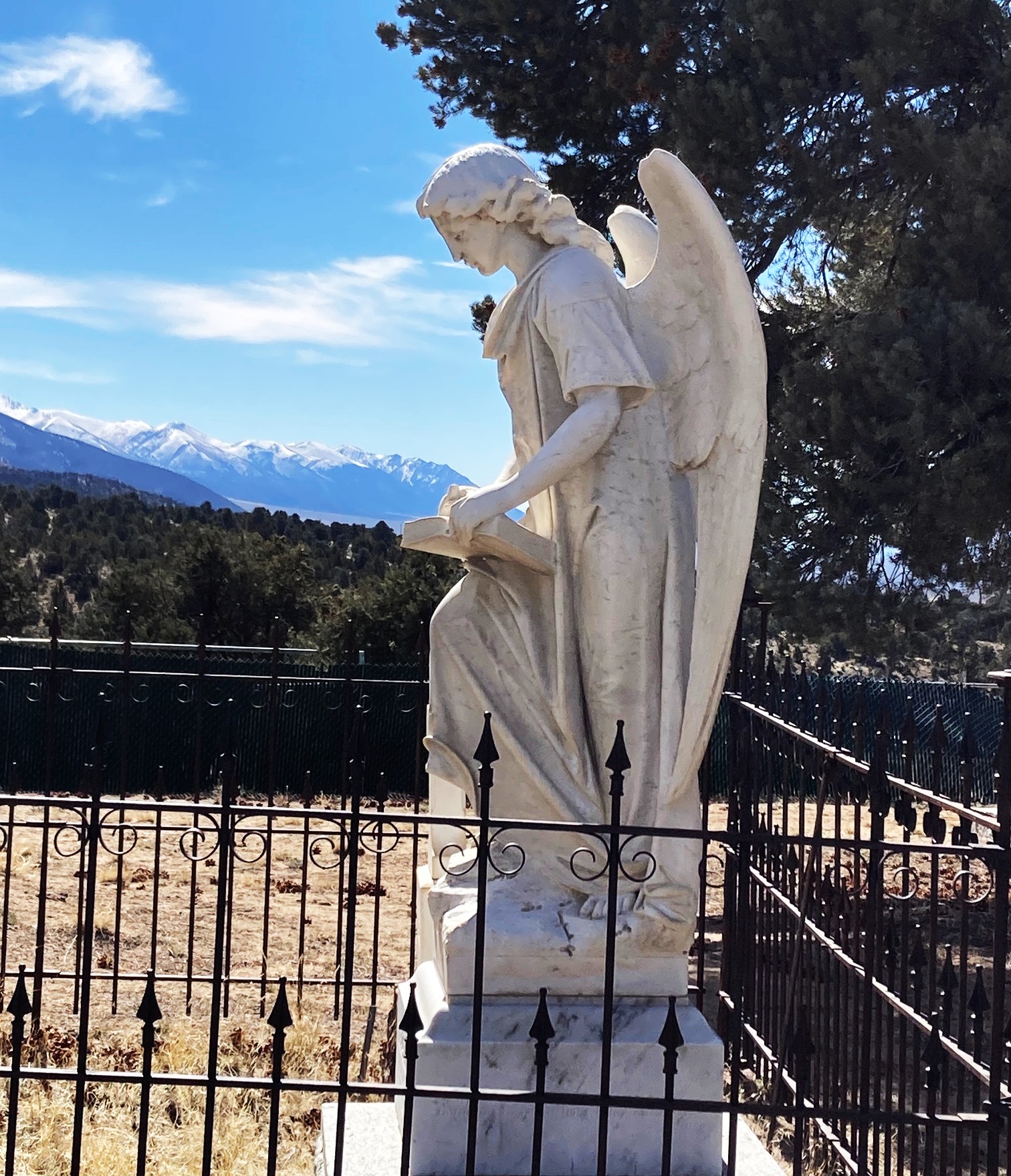
Austin History, March 1, 2025Austin YesterdayNearer My God To Thee, Nearer to Thee
We needed snow. We had a dry winter.
Today
As the snow continues . . .
Weather is life. No doubt this is the reason it is so often the topic of small talk. It’s life.
Weather is also death. I fear for our friend who left town just as the snow started, heading west on Highway 50 directly into its path.
And it affects all of us. Humans and nonhumans alike.
Here then is a tiny presentation of the weather in Austin, Nevada, USA, over a two-day period. Life and death. Ironic juxtaposition that the photos with elements of death are awash in sunshine? It was not intended. And that is telling.
It stopped snowing for a bit. But it’s starting again.
Whatever the weather where you are, I hope you are safe and always, always, rolling with the changes. Happy Spring–Soon!
Just before Christmas, Mr. P and I drove to the Hickison Petroglyph Recreation Area, which is located a short drive from our home over the Austin Summit on Highway 50, “The Loneliest Road in America.” I love nature and history, as well as walking and exploring new (to me) places, and this little day trip exceeded my expectations. As soon as we arrived, I was surprised that I had not heard much about the place in the four-plus years we have lived in Austin. Only one person had ever mentioned the spot to me, and that was a traveler who stopped in to see our historic general-store-turned-library and told me he had camped there the night before. I imagine the locals have all been there, and they have been good at telling us about other wonderful places to explore in the area, so it mystifies me that no one thought to suggest this historically and scenically stunning spot to visit.
Therefore, I will do so. If you travel Highway 50, be sure to make this one of your stops!
Some history:
“The Hickison Petroglyph Recreation Area provides public access to petroglyphs created by prehistoric people living near Hickison Summit at the north end of the Toquima Range and the south end of the Simpson Park Mountains in the U.S. state of Nevada. . . In the general vicinity of Hickison Summit are multiple prehistoric hunting and living sites dating to 10,000 B.C. as well as more recent sites such as mining camps and ranches.
Trails used by mid-19th century explorers John C. Fremont and James H. Simpson pass through the area as do the routes of the Pony Express and the Overland Stages. At the time of the earliest prehistoric sites, the Great Basin contained large lakes, including Lake Toiyabe and Lake Tonopah in the Big Smoky Valley west of the summit. As the climate became drier, the lakes evaporated, and the former lake dependent cultures were replaced by hunter-gatherers. When the first European-Americans arrived in about 1850, Western Shoshone people lived in the region” (https://en.wikipedia.org/wiki/Hickion_Petroglyph_Recereation_Area).
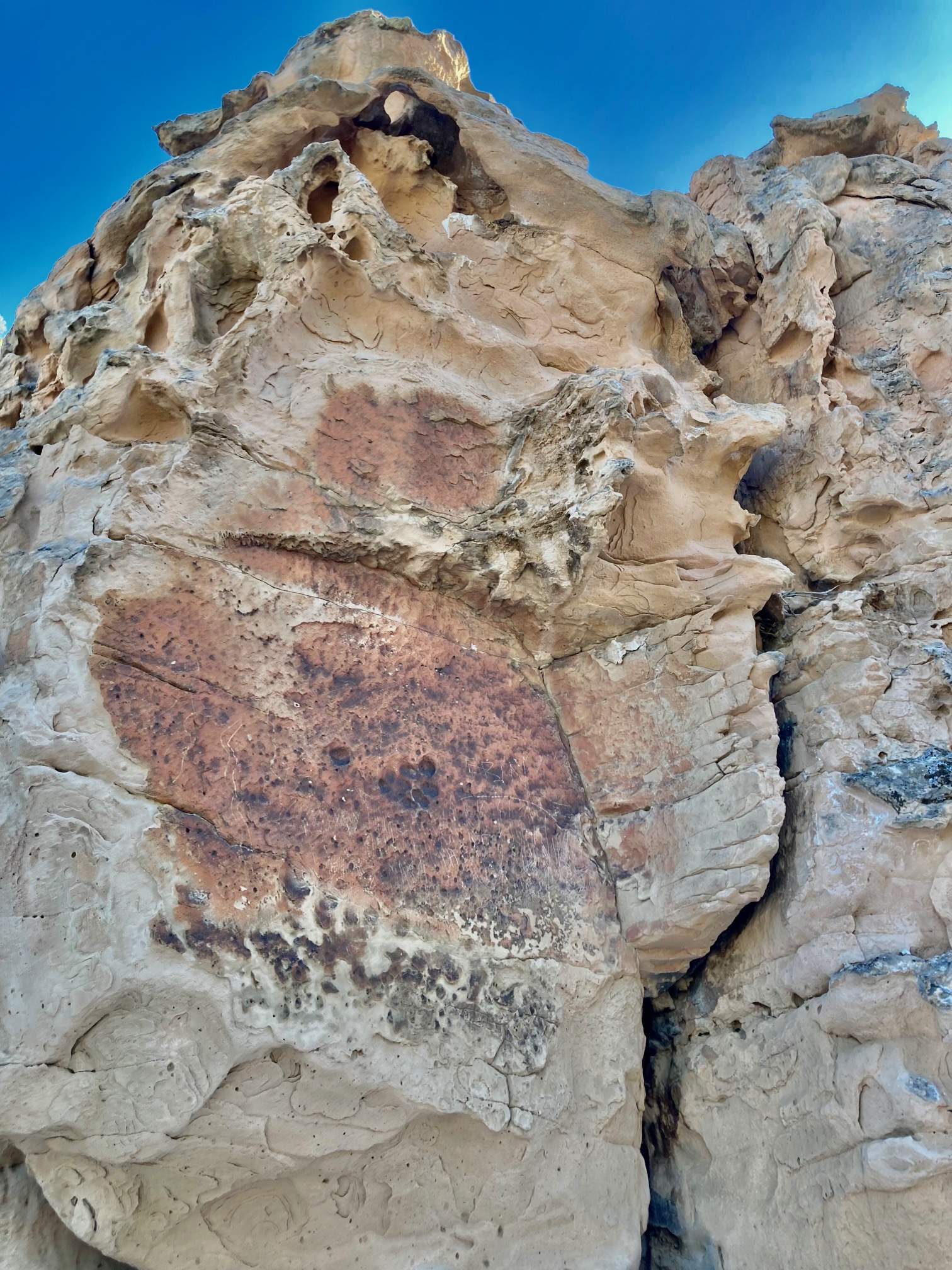
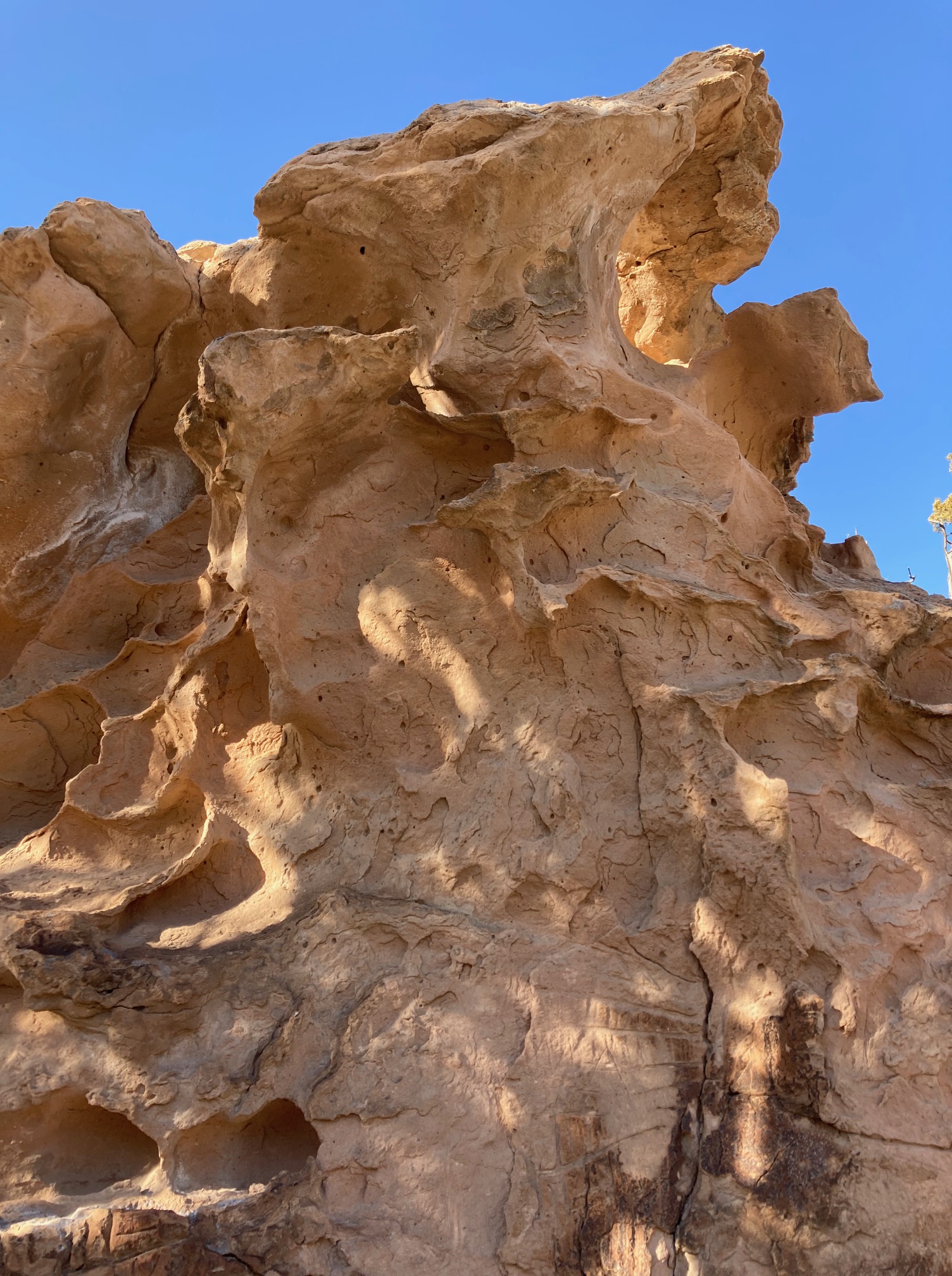
Wow, right? My dear friend, Cheryl, just informed me that when you see faces in things, it’s called pareidolia. I definitely see a face here, and a neck as graceful as Audrey Hepburn’s.
Here is the proposed text for the marker plate, State Historical Marker No. 137, from the Nevada State Historic Preservation Office:
The summit is named after rancher John Hickison because the road to his ranch passed over the summit. About one-mile northwest lies Hickison Summit, a natural pass between two low buttes. Passes and canyons were common Native American hunting locations for funneling and ambushing bighorn sheep and deer herds. Archaeological sites in the region reveal a dominance of bighorn bones and horn, reflecting the bighorn’s importance to Native Americans as food and raw material for tool production. The bighorn lacked resistance to diseases introduced by domestic sheep in the nineteenth century, and this resulted in catastrophic bighorn population declines through the West. Prehistoric native American petroglyphs, images and designs are carved into rock surfaces and are interpreted along a short hiking trail. Archaeologists hypothesize that the meanings for these designs include ceremonial, female puberty markers, ritual hunting magic symbols, and rock art or simply graffiti.
On the day we went, there were no interpretive booklets available, and other than a lone camper, no other people, so we didn’t learn as much as we would have liked. Still, it was stunning, and felt somehow sacred. The park was silent and isolated enough that all the years of this century easily fell away, and then echoes of past centuries offered themselves to our quieted minds. I was saddened, too, as I often am, thinking of how much is lost in the mists of history. What a stunning sight it must have been, all those herds of bighorn sheep and deer, and what a shame that diseases introduced by newcomers decimated the population even unto today.
Standing here, looking across the Great Smoky Valley to the Toiyabe Mountains, blue in the distance, I felt connected to all those who came before me. . . human, bird, mammal. . . all.
Such an amazing planet. Such an amazing gift to live here. Sending love and best wishes for a healthy, joyful, and adventurous 2025. Happy New Year!
Welcome to a space for all moms. This is a platform where I write my experiences as a mom in her primes—sharing real-life stories, lessons learned, and the ups and downs of motherhood. My goal is to inspire, support, and connect with fellow moms who are also embracing the journey of raising a family while growing as women.



























 LakeArrowheadLadyWriter