Tag Archives: Book Review

Books Get Me Through The Great Alone

It’s been two weeks since I left Nevada and one week since I arrived at my new Michigan home. All of these days have been solo; I drove alone, I arrived alone to an empty house, I spend my days here alone. There’s a theme building . . . For now!
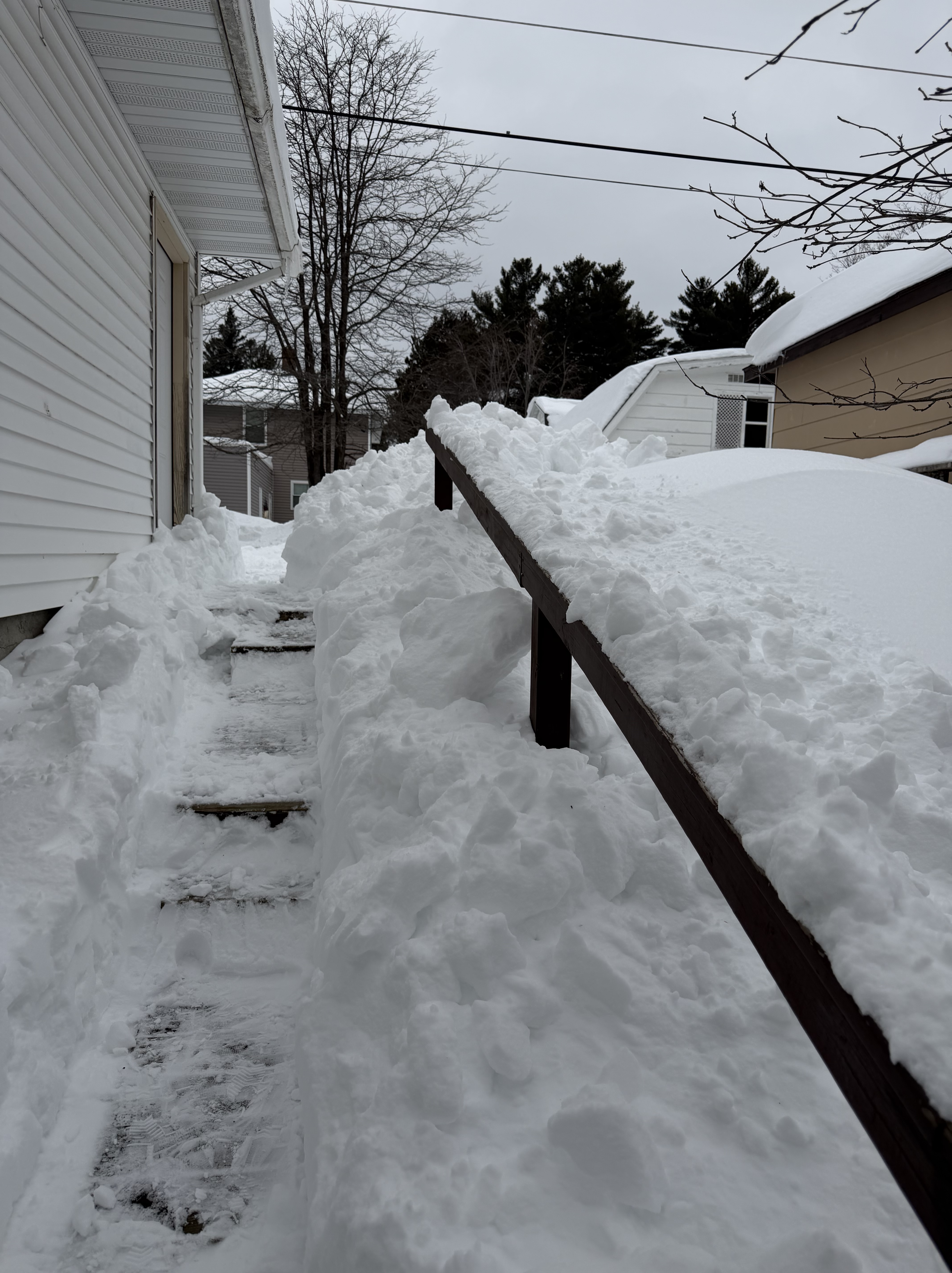
The Way In

But husband and kitties will be joining me soon.

The Dreaded Cot (I do not love it)
A Lonely Room (but I love it!)

As an introvert, this hasn’t been particularly tough. I love people, but I also love solitude. I just got the internet yesterday, and that’s fun because now I can write and publish my writing more easily. No TV here yet. No furniture to speak of. I have one little lamp table that fit in my car, a folding camp chair, and a cot. That’s it. Everything else will come in the moving van next week. So, what do I do all day?

I clean and I read. Often, at the same time, by listening to audiobooks using the Libby library App. One of the books I’ve enjoyed so far during this extended period of solitude is aptly The Great Alone by Kristin Hannah. It’s a tough book about a tough time and a tough place, but I liked it. Alaska in the 1970s, mental illness, abuse . . . it’s got it all, but it isn’t only that, of course. It’s also a book filled with nostalgia, love, and the awesomeness of nature.

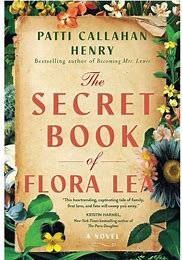
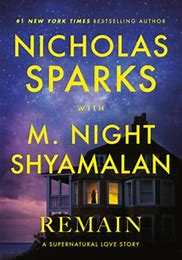
Other books I read either just prior to moving, during the drive, or since my arrival are: We All Live Here, Moyes; Sandwich, Newman; The Secret Book of Flora Lea, Henry; Remain, Spark and Shyamalan; The Missing Half, Flowers and Kiester; and currently, The Island of Sea Women, See. Each book has its merits.
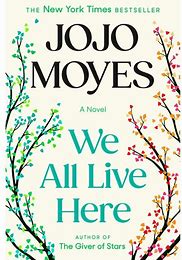
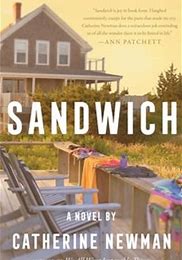
I found both We All Live Here and Sandwich charming and humorous. Both are light, contemporary novels with women protagonists wrestling with life changing events and the love of family.

The Secret Book of Flora Lea took me to one of my favorite historical settings, World War II England, in the countryside and also to London in the 1960s. It’s a delightful book about sisters, families, love, and the importance of stories.
Remain and The Missing Half are mysteries, with Remain being the more entertaining of the two for me. The Missing Half helped pass the time, but Remain’s ghostly love story captivated me at times, including during several memorable scenes that made me shiver.
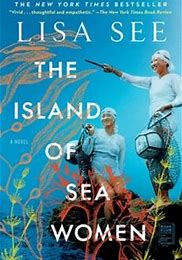
And now I’m listening to The Island of Sea Women. It’s taken me to a part of the world I know very little about, which I love, because I am learning so much. It’s set in Korea from the story’s beginning in the 1930s and will move through the war years and take me to the present day. It’s about women sea divers (an amazing group of female divers who earn the money for their families while their husbands care for the children), and it’s the story of two friends Mi-ja and Young-sook.   
As you can see, I’ve not been alone, not really, for I’ve been traveling through time and place along with the characters created by the authors of these varied and appealing novels, carried away by their stories. It’s a kind of magic really, the way a reader lives both inside and outside of a book—simultaneously in the room, and also somewhere else far away.

I love this line about reading from Stephen Chbosky from his young adult novel, The Perks of Being a Wallflower:

“Sometimes, I read a book, and I think I am the people in the book.”

Exactly.
33 Comments

Filed under Authors, Books, Commentary, Fiction, HIstorical Fiction, Home, Identity, Literary Fiction, Nature, Personal History, Reading, Uncategorized, Winter, World War II

Best Offer Wins?

“In his witty and thought-provoking manner, Mark Twain once famously said, ‘It’s no wonder that truth is stranger than fiction. Fiction has to make sense.’” https://www.socratic-method.com

Sometimes, though, truth is not stranger than fiction. And thankfully, sometimes truth is kinder than fiction, too. Recently a friend and I had both just finished books that bothered us in various ways, which isn’t to say books shouldn’t bother us—it’s quite often important that they do—it was just that in the case of these books, the way we’d been bothered had less to do with subject matter and more to do with the marketing expectation that readers would respond positively to the various dastardly deeds of the protagonists, and that, indeed, there did seem to be plenty of readers out there who backed up that claim—readers who “loved” these books (and so maybe by extension that means they loved the protagonists? Maybe?).

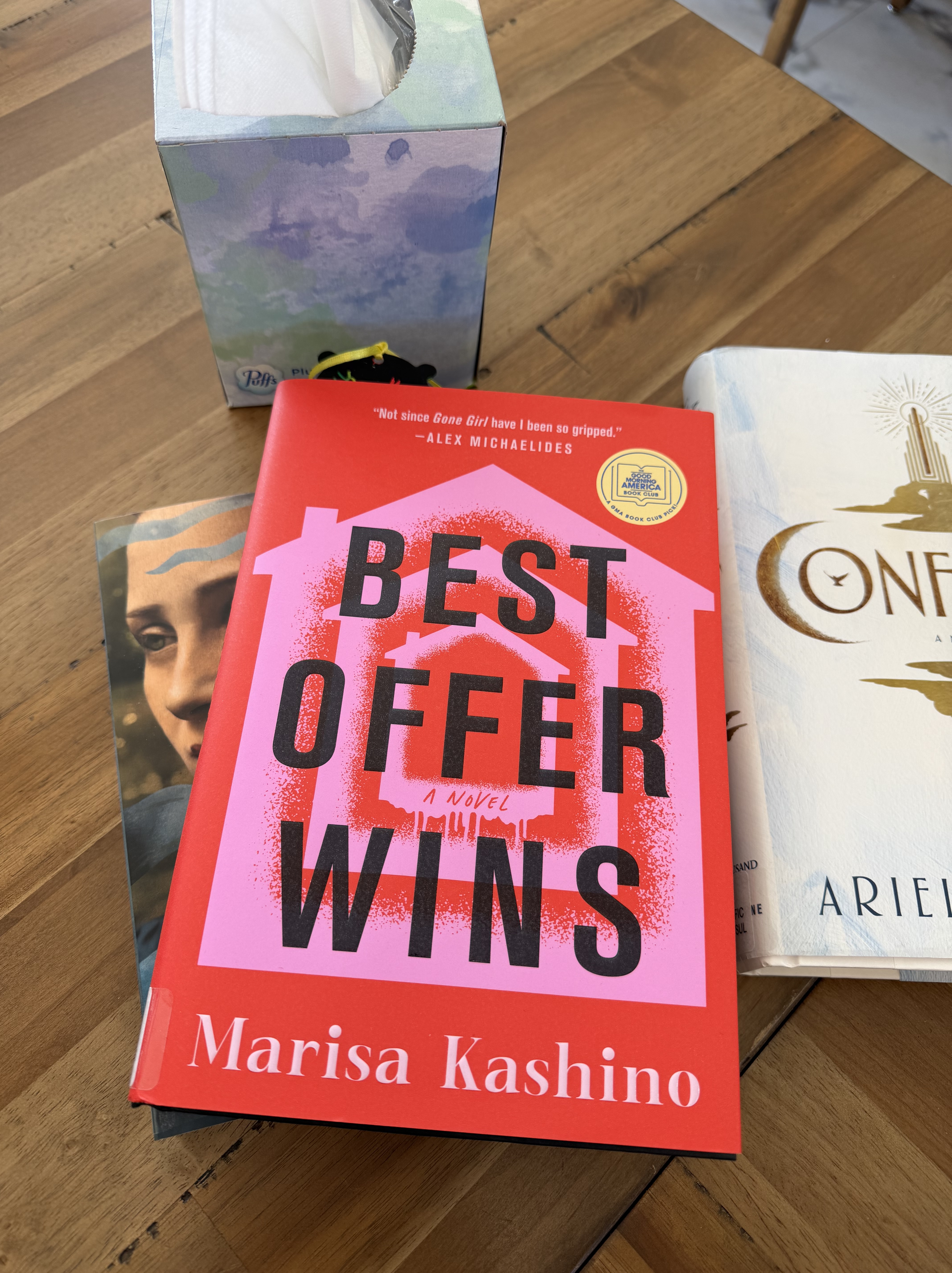
I don’t remember the title of the book my friend was referring to; she said it was something about killers who were in love and only killed bad people—sounded like a Dexter type theme, and I know that was a highly watched television series, so I guess there’s an audience for that. I can’t claim to be someone who is above consuming questionable content. I’ve read hundreds of books in most genres and not all of them have been particularly elevating. That said, I have seldom read a novel with a less likable protagonist than the one Marisa Kashino gives us in Best Offer Wins (With the possible exception of Humbert Humbert, the protagonist/narrator of Vladimir Nabokov’s Lolita).

Best Offer Wins is a Good Morning America Book Club Pick and was published by Celadon Books in 2025. From the book jacket: “…Margo will prove again and again that there’s no boundary she won’t cross to seize the dream life she’s been chasing. The most unsettling part? You’ll root for her, even as you gasp in disbelief.”

Uh. No. But let me take you back to the reason I read that blurb and took the bait. Coincidentally, on the same day my husband and I were submitting a bid on a house we wanted, Marisa Kashino’s thriller about a woman who will stop at nothing to get her dream house came across my desk at the library. It was a new purchase, and my job was to catalog it and get it ready for patron check-outs. I joked with my realtor that I hoped I wouldn’t become as obsessed with home buying as the teaser on the book jacket hinted the book’s protagonist, Margo, did.

Truth being, in this case anyway, less strange than fiction, I didn’t. Thank goodness. But I did check the book out and take it home to read over the weekend. I’m not normally inspired to write reviews about books I don’t like, but there’s something about this one that pushes me. What that tells me is that I did find it engaging, at least enough to finish it, but that, also, it troubled me. I think I kept reading to see if it would be possible to “root for her even as [I] gasped in disbelief.”

That stage never arrived. The backstory on Margo did indicate she’d had very tough breaks, enough of them, too, and that would normally soften a reader’s judgement and bring her to life in a way that would help the reader to care about her, but Margo’s behavior was so egregious that she remained not only unlikable, but monstrous. And I don’t mean monstrous in the sad way that Frankenstein was a monster because he was a victim and you felt sorry for him. Margo’s kind of monstrous is the carefully calculated kind that lacks any hint of personal responsibility or remorse.

I’m not sure what it says about me that I read the whole book anyway, and that gives me pause. I think perhaps my weird fascination with the book represents a part of contemporary America to me that I don’t understand and cannot accept, but that I still keep trying to fathom. I want people to have homes. I want people to care for each other. I want to love my neighbors as myself.

Each turn of the page offered hope, however slight, that Margo would learn some kind of moral lesson or would offer her a kernal of insight, forgiveness, or redemption, but in the end, there was none. No tenderness. No justice. Just a sad expose of a society where dreams can become as dangerous as despair, and the only thing that matters is the win.

In that way, the book is a success, I guess. A pretty good satire. Excellent social criticism, and social criticism is very much in order these days in my opinion. With Best Offer Wins out of the way, I’m happy to announce that Mr. P and I purchased a delightful home in the beautiful UP—the upper peninsula—in the lovely U.S. state of Michigan. We will be off to a new chapter there soon and leaving the awe-inspiring West and central Nevada behind with love for all we’ve learned and the friendships we treasure. By the way, we accomplished the purchase of the Michigan house without any nefarious activities nor bidding war mayhem.  Sometimes, you see, truth is not stranger than fiction, and sometimes it is kinder.

Wishing you all happy days and cozy nights as we move through February and into March. Be Well!

The Upper Peninsula, Michigan, U.S.

58 Comments

Filed under Books, Commentary, Fiction, Home

Lessons in Chemistry / Lessons in Flexibility

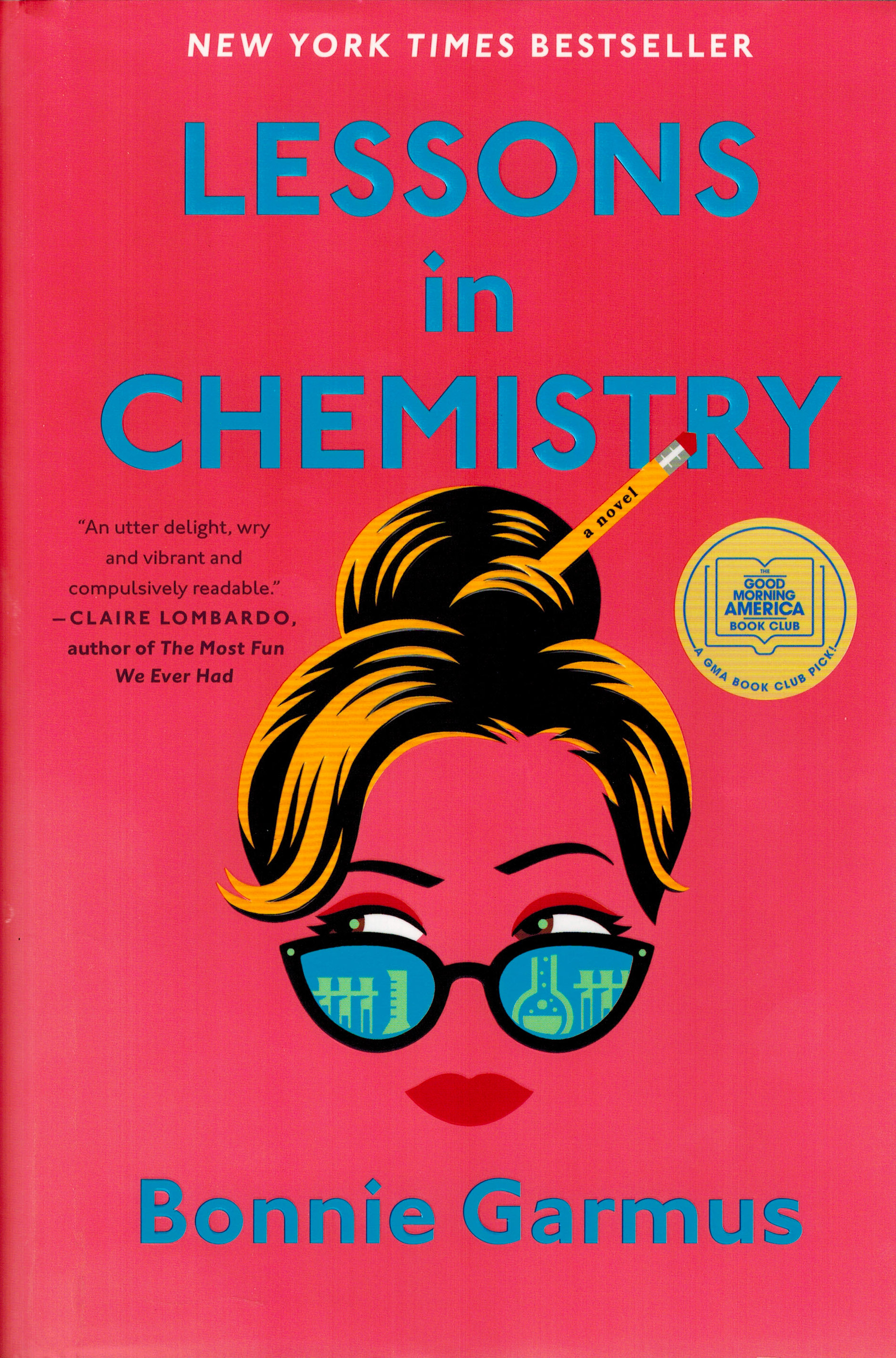
How I missed out on reading Lessons in Chemistry by Bonnie Garmus in the several years since its publication is a classic lesson in the old adage, Don’t judge a book by its cover, and also, a lesson in personal flexibility—that being that there are no doubt a plethora of other excellent books out there that I would love if I had bothered to read them, and sometimes that deprives me of valuable experiences. I heard Lessons in Chemistry was very good, but, eh . . . I thought. Not for me. I’m not into chemistry. The 1950s and early 60s don’t interest me as much as earlier times. It looks somehow . . . I don’t know . . . frivolous?

Hardcover Edition

I’m happy to report that I was wrong on all counts. Well, maybe not the I’m not into chemistry part, but as it turns out, that doesn’t matter. I didn’t need to be into chemistry to appreciate chemist Elizabeth Zott’s deep love of it. I just needed to appreciate Elizabeth Zott, the wonderful protagonist of this deeply funny, tragic, and ultimately affirming story. And that was easy. As for my not being interested in the 1950s-60s, I think I took that period for granted because I am a product of it. I have few memories of my earliest childhood, and of those, most are sad. Those years have not been a time I willingly wish to revisit. It appears I prefer visiting earlier and more dramatic times—times that occurred before I was able to suffer through them in person.

As for the idea that the book was probably frivolous, I definitely derived that from the cover. And I wasn’t the only one. Three years ago, a reader named Lisa Wright posted a question on Goodreads, “Am I the only one who was furious about the pink chick-lit, rom-com cover on this book? It belittles the book in exactly the same way Elizabeth Zott is belittled!”

Bonnie Garmus, the author, answered: “I have to agree–and I’m the author! All I can say is, the publisher did let me have input and I told them I thought it looked like chick-lit (nothing against chick-lit but this book isn’t that). Still, publishers have a lot of experience knowing what an audience will respond to and they thought this was the best way. They’ve been great to work with; we just didn’t see eye-to-eye on this. You can google other covers from the other nations and see you if you think anyone else got a little closer–I think Germany and the UK both did a nice job. I have hopes that this cover will change for the paperback.”

Paperback Cover

The way I fell into reading this book

I went on a trip and forgot to bring my library book. The airport gift shop’s book selection was pretty slim. I didn’t see anything from my TBR list. The cover on the paperback version was slightly less frivolous in my very unscientific opinion than the hardcover I had entered in our public library collection. At least it featured something that looked like the periodic table in the background. I picked it up, sighed, and purchased it.

The book delighted me from the first page. When I read these lines: “Fuel for learning, Elizabeth Zott wrote on a small slip of paper before tucking it into her daughter’s lunch box. Then she paused, her pencil in midair, as if reconsidering. Play sports at recess but do not automatically let the boys win, she wrote on another slip. Then she paused again, tapping her pencil against the table. It is not your imagination, she wrote on a third. Most people are awful. She placed the last two on top.”

Bonnie Garmus had my attention on page one, and she had me laughing and crying and feeling every range of emotion throughout the delicious ride through the air from Reno, Nevada to Minneapolis, Minnesota and back again. I loved this book! Highly recommended.

Have you had this experience? Purposely avoiding something, whether a book or a movie or a sport or an activity, that you later found to be good or valuable? I’m sure I’ve done it a lot!

Luckily for me, this time I was given the gift of proving myself wrong.

Happy Fall, Y’all!

26 Comments

Filed under Authors, Books, Commentary, Uncategorized

King Copper Book Review

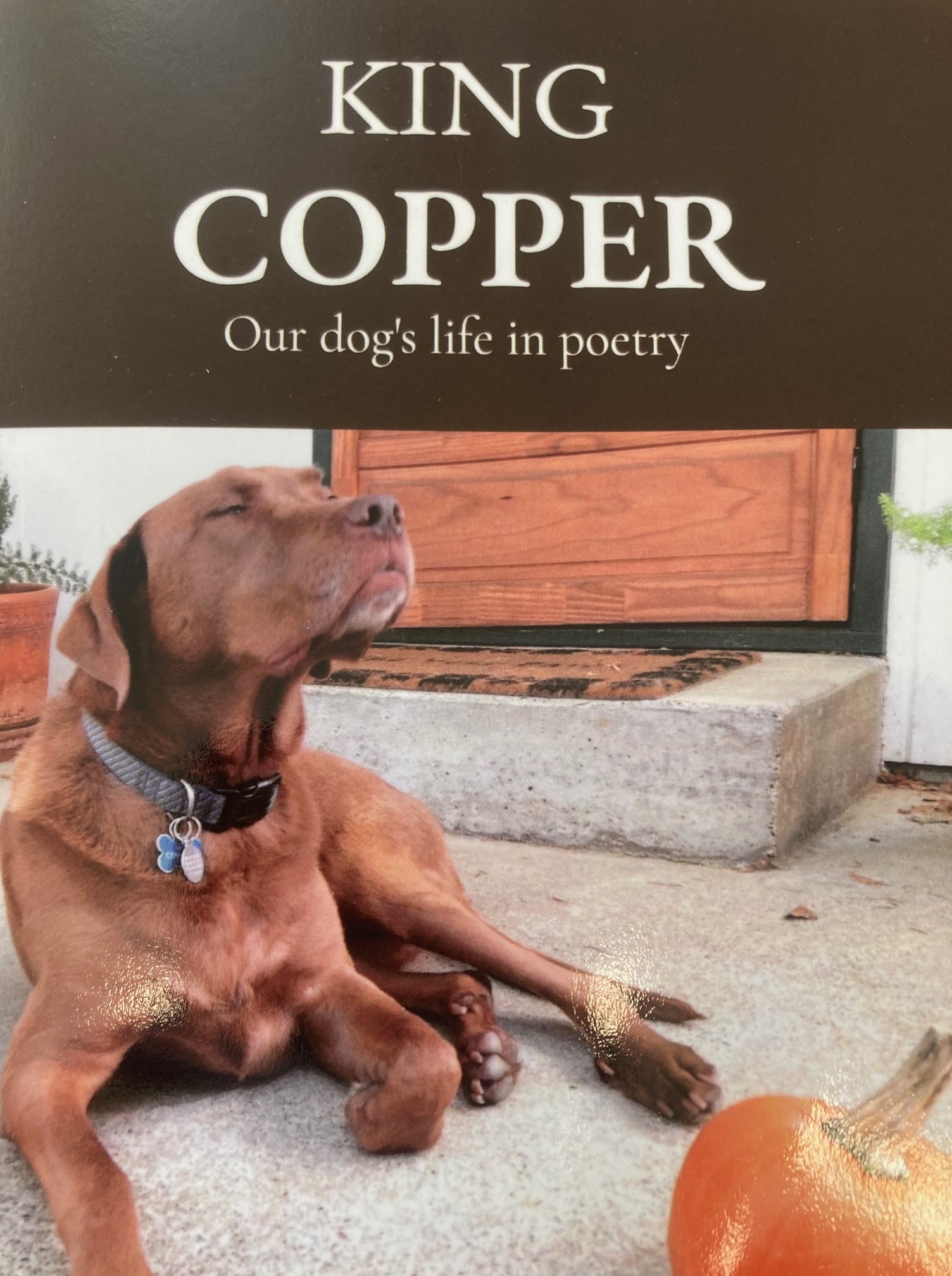
Lauren Scott, King Copper: Our Dog’s Life in Poetry

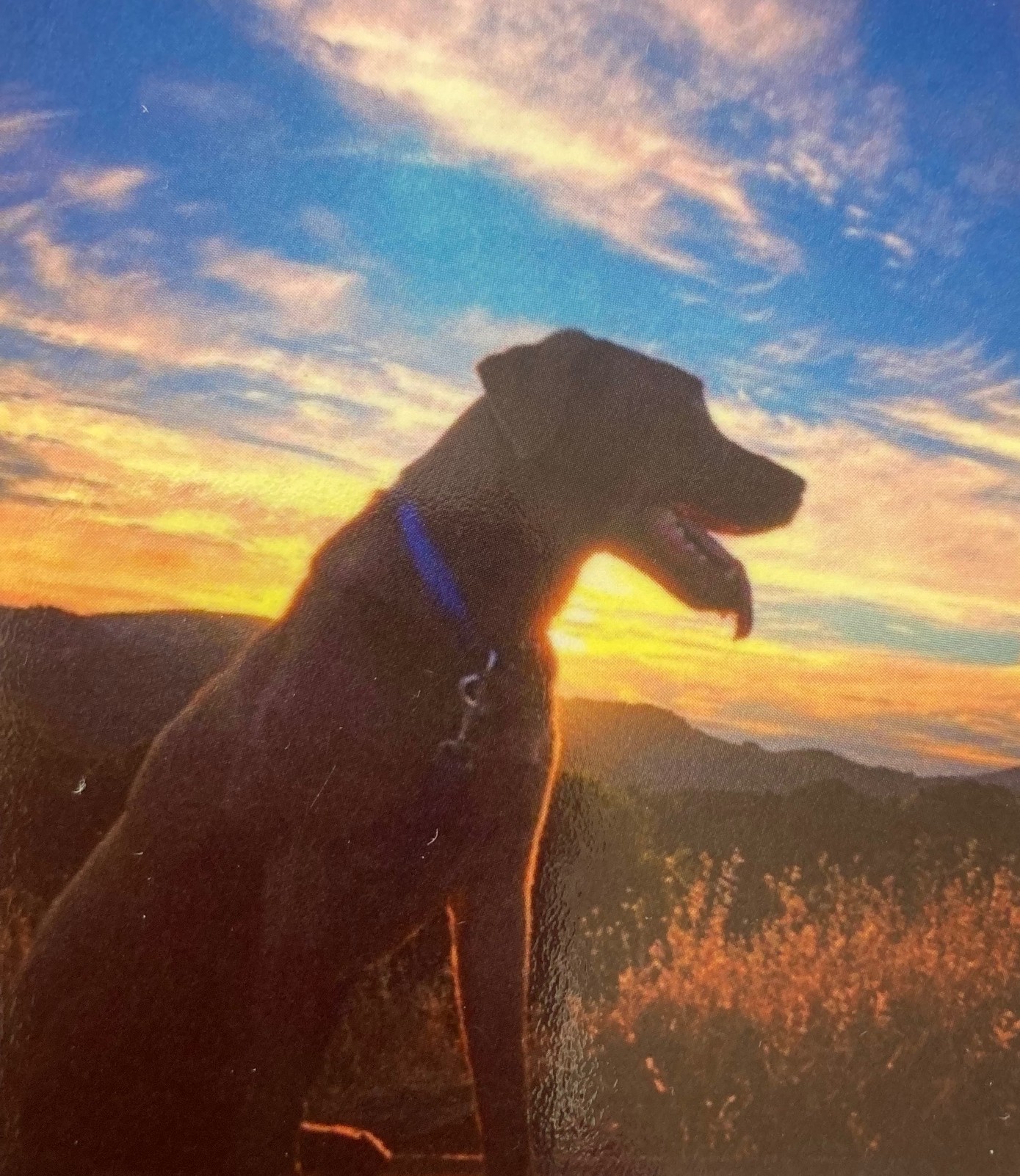
Lauren Scott’s love of her family’s beautiful chocolate lab, Copper, shines in this sweet little volume of photographs and poems that follow their lives together from adoption day on. In her words, King Copper is “a poetic account of the joy that arises when a lovable chocolate lab walks into your life and changes it forever. And the eventual heartache you feel when he crosses over the rainbow bridge thirteen years later and still too soon.”

What a touching account, and what a testament to the glorious impact our beloved pets have on our lives. If only all dogs—all pets—were as well loved and appreciated as the delightful lab Lauren writes so poetically about, the world would truly be a better place. Brava to Lauren for giving her beloved Copper a tribute worthy of his beauty and goodness! Did it make me cry a bit? Absolutely. But tears shed over the loss of a dear dog are never wrong. There is nothing purer than a dog’s affection and devotion. Copper wasn’t my dog, but I, too, have loved wonderful dogs. Like Lauren and her family, I know our animal companions deserve our deepest affection in return for the many gifts they give us. Part of the price for that gift is the same as it is for anything we open up our hearts to fully—the possibility, even the probability that one day there will be pain and loss.

But as Lauren so aptly says, “We celebrate his life- those soul-searching eyes that connected to us- we were links in a golden chain and now one link is missing, our golden boy- each day tears follow like a shadow- the shadow he was, but smiles gently find their place because he is in our hearts, because joy needs room to simmer.”

You can visit Lauren’s blog at baydreamerwrites.com.

http://lscotthoughts.wordpress.com

46 Comments

Filed under Authors, Books, Commentary, Loss, poetry, Reading

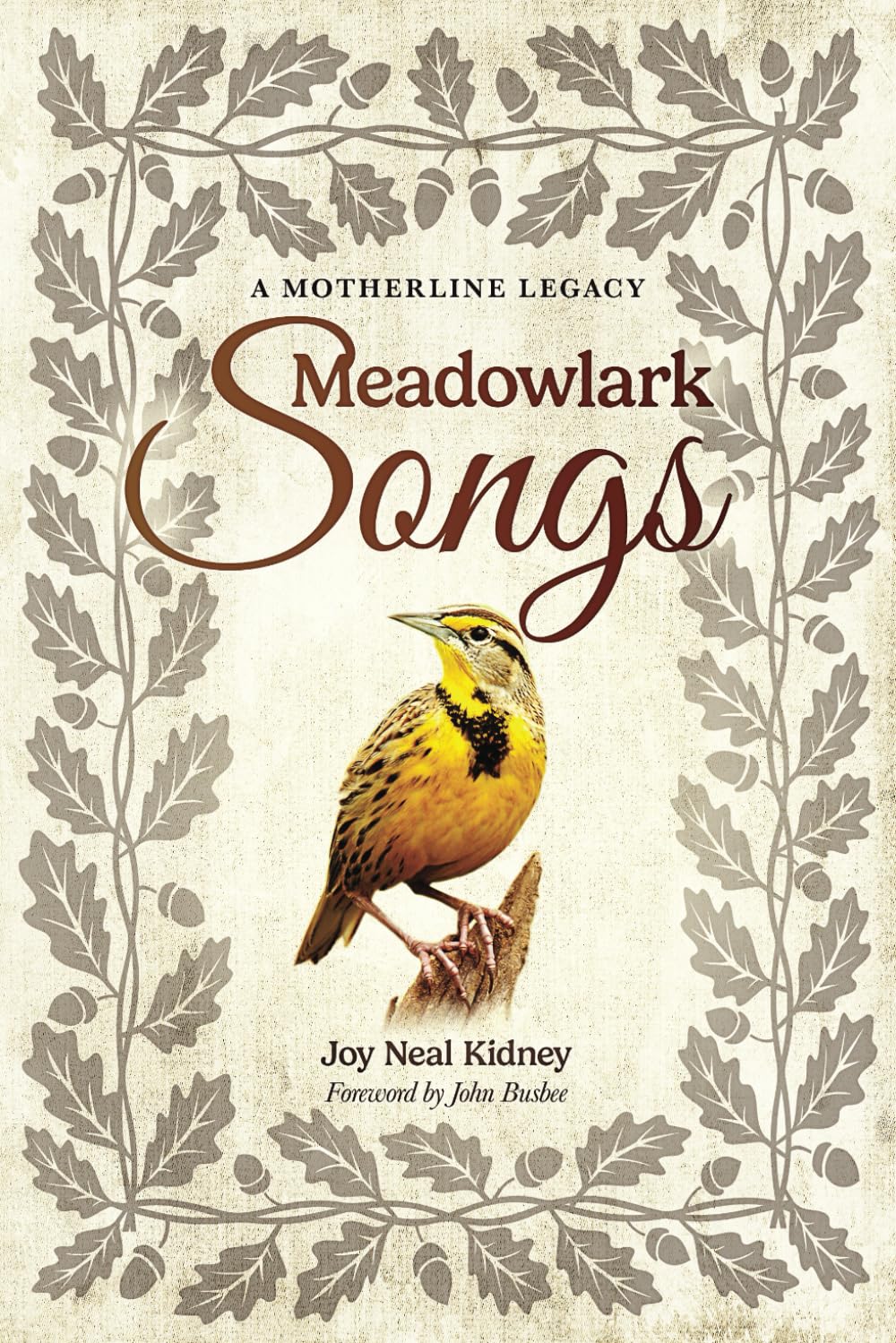
Book Review. Joy Neal Kidney, Meadowlark Songs: A Motherline Legacy

Version 1.0.0

Joy Neal Kidney’s treasury of family stories traces the lives of seven generations of her ancestors– their joys, their hardships, and their enduring faith.

The short, lyrical portraits of the lives of these women along with their husbands, sons, and daughters begin with Jane (Watson) Branson who was born in 1782 and end with Joy, herself, the memory keeper who researched, gathered photographs, recorded and wrote the lovely tributes, poetry, and historical details, and brought it all together for her family—and for her readers.

This charming volume gives all of us a delightful and heartfelt glimpse into the way our ancestors give us life, tradition, strength, and love, while reminding us of the many reasons we should honor them and remember them.

It’s a beautiful little gem of a book. Highly recommended!

Visit Joy on her blog at https://joynealkidney.com.

30 Comments

Filed under Books, Family, Personal History, Reading, Uncategorized

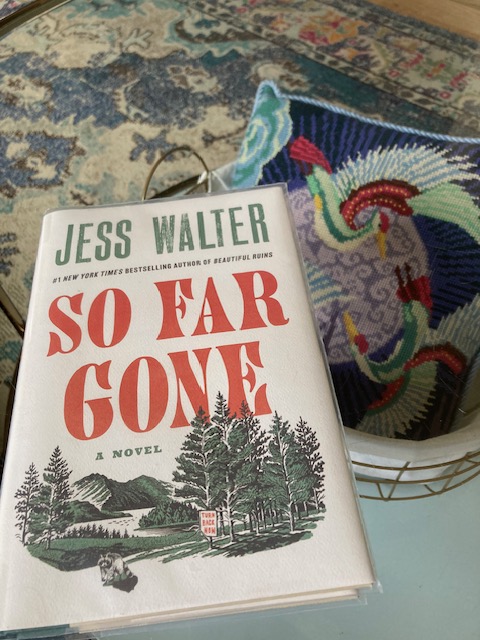
We are So Far Gone

Book Review

Jess Walter’s latest novel tells the story of Rhys Kinnick, a sad-hearted journalist who punches his son-in-law in the face at Thanksgiving, throws his cell phone out his car window, drops out of society, and goes off to live in the forest. The experience of reading So Far Gone reminded me of the not dissimilar experience of watching a Coen brothers movie such as The Big Lebowski or Fargo—odd ball characters, extreme situations, violence, and humor—often jumbled up together in the same scenes—in an overall story that somehow also manages to convey intelligence and love.

Walters is a master at building complicated characters in vivid, precise strokes. The characters in So Far Gone range from the struggling grandfather protagonist, to his charming grandchildren, his confused daughter, a group of religious zealot gun-toting conspiracy theorists, a bipolar retired cop, an old girlfriend with major attitude, his loyal friends Joanie and Brian, and other colorful characters Rhys meets along the way.

It’s a story about a crumbling America, about people lost and found, a world under siege, and ultimately about small miracles of healing magic fashioned by family and friendship. I found it refreshing, and touching, funny, sometimes outrageous, disturbing . . . and also an interesting look at the way some of us old dreamers and staunch believers in the ideals of fairness, justice, and a better future for all are feeling about and reacting to the twisted reality we now see laid out before us. So Far Gone is the perfect title for a book that describes us, now, today.

18 Comments

Filed under Authors, Books, Commentary, Reading

Book Review: Wynne Leon’s Finding My Father’s Faith

Memoir

Wynne Leon’s marvelous and inspirational memoir begins with the most upbeat paragraph about a somber occasion that I think I have ever read. I was immediately captured! Here are the first few sentences:

There is nothing like a funeral for a pastor. It feels like a graduation ceremony for someone who has spent his whole life working towards the ultimate advanced degree. Over 1200 people came to celebrate Dad and more watched it live-stream on the Internet—a large group that embodied a singular feeling . . .

Thus begins Leon’s reflection on her father, her family, and the journeys that shaped them. I found Leon’s well executed mission to honor, understand, and memorialize her beloved father, while also processing her own secular and spiritual quests, to be honest, uplifting, thoughtful and fascinating. I loved reading also about her mother, Carolyn, and her short courtship and long marriage to her father, Dick. They were surely a match made in heaven!

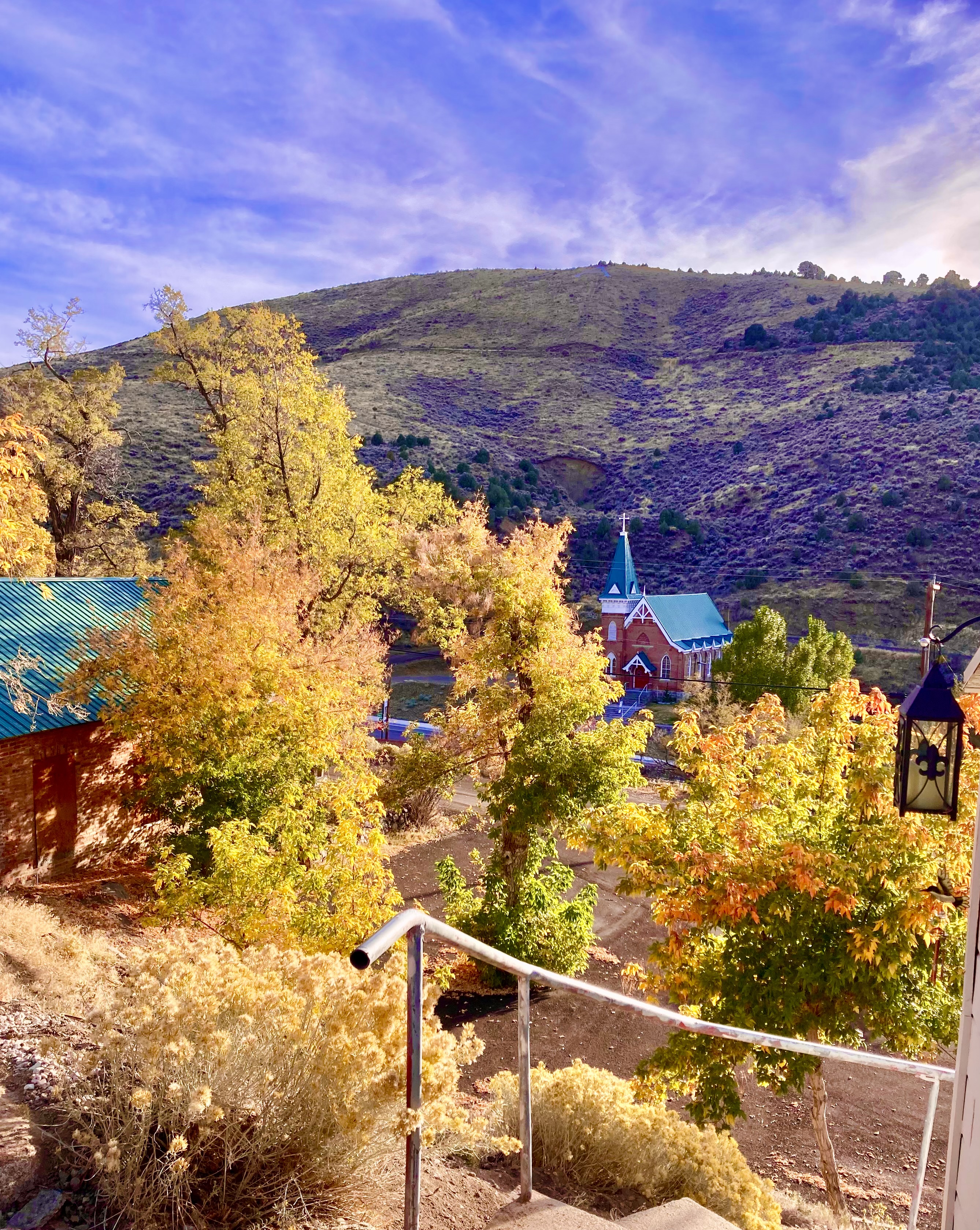
There is a church outside my door.

There is much to recommend in this book: real life examples of what a life of service can be, what incarnational ministry is and how it served Dick during his time working as a missionary in India, and as a Presbyterian minister in the Philippines and the U.S., the love of family and friends, the divergent paths we take to find our own way to spiritual, psychological and emotional health, meditation practice, self-examination, and everything between birth and death. It is somehow light and deep at the same time, an accessible and entertaining look into humanity’s search for and need for meaning. I love this book!

30 Comments

Filed under Uncategorized

Surviving Sue Review and Traces in the Snow

Today in the Reese River Valley. My photo.

Two consecutive snowstorms, and the sun sparks diamonds on the snow-hushed surfaces here in Austin and in the Reese River Valley just below us, giving us time to read, to wander, to cook, and to write.

Walking after a snowstorm is one of my favorite activities, along with walking in a warm rain, or on a starry night, or along a tree-lined lane at the height of autumn. It’s like walking inside a dream, a vision, a movie . . . all of it a magical changing work of art. This has been that kind of a weekend. An appreciated and needed balm for the eyes, ears, heart, mind and soul.

Our footprints going down our driveway last winter after a similar storm in Austin, NV. My photo.

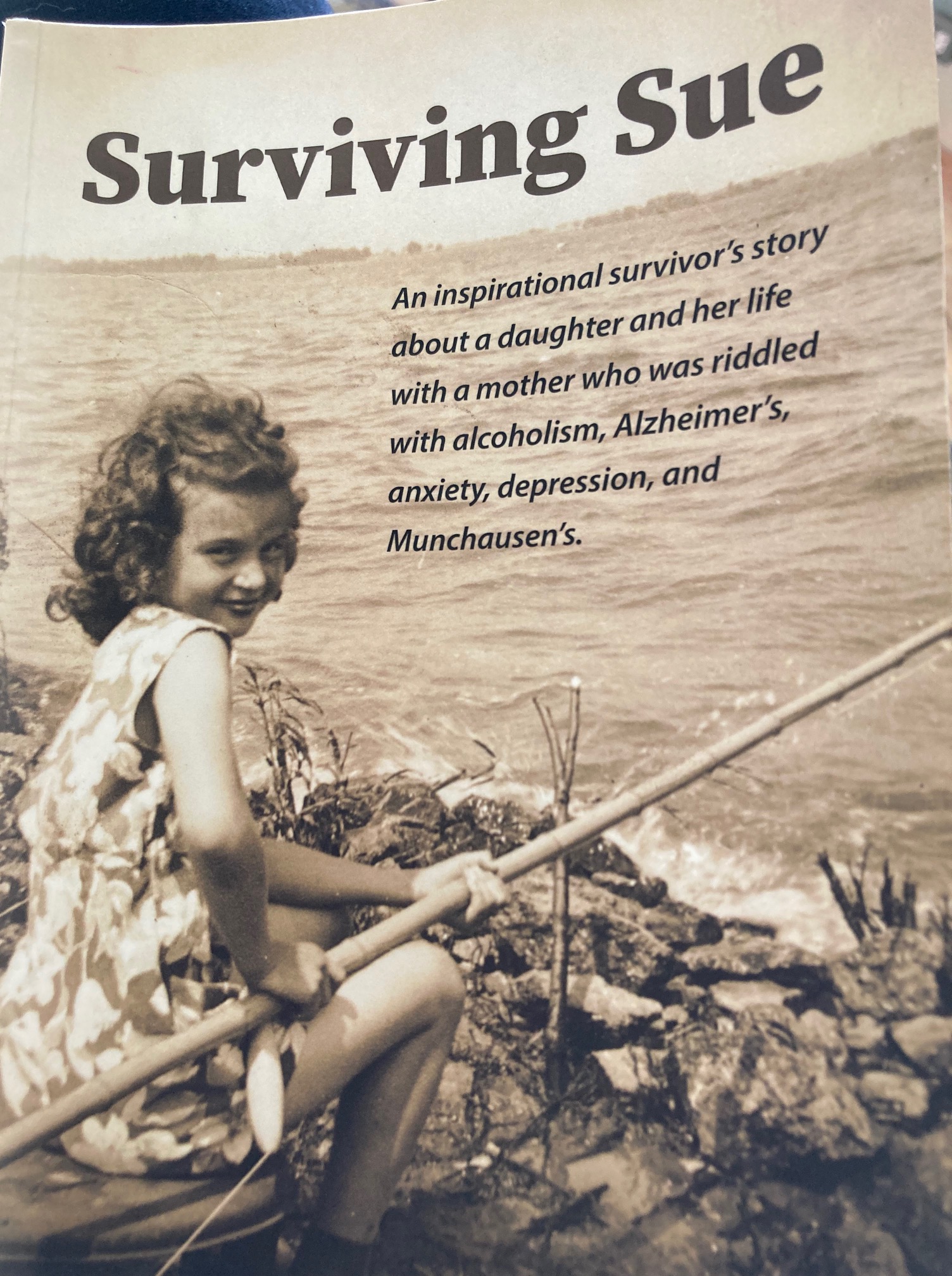
After today’s walk, I finished reading Dr. Vicki Atkinson’s memoir, Surviving Sue: An Inspirational Survivor’s Story About a Daughter and her Life with a Mother Who was Riddled with Alcoholism, Alzheimer’s, Anxiety, Depression, and Munchausen’s. Vicki is a fellow blogger, one I follow and read with pleasure, always knowing I will find something positive, real, and insightful in her posts. Vicki is generous with her readers, sharing of herself, her humor, her highs and lows with an empathic interest in our perspectives.

This is Vicki’s voice, and it shines on the pages of her book. She is a profoundly kind-spirited woman who grew up learning how to turn the injury and injustice of her mother’s mental illness into something bigger than her own pain. With keen intelligence, her father’s and sister’s love, and later through her own family and probably also due to her dedication to her studies, Vicki survives and thrives, and she does it without ever compromising her own values.

Vicki’s Wonderful Memoir

Vicki’s compassion for her mother is more than challenged over the years, but somehow, she stays the course of doing what she believes is best for everyone concerned. For those who don’t know Vicki or haven’t read Surviving Sue, I’d like to stop here to encourage you to read it for yourself. This story is worth your time. It may even affect the ways you view some of your own experiences, past or present. It may soften your heart. It’s a beautiful book, and an engaging read.

Surviving Sue, Eckhartz Press, Chicago. Copyright © 2023. Vicki’s Blog is victoriaponders.com. Vicki also shares a podcast with her friend and colleague, Wynne Leon of Surprised by Joy (Blog). Their podcast, The Heart of the Matter can be found at sharingtheheartofthematter.com.

Now it’s time for the cooking part of the day. I’ve got an eggplant, lots of spices, cheese, pasta, greens, and tomatoes. Oh, and wine.

Should be a beautiful night.

Photo by Pixabay on Pexels.com

24 Comments

Filed under Books, Commentary, Nature, Reading, Seasons, Uncategorized, Voice, Winter, Writing

Gone to Soldiers

a short review

pexels photo

I finished several books recently, one of which I had been reading for months in between other, less hefty titles. The hefty one is an older release (c1987), WWII historical fiction, Marge Piercy’s Gone to Soldiers. A wonderful book—rich in authentic detail—an amazing amount of research had to have gone into this devastating and sweeping novel. Having written two (as yet unpublished) WWII era novels, myself, I am beyond impressed with everything Piercy brings to life here.

Gone to Soldiers tells the stories of ten men and women who served in America, Europe, and the Pacific in vastly different ways: a war correspondent, an intelligence office for the OSS, a Japanese code breaker, a Women’s Airforce Service Pilot, an artist who fights with the Resistance in France, a woman who leads Jewish children to safety over the Pyrenees, a Marine struggling to stay alive in the Pacific, a Jewish teen from Paris sent to America before France fell, and her American cousin.

I have read a lot of WWII and Holocaust related fiction and nonfiction over the years, but somehow I missed this one. My brilliant friend, Sandy, sent me a copy, and I am so glad she did. It is not an easy book to read. Many of the scenes are incredibly vivid and tragic. Some of them were known to me from other sources, but a couple of them depicted battles or situations of which I was not aware.

I was particularly affected by the scenes in the Pacific, I believe, because my father served in the Pacific theatre, but talked about it so little that I never had a clear picture of what he went through. This book made me more aware of the horror he faced and makes me want to know more about his service.

I recommend Gone to Soldiers for its unblinking portrayal of the realities of war, ignorance, prejudice, love, and loss. It is an important book for men and women who seek to understand and remember our shared history—to mourn and honor those lost, to refuse to fall back into dangerous patterns of racism, prejudice, and misogyny, and to continue to work toward the vision of a safe, equitable, and free land for everyone.

“TODAY THE GUNS ARE SILENT. A GREAT TRAGEDY
HAS ENDED. A GREAT VICTORY HAS BEEN WON. THE SKIES
NO LONGER RAIN DEATH – THE SEAS BEAR ONLY COMMERCE –
MEN EVERYWHERE WALK UPRIGHT IN THE SUNLIGHT.
THE ENTIRE WORLD IS QUIETLY AT PEACE.”

GENERAL DOUGLAS MACARTHUR


Radio address to the American people from the USS Missouri, following the Japanese surrender ceremony, September 2, 1945  (FROM WWW.NPS.GOV)

2 Comments

Filed under Books, HIstorical Fiction, Reading, World War II

Book Review: Driving Dad Home

Having dedicated a great deal of time, energy, effort, and money–but mostly dreams and heart–to writing throughout my life, I’ve always longed for close relationships with other writers. People who would “get me” in a way that I didn’t feel “got.”

So it was with great pleasure when I learned that my dear friend Jan married a man who wrote. This was many years ago, and, like mine, John Halter’s career was varied and interesting. In my own case, I would add soul affirming, which is probably the case for John as well, but I have never asked him. Anyway, we both did something other than write to earn our livings, but we both always wrote. I worked in flower shops, and libraries, and taught school, while John was a professional sailor, riverboat pilot, and marine mechanic.

Driving Dad Home is John’s first published book, a memoir. It is published by Nodin Press, LLC out of Minneapolis, MN and is available on Amazon. Bravo, John!

John Halter’s Driving Dad Home is in part the story of John and his father, Russ, and their road trip from Arizona to Wisconsin where Russ’s family has procured a place for him in a memory care facility. That, in itself, provides more than enough to immerse the reader. A 96-year-old father who doesn’t want to leave the home where he chose to live out the remainder of his long life “hoodwinked” by his family, the dying alcoholic second wife they wish to save him from, the terror, anger, and anguish of Russ’s dementia—all told in the author’s particularly engaging style—would be plenty. But Halter gives us more.

In his attempts to placate his agitated father and make it to their destination safely, he learns that getting his dad to talk is the best remedy. As the miles unfurl, so too do Russ’s recollections about everything from his childhood on a South Dakota farm, to his years serving in the Navy in WWII, to his years as a husband and father living in Minneapolis, and to the years that followed, when John and his siblings were all grown, when their mother died, and the life their father made for himself afterward—all of which is as important to the author as it is to his dad. I don’t want to give anything away, but it was an excellent read, and I was left with a renewed appreciation and understanding of the generations before us. And I also came away believing that love is often a silent force swirling around us that we do not know and cannot recognize.

For some of us, thankfully, there comes another chance. This is a story about one of those chances.

Leave a Reply

Your email address will not be published. Required fields are marked *

6 Comments

Filed under Uncategorized