Tag Archives: Advice

This Writing Life

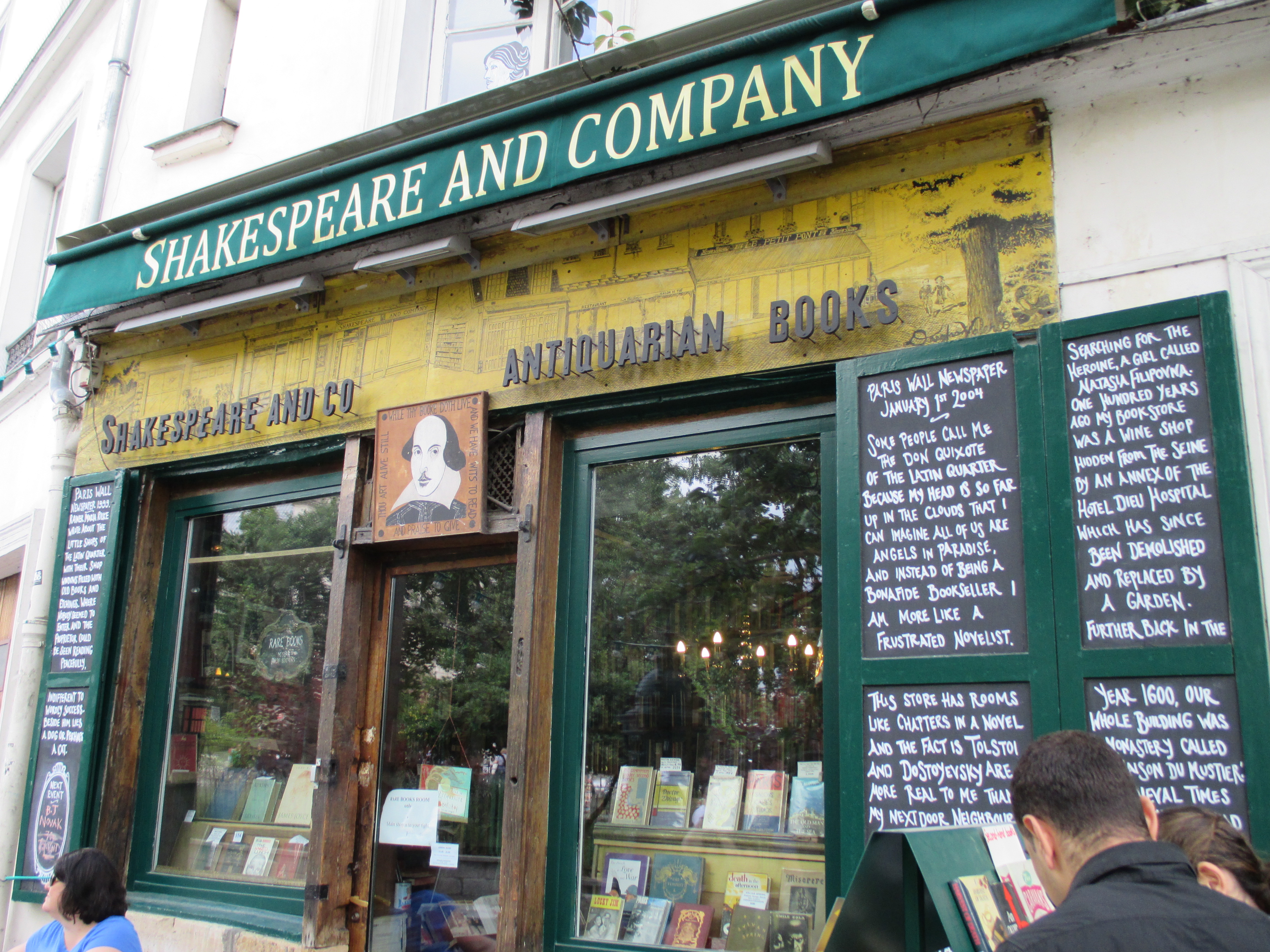
A few days in Paris, Writing . . . Years ago Never forgotten

Instructions for living a life.
Pay attention.
Be astonished.
Tell about it.”
―Mary Oliver

Moving a life forward is an investment in dreams, time, learning, relationship building, and so much more. Moving a writing life forward is all of that, and I would add it is also, at its best, a life transformed. As Anne Frank so eloquently put it: “I can shake off everything as I write; my sorrows disappear, my courage is reborn.” Writing did not save Anne Frank’s life, but I believe her writing has saved the lives of countless others.

Writers may feel called to the creative life, but that one precious life often must take a back seat to another, more practical life, one that includes a sensible career (aka something with a steady paycheck), perhaps with snatches of scribbling in between the job, chores, and attending to family or societal needs and expectations. The writing life can be a kind of shadow life. It has been for me. Some writers seldom or never mention their craft while engaged in their more acceptable “real” life.

“I love writing. I love the swirl and swing of words as they tangle with human emotions.”
—James Michener

It’s hard to explain to nonwriters why a few hours or a whole day spent attending a sporting event or a picnic can create in the writer a kind of panic—a feeling that the time needed to be alone, to read and to write, will never be enough, that time is seeping away, draining their spirit. Spending “free time” in non-creative areas can feel terribly wasted to the writer, while to others, the writer’s avoidance of joining in reeks of selfishness, or delusion. Or perhaps it’s just incomprehensible. Why, people wonder, is writing so important to you? There’s no money in it. And if there is, it’s only available to a few spectacularly talented gifted authors. If you had that gift, surely you’d have been published by now.

The writing life can be an ill-defined series of swells of poetic energy or flow, which is heady and soul lifting. There is nothing quite like those times. Catherine Drinker Bowen says, “For your born writer, nothing is so healing as the realization that he has come upon the right word.” And I have felt that many times. Writing has healed me.

But those transcendent hours or days are for writers seeking an agent or publisher likely to alternate with rejection after rejection after rejection. Writers do much of their writing alone, but if they seek representation and traditional publishing, they must eventually learn the oft times punishing lessons of business.

Soon I’ll be working with a developmental content editor on my completed World War II historical fiction manuscript. I’m excited to be taking this major step forward. It’s been a long journey, and honestly, I’ve loved the myriad lessons and experiences along the way, even the hard ones.

“If a story is in you, it has to come out.”
—William Faulkner

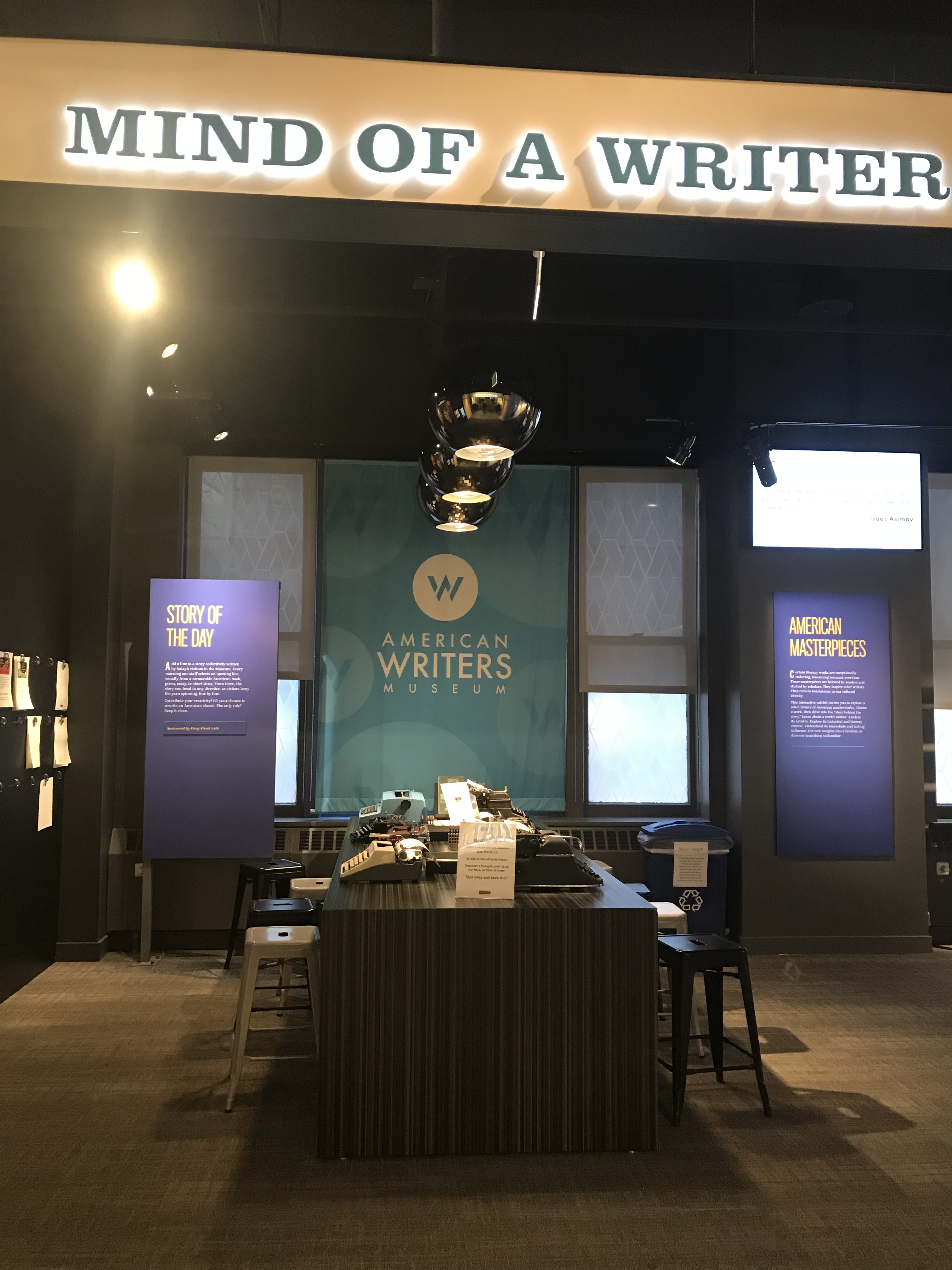
American Writers Museum, Chicago, Illinois

Thank you for visiting! Wishing you a wonderful day, doing exactly what you need and want to do.

With Love Always, Lori

43 Comments

Filed under Authors, Fiction, Gratitude, HIstorical Fiction, Identity, Literary Agents, Publishing, Reading, Research, Uncategorized, Work, World War II, Writing Advice

I Am a Writer

Something I don’t write about much is my writing background. And of course there’s a reason for that. I have spent a significant amount of time, effort, and money over a period of many years on writing, and though I don’t consider any of that effort to be wasted, I do think sometimes, sometimes when the shadows fall a little too dark, a little too thick, that I should have done more with it, this writing thing, by now. That it should have gone somewhere. Perhaps I’m even a bit embarrassed to admit that with a BA in English and an MFA in creative writing, and years of study and teaching under my belt, I still haven’t published a novel.

Have I written a novel? Oh, yes. I wrote my first novel three decades ago. I was teaching English and became active in the National Writing Project, a fantastic program for teachers that encourages us to become writers, ourselves. I wrote a contemporary novel during that time but never attempted to have it published. It was my learning novel, the one that I would never throw away, but also, the one that wouldn’t be good enough to publish. Don’t ask me exactly how I came to this conclusion. I think I read an awful lot of books and articles about writing, and this was my take on first novels. They were like the first pancake, or the first kiss. You just had to do it and get it out of the way. The payoff would be better pancakes and better kisses later. Fluffier, more evenly browned, delicious. Or maybe my own writing just embarrassed me so much that I couldn’t even think of approaching anyone with it. So, I printed it out and boxed it away.

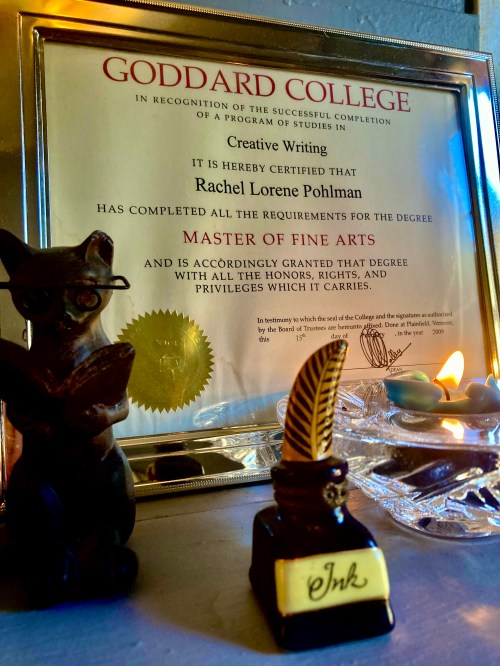
The itch to learn more and to focus more on writing took me to Goddard College next. I continued teaching and worked on my master’s from 2007-2009. During this exciting period, I wrote constantly, including many formal papers for my instructors and my thesis, which was a young adult historical fiction novel about a Catholic Polish teen and his Jewish neighbors during World War II. This one, I thought, I would try to get published. I just didn’t hurry it.

I attended Goddard West in Port Townsend, WA. I have never been to the original campus in Vermont, which has sadly, closed, but I still hope to visit there someday.

After the MFA, I focused on researching agents and publishers and writing queries. Admittedly, I didn’t try very hard. It was excruciating for me to put myself out there—my writing out there—which to me, amounted to putting my inexperience and inadequacy on full display, a neon sign of not-good-enough, flashy and annoying, just begging someone far more hard-working and talented than myself to squash it.

Time went by and I wrote with friends for fun, and to learn more. Shout out to you, Alicia, Lynn, Mike, Maria Elena, and of course all of my amazing students! I thought maybe I needed to put more time between me and my second novel. I started blogging. I was still teaching.

But then I found myself seriously ill with a rare form of cancer, and the world stopped spinning. I lost track of days, weeks. My brother was also ill and had come to live with us. My surgeries were successful. But I felt unwell. Months of chemo took a toll. And my brother. My beautiful brother, my only sibling, died.

I read that the average life span for appendiceal cancer was seven years, and yes, I also read that was not to be taken to mean that I would die in seven years—there were so many factors involved, and it was just an average. Many people died sooner. Others lived for twenty years or more. Blah, blah, blah, I thought. I have seven years.

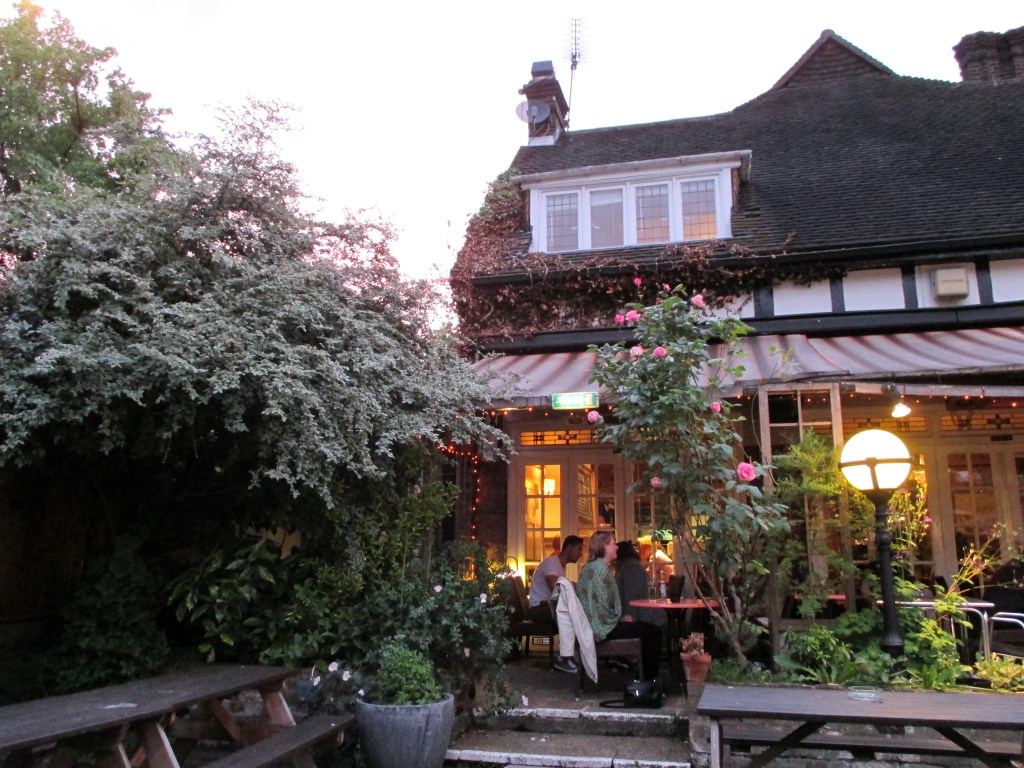
With my husband’s blessing, I cashed in a small savings account and took a short trip to London and Paris (my one and only trip outside the U.S.), and it was wonderful, and I knew I wanted to write. My writing vision could not have been more clear. I came home and worked on a new novel.

East Finchley, Outside London.

A Beautiful Place to Write.

I taught for a couple more years. Other than my family, my teaching career was what I was most proud of and committed to. Still, I felt my energy shifting. I expected an early death. I imagined myself too weak to be the kind of teacher I had always aspired to be, which was the Robin Williams as John Keating kind of teacher from Dead Poet’s Society. That was who I should be, but instead, I felt—I believed, I was tired, in failing health, more Virginia Poe dying slowly of tuberculous while Edgar became ever more prolific than John Keating taking on the entire world of poetry and elevating young minds and spirits. I saw myself settling into an early writing retirement where my husband would continue to work, but I would just be . . . . the quiet writer in residence.

Robin William as the victorious Mr. Keating

The sadly beautiful Mrs. E. A. Poe

And so, I finished my third book. It is not published.

I found I missed gainful employment and have steadily worked part-time since my early retirement, teaching and library work mostly.  I am fighting my hermit-like tendencies, and I’m enjoying getting more involved in actively reading and responding to my fellow writers online, as well as the few writers I know personally. This is a joy and a responsibility. I believe we must support each other, and I am so in awe of all of you! I just finished reading a fellow Goddard graduate’s Sci-Fi thriller, The Regolith Temple, yesterday, and was blown away! Roxana Arama, I will be writing a review for your excellent book very soon!

I am still waiting to hear back from an agent who requested my full manuscript many months ago. I’m considering next steps.

I’m not dead. I stopped going in for cancer scans several years ago. I can’t afford them, and anyway, I’m quite spectacularly healthy. Weirdly! So maybe the seven years thing was really just about itches and actually had nothing to do with my diagnosis. Whatever the reason, I’m grateful, and I’m still in love with this beautiful planet. And pancakes and kisses.

I’m walking every day and working on another novel.

Trying to say it a little more often.

The simple sentence I’ve never felt worthy of.

I am a writer.

41 Comments

Filed under Cancer, Cancer Journey, HIstorical Fiction, Identity, Literary Agents, London, Memories, Personal History, poetry, Relationship, Research, Teacher, Uncategorized, Voice, Writing, Writing Advice

Escaping Limbo

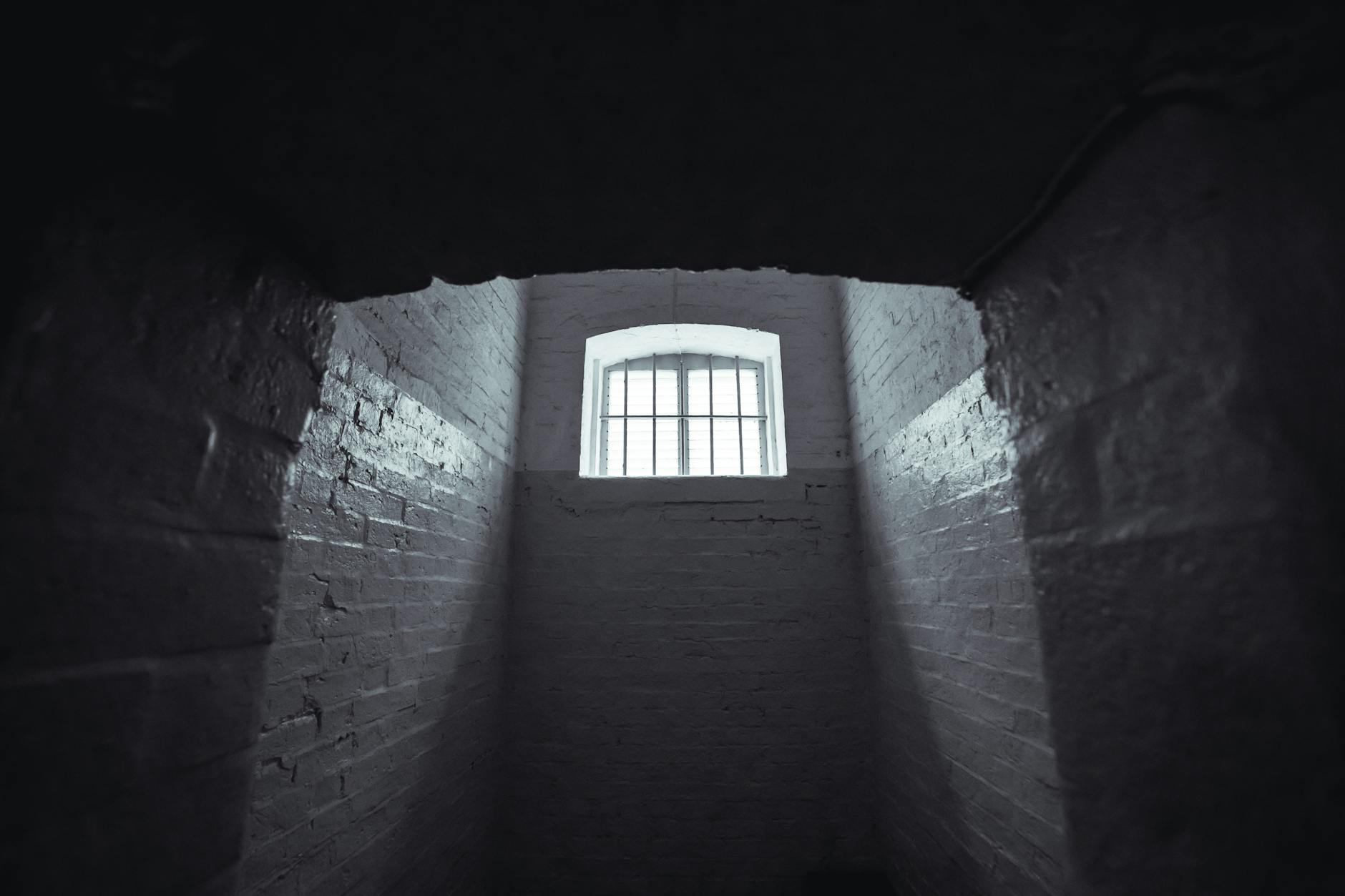
I have thought a lot lately about the discomfort of being in a perpetual state of waiting for something to happen, of worrying about what the results will be when something finally does happen, and then, wondering if I will navigate any of it well. The word “limbo” is often in my thoughts.

Photo by Jimmy Chan on Pexels.com

2024 brought new health concerns for my husband, and with that a reconsideration of where we should live, since we are currently in a very remote location, three and a half hours by car from the nearest medical center with cardiac care. We responded decisively by putting our house on the market. That decisiveness did not break us out of Limbo, however, as we do not know when or if our home will sell, and we do not know what it will sell for if it does sell. We cannot make plans on where to move until we sell the house. Still, we’re thinking about returning to the Midwest where real estate prices are more reasonable than here in the West and where we can reasonably expect to afford to live in a town with a hospital. But, until we sell, we are in Limbo.

Also, in 2024, I was thrilled to receive an invitation from my dream literary agent to send her my full manuscript, A Fine Suddenness, a World War II historical fiction novel based in Lake Arrowhead, CA. I’ve no idea if she has read it yet. It has been out of my hands for six months now, this after having worked on it pretty consistently for years. Many years. I miss it terribly (it’s an odd thing, really, the attachment I’ve made), and I have no interest in beginning a new novel yet, though at least I am continuing to write. Even so, journaling or posting online, as important and healthy as they are, do not give me the same sense of mission as novel writing does. I wait to hear from the agent, and I do not move forward on a sequel to the book I sent her, nor on some new unrelated novel, because I desperately want her opinion on A Fine Suddenness first. More Limbo.

And 2024, oh my goodness, has been a year of intense worry and anticipation for our nation and the world. We are no longer in the first stage of that particular limbo state, but we are certainly still in a place of transition and uncertainty. So many possible scenarios there, and so little I have control over. More Limbo.

Earliest historical references to Limbo describe a place in-between—not heaven, not hell—a place for deceased unbaptized humans born before the birth of Christ, or who died as infants before baptism, to reside until the second coming of Christ by the Roman Catholic Church, and these begin in the 14th Century. From there, the word limbo (more and more with a lower case “l”) entered usage in less theological contexts: as a place or state of restraint, confinement, neglect, oblivion, uncertainty, or an intermediate or transitional place or state.

Etymology also traces limbo from the English of Trinidad and Barbados limbo “a dance that involves bending backwards under a pole,” related to Jamaican English limba “to bend,” from English limber “flexible” (merriam-webster.com).

Photo by RDNE Stock project on Pexels.com

Which leads us to the dance, or funeral game, which dates back to the mid to late 1800s on the island of Tobago. In the beginning, the game started with the bar at the lowest possible height and the bar was gradually raised, signifying an emergence from death into life (Wikipedia.org). It is possible that the roots of this practice come from the slave experience of being transported across the seas in ships, where the slaves were separated and tried to squeeze through narrow spaces in order to see or touch one another. In some African beliefs, the game reflects the whole cycle of life . . . the players move under a pole that is gradually lowered from the chest level and they emerge on the other side as their heads clear the pole as in the triumph of life over death (Stanley-Niaah, Sonjah “Mapping of Black Atlantic Performance Geographies: From Slave Ship to Ghetto.” Quoted on Wikipedia.org).

The secularization of the dance began in the 1940s where “it became a popular entertainment in Trinidad and was adopted as a physical fitness exercise by American troops,” . . . and is now “considered the unofficial national game of Trinidad and Tobago” (Wikipedia.org). It has become a fun and happy pastime.

Historically, Limbo to limbo, has moved on. Broken free, so to speak. I wonder if my own limbo could progress that way, too. As for human history, perhaps also for me? If I am stuck in the place between heaven and hell right now, will it be possible for me to become limber enough to squeeze myself through the narrow places that block me from reaching the open, even joyful places that still may exist beyond my current ability to see them or experience them?

In order to do that, I would need to understand the constructs of the narrow places. What are they exactly? What are they made of? Are they hard and impervious, like granite? Splintered like rough wood? Flexible and sometimes deadly like serpents? Or are they only real because I make them real in my own paralyzed mind? Maybe I could wish them away, disintegrate them, with new knowledge or some kind of personal epiphany.

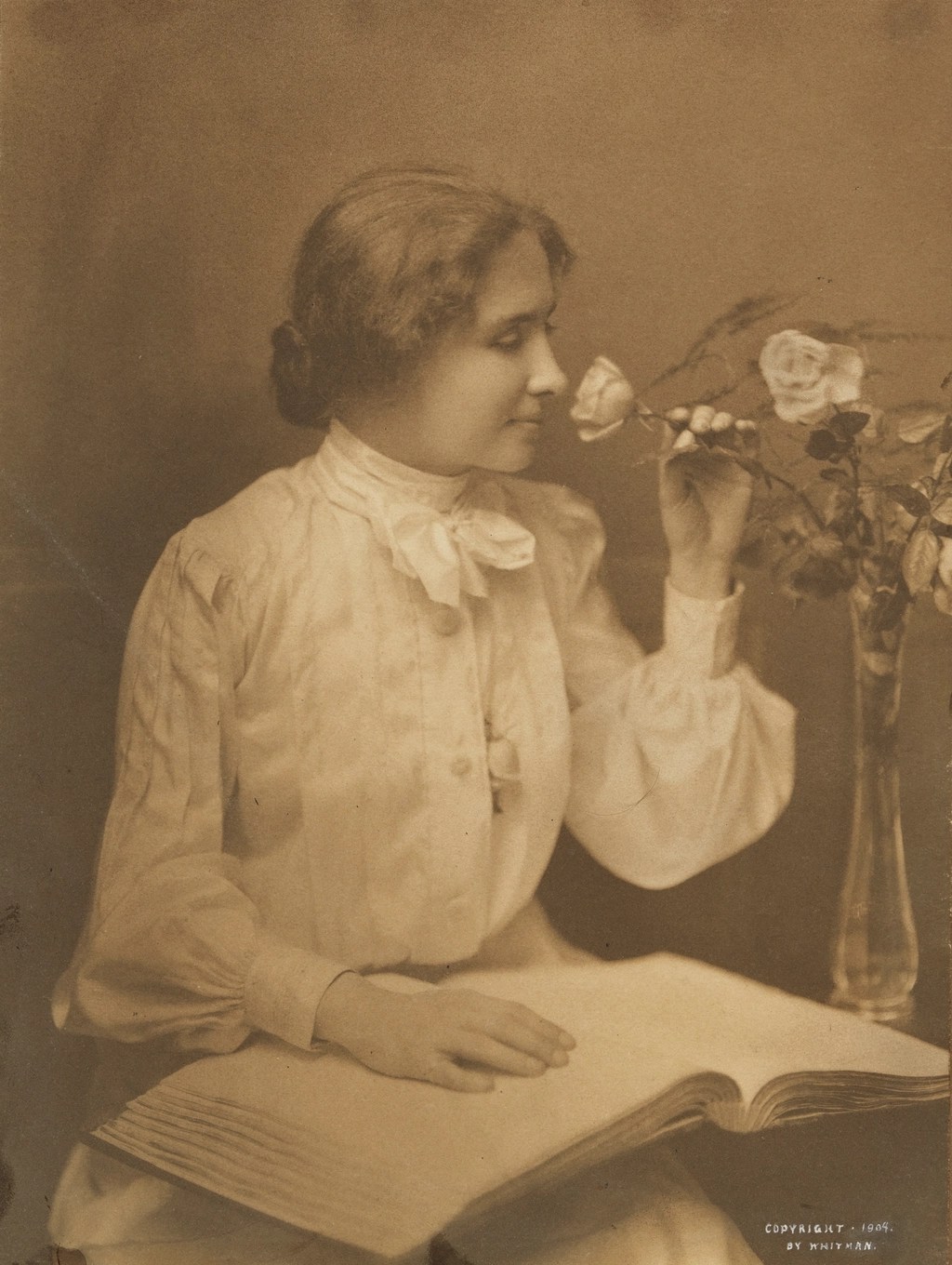
Perhaps there is a way. Perhaps not. But I must strive, at least, to remember Helen Keller’s words, these taken from her open letter in response to Nazi book burnings in Germany on May 9, 1933: “History has taught you nothing if you think you can kill ideas. Tyrants have tried to do that often before, and the ideas have risen up in their might and destroyed them. . .You can burn my books and the books of the best minds in Europe, but the ideas in them have seeped through a million channels and will continue to quicken other minds.”

If Helen Keller believed that ideas and hopes have always “seeped through a million channels,” who am I to deny it? Might not a few of those ideas and hopes, and more likely a multitude, have made their way to us now at the dawning of the year 2025? Might not they sustain us, quicken our minds, and help us find a way out of our narrow places and into the light?

Helen Adams Keller“/ CC0 1.0 from Openverse.

22 Comments

Filed under Advice, Books, Depression, Identity, Lake Arrowhead, Literary Agents, New Year's, Uncategorized, World War II, Writing

My Resolutions: A Re-Post from da-AL’s Happiness Between Tails

1 Comment

Filed under Publishing, Writing

The Writing Traveler

July 13, 2015

East Finchley Tube Station, London

East Finchley Tube Station, London

Today was a good writing day. You know, one of those days when you begin with a plan, something you know you can handle. (As opposed to one of those days where you stare blankly into space or rewrite the same paragraph over and over in every possible configuration, none of which really work for you.) My objective was simple. Revise one scene, adding sensory detail to infuse it with more life.

This launched me into a couple of happy hours spent researching unfamiliar foods—their ingredients, colors, flavors, and presentations—famous restaurants, Indian and English décor, and even childhood development.

This is one of the great delights of writing, this process of reaching beyond ones’ own experience, to better understand and describe the worlds we recreate on paper. I adore travel, and in the course of my writing, I am always going somewhere. At times, these travels take place in books or on the internet. Other times there is a trip to the grocery store or a new restaurant. Occasionally, there are tickets involved, such as bus, train, boat, or airline tickets.

Today, I’ve been to London! How about you? Where is your writing research and imagination leading you? Wishing you a bon voyage!London2013 027

2 Comments

Filed under Writing

The Cancer Journey, Part Two: What Goes in the Bag? June 19, 2015

Is this the kind of bag I mean? Well, almost as much fun.

Is this the kind of bag I mean? Well, almost as much fun.

The Bag

I’m not talking about a metaphorical bag here. You are going to need a real honest to goodness bag that you truly love. It should be as large as you can handle, maybe a large postman style, back pack, or beach bag. Splurge on this. It will be your companion throughout your journey. It should be washable, at least wipe-down-able, as it will be entering into all kinds of compromising situations—everything from car floors to public restrooms. Be sure it has at least two separate compartments and a zippered pouch for smaller valuables.

What Goes in the Bag?

  1. The first and most important item is a journal. Your journal will be used at doctor’s visits, during hospital stays, chemotherapy and or radiation sessions, and in all manner of waiting rooms, not to mention while reclining at home on your most attractive and comfortable piece of furniture.
    1. Regarding the journal
      1. Date every entry
      2. Write down every question you can think of to address with your oncologist, nurses, family, and for your personal research
      3. Freewrite about your symptoms, reactions, and all the fears and feelings, good and bad, that you experience.
      4. List your intentions, hopes, and everything you are grateful for. And yes, there is always something to be grateful for. Add to this list often!
  2. Colored Pens and Pencils (Any and all types you like, possibly including a Fountain Pen)
    1. They are fun!
    2. You can used them to highlight things you don’t want to forget to address. This may become increasingly necessary if you fall into the chemo fog that afflicts many patients: forgetfulness, confusion, sleepiness, and staring off into space for long segments of time, thinking about—absolutely nothing! Don’t let this scare you. I think of this chemo fog, or chemo brain, as a sort of cushion for your mind, a valuable stress reliever.
  3. The nicest lotion you can afford. This goes for men, too! Perhaps several different types, for example, rosemary or lavender stress balm to rub on your temples, hands, and feet. Maybe some peppermint, or eucalyptus.
    1. Check into essential oils and their uses. They can be added to any plain “base” lotion.
  4. Lip balm or moisturizing lipstick
  5. Small comb or brush. This is for the days you actually have hair. Keep in mind that not all treatments cause hair loss, but if yours does you can use the space for something more appropriate, such as a jaunty hat.
    1. You might think about getting a super short haircut before beginning treatment. I did this rather late, but it gave me a real boost at the time and my new hair came in thicker and in lovely shades of caramel and silver. I’ve never gone back to coloring it.
  6. Baby Wipes. Essential.
  7. Reading Materials. Your attention span, ability to focus, and mood, will probably fluctuate quite a bit. I found keeping a wide variety to most helpful.
    1. Magazines
    2. Novel
    3. Inspirational/Self Help/Health: When I found myself wondering if I was going to die, I read some lovely books on the afterlife. I even found myself at one point almost looking forward to the moment when I could put all earthly cares aside and walk into the light. While this was a joy and relief to me, it may not have the same effect on you.
      1. Choose your literature wisely. Avoid anything you might construe as negative or depressing (unless that’s what you’re looking for, of course!).
      2. It’s your mind and your spirit; you must decide what is right for you.
    4. Cancer-related literature. This is deeply personal. Some of us want to read everything we can get our hands on about our illness, others avoid it.
      1. My favorite book on cancer during my illness was (not surprisingly) The Journey Through Cancer by Jeremy Geffen, MD. It really spoke to me in a loving, affirmative, and informative way.
      2. Cure magazine is filled with good articles and is free of charge to every cancer patient.
      3. For a funny/touching coming of age novel involving cancer patients, I adored John Green’s The Fault in Our Stars.
  8. Cell phone. You know what to do with a phone, but also consider these internet sources:
    1. Caring Bridge.org is a private and free site for anyone going through any health crisis. They provide an area to share your story, an online journal, a visitor’s tab where your loved ones can say hello and leave personal messages, a link page for resources you can customize, a photo gallery, and more. I depended on my Caring Bridge journal to serve as a safe and supportive way to inform my loved ones and organize and understand my own journey, and it made it tremendously easier for my caregivers.
    2. Specific online support groups for your diagnosis can be wonderful.
  9. A lovely soft pillow
  10. Water Bottle. I couldn’t bear anything chilled during chemo. I drank room temperature water (sometimes the flavored kind).
  11. A Prayer Shawl. Many faiths organize prayer shawl groups to knit or crochet shawls for those who are ill or in any situation where comfort needs are paramount. I was lucky to receive two of these as gifts during my treatment. Just knowing they were made by hand with love and prayers in every stitch made me feel safe and loved. I often slept in them, and always wore them during treatments. Your caregivers can find these online for you if you aren’t given one by a local organization.
  12. Electric Heating Blanket (or any cozy blanket). Cozy for the car, bus, airplane, or whatever doctor’s office you find yourself waiting in. It may surprise you; it did me, but you may find yourself wanting to drop off to sleep in places you wouldn’t have imagined possible.

The first time I saw the recliners lined up inches apart in the brightly sunshine-filled room where I was to receive chemotherapy, and saw the veteran patients snoozing with tubes in their arms, hands, or chest ports, and all of the other paraphernalia attached to that, I thought, “I could never sleep in here.” I found out quickly they put relaxing drugs in those tubes along with the other drugs, and by the second treatment, with my heating blanket plugged in along with everything else, I was nodding off with the best of them.

  1. Hat, scarf, mittens. Head gear is essential. A scarf to wrap around your face on a cold or windy day will be a great relief if you’re on a medication that makes you hypersensitive to the cold as I was. One brisk wind can steal your breath if you’re not covered.
  2. Thank you cards. These help you maintain that all important attitude of gratitude. Dole them out liberally. Use your colored pens! You will find that people near and far, known forever and just met, will show you many kindnesses. Each card you write will bring you a bit of happiness!
  3. Food. This can be tricky. What I could choke down one week, would be torture the next. My dear husband made a mad dash to the store any time I showed interest in any type of food, and was disappointed constantly by my inability to eat the same thing the next day. My friend Sandy actually flew across the country with a potato ricer to make me her grandmother’s famouslatkes. Nothing worked. At every weigh-in I had lost another three pounds. Everything tasted like charcoal.
    1. I didn’t worry about not eating, but it was hard on my caregivers, so I tried.
    2. Fruit was the least offensive food. And water that tasted like fruit.
    3. Health bars, Jell-O bowls, cashews…sometimes.
    4. I ate oatmeal occasionally at home.
    5. If something sounds good, toss it in the bag! Just don’t forget to refresh your supply. If something seems tasteless and nasty fresh, you don’t even want to think about how the sight of it will affect you after it’s been stuck in the bottom of your bag for a couple of weeks.
  4. A sense of humor. This is every bit as important as the blanket and the attitude of gratitude. Without a grin, or a chuckle, or a crazy moment when you laugh at the predicament you’re in, your situation could close in on you. Do not let this happen! Your life is impossibly, unrelentingly important, and filled with opportunity for humor. Sometimes you have to look had to see it, but it’s there.One day your therapy will be over. Please pass along the secrets of your journey to someone new, someone who was like you before you learned everything that you know now. Make a difference and pass on your travel tips. You may never know what your grace provides, but pass your hard found comfort forward.Mahalo. Carry On!

    St. Paul's Cathedral, London

    St. Paul’s Cathedral, London

Leave a comment

Filed under Cancer Journey, Patient Advice and Support

The Cancer Journey: What to Pack Introduction, June 18, 2015

The Journey Begins When You Open the Door

The Journey Begins When You Open the Door

You’ve just been given a cancer diagnosis. Often, this news comes as a complete and unexpected blow to you, as it did for me. Other times, as it may have done for you, it comes after nervous days, weeks, or months of wondering what’s wrong, suspecting the worst, praying that it isn’t, going to doctors, and hoping the cough or the pain or the patch of scaly skin you have is anything—anything—but cancer.

Whichever way it happens, anyone who hears the words, “You have caner,” is in for a universally brain numbing and heart stopping experience. After those words, you know your life is suddenly changed in ways you fear and do not understand.

Here’s what I want you to know: many others have been through this, consequently, you are not alone. There are some simple things you can do to soften the shock, and to construct a small space of comfort to hold onto. You will need to prepare.

In July of 2011, I walked out of my surgeon’s office smiling bravely, barely feeling the ground beneath me, holding my five year old granddaughter’s tiny hand, and wondering if I was imagining what I had just been told. I had gone to the post op appointment feeling giddy. Just having survived and quickly recovered from an emergency appendectomy, I felt I had undergone nothing more than a small hiccup, an interruption that was going away as quickly as it had arrived, leaving me stronger than ever. After all, I had done remarkably well. I was already back to running around with my grandkids a bare two weeks after surgery. No need to cancel summer babysitting plans, I thought.

That was why I took my granddaughter with me, and how she was sitting right next to me when I heard, not, how beautifully I was doing, but, that the lab had tested my appendix. I had appendiceal cancer, a disease I’d never heard of and soon learned was rare, what is called an “orphan cancer” because so few people contract it that it doesn’t garner much research

Perhaps, like me, you went immediately to see a family member, or maybe called a loved one on the phone. You might have already been in a hospital. In my case, I checked my watch and saw that it was about time for my daughter to get off work, and since her office was in the same building as my surgeon’s, I dropped in on her. I could deliver my granddaughter to her there rather than at home.

“It’s strange,” I said. “The doctor thinks I have cancer.” Thinks, I said. Because how could that be? I’d never even heard of appendiceal cancer. It was too soon for tears, I guess, and definitely too soon for me to come up with a kinder way to inform my daughter. I wasn’t my usual self. Not at all.

My daughter looked at me as if I’d just told her I wasn’t her real mother, or something equally stunning. “It’s all going to be fine,” I said. I hugged her, spun my granddaughter in the air, and said goodbye.

Oddly, I then stopped off at the school where I taught, though it was summer break and I was off. My friend, Alicia, whose birthday concert I had missed a couple of weeks earlier due to my appendectomy, was there teaching summer school. The hallways seemed unfamiliar and I didn’t know many of the kids. I felt like a stranger. It was not even fully one hour since I’d heard my diagnosis, yet I believed I had already been transported into a new life. Suddenly, I wasn’t only a grandmother or a wife or a teacher or a writer, I was a woman with cancer.

It is in that fog-like state that I had to make decisions about treatment, and struggled to maintain the life I’d had just the day before, figuring out new ways to make the most of tomorrow. How would my husband take it? What about my brother, who was ill and living with us. I was his caregiver! You may feel things are happening too fast. They are. While you may have to accept that and many other unpleasant aspects of the journey at the beginning, remember, having cancer does not make you into a victim.

The American Cancer Society says that everyone who has been told they have cancer should immediately be referred to as a survivor. They print out new purple “Survivor” t-shirts every year. The ACS does lots of good things: provide rides for people who need to get to treatments, wigs for those who lose their hair, pump a great deal into research for cancer of all types.  A part of me loves that they call me a survivor, but another part, the teacher part, perhaps, thinks: The opposite of victim is survivor. I don’t want to be either of those things. I’m also a teacher of the Holocaust, and I can’t help but think of the Holocaust survivors I’ve known or learned about. My survival is something very different from theirs. And then there is this: Some people find the survivor label to be insensitive in regards to the loved ones of patients who died. Did they not fight hard enough? Were they not brave enough? Though I know this isn’t the intent of the label, I wonder about using it. I do wear the purple shirt when I attend a Relay for Life event, but I’m really not sure I should.

All I know for sure is, You Are Not a Victim!

We all do our best. You may or may not have excellent health insurance. You may or may not live near a state of the art cancer center, such as one of our few national cancer centers in the U.S. Even if you do live near such a place, your insurance may not cover it. You have so much to learn, particularly if your particular kind of cancer is rare. My insurance company sent me to a small clinic about an hour away from my rural home that I’d never heard of. I petitioned for (and won) permission to get an expert opinion at The City of Hope in California. My clinic then used City of Hope’s treatment plan, and I began to relax a bit.

Within hours, if not minutes of diagnosis, you and your caregiver (spouse, parent, friend, or adult child who will sign on to go with you on your arduous journey) will be responsible for learning a new language, becoming an expert medical researcher—tech savvy enough to search and set up informational networks for the other important people in your life… and the list goes on.

Make no mistake about it, a cancer diagnosis means you’re going on a journey, perhaps not to Paris (although that’s not out the realm of possibility!). There might be a really good doctor in Paris, one who is the world’s most renowned specialist in your cancer. Your specialist, and I strongly urge you to find one, could be hundreds, or even thousands of miles away. Wherever you travel, either metaphorically or concretely, you will benefit greatly from a well-stocked gear bag.

Coming Tomorrow: The Gear Bag and All of Its Contents

Is this the kind of bag I mean? Well, almost as much fun.

Is this the kind of bag I mean? Well, almost as much fun.

Leave a comment

Filed under Cancer Journey, Patient Advice and Support

Smiling into Spring, and Writing, and Festivals

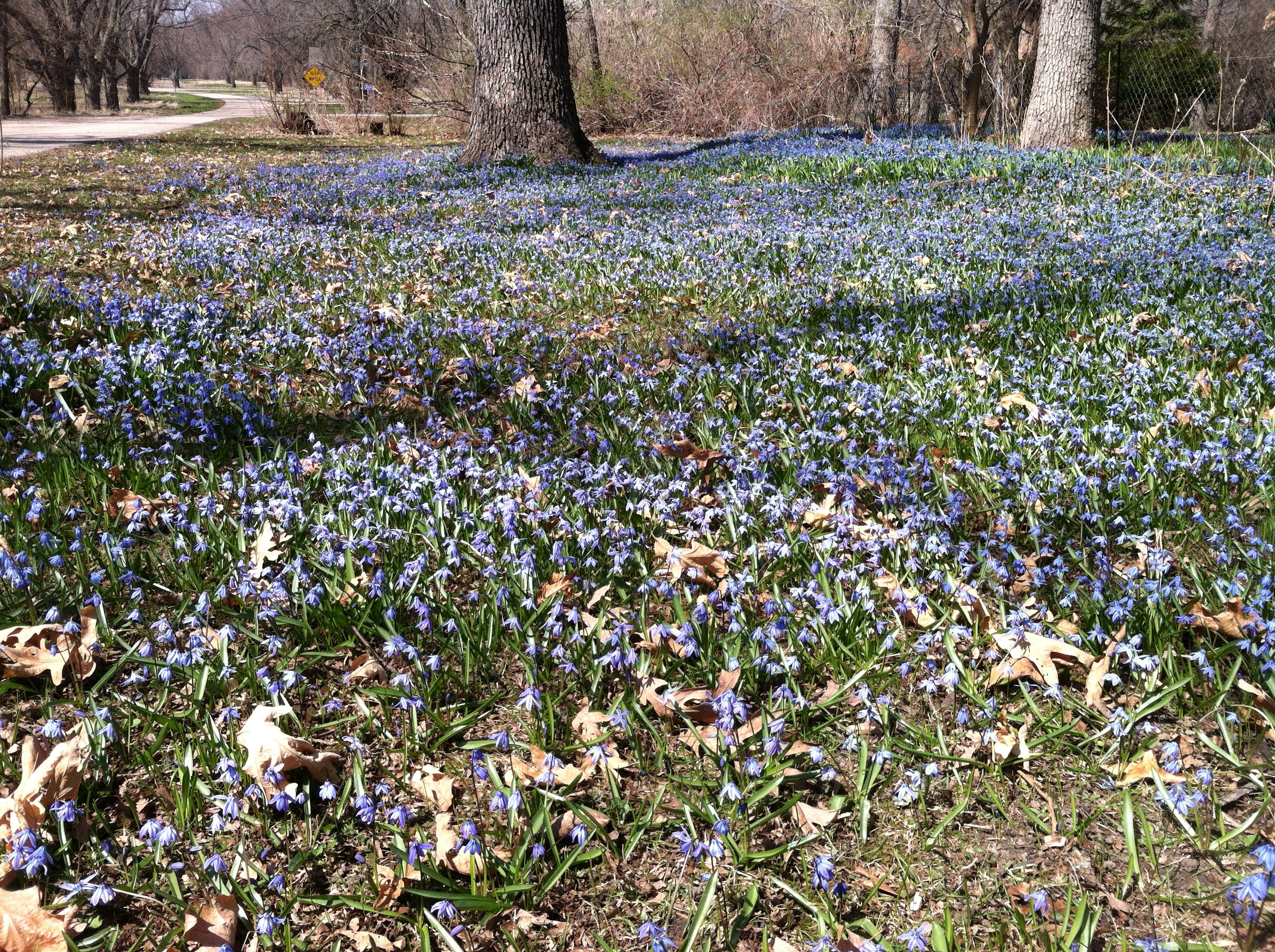
Spring comes in fits and starts in Wisconsin. We’ve had a few days hovering at 70 degrees (very few—technically, I don’t think two qualifies as a few), but mostly we’re back and forth right now between chill winds, dark clouds, rain, snow flurries, and the occasional embrace of golden warmth and showy display of nature that keeps us right where we need to be: alert and grateful, and ready to hit the Festival circuit. Wisconsonites thrive on festivals, which go on all summer long. The first comes Memorial Day Weekend: Nestle/Burlington’s Chocolate Fest. Happy Days are where you make them, here now, here then, and most definitely…Here Again!

Even the most curmurgeonliest of my river rat neighbors has a smile to share this time of year. The guy with the waist-length beard and the four broken down boats in his driveway, the lady smoker I haven’t seen since October with the two pit bull dogs, the suspicious teenager who usually ignores my friendly wave. Today they stand proud, noses lifted high. Smiling. The seasons will and do change, and nobody and nothin’ can take that away from us.

Writing is kind of that way. For me, anyhow. Sometimes it flows like the Fox River does right now, swelled up with all kinds of life and energy, bringing on something new. Other times it gets sluggish, muddy, stagnant—full of bugs. Right now, things are moving along. Change is good. Accept and embrace that, as we do in Wisconsin, and everything else gets a whole lot brighter. Happy Writing, and Happy Festival Season!bluelawn 001

Leave a comment

Filed under Writing Advice

Fact or Fiction? Writing Tips from Writers Digest

http://www.writersdigest.com/online-editor/6-tips-for-writing-fiction-based-on-true-events?et_mid=712046

One of the great things about online media is that sometimes you find just the advice you need at that moment.  This short piece regarding writing fiction based on true events came at the right time for me. I have been finding myself trapped between two opposing needs: to tell the truth, and to protect others.  Maybe, according to this article, I can do both. I hope you find it useful.

Leave a comment

Filed under Writing Advice