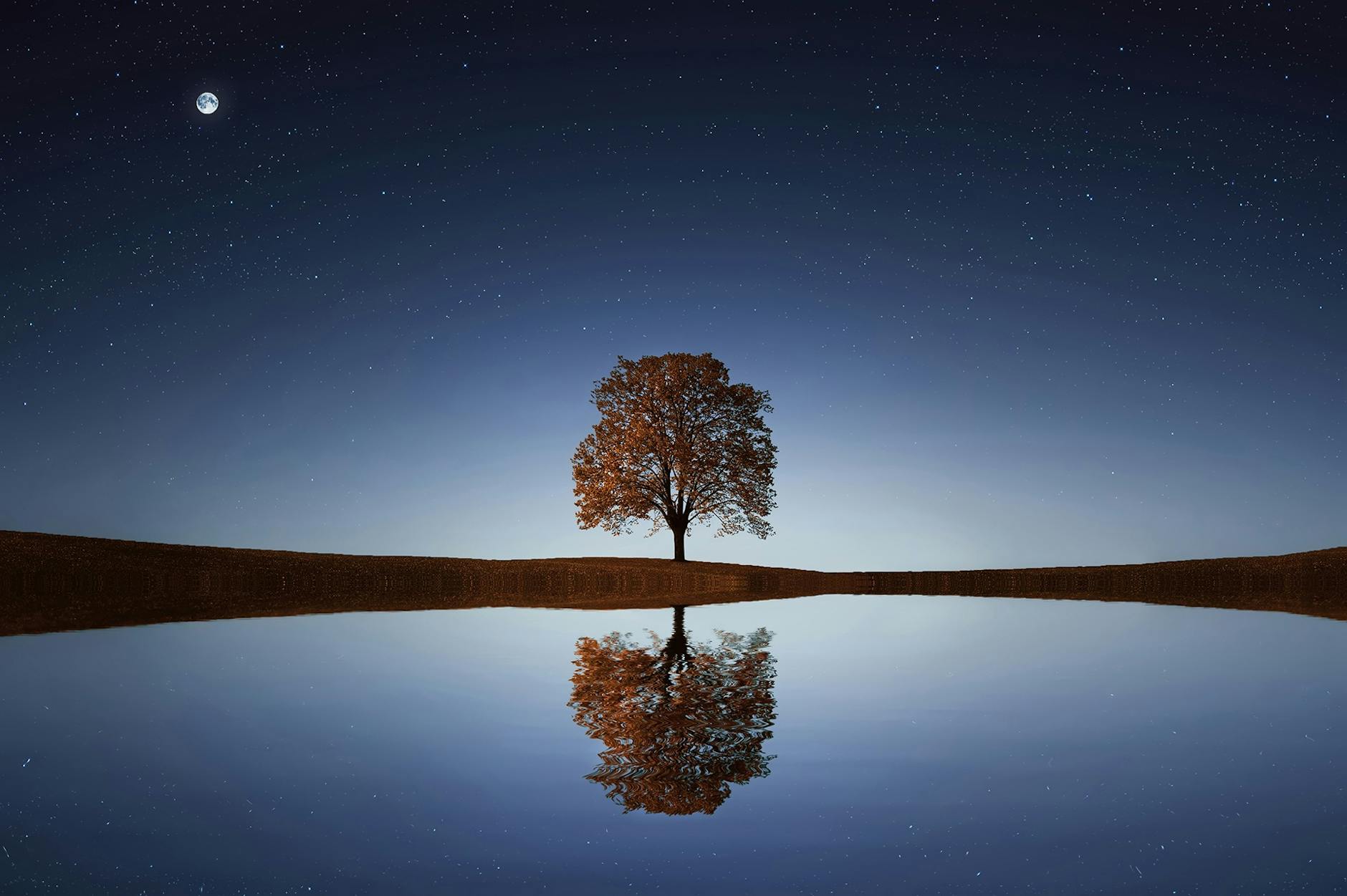
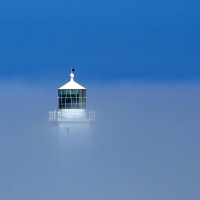
“The strongest oak of the forest is not the one that is protected from the storm and hidden from the sun.It’s the one that stands in the open where it is compelled to struggle for its existence against the winds and rains and the scorching sun.” – Napoleon Hill
Hello, Reader and Writer Friends! I hope this post finds you well and blessed with the energy, time, and resources you need and deserve. I am grateful to you and wish you joy. The past few weeks have brought both expected and unexpected news, tasks, challenges, joys, and sorrows to my little corner of the planet, and I suspect they may have to yours also.
Changes of season, the holidays, national and world events, community and family celebrations, work, play, plans, and the shadow of illness and even death for some have been on the hearts and minds of many.
This week in my little town we’ve lost a young woman to suicide. The tragic and violent event has left many of us in shock, and the pain is palpable. And yet, standing right beside that horror, we also have grace in the shape of a group of dear people who planned and cooked and decorated our community center, and fed everyone in town who wished to come. And we had the Christmas tree lighting in the park, followed by fireworks. And we have a live nativity on Main Street coming in a few days. And I’m going to Disneyland with my grandkids next week. And yet, a friend’s cat died and one of our own adopted cats disappeared (you see how the sadness creeps back in). And yet, I got a surprisingly good medical report from my doctor. And in the netherworld of being a writer, I began another round of manuscript submissions today, sending out queries to six publishers.
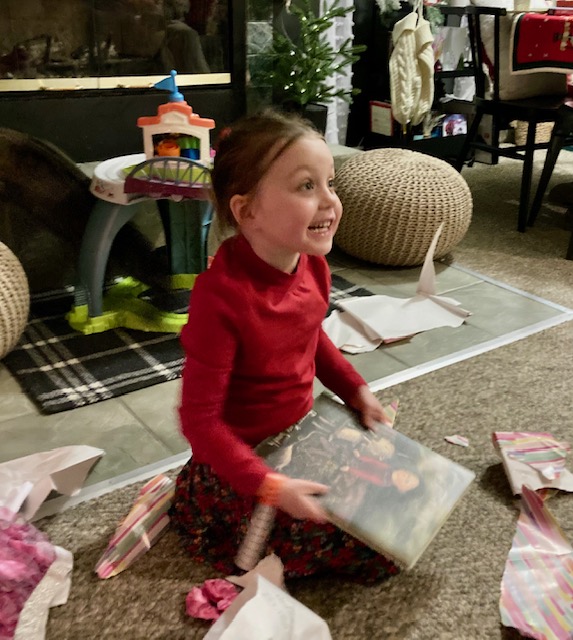
The light shifts, the wind blows.
We manage as best we can, remembering that the strongest oak
“The demise of writing matters, because writing is not a second thing that happens after thinking. The act of writing is an act of thinking. This is as true for professionals as it is for students. In “Writing Is Thinking,” an editorial in Nature, the authors argued that “outsourcing the entire writing process to [large language models]” deprives scientists of the important work of understanding what they’ve discovered and why it matters. Students, scientists, and anyone else who lets AI do the writing for them will find their screens full of words and their minds emptied of thought.”
I read the “Daily Words of Wisdom” —well, daily— from the London’s Writers’ Salon. They are always good, and today’s topic is something I’ve been thinking a lot about lately. I’ve always felt that I, personally, discover what I think, what I know, and what I want to know best through writing. I’m also better able to tap into memory and creativity through writing. I seem to retain more information and integrate knowledge into my soul better through writing. For example, if I read a brilliant fiction or nonfiction book and write an essay about it, I amplify the many benefits gleaned from the reading–these benefits range from an awareness and appreciation of literary technique all the way across the spectrum to a synthesis of understanding on any variety of topics.
Because of my love of writing, and my deeply held belief in its power and many benefits, I wanted to share this and ask you for your thoughts. Do you agree with Derek Thompson’s view that “Students , scientists, and anyone else who lets AI do the writing for them will find their screens full of words and their minds emptied of thought”?
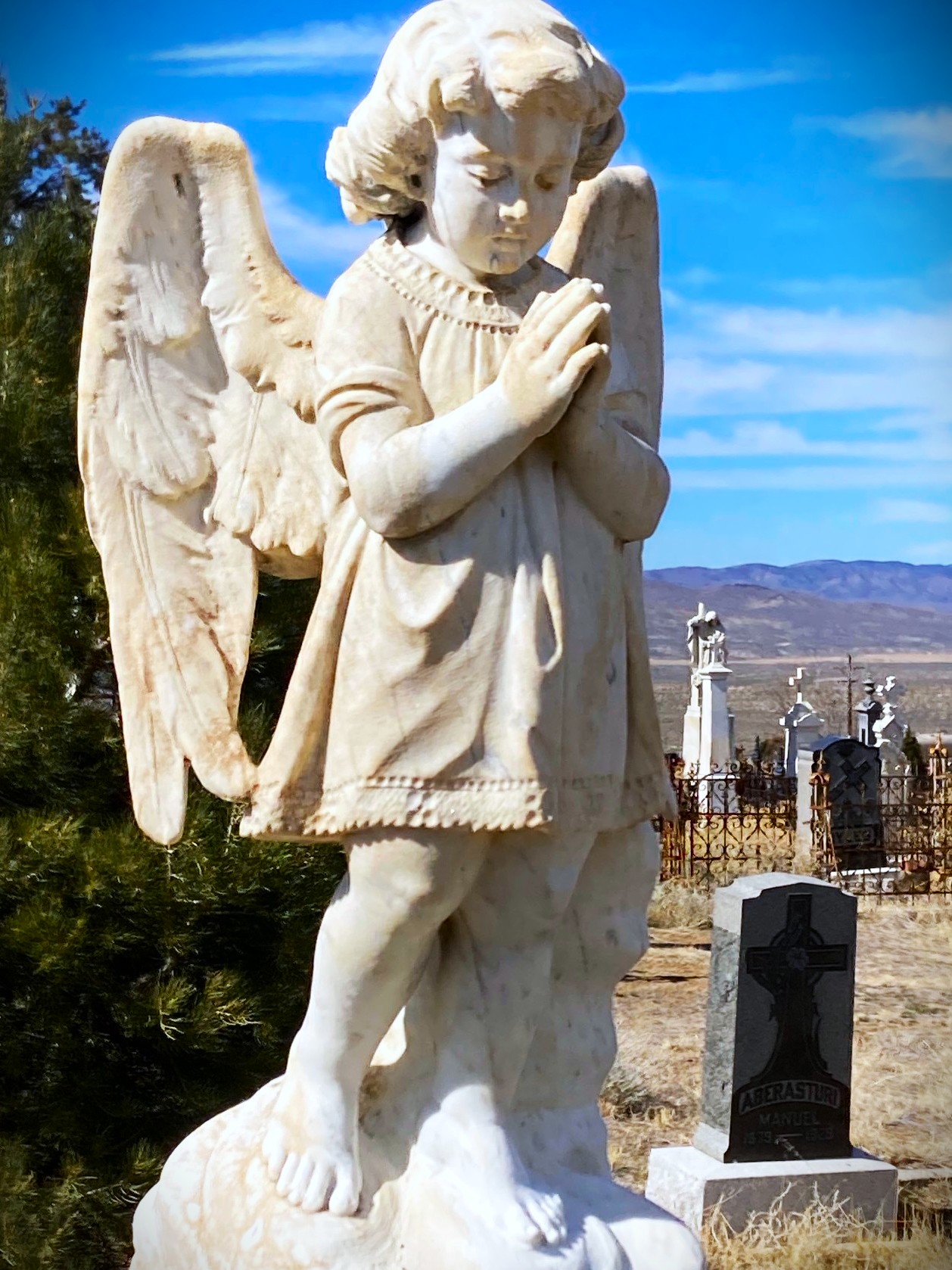
Stained ivory marble glimmers at the edge of the woods
Silent graves behind a rusty fence
Water murmurs in a nearby brook
So small So sweet So Young
A pool of minnows
A mother’s tears
Silver flashes of life
And a blanket of tangled vines, thorns, pink roses
Seek the sun and the angel
Roots curve lovingly around a box lined with satin in the cold earth below
Little bones
Buried in the cold earth below
And the sun sparkles on the brook which speaks softly, softly
A lullaby as it gentles on its way
Soothing the mother now resting next to her child
Buried in grief
Bones reach for bones
And the sun sparkles on the brook
Casting diamonds and tears across the surface
Warming the earth
Descending to the grave
Rising to the heavens
Where the child plays in golden endless days
Hold on hold on hold on to your faith
Austin Cemetery. Austin, Nevada, US. Photos are my own. I wrote this poem as a kind of meditation. In deeply dark times, I search for faith, comfort, and beauty. I pray for the children. In peace and love, Lori. 2025
Friends! I have been remiss! I apologize for getting so far behind in reading and responding to your posts. I hope you are all well and I’m looking forward to catching up!
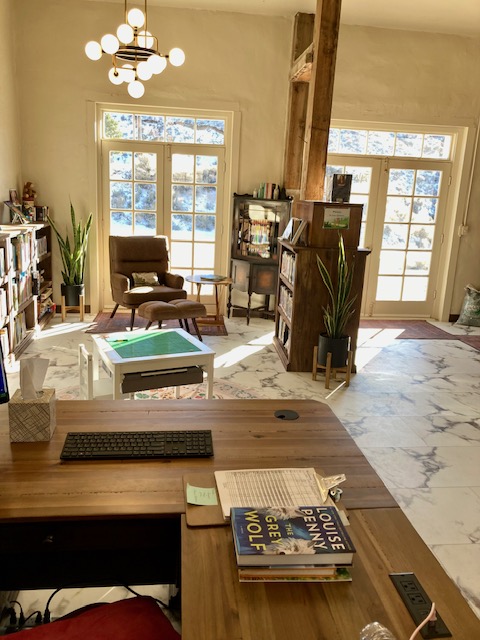
Austin Library, Lander County, Nevada
I’ve been busy of late with revising my historical fiction manuscript after receiving feedback from an agent and a publisher. It’s been fun, in that odd way that perhaps only other writers can understand—a challenge, a wrestling with words, a content shift—all of it within a world that was once mine alone and that now I must share if it is ever to come to fruition as a novel that lives in the world.
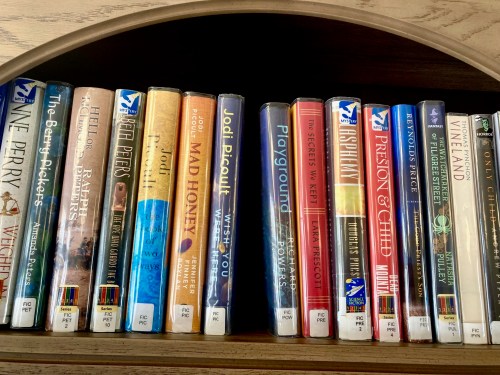
Field Trip! I can’t remember where I saw this exercise in visualization. It was likely from one of you, so please accept my apologies for not remembering the source, and let me know if it was you. I love the idea: Go to a book store or a library and find the spot on the shelf where your book would be shelved if it were published. Make a space for your beautiful creation and take a picture. What books will be nestled up to yours?
In the Austin, Nevada library, my book would be shelved right next to Jodi Picoult’s if it were published today!
Your Turn! I’d love to see your spaces! And if you already have a book or books out there, it would be wonderful to see where they sit on the shelf. Please share!
From Top to Bottom: Sierra Boggess and Emily Jewel Hoder in the revival production of “The Secret Garden” at Center Theatre Group / Ahmanson Theatre February 19 through March 26, 2023. Photo credit: Matthew Murphy of MurphyMade
As a way to identify the activities that bring me joy and find ways to incorporate more of them—more often—into my daily life, I recently completed a writing exercise. It morphed into several disparate, yet ultimately connected and delightful experiences. I had so much fun with it, I just had to share!
Here is the prompt: “Write a letter to your childhood hero. You won’t actually send this letter. Tell them about what has brought you the most joy in each decade of your life. Don’t think too hard about the answers. Write the first things that come to mind. Reread the letter. Do you see common threads?” -Brittany Polat, PhD. Journal Like a Stoic, c2022.
Choosing who to write to was an intriguing part of the process. Who, I asked my little girl self, is your hero? The name that sprang spontaneously to mind was Frances Hodgson Burnett. Of everyone I could have chosen, for some reason I chose a lady author, a woman I’d never met and in fact could never have met because she died thirty-two years before I was born. She may have left the earthly realm, but she was very alive to me. She spoke to me through her books. The Secret Garden was my favorite, and I have continued to love it my whole life, cherishing it through rereads, watching all of the movie versions, and attending the play.
Before writing my letter to Frances, I did a bit of research on her life, and what a full life it was! Born in 1849 in England, impoverished at age four after her father’s death, Frances eventually traveled with her mother to live in a log cabin in Tennessee during the American Civil War. It was writing that finally lifted her out of poverty. She was a highly regarded author who published fifty-three novels and owned homes in both England and America (Gerzina, Gretchen H. “In the Garden: The Life of Frances Hodgson Burnett.” Shakespeare Theatre Company, c2024).
This research into Frances’s life inspired me as I wrote to her about the greatest joys in my own life. The common threads became very clear. Family, friends, nature, wildlife, pets, reading, writing, and learning showed up consistently throughout the decades. These are the things that spark the most joy for me.
Frances with her sons
With this in mind, I agreed to an unplanned day-long trail ride with my husband on a day I had planned to spend doing laundry and vacuuming the house. Seems like an easy choice, venturing out into nature with my guy rather than doing chores, but I honestly might not have agreed to drop everything and go if I hadn’t just completed my “joy inventory.”
Though housekeeping and organization didn’t make themselves known in my letter to Frances, they are important to me, nonetheless. I find it difficult to get to joy in any kind of untidy environment, whether in my own home or anywhere else. Still! I managed to say yes. As a bonus, I thought I could write about it afterwards, thereby including another of my favorite activities in the event.
Here is the result:
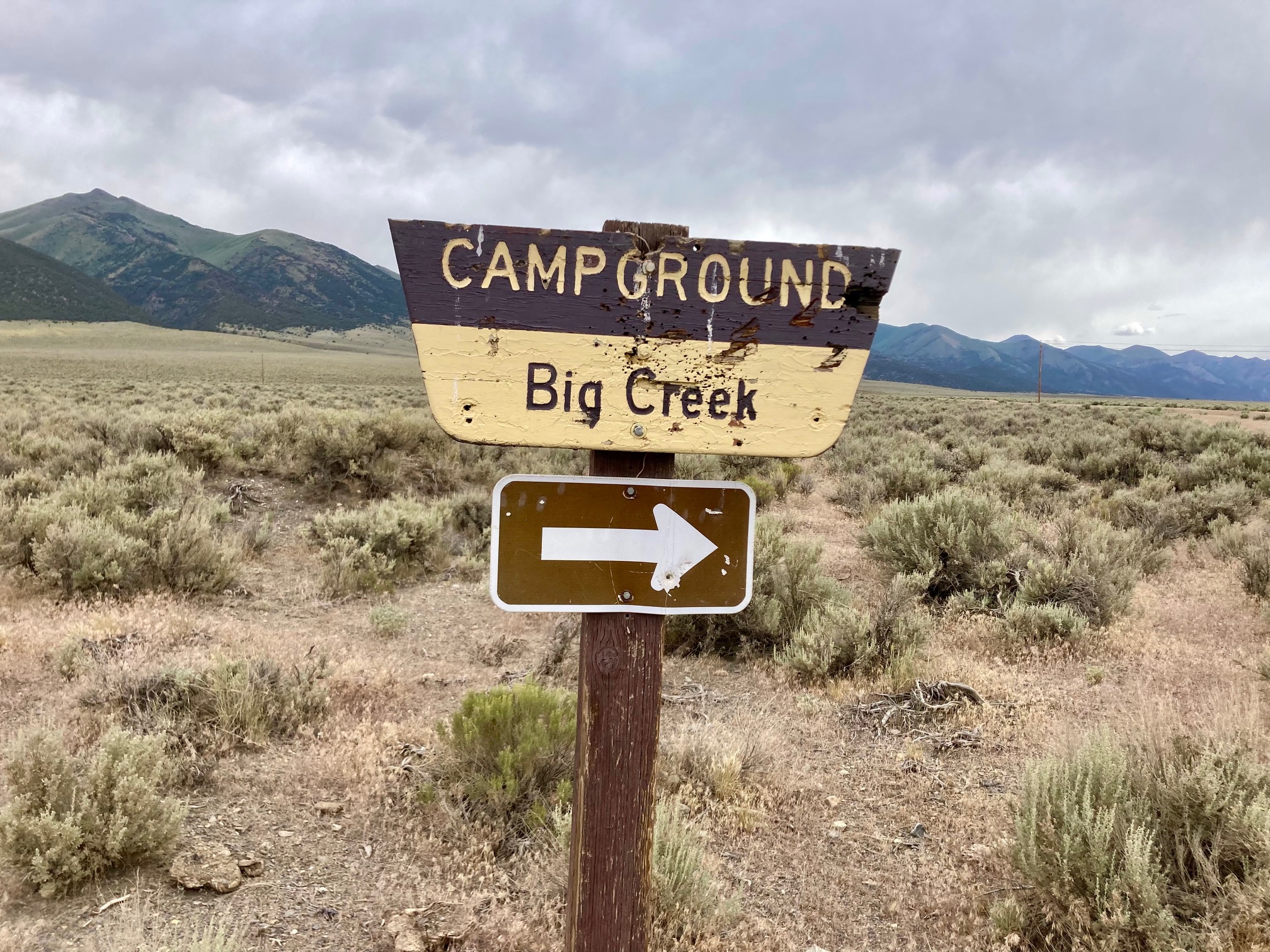
Off highway vehicle trails abound in the high elevation areas of the entire Toiyabe Mountain range and extend down into the valleys and basin below. We have an old side-by-side Rhino that can climb just about anything at very low speeds and peaks at 30 miles per hour on a flat road going downhill (a situation not often experienced here). Our chosen route for the day was to begin at our home in Austin, travel to Big Creek Campground, and then continue over the mountains into the adjacent valley to the east.
My guy and the Rhino
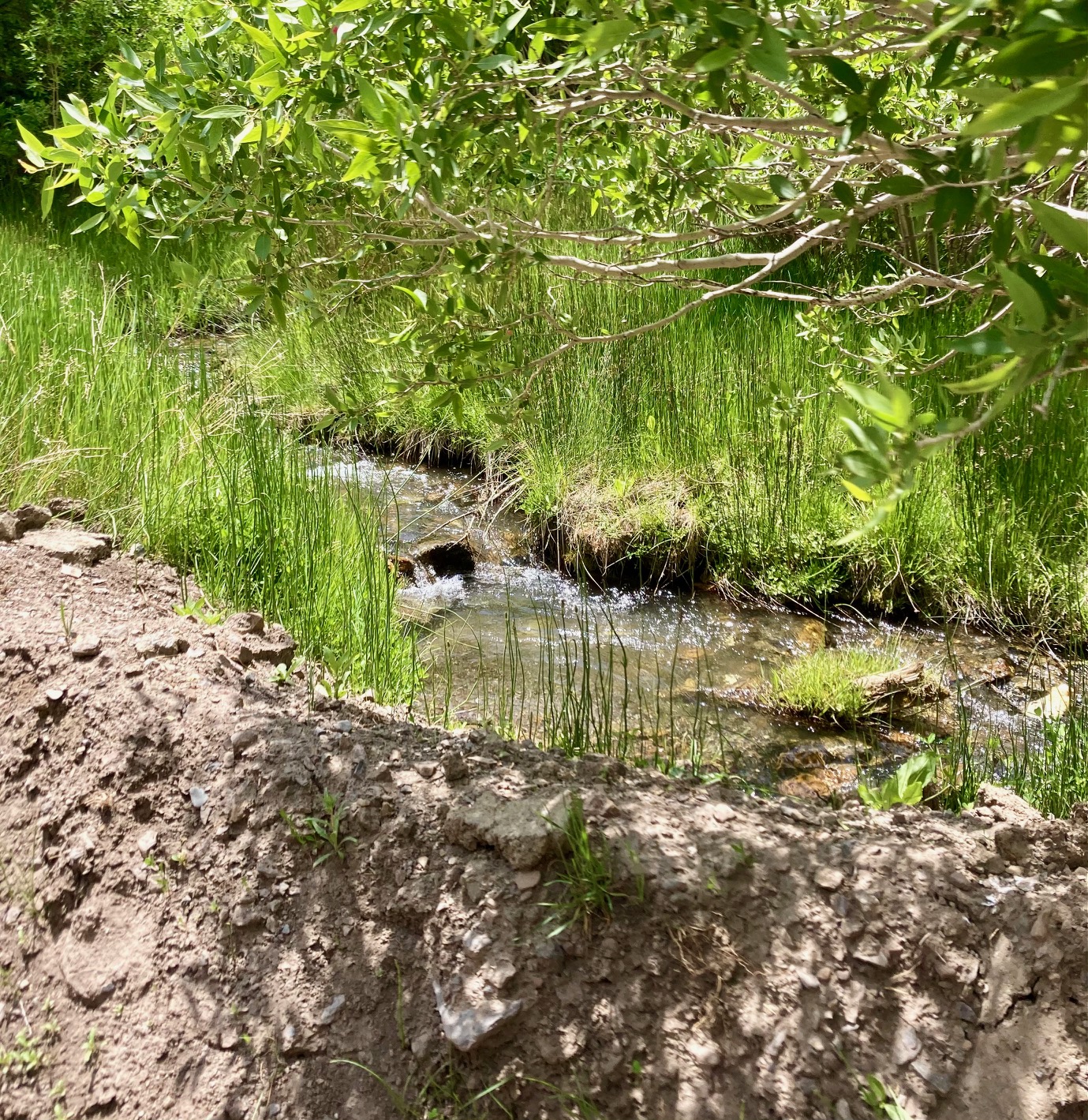
Big Creek
Soon to be up and over the top!
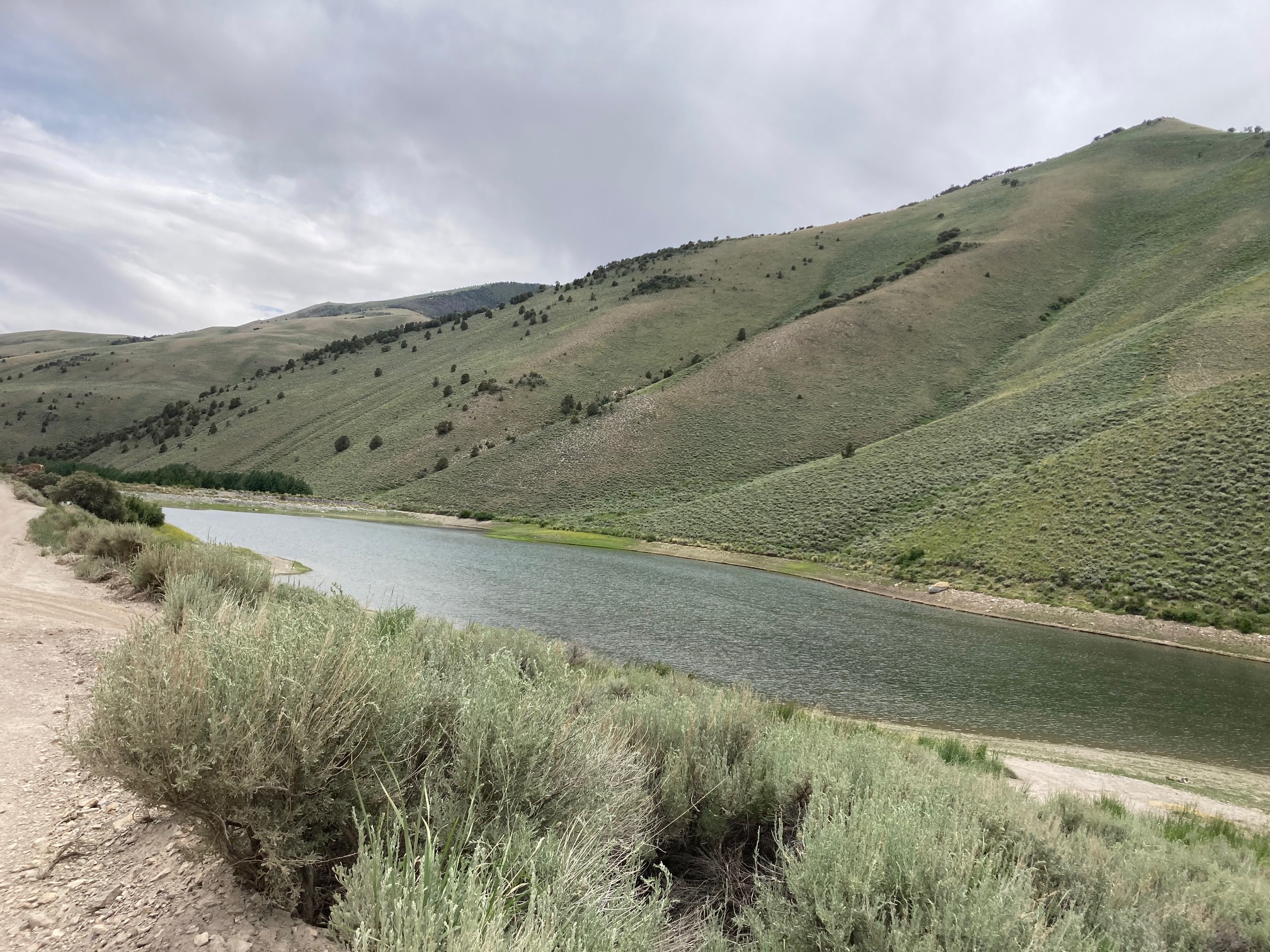
Groves Lake
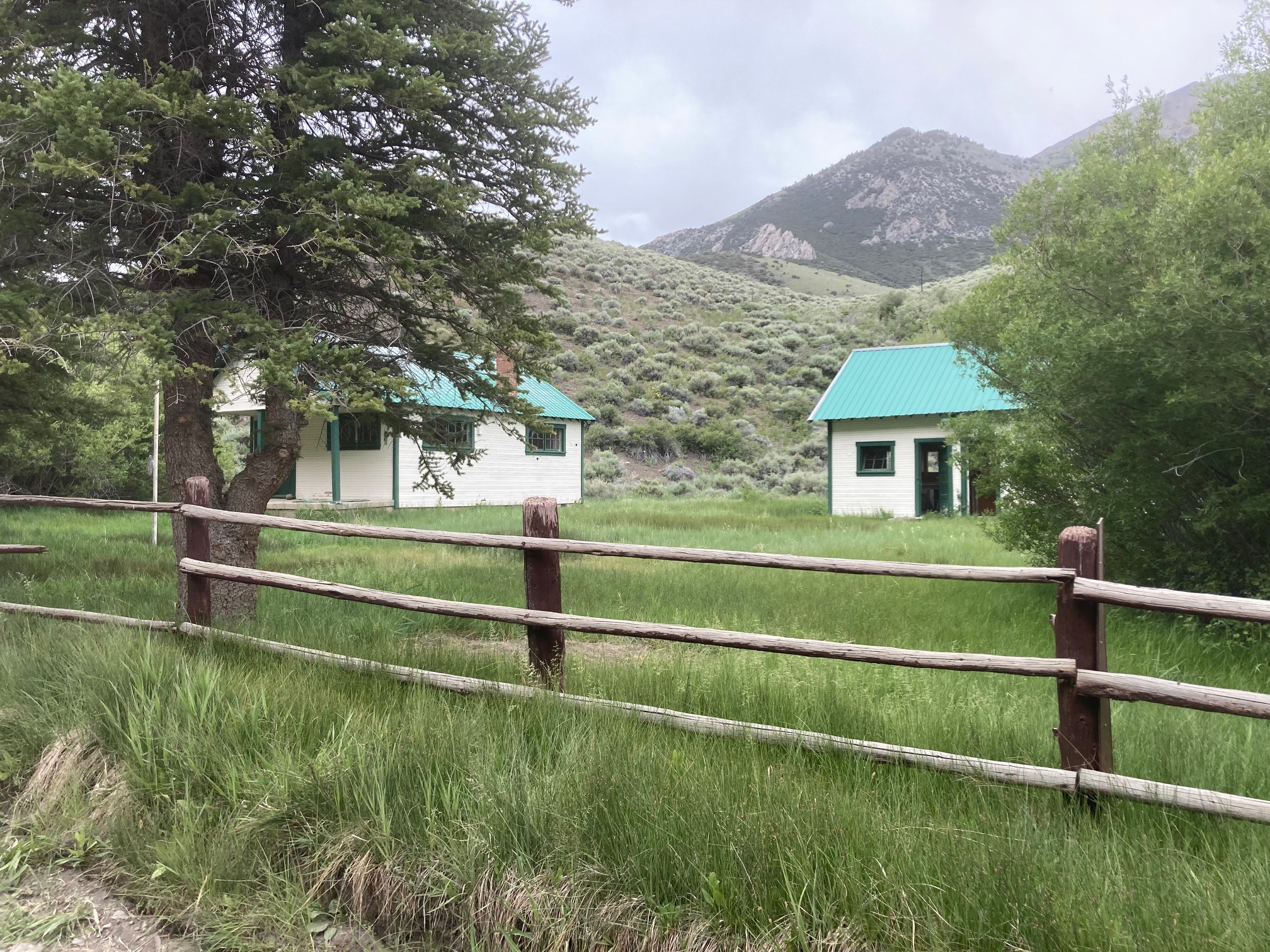
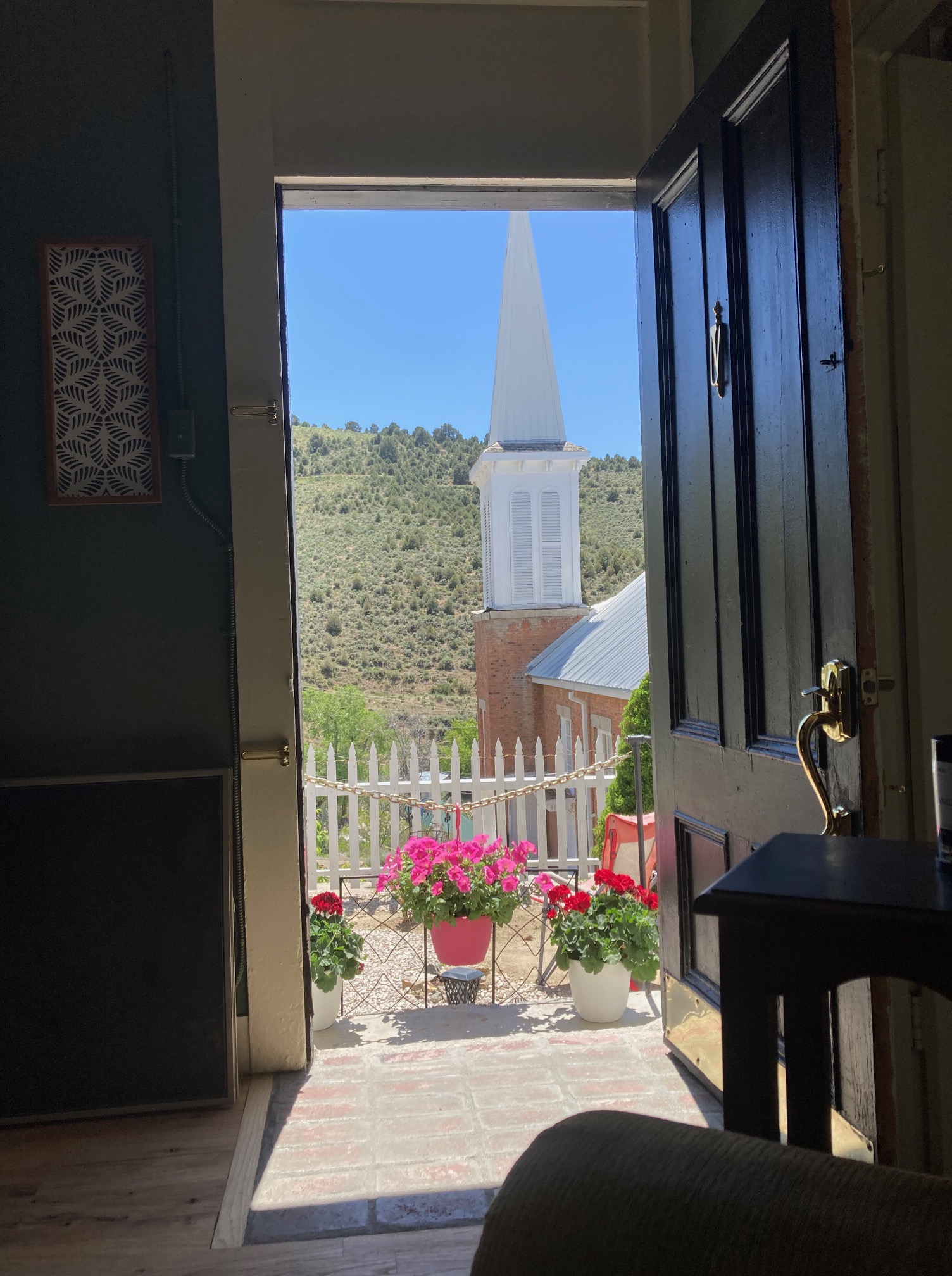
Along the way we experienced the expanse of the Reese River Valley over exposed rocky trails and into and over the mountains with multiple stream crossings, aspen groves, meadows, and significant elevation change. We passed by two campgrounds (Big Creek Campground and Kingston Campground) and Groves Lake, winding up in the charming Kingston community where we were welcomed by the wonderful ladies of a Monday Mahjong groups that meets at our friend Linda’s house. There we were treated to a delicious lunch and lively conversation before heading back over the mountain. Friendship, another joy inducing ingredient added! It was a lovely day.
Old Kingston Ranger Station
Linda and the Mahjong Ladies welcomed us in!
From the initial moments spent reading the prompt in my journal it was indeed a joy to experience the results of contemplating a childhood hero, writing to her, thinking about my life in decades, and saying yes to an impromptu adventure.
It would be wonderful to read about your hero, and the joys of your decades. Who would you write to? What insights about joy might your letter reveal? If the spirit moves you, please do give this little project a go! You might find yourself delighted by the results, as I have done. Looking forward to hearing from you!
Something I don’t write about much is my writing background. And of course there’s a reason for that. I have spent a significant amount of time, effort, and money over a period of many years on writing, and though I don’t consider any of that effort to be wasted, I do think sometimes, sometimes when the shadows fall a little too dark, a little too thick, that I should have done more with it, this writing thing, by now. That it should have gone somewhere. Perhaps I’m even a bit embarrassed to admit that with a BA in English and an MFA in creative writing, and years of study and teaching under my belt, I still haven’t published a novel.
Have I written a novel? Oh, yes. I wrote my first novel three decades ago. I was teaching English and became active in the National Writing Project, a fantastic program for teachers that encourages us to become writers, ourselves. I wrote a contemporary novel during that time but never attempted to have it published. It was my learning novel, the one that I would never throw away, but also, the one that wouldn’t be good enough to publish. Don’t ask me exactly how I came to this conclusion. I think I read an awful lot of books and articles about writing, and this was my take on first novels. They were like the first pancake, or the first kiss. You just had to do it and get it out of the way. The payoff would be better pancakes and better kisses later. Fluffier, more evenly browned, delicious. Or maybe my own writing just embarrassed me so much that I couldn’t even think of approaching anyone with it. So, I printed it out and boxed it away.
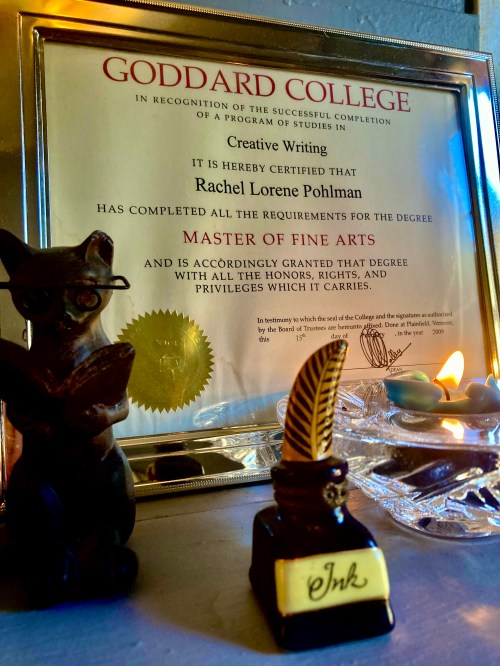
The itch to learn more and to focus more on writing took me to Goddard College next. I continued teaching and worked on my master’s from 2007-2009. During this exciting period, I wrote constantly, including many formal papers for my instructors and my thesis, which was a young adult historical fiction novel about a Catholic Polish teen and his Jewish neighbors during World War II. This one, I thought, I would try to get published. I just didn’t hurry it.
I attended Goddard West in Port Townsend, WA. I have never been to the original campus in Vermont, which has sadly, closed, but I still hope to visit there someday.
After the MFA, I focused on researching agents and publishers and writing queries. Admittedly, I didn’t try very hard. It was excruciating for me to put myself out there—my writing out there—which to me, amounted to putting my inexperience and inadequacy on full display, a neon sign of not-good-enough, flashy and annoying, just begging someone far more hard-working and talented than myself to squash it.
Time went by and I wrote with friends for fun, and to learn more. Shout out to you, Alicia, Lynn, Mike, Maria Elena, and of course all of my amazing students! I thought maybe I needed to put more time between me and my second novel. I started blogging. I was still teaching.
But then I found myself seriously ill with a rare form of cancer, and the world stopped spinning. I lost track of days, weeks. My brother was also ill and had come to live with us. My surgeries were successful. But I felt unwell. Months of chemo took a toll. And my brother. My beautiful brother, my only sibling, died.
I read that the average life span for appendiceal cancer was seven years, and yes, I also read that was not to be taken to mean that I would die in seven years—there were so many factors involved, and it was just an average. Many people died sooner. Others lived for twenty years or more. Blah, blah, blah, I thought. I have seven years.
With my husband’s blessing, I cashed in a small savings account and took a short trip to London and Paris (my one and only trip outside the U.S.), and it was wonderful, and I knew I wanted to write. My writing vision could not have been more clear. I came home and worked on a new novel.
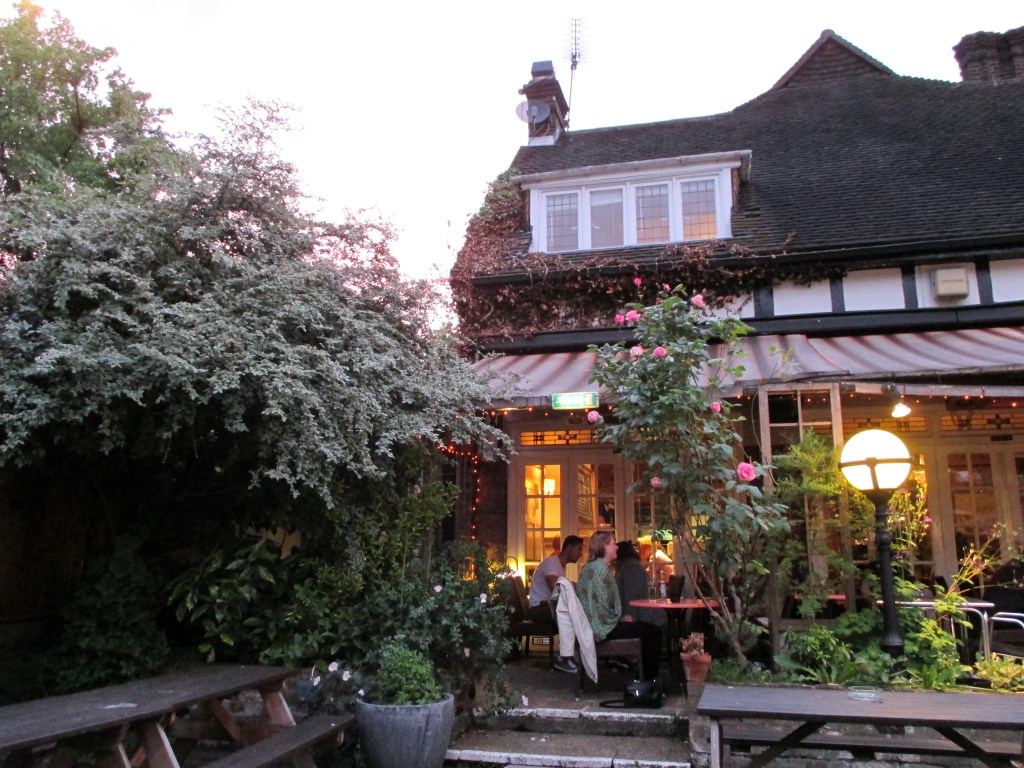
East Finchley, Outside London.
A Beautiful Place to Write.
I taught for a couple more years. Other than my family, my teaching career was what I was most proud of and committed to. Still, I felt my energy shifting. I expected an early death. I imagined myself too weak to be the kind of teacher I had always aspired to be, which was the Robin Williams as John Keating kind of teacher from Dead Poet’s Society. That was who I should be, but instead, I felt—I believed, I was tired, in failing health, more Virginia Poe dying slowly of tuberculous while Edgar became ever more prolific than John Keating taking on the entire world of poetry and elevating young minds and spirits. I saw myself settling into an early writing retirement where my husband would continue to work, but I would just be . . . . the quiet writer in residence.
Robin William as the victorious Mr. Keating
The sadly beautiful Mrs. E. A. Poe
And so, I finished my third book. It is not published.
I found I missed gainful employment and have steadily worked part-time since my early retirement, teaching and library work mostly. I am fighting my hermit-like tendencies, and I’m enjoying getting more involved in actively reading and responding to my fellow writers online, as well as the few writers I know personally. This is a joy and a responsibility. I believe we must support each other, and I am so in awe of all of you! I just finished reading a fellow Goddard graduate’s Sci-Fi thriller, The Regolith Temple, yesterday, and was blown away! Roxana Arama, I will be writing a review for your excellent book very soon!
I am still waiting to hear back from an agent who requested my full manuscript many months ago. I’m considering next steps.
I’m not dead. I stopped going in for cancer scans several years ago. I can’t afford them, and anyway, I’m quite spectacularly healthy. Weirdly! So maybe the seven years thing was really just about itches and actually had nothing to do with my diagnosis. Whatever the reason, I’m grateful, and I’m still in love with this beautiful planet. And pancakes and kisses.
I’m walking every day and working on another novel.
An early picture of our old house, before renovation.
One of the most enjoyable writing exercises I’ve done lately comes from a biographical poetry template based on a poem by George Ella Lyon. I came across it on Jeannine Quellette’s brilliant Substack, Writing in the Dark. The exercise is familiar to me in a distant way, as though perhaps I’d done it before but lost it. Or perhaps it suited me perfectly this past week because I have been contemplating writing memoir and fictionalized biography, so it seems as though I always had it—a poem about beginnings, and the echoes still heard, the lessons still being learned.
Green grass, Blue water, the whoosh of wind and wings
Flocks of seagulls
I am from Lilies of the Valley, Bleeding Hearts, Lake Michigan’s endless sand and waves
I’m from World War II, Ramblers, and Divorce
From Rachel and Frederick and William and Lorene
From Rae and Bill
I’m from long car rides and listening to albums on the stereo
From Mr. Wonderful and Stop Crying and What did you learn in school today?
I’m from no church, lost pets, and rented houses.
From a mother who scoffed at religious people
And a father who blamed organized religion
For the world’s woes.
But I’m also from Christmas trees and baking cookies, from bunnies and Easter baskets.
And I’m from the hand-written prayers I found in my father’s bedside table when he died.
I’m from Chicago and Kenosha
From Illinois, Wisconsin, and Minnesota
From Scots called Johnstone, and Swedes called Nelson
From ground beef casseroles, navy bean soup, and sour cream raisin pie
From Great Aunt Mary who broke up with her beau when he jumped into a fountain,
Never to wed, who lived with her sister Lorene’s family and then mine until The Divorce when she
Was sent back to Chicago to an old folk’s home
And Mother was hospitalized
I am from women who sewed and worked in libraries
and who cooked and cleaned other people’s houses.
And from men who sought love and adventure and worked on farms and in factories.
I am from Midwestern barefoot summers and sea glass and wandering the West
Restless and yearning for polished maple tables and a place to call home.
RLP, 2025
If you would like to write your own “I Am From” poem, here is the template. Use it as a springboard. Jump in and adjust it to suit. I hope the writing brings you joy, or something like joy, which is sometimes as simple as finding a way to express the inexpressible past.
Blessings! And please share your poems in the comments!
Kenosha, Wisconsin
Template: I Am From
I am from ________________ (specific ordinary item)
From ____________ (product name) and _____________ (product name)
Two consecutive snowstorms, and the sun sparks diamonds on the snow-hushed surfaces here in Austin and in the Reese River Valley just below us, giving us time to read, to wander, to cook, and to write.
Walking after a snowstorm is one of my favorite activities, along with walking in a warm rain, or on a starry night, or along a tree-lined lane at the height of autumn. It’s like walking inside a dream, a vision, a movie . . . all of it a magical changing work of art. This has been that kind of a weekend. An appreciated and needed balm for the eyes, ears, heart, mind and soul.
Our footprints going down our driveway last winter after a similar storm in Austin, NV. My photo.
After today’s walk, I finished reading Dr. Vicki Atkinson’s memoir, Surviving Sue: An Inspirational Survivor’s Story About a Daughter and her Life with a Mother Who was Riddled with Alcoholism, Alzheimer’s, Anxiety, Depression, and Munchausen’s. Vicki is a fellow blogger, one I follow and read with pleasure, always knowing I will find something positive, real, and insightful in her posts. Vicki is generous with her readers, sharing of herself, her humor, her highs and lows with an empathic interest in our perspectives.
This is Vicki’s voice, and it shines on the pages of her book. She is a profoundly kind-spirited woman who grew up learning how to turn the injury and injustice of her mother’s mental illness into something bigger than her own pain. With keen intelligence, her father’s and sister’s love, and later through her own family and probably also due to her dedication to her studies, Vicki survives and thrives, and she does it without ever compromising her own values.
Vicki’s Wonderful Memoir
Vicki’s compassion for her mother is more than challenged over the years, but somehow, she stays the course of doing what she believes is best for everyone concerned. For those who don’t know Vicki or haven’t read Surviving Sue, I’d like to stop here to encourage you to read it for yourself. This story is worth your time. It may even affect the ways you view some of your own experiences, past or present. It may soften your heart. It’s a beautiful book, and an engaging read.
I headed home from my holiday travels at the end of December, heart-filled with the love of family. I was tired, but happy in the distinct way grandmothers know well. I had just been given a multitude of irreplaceable moments with my best beloveds . . . Tiny hands holding mine, some still so small, and some growing too fast. Also bigger hands and hearty hugs. Teens and twenty-somethings updating me on their lives. Strong, beautiful, and grown. Smiles. Laughter. Storybooks shared. Snowman crafts. Game playing. Sleepy cuddles. All of it so cherished.
After tearful goodbyes, I checked in for my flight and went in search of a new journal at the airport gift shop, thinking I could begin it on January 1st. Last year, returning from my Christmas trip, I had purchased one there, and it had been a terrific addition to my writing life. Alas, this time nothing spoke to me, probably because I already had it in mind that I wanted a guided journal like the one I used in 2024 (The Breathe Journal 52 Week Guided Planner) and they didn’t have anything similar.
Once home, my usual routines resumed, but with more than the usual spark of wonder and worry that a new year brings. This was not going to be just any new year. Apprehensive, sad, and often angry, too, I knew that I was going to have to work hard to maintain my usual optimism and good will. Honestly, my optimism was at one of the lowest levels I have ever known. Somehow, I was still hanging on to my feeling of good will in all my daily encounters. My genuine love of the people I see during the course of a regular week’s activities lifts me up. But when I was at home reading the news, I was feeling helpless and exceptionally low.
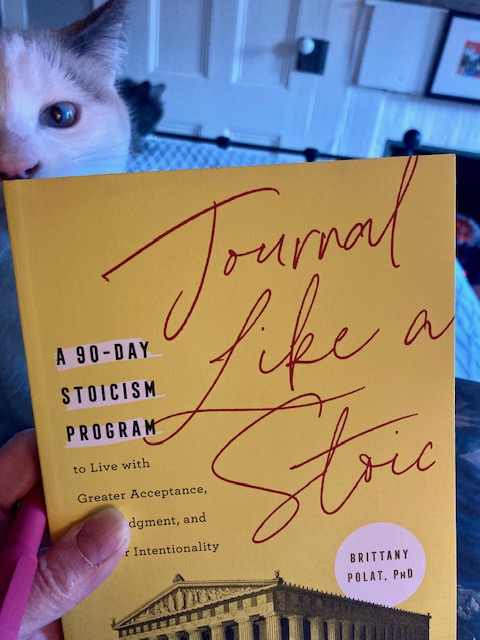
Mr. P and I stuck to our walking schedule, which we know is a nonnegotiable necessity, and I was happy to return to my library job and to church on Sundays. These things always help. Still, I knew I needed to get more writing in, and was stuck—am stuck—as far as my historical fiction manuscript goes, so I searched online for a new journal. I found and ordered Journal Like a Stoic: A 90-Day Stoicism Program to Live with Greater Acceptance, Less Judgment, and Deeper Intentionality by Brittany Polat, PhD.
By the time the journal arrived, we were more than halfway through January, and I was physically unwell. I am only into my third day of using it, but I would say it is helping me in the way that almost any honest attempt at writing truthfully from my heart and mind can do. It focuses my mind with reading, questions me with depth, and sets a task before me. I like it.
From the book: “Stoicism is a philosophy of life in the fullest sense. As a framework for daily living, it can guide us in every decision we make, from our career choices to what’s for dinner tonight. What’s more, it helps ground us when we’re living through what feels like unprecedented times.”
The kitty is also interested in stoicism.
The three disciplines of stoicism are logic, ethics, and physics. The four virtues of stoicism are wisdom, justice, courage, and temperance. All these things I can get behind, believe that I mostly already embrace them. I say mostly, because I am ignorant when it comes to physics, and historically slack when it comes to temperance. Still! I am in. I will faithfully read and respond to the prompts in the book. I will write honestly.
I plan to continue with the other things in my life that sustain me: my love of friends, family, community, church, library, nature, reading, art, music, cooking, and pets (to name a few). And I will write the occasional blog post! I love connecting with all of you!
Cheers
To us! To a year of introspection and growth, and to a lifetime of love-motivated action and purpose. God Speed.
I have thought a lot lately about the discomfort of being in a perpetual state of waiting for something to happen, of worrying about what the results will be when something finally does happen, and then, wondering if I will navigate any of it well. The word “limbo” is often in my thoughts.
2024 brought new health concerns for my husband, and with that a reconsideration of where we should live, since we are currently in a very remote location, three and a half hours by car from the nearest medical center with cardiac care. We responded decisively by putting our house on the market. That decisiveness did not break us out of Limbo, however, as we do not know when or if our home will sell, and we do not know what it will sell for if it does sell. We cannot make plans on where to move until we sell the house. Still, we’re thinking about returning to the Midwest where real estate prices are more reasonable than here in the West and where we can reasonably expect to afford to live in a town with a hospital. But, until we sell, we are in Limbo.
Also, in 2024, I was thrilled to receive an invitation from my dream literary agent to send her my full manuscript, A Fine Suddenness, a World War II historical fiction novel based in Lake Arrowhead, CA. I’ve no idea if she has read it yet. It has been out of my hands for six months now, this after having worked on it pretty consistently for years. Many years. I miss it terribly (it’s an odd thing, really, the attachment I’ve made), and I have no interest in beginning a new novel yet, though at least I am continuing to write. Even so, journaling or posting online, as important and healthy as they are, do not give me the same sense of mission as novel writing does. I wait to hear from the agent, and I do not move forward on a sequel to the book I sent her, nor on some new unrelated novel, because I desperately want her opinion on A Fine Suddenness first. More Limbo.
And 2024, oh my goodness, has been a year of intense worry and anticipation for our nation and the world. We are no longer in the first stage of that particular limbo state, but we are certainly still in a place of transition and uncertainty. So many possible scenarios there, and so little I have control over. More Limbo.
Earliest historical references to Limbo describe a place in-between—not heaven, not hell—a place for deceased unbaptized humans born before the birth of Christ, or who died as infants before baptism, to reside until the second coming of Christ by the Roman Catholic Church, and these begin in the 14th Century. From there, the word limbo (more and more with a lower case “l”) entered usage in less theological contexts: as a place or state of restraint, confinement, neglect, oblivion, uncertainty, or an intermediate or transitional place or state.
Etymology also traces limbo from the English of Trinidad and Barbados limbo “a dance that involves bending backwards under a pole,” related to Jamaican English limba “to bend,” from English limber “flexible” (merriam-webster.com).
Which leads us to the dance, or funeral game, which dates back to the mid to late 1800s on the island of Tobago. In the beginning, the game started with the bar at the lowest possible height and the bar was gradually raised, signifying an emergence from death into life (Wikipedia.org). It is possible that the roots of this practice come from the slave experience of being transported across the seas in ships, where the slaves were separated and tried to squeeze through narrow spaces in order to see or touch one another. In some African beliefs, the game reflects the whole cycle of life . . . the players move under a pole that is gradually lowered from the chest level and they emerge on the other side as their heads clear the pole as in the triumph of life over death (Stanley-Niaah, Sonjah “Mapping of Black Atlantic Performance Geographies: From Slave Ship to Ghetto.” Quoted on Wikipedia.org).
The secularization of the dance began in the 1940s where “it became a popular entertainment in Trinidad and was adopted as a physical fitness exercise by American troops,” . . . and is now “considered the unofficial national game of Trinidad and Tobago” (Wikipedia.org). It has become a fun and happy pastime.
Historically, Limbo to limbo, has moved on. Broken free, so to speak. I wonder if my own limbo could progress that way, too. As for human history, perhaps also for me? If I am stuck in the place between heaven and hell right now, will it be possible for me to become limber enough to squeeze myself through the narrow places that block me from reaching the open, even joyful places that still may exist beyond my current ability to see them or experience them?
In order to do that, I would need to understand the constructs of the narrow places. What are they exactly? What are they made of? Are they hard and impervious, like granite? Splintered like rough wood? Flexible and sometimes deadly like serpents? Or are they only real because I make them real in my own paralyzed mind? Maybe I could wish them away, disintegrate them, with new knowledge or some kind of personal epiphany.
Perhaps there is a way. Perhaps not. But I must strive, at least, to remember Helen Keller’s words, these taken from her open letter in response to Nazi book burnings in Germany on May 9, 1933: “History has taught you nothing if you think you can kill ideas. Tyrants have tried to do that often before, and the ideas have risen up in their might and destroyed them. . .You can burn my books and the books of the best minds in Europe, but the ideas in them have seeped through a million channels and will continue to quicken other minds.”
If Helen Keller believed that ideas and hopes have always “seeped through a million channels,” who am I to deny it? Might not a few of those ideas and hopes, and more likely a multitude, have made their way to us now at the dawning of the year 2025? Might not they sustain us, quicken our minds, and help us find a way out of our narrow places and into the light?
Being vegetarian and eating greens and salads out is always a risk, it s hard to be 100% sure all you eat is absolutely safe, so take it twice a year to guarantee your body is free from unwanted organism
The goal of this blog is to create a long list of facts that are important, not trivia, and that are known to be true yet are either disputed by large segments of the public or highly surprising or misunderstood by many.
This blog feature amusing and heartwarming stories about our late Leonberger dog Bronco, as well as other Leonbergers. It also has a lot of information about the Leonberger breed, the history, care, training, Leonberger organizations, etc. I also wrote a Leonberger book, which I am featuring in the sidebar.
Surviving Sue Review and Traces in the Snow
Two consecutive snowstorms, and the sun sparks diamonds on the snow-hushed surfaces here in Austin and in the Reese River Valley just below us, giving us time to read, to wander, to cook, and to write.
Walking after a snowstorm is one of my favorite activities, along with walking in a warm rain, or on a starry night, or along a tree-lined lane at the height of autumn. It’s like walking inside a dream, a vision, a movie . . . all of it a magical changing work of art. This has been that kind of a weekend. An appreciated and needed balm for the eyes, ears, heart, mind and soul.
After today’s walk, I finished reading Dr. Vicki Atkinson’s memoir, Surviving Sue: An Inspirational Survivor’s Story About a Daughter and her Life with a Mother Who was Riddled with Alcoholism, Alzheimer’s, Anxiety, Depression, and Munchausen’s. Vicki is a fellow blogger, one I follow and read with pleasure, always knowing I will find something positive, real, and insightful in her posts. Vicki is generous with her readers, sharing of herself, her humor, her highs and lows with an empathic interest in our perspectives.
This is Vicki’s voice, and it shines on the pages of her book. She is a profoundly kind-spirited woman who grew up learning how to turn the injury and injustice of her mother’s mental illness into something bigger than her own pain. With keen intelligence, her father’s and sister’s love, and later through her own family and probably also due to her dedication to her studies, Vicki survives and thrives, and she does it without ever compromising her own values.
Vicki’s compassion for her mother is more than challenged over the years, but somehow, she stays the course of doing what she believes is best for everyone concerned. For those who don’t know Vicki or haven’t read Surviving Sue, I’d like to stop here to encourage you to read it for yourself. This story is worth your time. It may even affect the ways you view some of your own experiences, past or present. It may soften your heart. It’s a beautiful book, and an engaging read.
Surviving Sue, Eckhartz Press, Chicago. Copyright © 2023. Vicki’s Blog is victoriaponders.com. Vicki also shares a podcast with her friend and colleague, Wynne Leon of Surprised by Joy (Blog). Their podcast, The Heart of the Matter can be found at sharingtheheartofthematter.com.
Now it’s time for the cooking part of the day. I’ve got an eggplant, lots of spices, cheese, pasta, greens, and tomatoes. Oh, and wine.
Should be a beautiful night.
Share this:
24 Comments
Filed under Books, Commentary, Nature, Reading, Seasons, Uncategorized, Voice, Winter, Writing
Tagged as blogging, Book Review, Books, Family, memoir, Memoirs, Mental Health, Nevada, Review, Writing