Category Archives: Reading

Embrace Autumn: October’s Beauty in Nature

Hello, October!

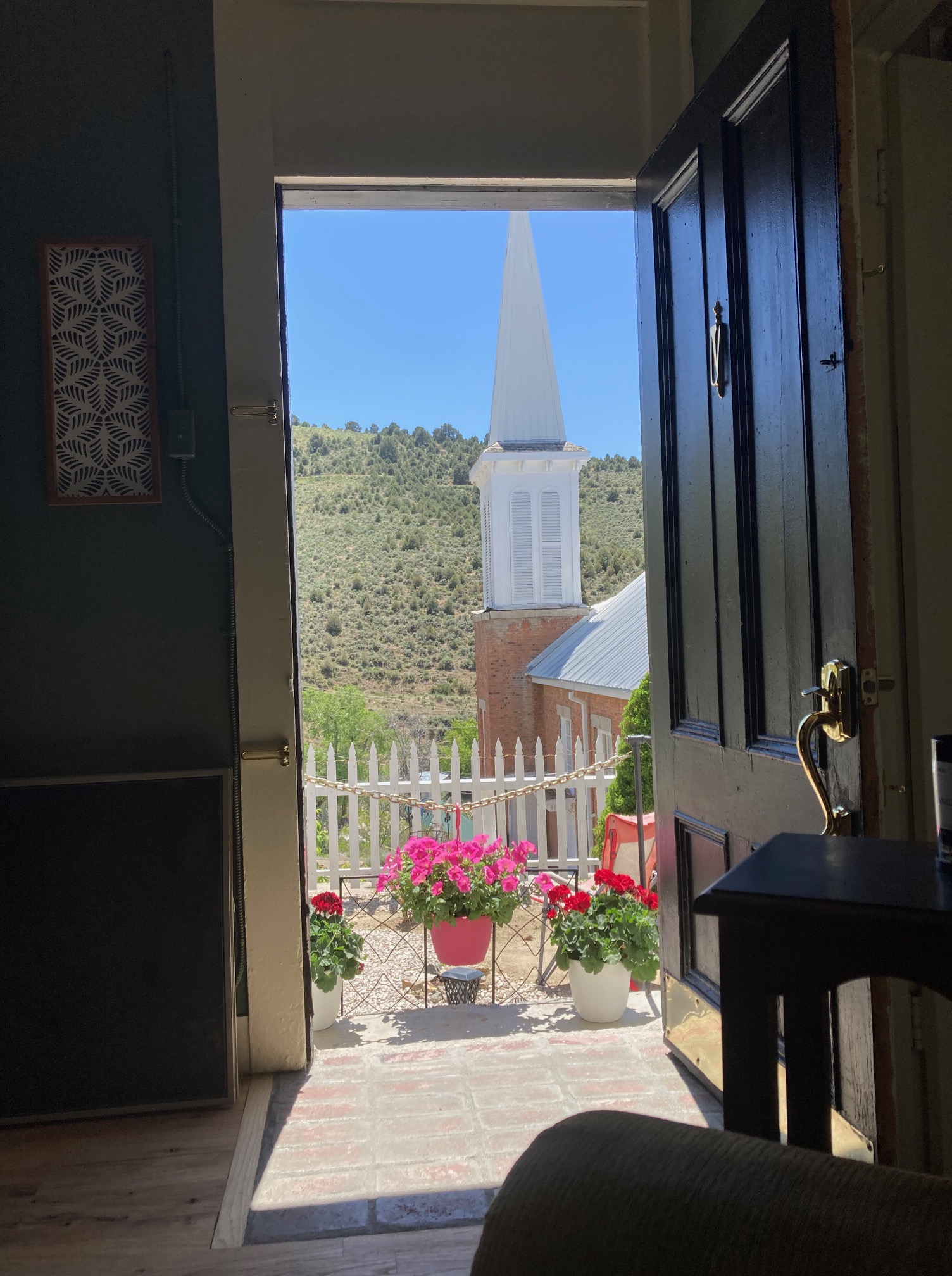
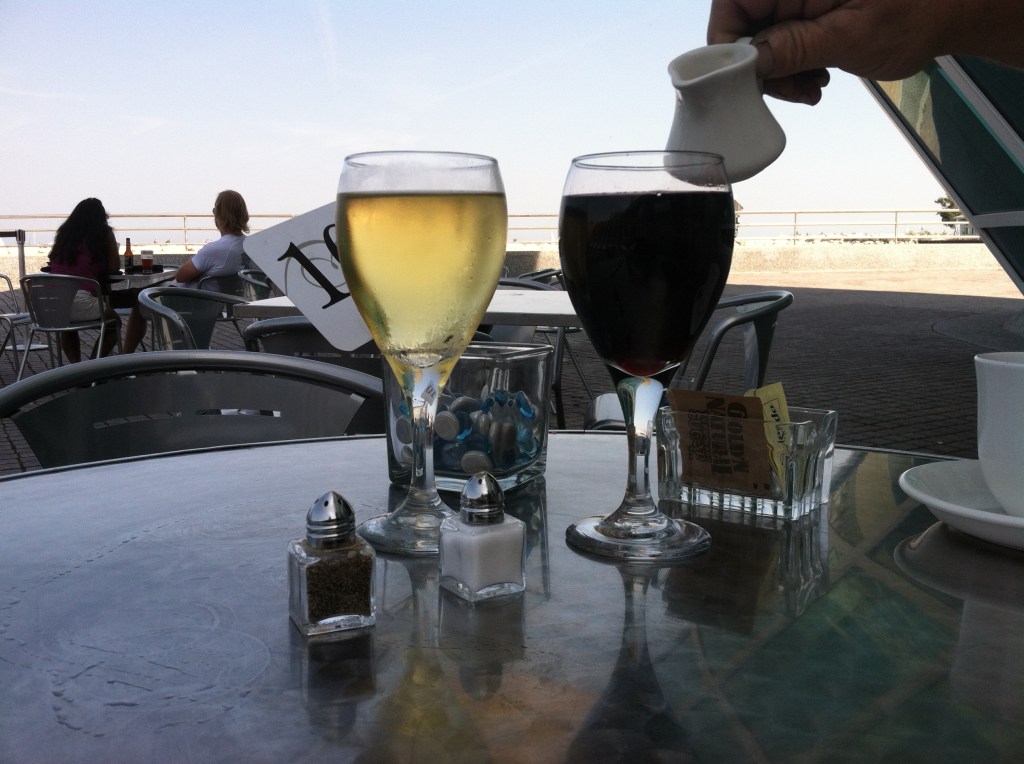
Suddenly the leaves turn red, yellow, and orange; the night temperatures dip into the thirties, and I enjoy sitting in my front yard both in the morning and the early evening. Ahhh . . . those morning coffees and evening wines . . .

The steeple front, right, is on the old Methodist church, now our community center. The steeple across the canyon (you may have to zoom in if the image is too small) is on St. George’s Episcopal church, where I attend. Sunday services have never stopped at St. George’s since the church opened in 1878.

Just a month ago it was much too hot to sit here for any length of time. It is an unusual yard, not yet shaded, one that we created by tearing down an old carport that covered the entire front of our old parsonage for sixty years. This reclaimed space has an incredible view of two one-hundred-plus-year-old church steeples and an impressive hillside on this, the northern end of our section of the Toiyabe Mountains, but no large trees yet. We have planted an oak, a cottonwood, and a blue spruce there, but they are small still.

That evening wine.

Our little town of Austin, Nevada is located in central Nevada’s sparsely-populated, history-rich Lander County in  “. . .the Toiyabe Range, a mountain range in Lander and Nye counties, Nevada, United StatesThe range is included within the Humboldt-Toiyabe National ForestThe highest point in the range is Arc Dome (11,788 feet, 3592 m), an area protected as the Arc Dome WildernessThe Toiyabe Crest Trail runs along the Toiyabe Range for over 70 miles, and is one of the most challenging and secluded trails in the United States.”  U.S. Forest Service, www.fs.us.gov.

In October, we venture out on the mountain trails, we get supplies ready for the long winter to come, and we sit in quiet reverie, grateful for nature’s hush. Enjoying the splendor. Soon, it will be too cold to sit out here without a coat. Soon, there will be more time inside, tending the fire, cooking large pots of soups and stews, reading, and writing.

This gradual gathering of the special autumn light, the relish we feel as we take it in, and our own eventual inner-directed shift is a very great gift as the seasons change, I believe.

Mostly Marigolds! Some of my favorites.

Here is a poem of great beauty by John Keats on the season:

 “To Autumn”

Season of mists and mellow fruitfulness,

  Close bosom-friend of the maturing sun;

Conspiring with him how to load and bless

  With fruit the vines that round the thatch-eves run;

To bend with apples the moss’d cottage-trees,

  And fill all fruit with ripeness to the core;

    To swell the gourd, and plump the hazel shells

  With a sweet kernel; to set budding more,

And still more, later flowers for the bees,

Until they think warm days will never cease,

    For summer has o’er-brimm’d their clammy cells.

Who hath not seen thee oft amid thy store?

  Sometimes whoever seeks abroad may find

Thee sitting careless on a granary floor,

  Thy hair soft-lifted by the winnowing wind;

Or on a half-reap’d furrow sound asleep,

  Drowsed with the fume of poppies, while thy hook

    Spares the next swath and all its twined flowers:

And sometimes like a gleaner thou dost keep

  Steady thy laden head across a brook;

  Or by a cider-press, with patient look,

    Thou watchest the last oozings, hours by hours.

Where are the songs of Spring? Ay, where are they?

  Think not of them, thou hast thy music too,—

While barred clouds bloom the soft-dying day,

  And touch the stubble-plains with rosy hue;

Then in a wailful choir the small gnats mourn

  Among the river sallows, borne aloft

    Or sinking as the light wind lives or dies;

And full-grown lambs loud bleat from hilly bourn;

  Hedge-crickets sing; and now with treble soft

  The redbreast whistles from a garden-croft,

    And gathering swallows twitter in the skies.

Written September 19, 1819; first published in 1820. This poem is in the public domain.

Hello, October! And Welcome!

7 Comments

Filed under Nature, poetry, Reading, Seasons, Uncategorized

Gone to Soldiers

a short review

pexels photo

I finished several books recently, one of which I had been reading for months in between other, less hefty titles. The hefty one is an older release (c1987), WWII historical fiction, Marge Piercy’s Gone to Soldiers. A wonderful book—rich in authentic detail—an amazing amount of research had to have gone into this devastating and sweeping novel. Having written two (as yet unpublished) WWII era novels, myself, I am beyond impressed with everything Piercy brings to life here.

Gone to Soldiers tells the stories of ten men and women who served in America, Europe, and the Pacific in vastly different ways: a war correspondent, an intelligence office for the OSS, a Japanese code breaker, a Women’s Airforce Service Pilot, an artist who fights with the Resistance in France, a woman who leads Jewish children to safety over the Pyrenees, a Marine struggling to stay alive in the Pacific, a Jewish teen from Paris sent to America before France fell, and her American cousin.

I have read a lot of WWII and Holocaust related fiction and nonfiction over the years, but somehow I missed this one. My brilliant friend, Sandy, sent me a copy, and I am so glad she did. It is not an easy book to read. Many of the scenes are incredibly vivid and tragic. Some of them were known to me from other sources, but a couple of them depicted battles or situations of which I was not aware.

I was particularly affected by the scenes in the Pacific, I believe, because my father served in the Pacific theatre, but talked about it so little that I never had a clear picture of what he went through. This book made me more aware of the horror he faced and makes me want to know more about his service.

I recommend Gone to Soldiers for its unblinking portrayal of the realities of war, ignorance, prejudice, love, and loss. It is an important book for men and women who seek to understand and remember our shared history—to mourn and honor those lost, to refuse to fall back into dangerous patterns of racism, prejudice, and misogyny, and to continue to work toward the vision of a safe, equitable, and free land for everyone.

“TODAY THE GUNS ARE SILENT. A GREAT TRAGEDY
HAS ENDED. A GREAT VICTORY HAS BEEN WON. THE SKIES
NO LONGER RAIN DEATH – THE SEAS BEAR ONLY COMMERCE –
MEN EVERYWHERE WALK UPRIGHT IN THE SUNLIGHT.
THE ENTIRE WORLD IS QUIETLY AT PEACE.”

GENERAL DOUGLAS MACARTHUR


Radio address to the American people from the USS Missouri, following the Japanese surrender ceremony, September 2, 1945  (FROM WWW.NPS.GOV)

2 Comments

Filed under Books, HIstorical Fiction, Reading, World War II

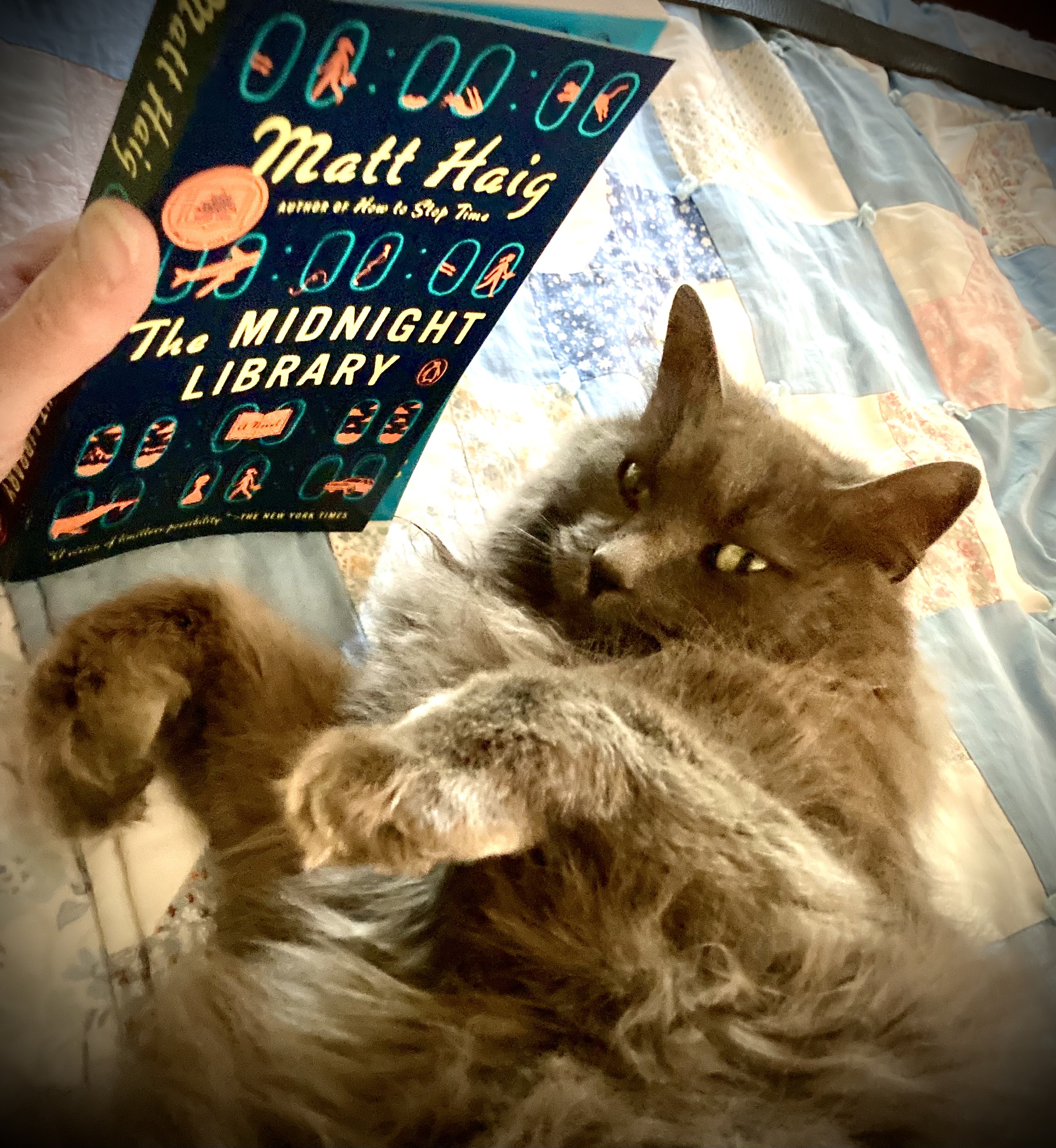
What I’m Reading: The Midnight Library by Matt Haig

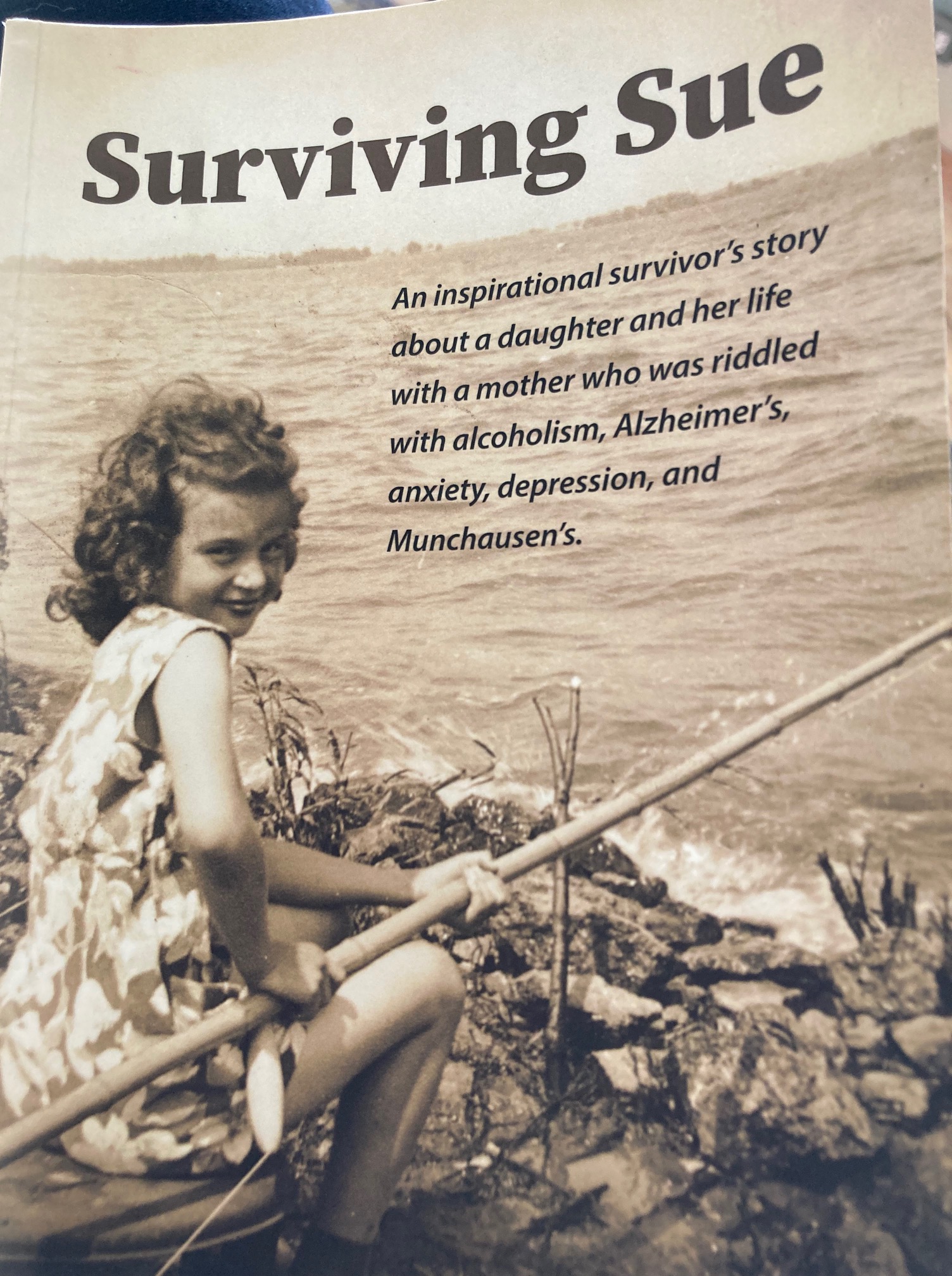
Hello, Readers! I just finished The Midnight Library and wanted to linger over it a while longer. One way to preserve and examine a recent experience is to write about it. Another way would be to get together with my friends at the Austin Ladies Book Club, but it’s been a busy summer and we are on hiatus. Here then, is my short take on Matt Haig’s “whimsical” novel (as The Washington Post aptly calls it).

It’s an intriguing little book, chockful of tiny little chapters, each one the piece of a puzzle containing alternate lives for our damaged, yet clever and likable heroine, Nora Seed. It’s midnight, and as Nora’s consciousness flickers between life and death, a wise and kind librarian directs Nora to endless books of possibilities—the myriad different paths her choices may have led her, and may lead her still.

This is a puzzle many of us have played in our minds, and often, as in The Midnight Library, we move these pieces around in the wee hours of the night.

Imagine if I had…      What if I hadn’t…      If only I could go back and change…

Regrets.           Lost opportunities.                 

Shame.

Like Nora Seed, I’ve had plenty of these, and being the imperfect human I am, I continue to accrue new ones regularly. It can be a heavy load. The nights can be very dark.

Sometimes, a book can help. Some night soon when I drift off to sleep, perhaps I will find myself in a magic library like Nora’s. After all, I often have vivid dreams where things I experience in my waking hours revisit me in interesting and revealing ways (sometimes horrifying ways, too, but this isn’t that kind of book, thank goodness). So it could happen. Maybe tonight.

The Midnight Library is an obvious win-win for me, the lady lucky enough to run the local library and the lady who finds reading and writing endlessly captivating. It is wonderful for all the right reasons. Fun, and funny, too. Sweet, sad, insightful, and smart—it’s a little volume that may just lighten your heart.

If you read it, let me know what you think!

8 Comments

Filed under Books, Commentary, Reading

The Library

The Library by Jacob Lawrence, 1960

     It is a small library in a small town. It sits on Main Street in a 150-year-old building that also houses a pub. Both the library and the pub are in the process of renewal, endeavoring to revive their historical importance, their usefulness and vibrancy, their centrality to our community. I began working there last week, and immediately felt a satisfying appreciation at the completion of a circle, which joins both my journey and destination…of coming home, of continuing to matter, and also, of an immediate and curious closeness to my deceased father, who I recalled had loved it when I worked in libraries before, and to his mother, my children’s librarian grandmother, Lorene.

     Nonny Lorene died when I was an infant, but I was given her name, a small collection of children’s books, and a legacy of library lore which included the often-told story of how she, a widow, supported her two sons, her spinster sister, and various other relatives throughout the Great Depression, the only one left with a steady income during those hard years. Her library job saved the family, I was told. There could be no better job. For that reason, and many others, I believe that, and so even though Dad and Nonny have been gone from this earth for many, many years, I feel their presence in my little library, and know that they are pleased.

     It feels right. I love every minute I spend there—reading the shelves, looking up classification numbers, typing up spine labels, adding genre stickers, covering books—touching them, reading them, smelling them, discovering new titles and authors, revisiting the old. Planning a new computer corner, training soon on our newly purchased county-wide circulation system, looking forward to story times and book signings, all that and so much more. There is nothing like a library.

      I’ll end with the wisdom of Carl Sagan:

     “Books permit us to voyage through time, to tap the wisdom of our ancestors. The library connects us with the insight and knowledge, painfully extracted from Nature, of the greatest minds that ever were, with the best teachers, drawn from the entire planet and from all our history, to instruct us without tiring, and to inspire us to make our own contribution to the collective knowledge of the human species. I think the health of our civilization, the depth of our awareness about the underpinnings of our culture and our concern for the future can all be tested by how well we support our libraries.”   ― Cosmos

      And E. B. White:

      “A library is a good place to go when you feel unhappy, for there, in a book, you may find encouragement and comfort. A library is a good place to go when you feel bewildered or undecided, for there, in a book, you may have your question answered. Books are good company, in sad times and happy times, for books are people – people who have managed to stay alive by hiding between the covers of a book.”

Quotes from Hooked to Books, hookedtobooks.com. “50 Inspiring Quotes About Libraries and Librarians”

by Grace Plant, accessed 5/12/2023.

5 Comments

Filed under Books, Reading

My Teaching Voice

Since leaving Lake Arrowhead three years ago I’ve been having trouble hanging on to my voice. And not just my voice really, but also my words. Sentences and paragraphs and pages of text I should be writing but that I push aside for a good novel or a movie or a great new recipe involving bacon, sweet potatoes, rigatoni, mascarpone cheese and fresh sage (this, a recent distraction—the dishes are still soaking in the sink).

I’m sure it’s not only that I am in mourning.

Some of my writing inertia could be due to a mind busy with other things—new things, like teaching college speech and all that entails… learning innovative technologies, tackling a new curriculum, slugging through online faculty required “teaching”courses, trying to lacquer my wild mane into some semblance of what my imagination believes a professor’s hair should look like…oh so many time consuming diversions.

Still, I know I should also be writing creatively.

I’m sure it’s not only that I am in mourning.

When I left Lake Arrowhead, a pain planted itself firmly behind my breast plate and I can’t shake it. I can’t walk it off, though my dear husband and I take many beautiful nature walks every single week. I can’t read it off, though I take time to immerse myself in many an enjoyable book. I can’t yoga it off, or massage it off, or wine it off. It is sewn in, gorilla glued, bolted; it is chained to my heart.

But that cannot be the only reason I do not write.

I did, in fact, write quite a bit a year and more back. (The book is about Lake Arrowhead.)

SouthernCAjuly2015 001

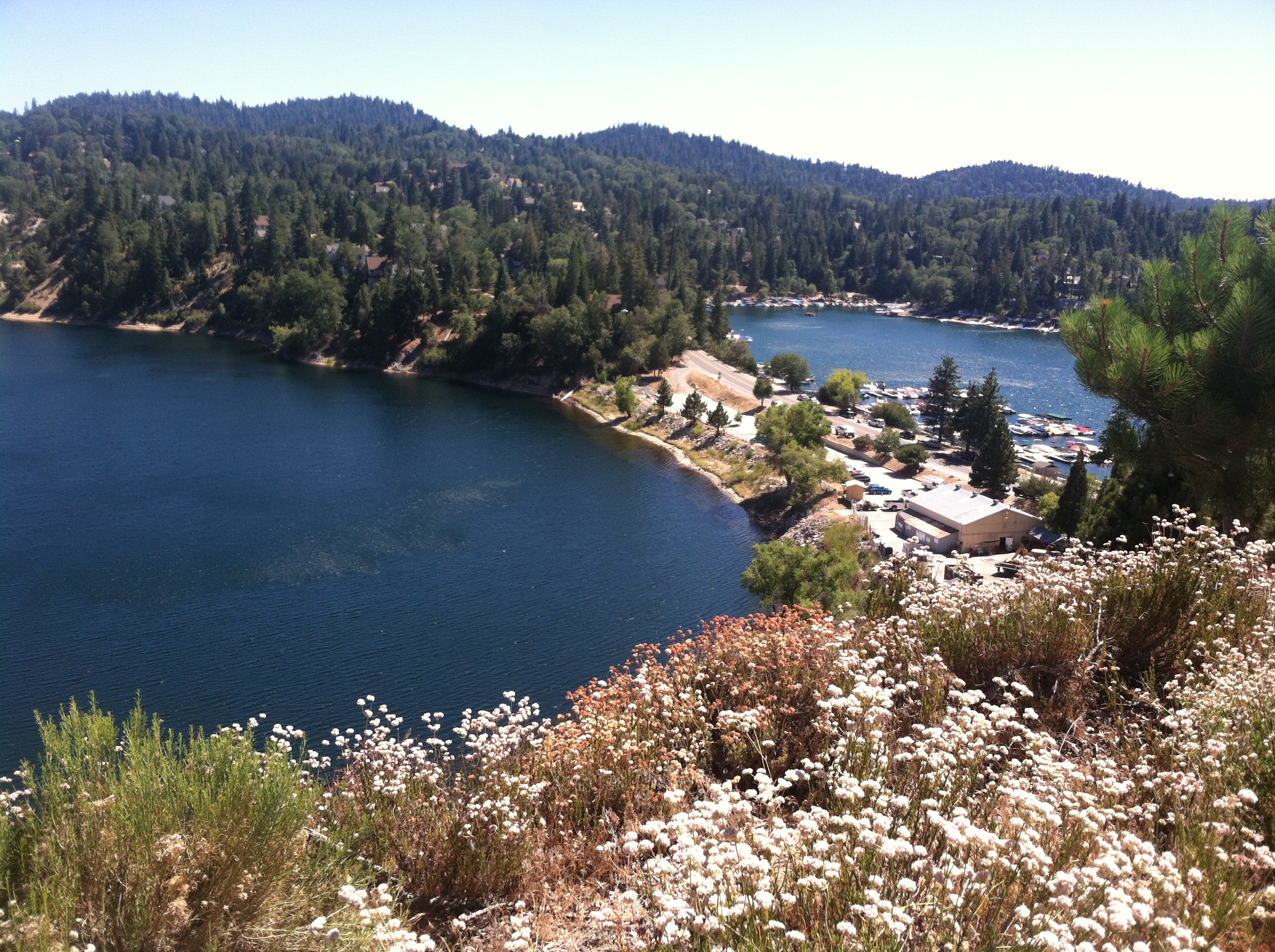
Lake Arrowhead, CA

But I’m sure it’s not only that I am mourning.

I adore Wisconsin, and the weather here suits us perfectly. The vast greenness of the place in summer, the orange-red-yellow-green autumns, the take your breath away white frozen winters. A lake so big it looks Pacific. Lake Arrowhead, amplified.

Mourning comes to some of us for a visit. For me, without my children and my grandchildren, it stays. It has moved in to the quaint little Cape Cop home on the tree-lined avenue where we now live. It’s here to stay.

There, I’ve said it.

Missing Lake Arrowhead means missing a million moments that can never be regained—with my kids, with my grandchildren, with my friends, with all the people I was so fortunate to know. And as much as I love the cardinals and Canadian geese (and I love them a lot!), there is something sad about knowing that I will never happen upon a bear or be awakened in the night by the ungodly howl of a pack of coyotes closing in on its prey.

So, my voice began to falter a while back and has gone somewhat quiet of late.

My husband began to worry, so I finally forced myself to sit and write tonight, but as little as this accomplishment is, and as much as I love him, I cannot give him much of the credit for bringing me to my chair, for opening the blank page, for placing my fingers on the keys and letting them speak for me, expose me, help me… nor can I take any of the credit myself.

It came not from knowing that I should do it, it came instead as a magical gift from a miraculous profession.

Teaching.

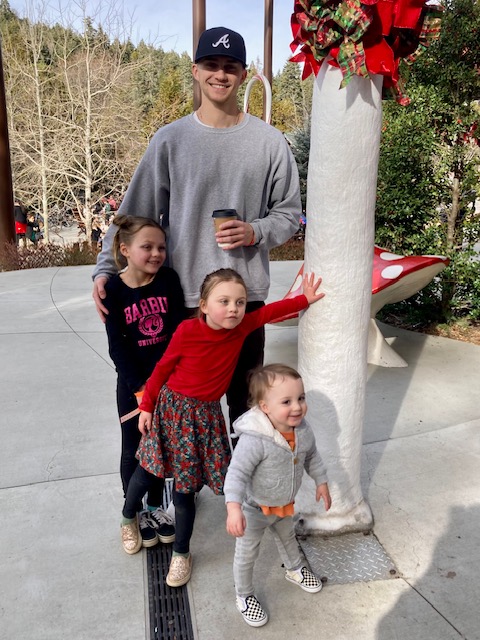
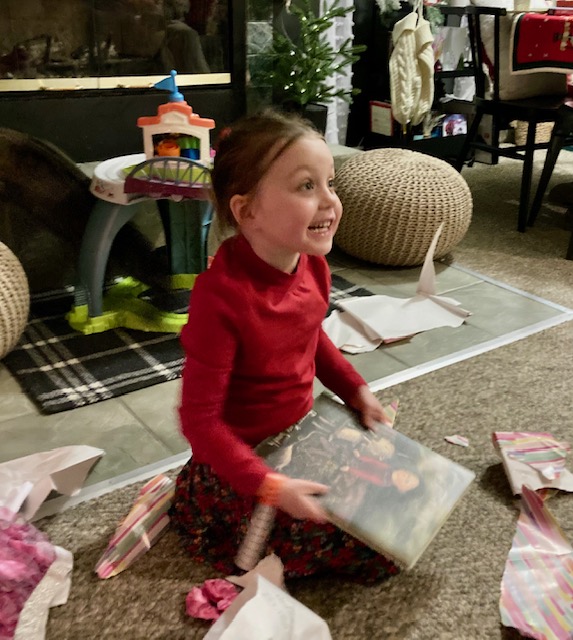
Thinking I needed more family photos on my office walls, I drove over to Walgreens this afternoon to pick up some photographs I had ordered. They are beautiful photos of our newest granddaughter, Adaline Lorene, and her big sister, Jasmine, who visited us here in Wisconsin this past June.

As you can see, they are worth the ache. My girls.

     Anyway.

On my way back out to the car I stopped to ask a young man (who was coughing uncontrollably as if he might be choking) if I could help him. Just a simple, “Are you okay? Can I do anything?”

The young woman next to him, obviously his companion, said, “I recognize that voice! Do you remember me?”

The coughing continued, but she ignored it. She walked toward me. “I heard your voice and I said, ‘That’s my speech teacher!””

Of course, I remembered her, a lovely person and a good public speaker, animated and organized. We hugged. Her manfriend, ignored, coughed his way unaided to their car.

“Does he need help?” I asked. “Does he need the Heimlich? Because I’ll do it.”

“He’ll be fine,” she said. “It’s wonderful to see you.”

She recognized my voice. Here, in Kenosha, a town of roughly 100,000 people. She recognized my voice.

It seems silly, perhaps. To place so much value on recognition. But I do. I suddenly felt a little less alone. The sharing of a past. In Lake Arrowhead, a teacher never goes out without encountering a former or present student, which sometimes unnerved me. I never realized how important it was to my self-image, to my belief that I was connected to the community. I knew that I loved my students, but I didn’t perhaps understand how much I needed them.

Today I was given back a small piece of my voice, reflected through a young woman’s memory. I still feel the pain, I still crave the everyday closeness of my grandchildren, and I still miss the bears, but I can write, and that’s a soft and soothing salve for my soul. I’ll take it.

FallWinter2015Mostly 200

13 Comments

Filed under Depression, Gratitude, Lake Arrowhead, Nature, Reading, Teacher, Voice, Wisconsin, Writing, Writing Advice