It’s been two weeks since I left Nevada and one week since I arrived at my new Michigan home. All of these days have been solo; I drove alone, I arrived alone to an empty house, I spend my days here alone. There’s a theme building . . . For now!
The Way In
But husband and kitties will be joining me soon.
The Dreaded Cot(I do not love it)
A Lonely Room (but I love it!)
As an introvert, this hasn’t been particularly tough. I love people, but I also love solitude. I just got the internet yesterday, and that’s fun because now I can write and publish my writing more easily. No TV here yet. No furniture to speak of. I have one little lamp table that fit in my car, a folding camp chair, and a cot. That’s it. Everything else will come in the moving van next week. So, what do I do all day?
I clean and I read. Often, at the same time, by listening to audiobooks using the Libby library App. One of the books I’ve enjoyed so far during this extended period of solitude is aptly The Great Alone by Kristin Hannah. It’s a tough book about a tough time and a tough place, but I liked it. Alaska in the 1970s, mental illness, abuse . . . it’s got it all, but it isn’t only that, of course. It’s also a book filled with nostalgia, love, and the awesomeness of nature.
Other books I read either just prior to moving, during the drive, or since my arrival are: We All Live Here, Moyes; Sandwich, Newman; The Secret Book of Flora Lea, Henry; Remain, Spark and Shyamalan; The Missing Half, Flowers and Kiester; and currently, The Island of Sea Women, See. Each book has its merits.
I found both We All Live Here and Sandwich charming and humorous. Both are light, contemporary novels with women protagonists wrestling with life changing events and the love of family.
The Secret Book of Flora Lea took me to one of my favorite historical settings, World War II England, in the countryside and also to London in the 1960s. It’s a delightful book about sisters, families, love, and the importance of stories.
Remain and The Missing Half are mysteries, with Remain being the more entertaining of the two for me. The Missing Half helped pass the time, but Remain’s ghostly love story captivated me at times, including during several memorable scenes that made me shiver.
And now I’m listening to The Island of Sea Women. It’s taken me to a part of the world I know very little about, which I love, because I am learning so much. It’s set in Korea from the story’s beginning in the 1930s and will move through the war years and take me to the present day. It’s about women sea divers (an amazing group of female divers who earn the money for their families while their husbands care for the children), and it’s the story of two friends Mi-ja and Young-sook.
As you can see, I’ve not been alone, not really, for I’ve been traveling through time and place along with the characters created by the authors of these varied and appealing novels, carried away by their stories. It’s a kind of magic really, the way a reader lives both inside and outside of a book—simultaneously in the room, and also somewhere else far away.
I love this line about reading from Stephen Chbosky from his young adult novel, The Perks of Being a Wallflower:
“Sometimes, I read a book, and I think I am the people in the book.”
Hello, Readers! I’m putting together my summer reading list, and getting my historical fiction manuscript ready for submission. One part of this process is to read recent books (published within the last few years) that are in some way comparable to mine, so that I can better describe my own manuscript to potential agents, publishers, and booksellers.
Have you read any recently published fiction set during the 1930s or 1940s? Have you read a novel about a war widow, or a strong woman struggling and coming to grips with some other loss? If so, I’d love to hear about it. My manuscript is set in Lake Arrowhead, California, and the place is integral to the plot, so I’m also interested in any fiction that transports the reader to a specific city, town, or region.
If any titles come to mind, I’d greatly appreciate your sharing them here. I welcome any and all suggestions. Many thanks!
Like Jenny, I love used books, books that have a history of relationship with other readers that I can see and hold in my hands. The cover doesn’t need to be in great shape. There should be a name written in long hand somewhere within the first pages. Notes written in the margins. Words, phrases, paragraphs underlined. Exclamation marks, hearts, question marks in the margins. Old shopping lists stuck between the pages. Dedications to lovers, children, grandchildren, friends on the title page. This book reminds me of how very much I love being your mom.
Despite my librarian grandmother, my own library training and teacher training, and my years working in libraries and public schools, I’ve always been much more of a book sharer than a book protector. This doesn’t mean I condone random doodling, especially not of the tasteless variety, or nasty vulgarisms of any sort in any book (and I’ve seen plenty of those, believe me). And I am not advocating writing in any book that you do not own—please, respect all library books, and school texts! But I do appreciate a pithy comment that pertains to the content. I love knowing that I am sharing the experience of reading a particular piece with someone who found something striking enough to comment on right then and there, in the moment.
Jenny Lawson says, “…reading those found books is like reading with ghosts, ones who eagerly point out their favorite passages or share their thoughts or questions in the margins.”
Books that I can remember writing in that are sitting around my house right now include:
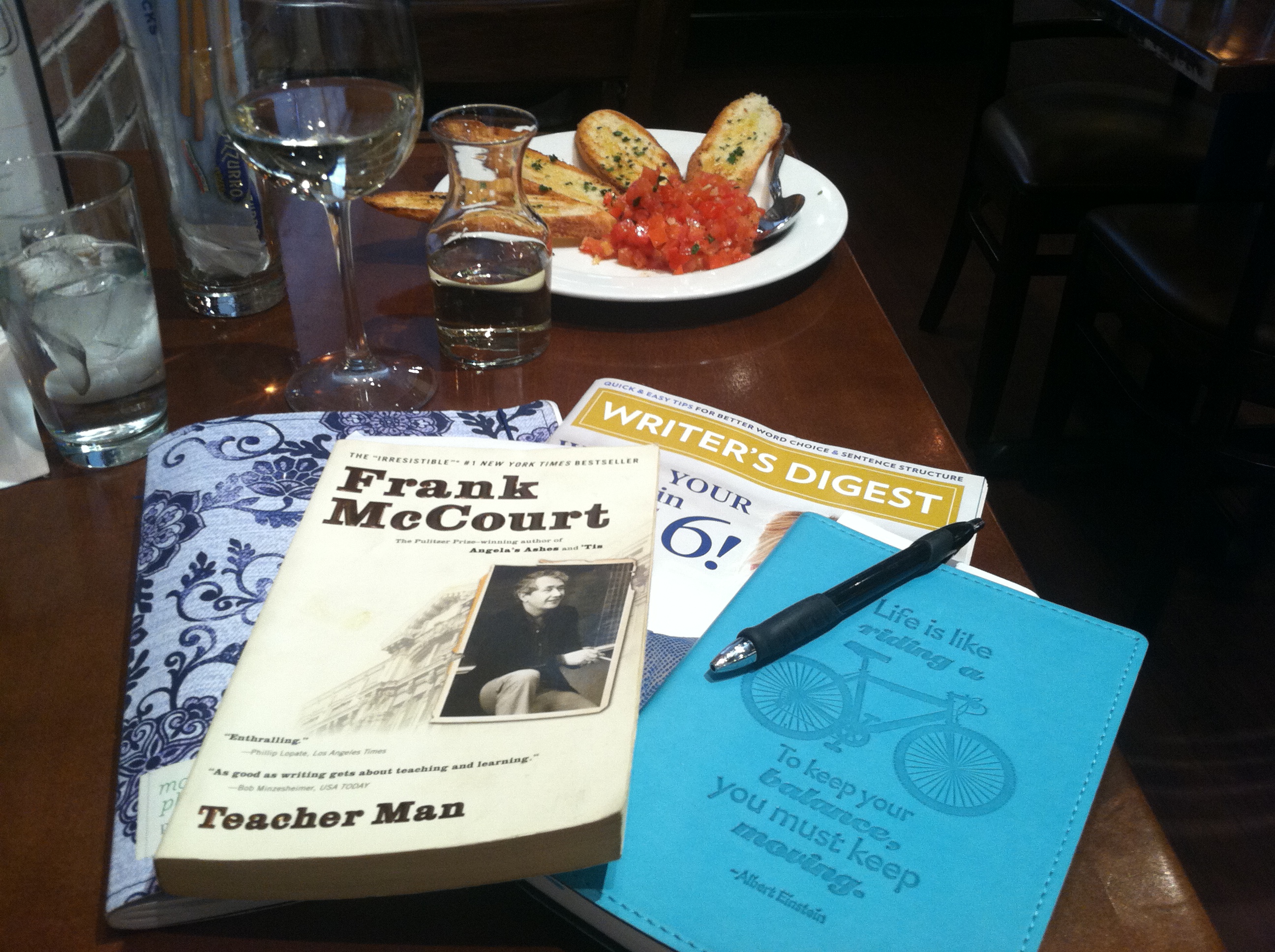
Jane Eyre, A Prayer for Owen Meany, The Catcher in the Rye (probably my first!), The Diary of Anne Frank, Man’s Search for Meaning, Teacher Man, Rebecca, Atonement, Prodigal Summer, The Glass Castle, Learning to Walk in the Dark, and lots of poems—“The Raven” comes to mind along with some of Shakespeare’s sonnets. And memorably, the teacher edition of a literature anthology I used in my classroom for many years (not sure if this qualifies as defacing a public school text, but it did raise a few eyebrows during department meetings).
Funny story there. I was told, “That’s not your book! You can’t write in that!” back in 1998 by a wonderful teacher I respected and admired. Even so, I continued to write in the book. I planned on outlasting the book adoption cycle, and I wanted to remember what worked, what went flat, what insights, funny or touching, or what “light bulb” moments were expressed by my kids. When I retired in 2014 a young English teacher retrieved the same teacher anthology from the school library that I had written notes in for years. There hadn’t been a new book adoption in all of those years because the budget was just too tight for the district to purchase a new anthology. This new teacher wrote me a letter. “What a treasure!” she said. “Thank you for writing all of that down.”
A reader after my own heart. A teacher after my own heart. I hope she never forgets to write in the margins.
Silly me. I had this idea to write a WWII-era literary fiction novel a while back. Quite a while back.
I spent a lot of time researching in between writing scenes. I felt I had a decent grasp on the time period; my dad was a WWII marine—I grew up waking to The Marine Corps Hymn–and though I majored in English, not history, I spent a good deal of time learning about and teaching the Holocaust to my eighth-grade classes when I taught The Diary of Anne Frank. I even wrote a YA novel about a Polish boy falling in love in war-torn Poland for my Master’s thesis in creative writing.
I’d just need to check a few dates here and there, maybe read a few more books and immerse myself in the movies and music of the 1940s, and presto! I’d be good.
Not so true.
What is true is that old saying about “the more you learn, the more you realize how much you don’t know.” Today’s epiphany: Go Deeper. I stumbled into going deeper today almost by accident. I was looking up a few Roosevelt quotes for a scene in my manuscript where my protagonist listens to the president on the radio. Just a few lines, you know, to add realism and texture to the scene.
GO DEEPER
And I find myself, hours later, too torn up to write the scene. I’ll write it tomorrow, or maybe the next day. You see, I found recordings of Franklin D. Roosevelt speaking to the American public. I listened to them. Then I found recordings of the broadcasts made by the journalists who had followed him throughout his long presidency talking about him on the day of his death.
These recordings are priceless. You will need Kleenex. And maybe a dog. Or a loved one nearby. Luckily, my protagonist has a hankie, a dog, and a brother.
(Not my photo) Silly me? Yes. But also grateful me.
Welcome to a space for all moms. This is a platform where I write my experiences as a mom in her primes—sharing real-life stories, lessons learned, and the ups and downs of motherhood. My goal is to inspire, support, and connect with fellow moms who are also embracing the journey of raising a family while growing as women.




 GO DEEPER

















 LakeArrowheadLadyWriter
Books Get Me Through The Great Alone
It’s been two weeks since I left Nevada and one week since I arrived at my new Michigan home. All of these days have been solo; I drove alone, I arrived alone to an empty house, I spend my days here alone. There’s a theme building . . . For now!
But husband and kitties will be joining me soon.
As an introvert, this hasn’t been particularly tough. I love people, but I also love solitude. I just got the internet yesterday, and that’s fun because now I can write and publish my writing more easily. No TV here yet. No furniture to speak of. I have one little lamp table that fit in my car, a folding camp chair, and a cot. That’s it. Everything else will come in the moving van next week. So, what do I do all day?
I clean and I read. Often, at the same time, by listening to audiobooks using the Libby library App. One of the books I’ve enjoyed so far during this extended period of solitude is aptly The Great Alone by Kristin Hannah. It’s a tough book about a tough time and a tough place, but I liked it. Alaska in the 1970s, mental illness, abuse . . . it’s got it all, but it isn’t only that, of course. It’s also a book filled with nostalgia, love, and the awesomeness of nature.
Other books I read either just prior to moving, during the drive, or since my arrival are: We All Live Here, Moyes; Sandwich, Newman; The Secret Book of Flora Lea, Henry; Remain, Spark and Shyamalan; The Missing Half, Flowers and Kiester; and currently, The Island of Sea Women, See. Each book has its merits.
I found both We All Live Here and Sandwich charming and humorous. Both are light, contemporary novels with women protagonists wrestling with life changing events and the love of family.
The Secret Book of Flora Lea took me to one of my favorite historical settings, World War II England, in the countryside and also to London in the 1960s. It’s a delightful book about sisters, families, love, and the importance of stories.
Remain and The Missing Half are mysteries, with Remain being the more entertaining of the two for me. The Missing Half helped pass the time, but Remain’s ghostly love story captivated me at times, including during several memorable scenes that made me shiver.
And now I’m listening to The Island of Sea Women. It’s taken me to a part of the world I know very little about, which I love, because I am learning so much. It’s set in Korea from the story’s beginning in the 1930s and will move through the war years and take me to the present day. It’s about women sea divers (an amazing group of female divers who earn the money for their families while their husbands care for the children), and it’s the story of two friends Mi-ja and Young-sook.
As you can see, I’ve not been alone, not really, for I’ve been traveling through time and place along with the characters created by the authors of these varied and appealing novels, carried away by their stories. It’s a kind of magic really, the way a reader lives both inside and outside of a book—simultaneously in the room, and also somewhere else far away.
I love this line about reading from Stephen Chbosky from his young adult novel, The Perks of Being a Wallflower:
“Sometimes, I read a book, and I think I am the people in the book.”
Exactly.
Share this:
33 Comments
Filed under Authors, Books, Commentary, Fiction, HIstorical Fiction, Home, Identity, Literary Fiction, Nature, Personal History, Reading, Uncategorized, Winter, World War II
Tagged as Book Review, Books, Fiction, Introvert, Michigan, Moving, Nevada, Reading, Writing