Category Archives: Fiction

Books Get Me Through The Great Alone

It’s been two weeks since I left Nevada and one week since I arrived at my new Michigan home. All of these days have been solo; I drove alone, I arrived alone to an empty house, I spend my days here alone. There’s a theme building . . . For now!

The Way In

But husband and kitties will be joining me soon.

The Dreaded Cot (I do not love it)
A Lonely Room (but I love it!)

As an introvert, this hasn’t been particularly tough. I love people, but I also love solitude. I just got the internet yesterday, and that’s fun because now I can write and publish my writing more easily. No TV here yet. No furniture to speak of. I have one little lamp table that fit in my car, a folding camp chair, and a cot. That’s it. Everything else will come in the moving van next week. So, what do I do all day?

I clean and I read. Often, at the same time, by listening to audiobooks using the Libby library App. One of the books I’ve enjoyed so far during this extended period of solitude is aptly The Great Alone by Kristin Hannah. It’s a tough book about a tough time and a tough place, but I liked it. Alaska in the 1970s, mental illness, abuse . . . it’s got it all, but it isn’t only that, of course. It’s also a book filled with nostalgia, love, and the awesomeness of nature.

Other books I read either just prior to moving, during the drive, or since my arrival are: We All Live Here, Moyes; Sandwich, Newman; The Secret Book of Flora Lea, Henry; Remain, Spark and Shyamalan; The Missing Half, Flowers and Kiester; and currently, The Island of Sea Women, See. Each book has its merits.

I found both We All Live Here and Sandwich charming and humorous. Both are light, contemporary novels with women protagonists wrestling with life changing events and the love of family.

The Secret Book of Flora Lea took me to one of my favorite historical settings, World War II England, in the countryside and also to London in the 1960s. It’s a delightful book about sisters, families, love, and the importance of stories.

Remain and The Missing Half are mysteries, with Remain being the more entertaining of the two for me. The Missing Half helped pass the time, but Remain’s ghostly love story captivated me at times, including during several memorable scenes that made me shiver.

And now I’m listening to The Island of Sea Women. It’s taken me to a part of the world I know very little about, which I love, because I am learning so much. It’s set in Korea from the story’s beginning in the 1930s and will move through the war years and take me to the present day. It’s about women sea divers (an amazing group of female divers who earn the money for their families while their husbands care for the children), and it’s the story of two friends Mi-ja and Young-sook.   

As you can see, I’ve not been alone, not really, for I’ve been traveling through time and place along with the characters created by the authors of these varied and appealing novels, carried away by their stories. It’s a kind of magic really, the way a reader lives both inside and outside of a book—simultaneously in the room, and also somewhere else far away.

I love this line about reading from Stephen Chbosky from his young adult novel, The Perks of Being a Wallflower:

“Sometimes, I read a book, and I think I am the people in the book.”

Exactly.

33 Comments

Filed under Authors, Books, Commentary, Fiction, HIstorical Fiction, Home, Identity, Literary Fiction, Nature, Personal History, Reading, Uncategorized, Winter, World War II

Best Offer Wins?

“In his witty and thought-provoking manner, Mark Twain once famously said, ‘It’s no wonder that truth is stranger than fiction. Fiction has to make sense.’” https://www.socratic-method.com
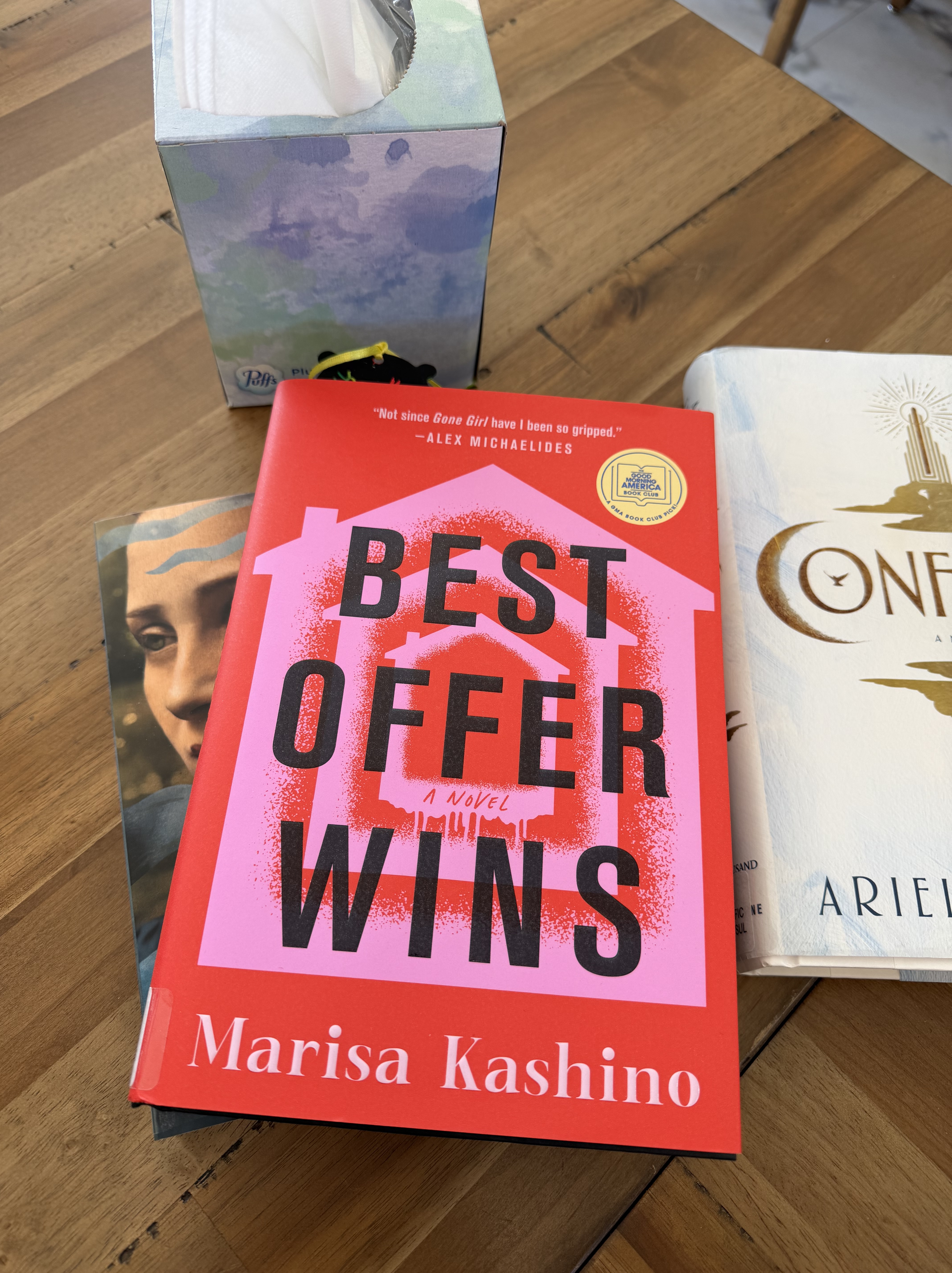
Sometimes, though, truth is not stranger than fiction. And thankfully, sometimes truth is kinder than fiction, too. Recently a friend and I had both just finished books that bothered us in various ways, which isn’t to say books shouldn’t bother us—it’s quite often important that they do—it was just that in the case of these books, the way we’d been bothered had less to do with subject matter and more to do with the marketing expectation that readers would respond positively to the various dastardly deeds of the protagonists, and that, indeed, there did seem to be plenty of readers out there who backed up that claim—readers who “loved” these books (and so maybe by extension that means they loved the protagonists? Maybe?).

I don’t remember the title of the book my friend was referring to; she said it was something about killers who were in love and only killed bad people—sounded like a Dexter type theme, and I know that was a highly watched television series, so I guess there’s an audience for that. I can’t claim to be someone who is above consuming questionable content. I’ve read hundreds of books in most genres and not all of them have been particularly elevating. That said, I have seldom read a novel with a less likable protagonist than the one Marisa Kashino gives us in Best Offer Wins (With the possible exception of Humbert Humbert, the protagonist/narrator of Vladimir Nabokov’s Lolita).

Best Offer Wins is a Good Morning America Book Club Pick and was published by Celadon Books in 2025. From the book jacket: “…Margo will prove again and again that there’s no boundary she won’t cross to seize the dream life she’s been chasing. The most unsettling part? You’ll root for her, even as you gasp in disbelief.”

Uh. No. But let me take you back to the reason I read that blurb and took the bait. Coincidentally, on the same day my husband and I were submitting a bid on a house we wanted, Marisa Kashino’s thriller about a woman who will stop at nothing to get her dream house came across my desk at the library. It was a new purchase, and my job was to catalog it and get it ready for patron check-outs. I joked with my realtor that I hoped I wouldn’t become as obsessed with home buying as the teaser on the book jacket hinted the book’s protagonist, Margo, did.

Truth being, in this case anyway, less strange than fiction, I didn’t. Thank goodness. But I did check the book out and take it home to read over the weekend. I’m not normally inspired to write reviews about books I don’t like, but there’s something about this one that pushes me. What that tells me is that I did find it engaging, at least enough to finish it, but that, also, it troubled me. I think I kept reading to see if it would be possible to “root for her even as [I] gasped in disbelief.”

That stage never arrived. The backstory on Margo did indicate she’d had very tough breaks, enough of them, too, and that would normally soften a reader’s judgement and bring her to life in a way that would help the reader to care about her, but Margo’s behavior was so egregious that she remained not only unlikable, but monstrous. And I don’t mean monstrous in the sad way that Frankenstein was a monster because he was a victim and you felt sorry for him. Margo’s kind of monstrous is the carefully calculated kind that lacks any hint of personal responsibility or remorse.

I’m not sure what it says about me that I read the whole book anyway, and that gives me pause. I think perhaps my weird fascination with the book represents a part of contemporary America to me that I don’t understand and cannot accept, but that I still keep trying to fathom. I want people to have homes. I want people to care for each other. I want to love my neighbors as myself.

Each turn of the page offered hope, however slight, that Margo would learn some kind of moral lesson or would offer her a kernal of insight, forgiveness, or redemption, but in the end, there was none. No tenderness. No justice. Just a sad expose of a society where dreams can become as dangerous as despair, and the only thing that matters is the win.

In that way, the book is a success, I guess. A pretty good satire. Excellent social criticism, and social criticism is very much in order these days in my opinion. With Best Offer Wins out of the way, I’m happy to announce that Mr. P and I purchased a delightful home in the beautiful UP—the upper peninsula—in the lovely U.S. state of Michigan. We will be off to a new chapter there soon and leaving the awe-inspiring West and central Nevada behind with love for all we’ve learned and the friendships we treasure. By the way, we accomplished the purchase of the Michigan house without any nefarious activities nor bidding war mayhem.  Sometimes, you see, truth is not stranger than fiction, and sometimes it is kinder.

Wishing you all happy days and cozy nights as we move through February and into March. Be Well!

The Upper Peninsula, Michigan, U.S.

58 Comments

Filed under Books, Commentary, Fiction, Home

This Writing Life and Query Tracker

Why We Write

“You should write because you love the shape of stories and sentences and the creation of different words on a page. Writing comes from reading, and reading is the finest teacher of how to write.” ― Annie Proulx

Photo by Suzy Hazelwood on Pexels.com

“Fill your paper with the breathings of your heart.” ― William Wordsworth

Photo by Pixabay on Pexels.com

“One of the few things I know about writing is this: spend it all, shoot it, play it, lose it, all, right away, every time. Do not hoard what seems good for a later place in the book, or for another book; give it, give it all, give it now. The impulse to save something good for a better place later is the signal to send it now. Something more will arise for later, something better. These things fill from behind, from beneath, like well water. Similarly, the impulse to keep to yourself what you have learned is not only shameful, it is destructive. Anything you do not give freely and abundantly becomes lost to you. You open your safe and find ashes.” -Annie Dillard

Photo by Pixabay on Pexels.com

How We Manage Our Writing

One way I manage my writing is with the free online Query Tracker (QT) service, which makes it easy for writers to search for literary agents. I love that I can narrow my search to suit my particular manuscript—by genre and length—and also by providing links to the agents’ respective agencies, where I can read extensively about the agency itself, what authors it represents, and much more. Locating an updated list of literary agents currently accepting queries and providing an organized space to keep track of who I submit to and when is immediately helpful.

Have you used Query Tracker?  I’ve been using it for several years now, and I find it very useful. In the beginning I used it to research agents, looking for professionals who represented my genre of fiction. Gradually, I felt ready to send out queries and began the laborious process. I also keep a paper file where I jot down notes about the various agents’ manuscript wish lists and guidelines, as well as the dates I submitted to them. That is my messy but personalized backup, and I intend to continue the practice, but it’s also extremely helpful to use the free online Query Tracker.

Over time, I’ve found that I also greatly appreciate the features for recording the date I get a response (if ever), and the type of response. Agents request different content. Some accept only a query letter. Some want a certain number of sample pages along with the query (the number of pages varies). Some request a synopsis. Most of them have a loosely specified timeline given for responding to queries, with many of them stating that if you don’t hear from them within that time frame, it counts as a pass on your manuscript. If you get a response asking for more pages, or the full manuscript (Hallelujah!), there’s a place on QT for you to record that information as well. You can organize the submission chart alphabetically by agent or agency or by date submitted. This is just a quick overview.

Photo by Lori Pohlman

In my case, after sending out over 80 deeply researched and personally tailored queries to agents, with a couple of requests for more material that sadly didn’t bring an offer of representation, I went back to the drawing board. I revised the manuscript again on my own and then had the whole thing professionally edited. That accomplished, I felt ready to start submitting again, but this time I decided to submit the manuscript to small publishers that accept submissions without agent representation. I’ve read there is a better chance of getting traditionally published going this route.

Query Tracker has a search engine for publishers as well, so it was easy for me to search for publishers, again by genre and length, to research those who published my genre, and to begin submitting again. Currently I have 7 submissions out with these small presses, one of which contacted me within a few days. It’s currently under review there, but it could be some time before I hear anything, so I’m keeping the other submissions out there, and will continue sending out more.

It’s still early days in this process, but with the new year just hours away, I’m energized about new possibilities! I’d love to hear about your writing life journey—not only the path to publishing, but about all aspects of this beautifully messy creative life we share. With Love!

Photo by Lori Pohlman

26 Comments

Filed under Authors, Books, Calendars, Fiction, Literary Agents, New Year's, Publishing, Reading, Research, Uncategorized, Voice, Writing, Writing Advice

This Writing Life

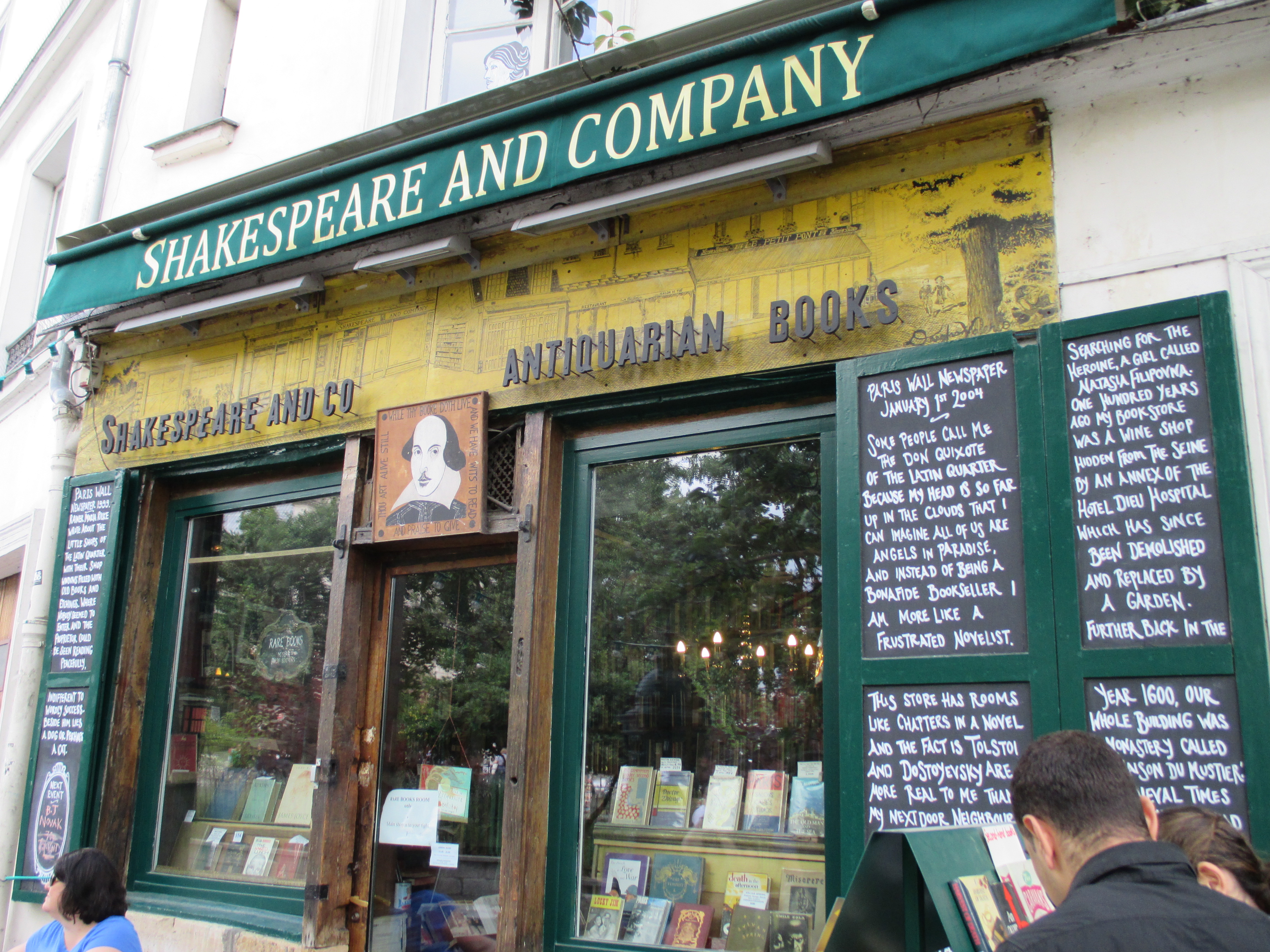
A few days in Paris, Writing . . . Years ago Never forgotten

Instructions for living a life.
Pay attention.
Be astonished.
Tell about it.”
―Mary Oliver

Moving a life forward is an investment in dreams, time, learning, relationship building, and so much more. Moving a writing life forward is all of that, and I would add it is also, at its best, a life transformed. As Anne Frank so eloquently put it: “I can shake off everything as I write; my sorrows disappear, my courage is reborn.” Writing did not save Anne Frank’s life, but I believe her writing has saved the lives of countless others.

Writers may feel called to the creative life, but that one precious life often must take a back seat to another, more practical life, one that includes a sensible career (aka something with a steady paycheck), perhaps with snatches of scribbling in between the job, chores, and attending to family or societal needs and expectations. The writing life can be a kind of shadow life. It has been for me. Some writers seldom or never mention their craft while engaged in their more acceptable “real” life.

“I love writing. I love the swirl and swing of words as they tangle with human emotions.”
—James Michener

It’s hard to explain to nonwriters why a few hours or a whole day spent attending a sporting event or a picnic can create in the writer a kind of panic—a feeling that the time needed to be alone, to read and to write, will never be enough, that time is seeping away, draining their spirit. Spending “free time” in non-creative areas can feel terribly wasted to the writer, while to others, the writer’s avoidance of joining in reeks of selfishness, or delusion. Or perhaps it’s just incomprehensible. Why, people wonder, is writing so important to you? There’s no money in it. And if there is, it’s only available to a few spectacularly talented gifted authors. If you had that gift, surely you’d have been published by now.

The writing life can be an ill-defined series of swells of poetic energy or flow, which is heady and soul lifting. There is nothing quite like those times. Catherine Drinker Bowen says, “For your born writer, nothing is so healing as the realization that he has come upon the right word.” And I have felt that many times. Writing has healed me.

But those transcendent hours or days are for writers seeking an agent or publisher likely to alternate with rejection after rejection after rejection. Writers do much of their writing alone, but if they seek representation and traditional publishing, they must eventually learn the oft times punishing lessons of business.

Soon I’ll be working with a developmental content editor on my completed World War II historical fiction manuscript. I’m excited to be taking this major step forward. It’s been a long journey, and honestly, I’ve loved the myriad lessons and experiences along the way, even the hard ones.

“If a story is in you, it has to come out.”
—William Faulkner

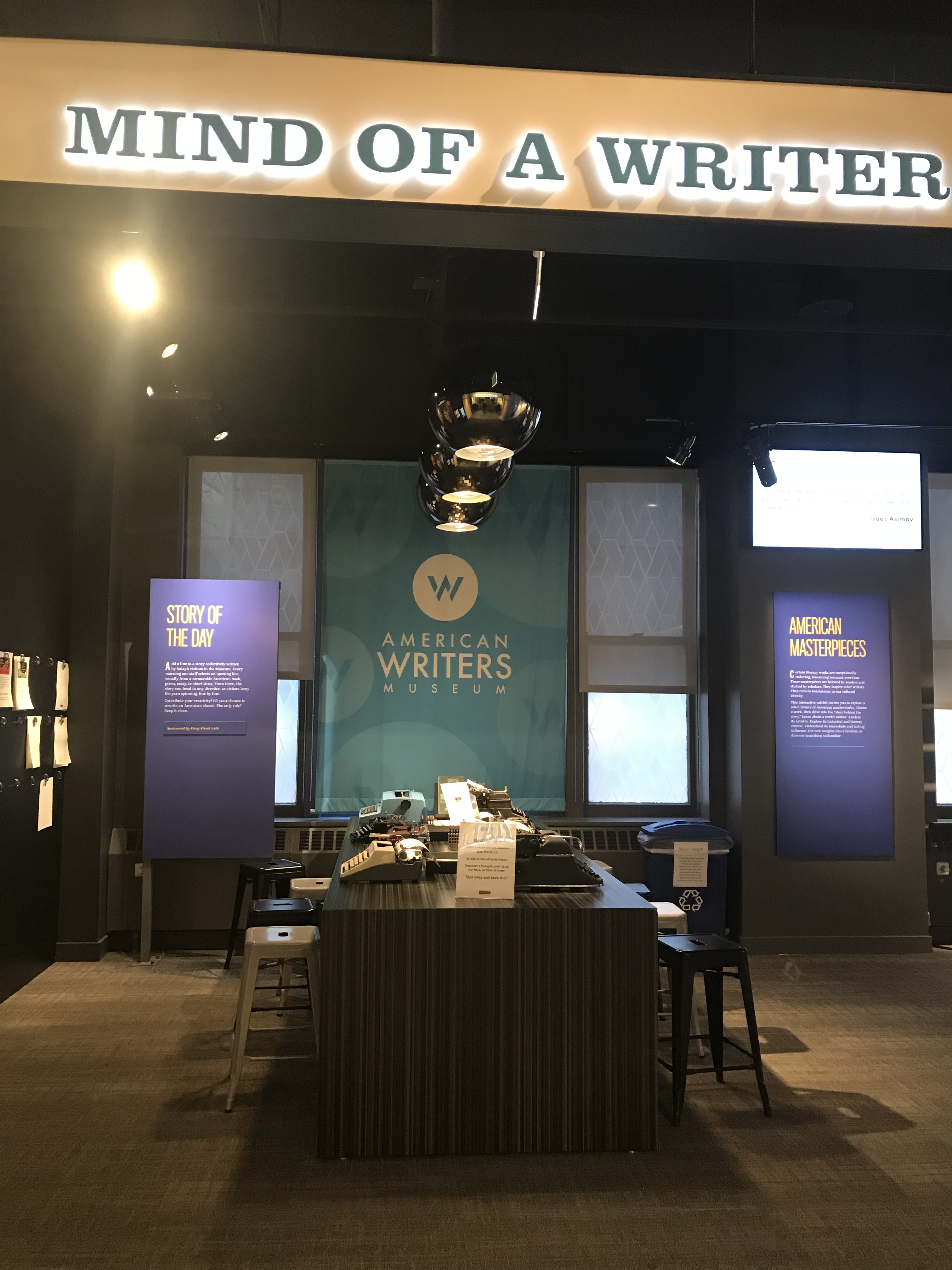
American Writers Museum, Chicago, Illinois

Thank you for visiting! Wishing you a wonderful day, doing exactly what you need and want to do.

With Love Always, Lori

43 Comments

Filed under Authors, Fiction, Gratitude, HIstorical Fiction, Identity, Literary Agents, Publishing, Reading, Research, Uncategorized, Work, World War II, Writing Advice

Our Books, Our Shelves

Friends! I have been remiss! I apologize for getting so far behind in reading and responding to your posts. I hope you are all well and I’m looking forward to catching up!

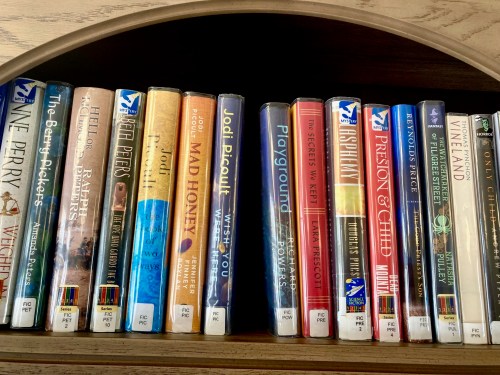
Austin Library, Lander County, Nevada

I’ve been busy of late with revising my historical fiction manuscript after receiving feedback from an agent and a publisher. It’s been fun, in that odd way that perhaps only other writers can understand—a challenge, a wrestling with words, a content shift—all of it within a world that was once mine alone and that now I must share if it is ever to come to fruition as a novel that lives in the world.

Field Trip! I can’t remember where I saw this exercise in visualization. It was likely from one of you, so please accept my apologies for not remembering the source, and let me know if it was you. I love the idea: Go to a book store or a library and find the spot on the shelf where your book would be shelved if it were published. Make a space for your beautiful creation and take a picture. What books will be nestled up to yours?

In the Austin, Nevada library, my book would be shelved right next to Jodi Picoult’s if it were published today!

Your Turn! I’d love to see your spaces! And if you already have a book or books out there, it would be wonderful to see where they sit on the shelf. Please share!

38 Comments

Filed under Authors, Books, Fiction, Writing