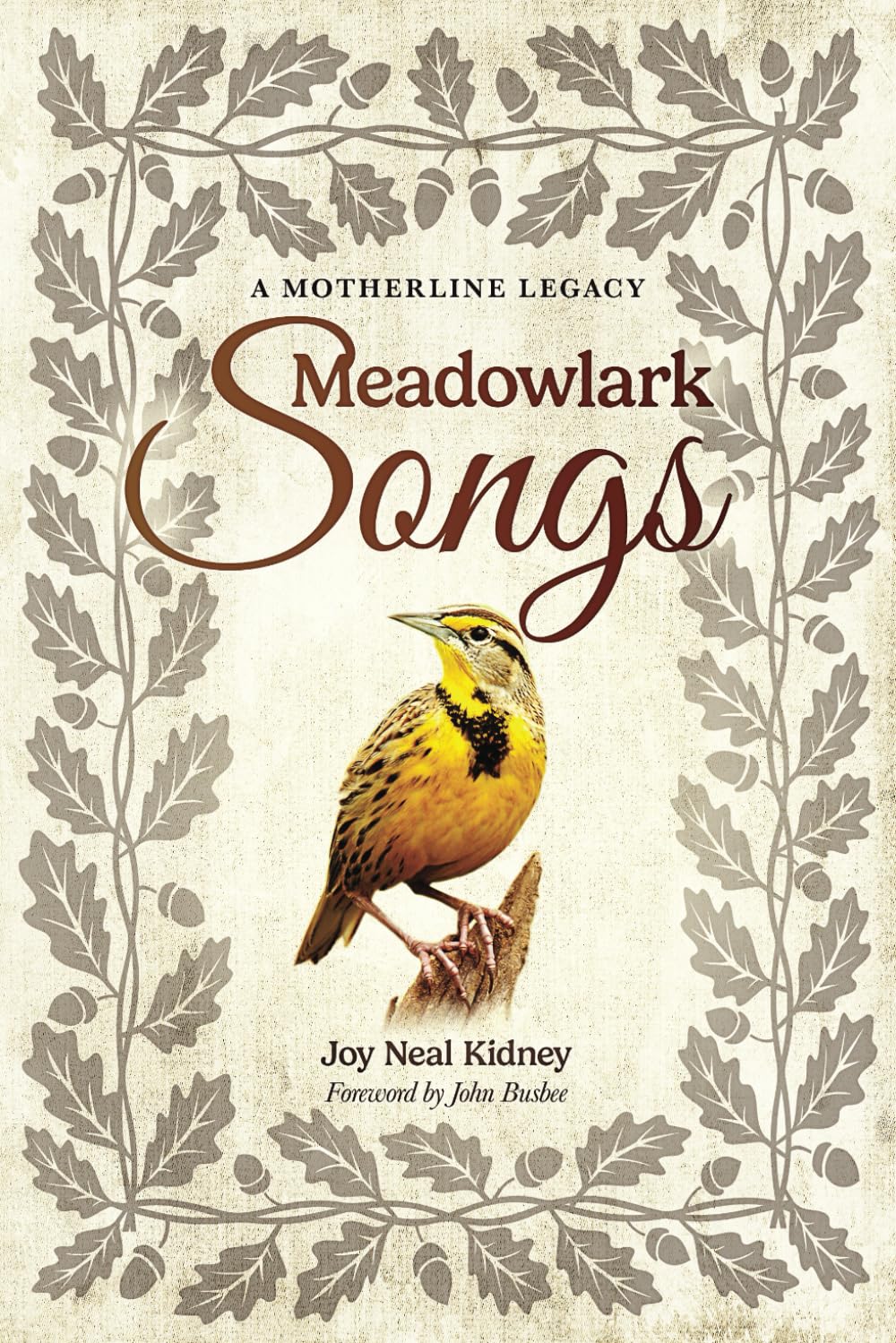
Joy Neal Kidney’s treasury of family stories traces the lives of seven generations of her ancestors– their joys, their hardships, and their enduring faith.
The short, lyrical portraits of the lives of these women along with their husbands, sons, and daughters begin with Jane (Watson) Branson who was born in 1782 and end with Joy, herself, the memory keeper who researched, gathered photographs, recorded and wrote the lovely tributes, poetry, and historical details, and brought it all together for her family—and for her readers.
This charming volume gives all of us a delightful and heartfelt glimpse into the way our ancestors give us life, tradition, strength, and love, while reminding us of the many reasons we should honor them and remember them.
It’s a beautiful little gem of a book. Highly recommended!
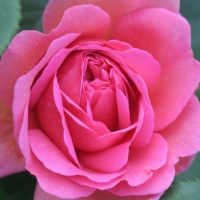
From Top to Bottom: Sierra Boggess and Emily Jewel Hoder in the revival production of “The Secret Garden” at Center Theatre Group / Ahmanson Theatre February 19 through March 26, 2023. Photo credit: Matthew Murphy of MurphyMade
As a way to identify the activities that bring me joy and find ways to incorporate more of them—more often—into my daily life, I recently completed a writing exercise. It morphed into several disparate, yet ultimately connected and delightful experiences. I had so much fun with it, I just had to share!
Here is the prompt: “Write a letter to your childhood hero. You won’t actually send this letter. Tell them about what has brought you the most joy in each decade of your life. Don’t think too hard about the answers. Write the first things that come to mind. Reread the letter. Do you see common threads?” -Brittany Polat, PhD. Journal Like a Stoic, c2022.
Choosing who to write to was an intriguing part of the process. Who, I asked my little girl self, is your hero? The name that sprang spontaneously to mind was Frances Hodgson Burnett. Of everyone I could have chosen, for some reason I chose a lady author, a woman I’d never met and in fact could never have met because she died thirty-two years before I was born. She may have left the earthly realm, but she was very alive to me. She spoke to me through her books. The Secret Garden was my favorite, and I have continued to love it my whole life, cherishing it through rereads, watching all of the movie versions, and attending the play.
Before writing my letter to Frances, I did a bit of research on her life, and what a full life it was! Born in 1849 in England, impoverished at age four after her father’s death, Frances eventually traveled with her mother to live in a log cabin in Tennessee during the American Civil War. It was writing that finally lifted her out of poverty. She was a highly regarded author who published fifty-three novels and owned homes in both England and America (Gerzina, Gretchen H. “In the Garden: The Life of Frances Hodgson Burnett.” Shakespeare Theatre Company, c2024).
This research into Frances’s life inspired me as I wrote to her about the greatest joys in my own life. The common threads became very clear. Family, friends, nature, wildlife, pets, reading, writing, and learning showed up consistently throughout the decades. These are the things that spark the most joy for me.
Frances with her sons
With this in mind, I agreed to an unplanned day-long trail ride with my husband on a day I had planned to spend doing laundry and vacuuming the house. Seems like an easy choice, venturing out into nature with my guy rather than doing chores, but I honestly might not have agreed to drop everything and go if I hadn’t just completed my “joy inventory.”
Though housekeeping and organization didn’t make themselves known in my letter to Frances, they are important to me, nonetheless. I find it difficult to get to joy in any kind of untidy environment, whether in my own home or anywhere else. Still! I managed to say yes. As a bonus, I thought I could write about it afterwards, thereby including another of my favorite activities in the event.
Here is the result:
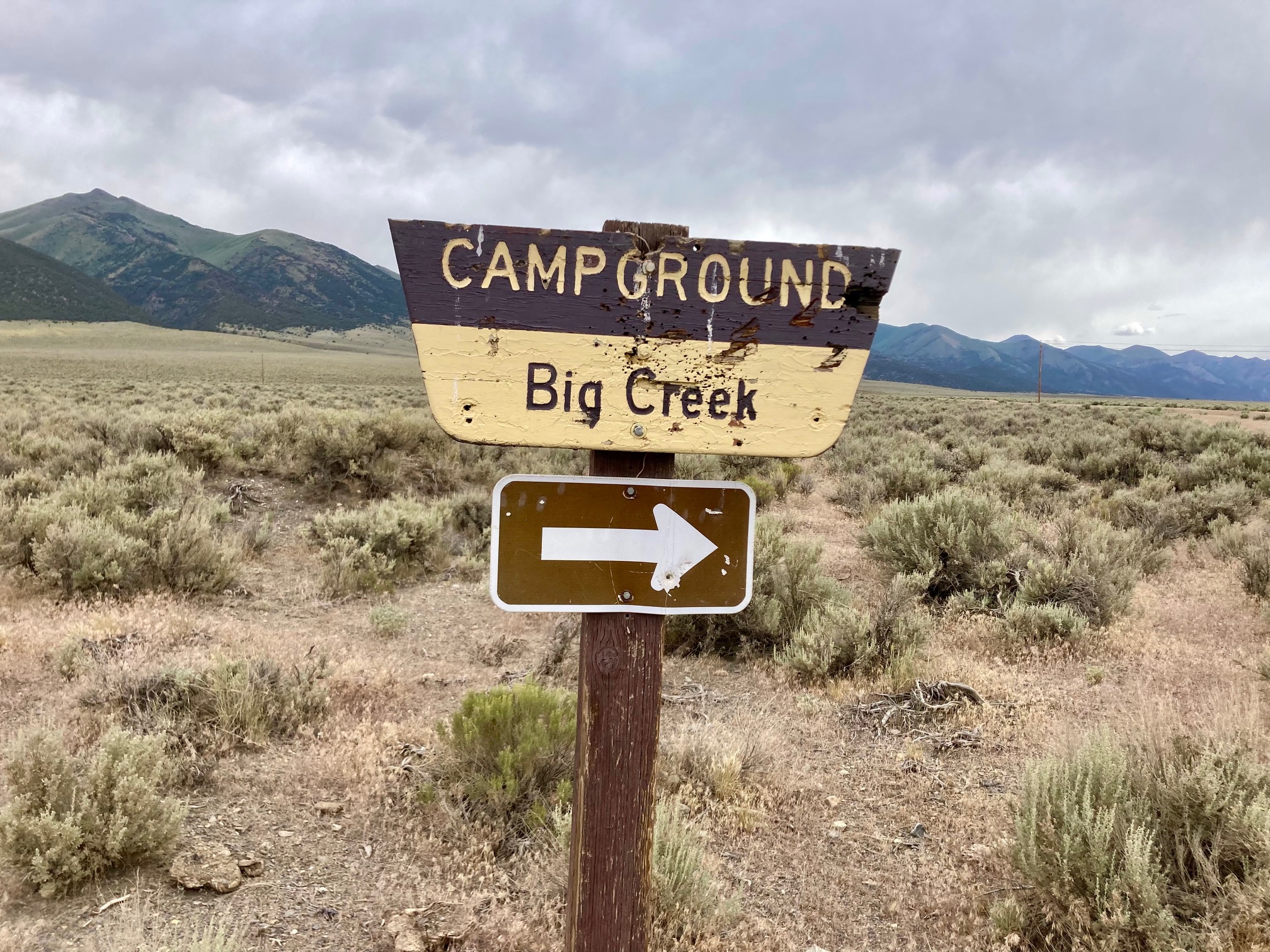
Off highway vehicle trails abound in the high elevation areas of the entire Toiyabe Mountain range and extend down into the valleys and basin below. We have an old side-by-side Rhino that can climb just about anything at very low speeds and peaks at 30 miles per hour on a flat road going downhill (a situation not often experienced here). Our chosen route for the day was to begin at our home in Austin, travel to Big Creek Campground, and then continue over the mountains into the adjacent valley to the east.
My guy and the Rhino
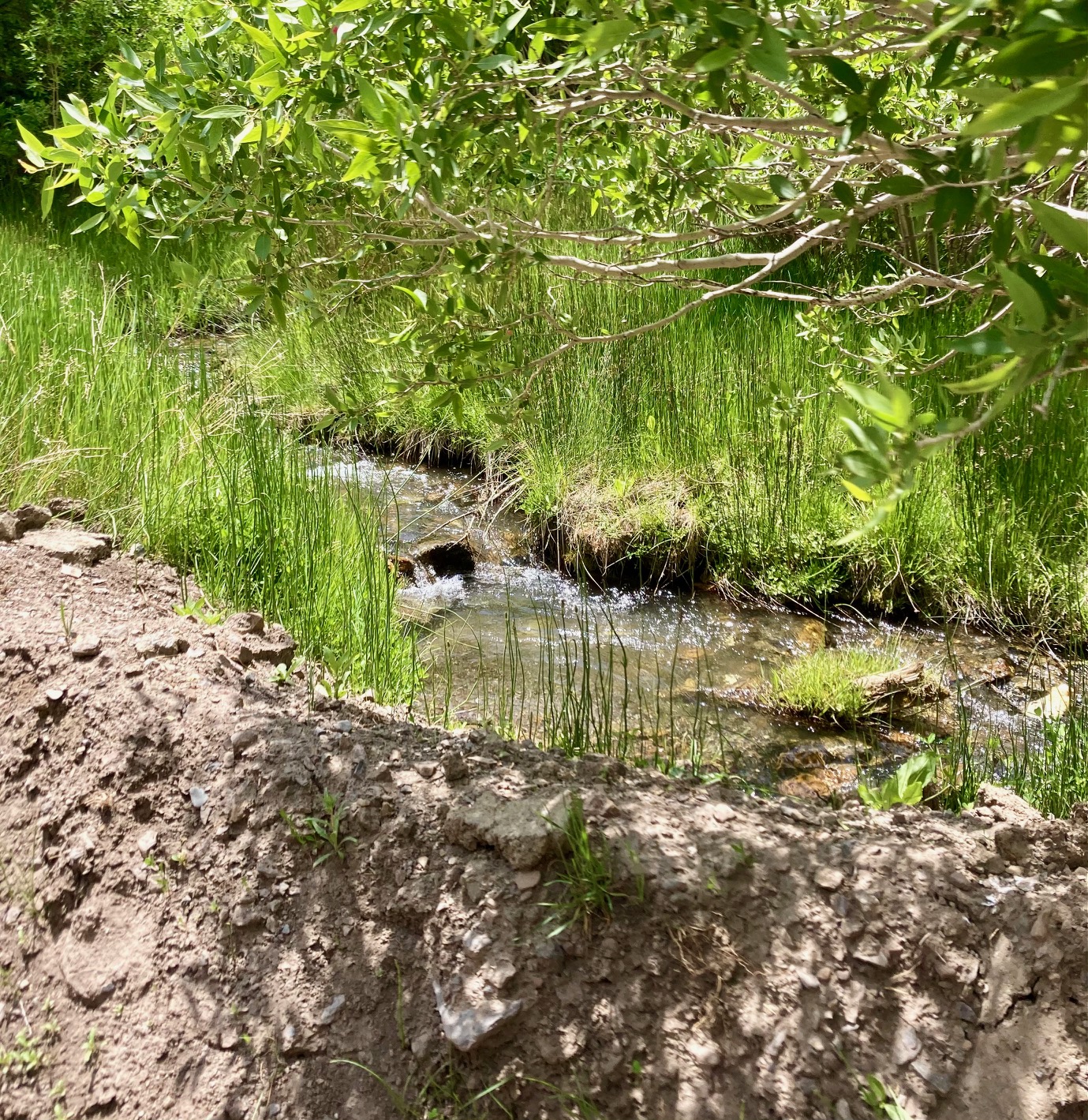
Big Creek
Soon to be up and over the top!
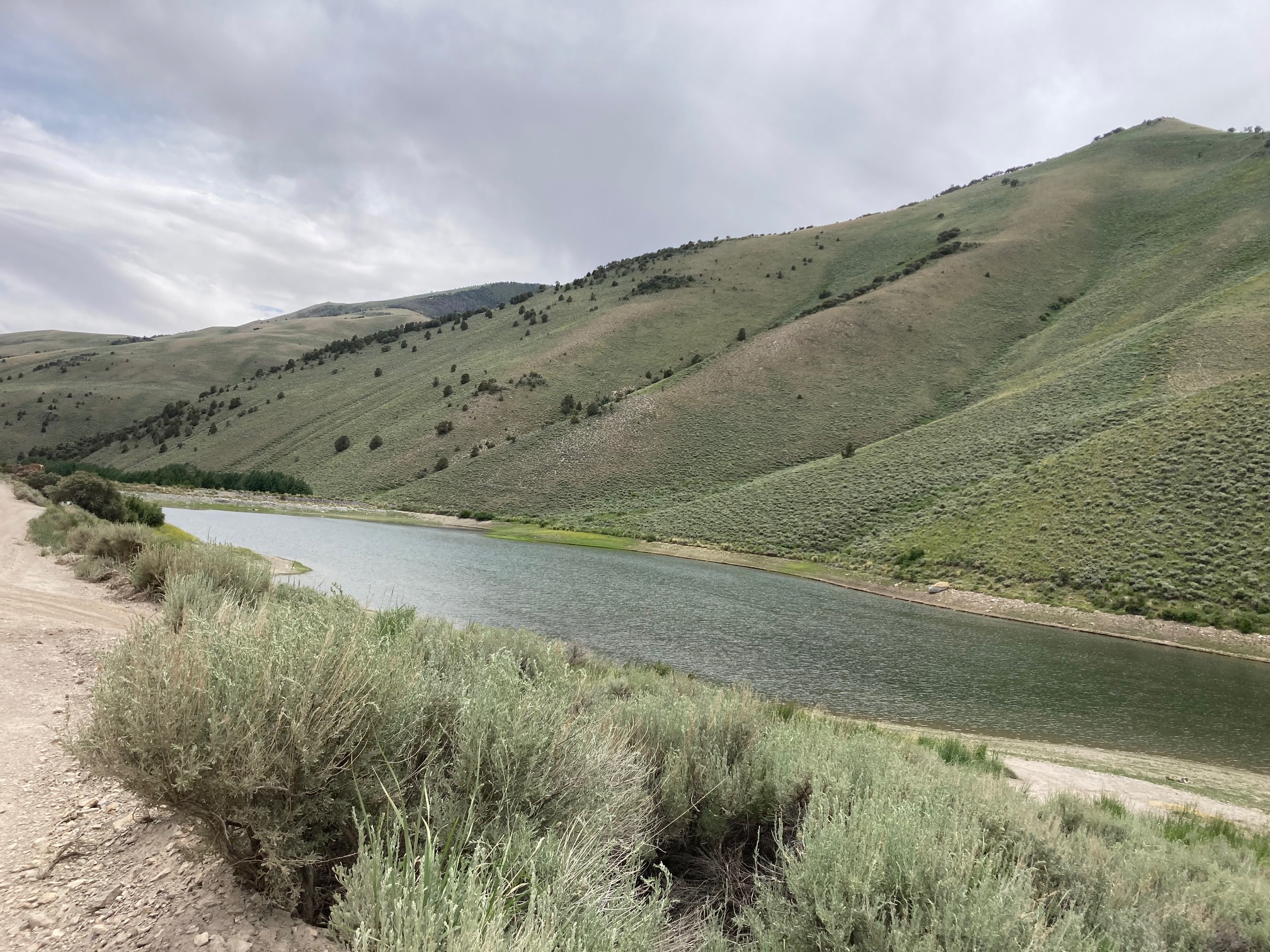
Groves Lake
Along the way we experienced the expanse of the Reese River Valley over exposed rocky trails and into and over the mountains with multiple stream crossings, aspen groves, meadows, and significant elevation change. We passed by two campgrounds (Big Creek Campground and Kingston Campground) and Groves Lake, winding up in the charming Kingston community where we were welcomed by the wonderful ladies of a Monday Mahjong groups that meets at our friend Linda’s house. There we were treated to a delicious lunch and lively conversation before heading back over the mountain. Friendship, another joy inducing ingredient added! It was a lovely day.
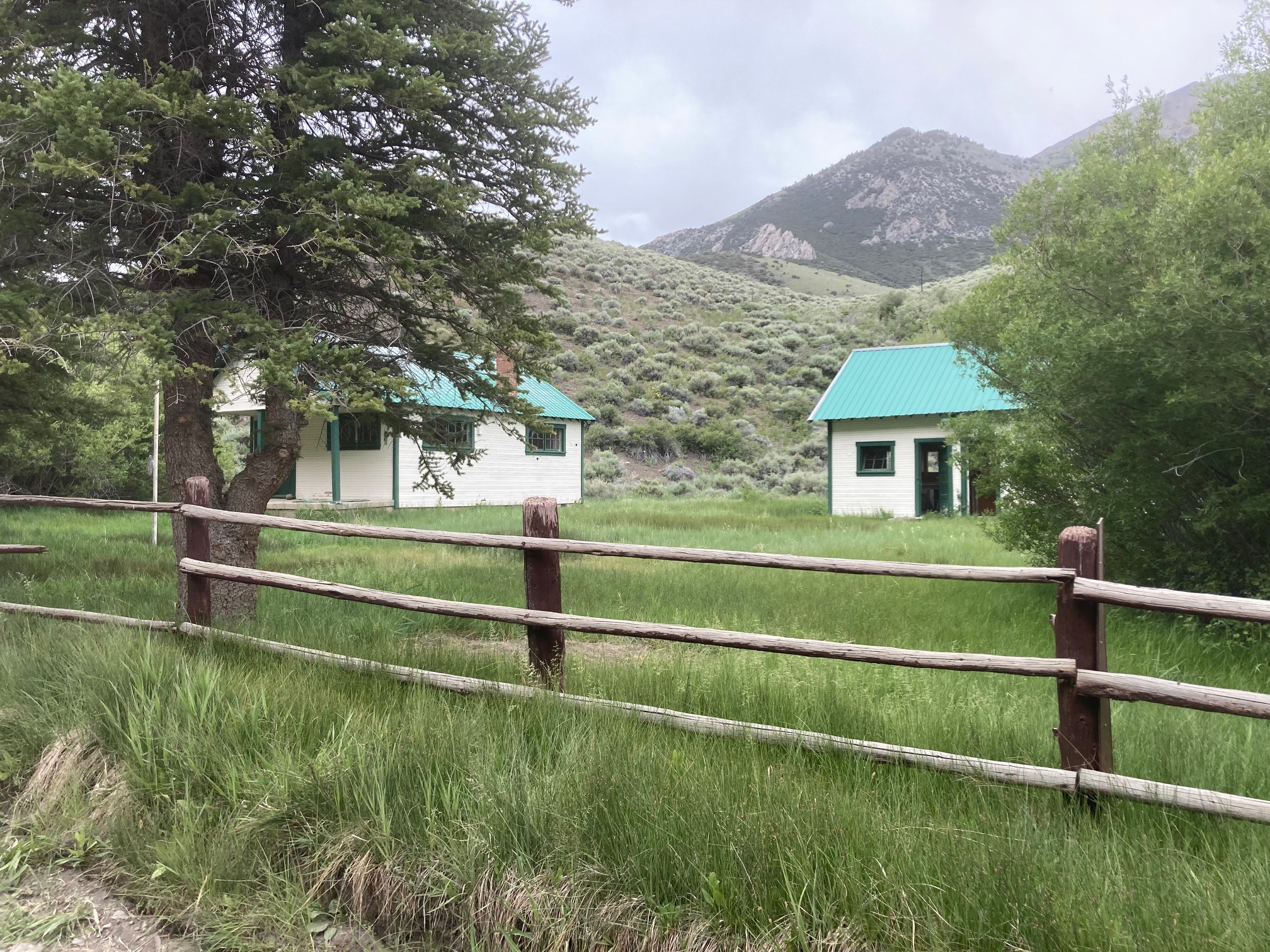
Old Kingston Ranger Station
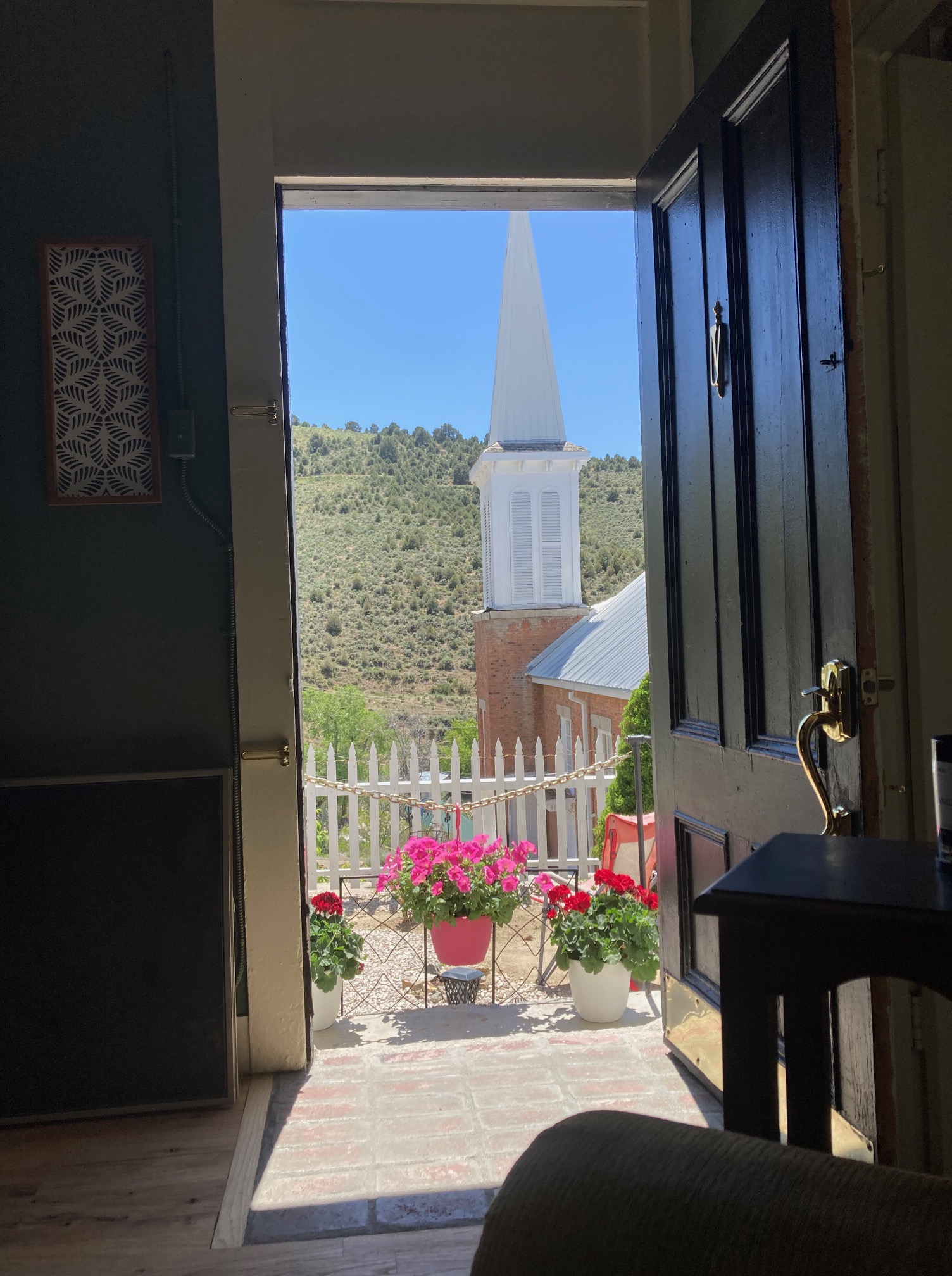
Linda and the Mahjong Ladies welcomed us in!
From the initial moments spent reading the prompt in my journal it was indeed a joy to experience the results of contemplating a childhood hero, writing to her, thinking about my life in decades, and saying yes to an impromptu adventure.
It would be wonderful to read about your hero, and the joys of your decades. Who would you write to? What insights about joy might your letter reveal? If the spirit moves you, please do give this little project a go! You might find yourself delighted by the results, as I have done. Looking forward to hearing from you!
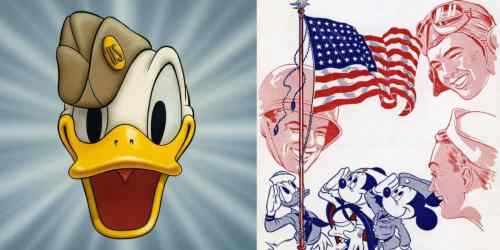
Disney’s Donald Duck, WWII. I can see why Dad chose to imitate this particular character. He was very proud of his Scottish roots!
Some time ago I responded to a fellow blogger, GP, Pacific Paratrooper, a WordPress.com site of Pacific War era information (https://wordpress.com/reader/feeds/4440944/posts/5114548606) about his article, “Disney and WWII,” posted Feb. 12, 2024. The post both tickled my fancy and triggered positive childhood memories, but also, delivered a good dose of regret. I knew so little about my dad’s service, and there was no one living I could ask.
Here is a record of our brief exchange:
Me: My dad was a WWII Marine. I didn’t think it was odd that he could speak to my brother and me in full Donald Duck voice because he just did. He never spoke about why. He did drive us from Wisconsin to California to visit Disneyland when it opened. So much I wish I could ask him now.
GP: May I ask what unit he was in? There might just be a good reason. Disney made training videos, etc. too.
Me: I am ashamed to say that I don’t know his unit.
GP: So many of us have questions we wished we had asked.
As the days passed, I kept going back to GP’s article. I couldn’t reconcile the fact that I had practically no knowledge whatsoever of my father’s service in World War II with who I believed I was: a loving daughter, a lover of history, a teacher of literature, writing, and the Holocaust, a writer of historical fiction, a devoted library worker . . . how was it that I knew so little about my own father’s relationship to such tremendously important world events?
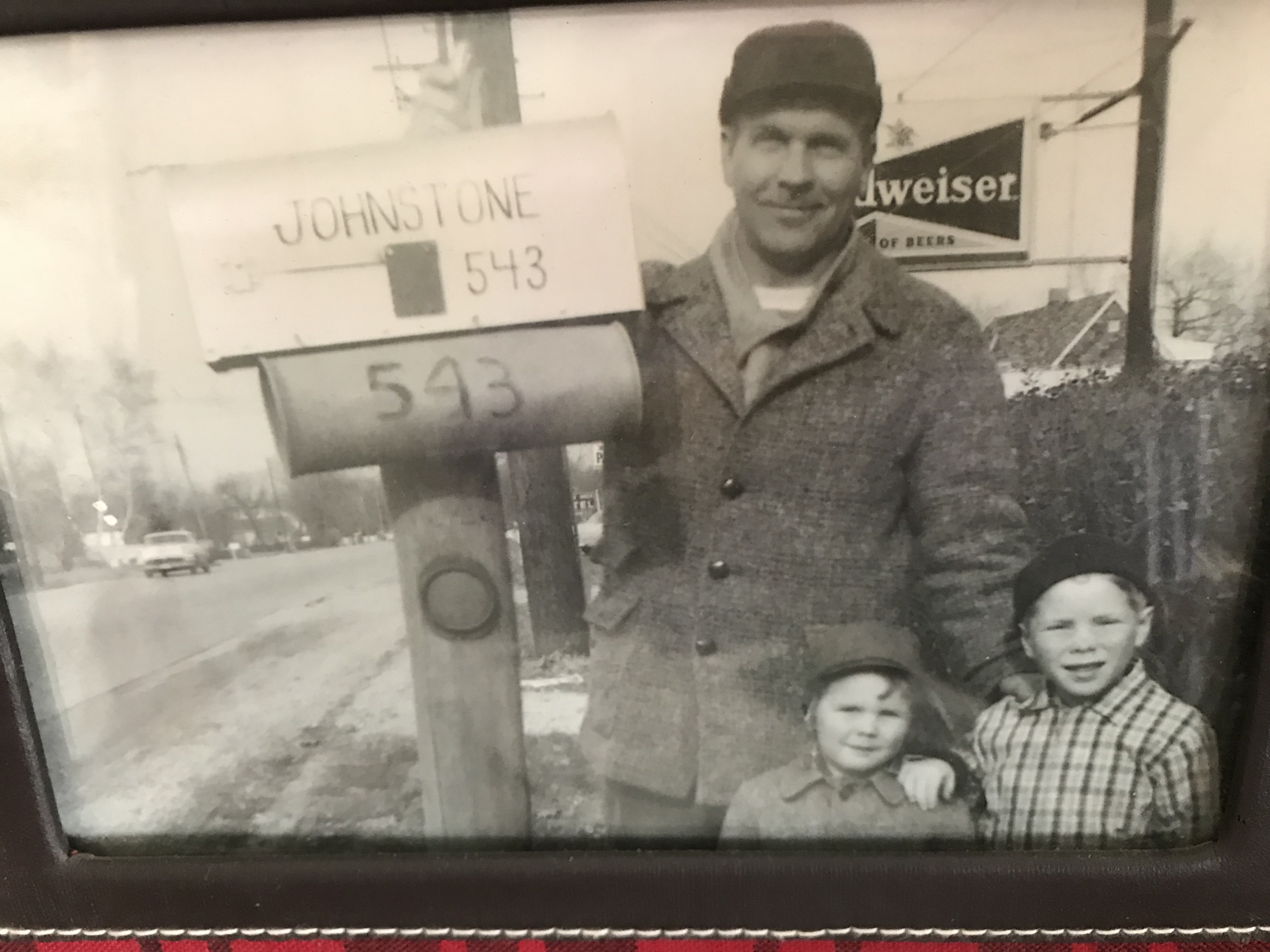
Dad, Lori and Billy. About 1959.We lived next door to a bowling alley, but Lake Michigan was in our backyard!
An online search informed me that I could request my father’s United States Marine Corps Separation Documents and Personnel Records from the National Personnel Records Center at the National Archives, www.archives.gov. I did so, and some months later I received a short stack of copied documents dating back to my father’s voluntary enlistment the day after the Pearl Harbor attack.
I did remember that. It was one of the few stories Dad repeatedly told my brother and me, that he had waited in a line two blocks long in his hometown of Chicago, Illinois to join the Marines the day after Pearl Harbor. It painted a picture of patriotism that stayed with me. I have heard myself repeat it many times throughout my life. My dad, the story revealed, was one of the true heroes of The Greatest Generation.
Here is the rest of the story, as much as I was able to glean from the archives:
Pearl Harbor Attack. World War II Facts.org
When Pearl Harbor was attacked (December 7, 1941), William Harold Johnstone was 21 ½ years old. He had turned 21 on his Flag Day birthday, June 14, 1941. He began active duty on January 5, 1942. He was a high school graduate, and he had completed one year of college. His stated major was Pre Med. Qualified sports listed were track, football, basketball, and swimming. It was also noted that he sang in the church choir. He worked at Montgomery and Ward Co. as a silk screen printer.
I do remember my mom telling me Dad had wanted to be a doctor but that after his war injuries he had never gone back to college. I know he was always interested in medicine. Also, I remember a story about how he swam out and back to a pier or perhaps a buoy some distance off the shore of Lake Michigan and back as a teen, which I gather was somewhat of a feat / badge of honor. Also, he mentioned that at one time he had the nickname “Johnny Rock” — perhaps an homage to both his last name (Johnstone) and his physical fitness. His record shows he was 5 foot, 8 inches tall and he weighed 136 pounds. Not a big man, but strong.
Dad’s father, an immigrant from Scotland, had died when Dad was only four-years-old, so he was raised by his mother, Lorene, and her sister, Mary, along with his older brother, Donald. Tragically, Donald died at age twelve. It was then, my dad told me that he knew he had to give up childish games and work to help his mother and his aunt.
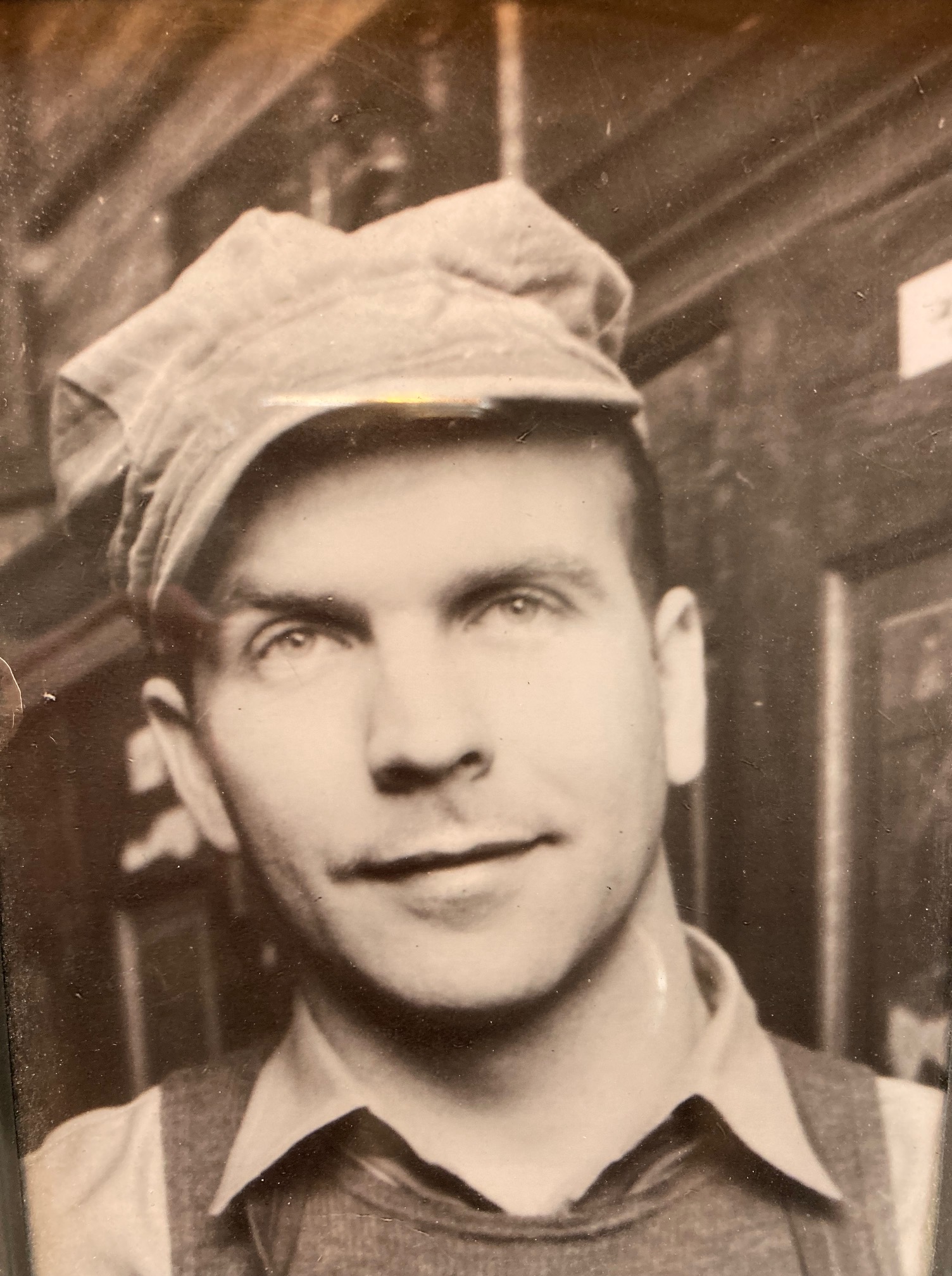
This then, is a portrait of the twenty-one-year-old man who entered the military.
My Handsome Dad
Dad’s original principle military duty early on was Surveyor 227 Rank Private First Class. USMC, 19th Marines Engineer, 3rd Marine Division Fleet Marine Force, Camp Elliott, San Diego, CA.
Later I see him listed as Private 1st Class, 339815, “I” Company, Third Battalion, 22nd Marines, Sixth Marine Division.
After his initial training, it seems Dad shipped out. The reports are difficult to decipher, but they contain notes of his being in Pearl Harbor, Hawaii; Auckland, New Zealand; Guam, Marianas Islands; Guadalcanal Island, Solomon Group; and Okinawa, Ryukyu Islands, Japan. The only detailed reports refer to Guam and Okinawa.
Guam in World War II, National Park Service
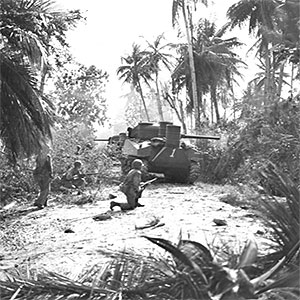
Here is Guam:
From James Forrestal, The Secretary of the Navy, Washington
The Secretary of the Navy takes pleasure in commending the First Provisional Marine Brigade for service as follows:
“For outstanding heroism in action against enemy Japanese forces, during the invasion of Guam, Marianas Islands, from July 21 to August 10, 1944. Functioning as a combat unit for the first time, the First Provisional Marine Brigade forced a landing against strong hostile defenses and well camouflaged positions, steadily advancing inland under the relentless fury of the enemy’s heavy artillery, mortar and small arms fire to secure a firm beachhead by nightfall.
Executing a difficult turning movement to the north, this daring and courageous unit fought its way ahead yard by yard through mangrove swamps, dense jungles and over cliffs and, although terrifically reduced in strength under the enemy’s fanatical counterattacks, hunted the Japanese in caves, pillboxes and foxholes and exterminated them.
By their individual acts of gallantry and their indomitable fighting teamwork throughout this bitter and costly struggle, the men of the First provisional Marine Brigade aided immeasurably in the restoration of Guam to our sovereignty.”
All personnel serving the First Provisional Marine Brigade, comprised of: Headquarters Company; Brigade Signal Company; Brigade military Police Company; 4th Marines, Reinforced; 22nd Marines, Reinforced; Naval Construction Battalion Maintenance Unit 515, and 4th Platoon, 2nd Marine Ammunition Company, during the above mentioned period are hereby authorized to wear the NAVY UNIT COMMENDATION Ribbon.
My dad never described any of these experiences to me, and I don’t remember ever seeing that Commendation Ribbon. I hope he was able to talk about it with someone, but I do not know if that was the case. It grieves me.
On Okinawa:
The next specific report in the records begins with a Report of Combat Casualties, which states that William H. Johnstone of the Twenty Second Marines, Sixth Marine Division was Wounded in Action on May 12, 1945 on the island of Okinawa, Ryukyu Islands. Recorded on 13 May 1945. Diagnosis: Wound Fragment Face. Prognosis: Serious.
On 18 May 1945, U.S. Fleet Hospital No. 111 reports William H. Johnstone, Wounds, Multiple. Wounded in action against an organized enemy. Shell struck near patient causing injury.
A U.S. Fleet Hospital letter to my grandmother, written July 1, 1945 reports Dad’s condition as good, and states that he will be returned to active duty in the near future, so it looks like he was hospitalized for approximately a month and a half.
The record states:
In the name of the President of the United States, and by direction of the Commander in Chief, U.S. Pacific Fleet, the Purple Heart is awarded by the Medical Officer in Command, U.S. Fleet Hospital Number One Hundred and Eleven to: William H. Johnstone, Private 1st Class, USMC for wounds received in action against an enemy of the United States on 14 May 1945.
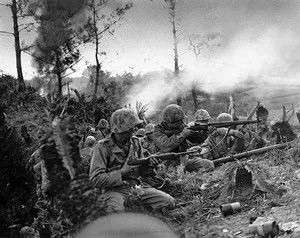
The battle of Okinawa “was one of the bloodiest in the Pacific War, claiming the lives of more than 12,000 Americans and 100,000 Japanese, including the commanding generals on both sides. In addition, at least 100,000 civilians were either killed in combat or were ordered to commit suicide by the Japanese military (Battle of Okinawa | Map, Combatants, Facts, Casualties, & Outcome | Britannica).
Battle of Okinawa, Brittanica
I do remember seeing the Purple Heart. My father gave it to my brother. Unfortunately, it was lost during my brother’s divorce, and it was never returned to the family.
I would like to thank GP and his Pacific Paratrooper WordPress blog for getting me started on this mission of discovery. Without his article on Disney in the Military and my memories of a loving father amusing my brother and me with an array of his silly Donald Duck performances, I doubt that I would have been able to share this information with my children and grandchildren. So, thank you, GP!
An early picture of our old house, before renovation.
One of the most enjoyable writing exercises I’ve done lately comes from a biographical poetry template based on a poem by George Ella Lyon. I came across it on Jeannine Quellette’s brilliant Substack, Writing in the Dark. The exercise is familiar to me in a distant way, as though perhaps I’d done it before but lost it. Or perhaps it suited me perfectly this past week because I have been contemplating writing memoir and fictionalized biography, so it seems as though I always had it—a poem about beginnings, and the echoes still heard, the lessons still being learned.
Green grass, Blue water, the whoosh of wind and wings
Flocks of seagulls
I am from Lilies of the Valley, Bleeding Hearts, Lake Michigan’s endless sand and waves
I’m from World War II, Ramblers, and Divorce
From Rachel and Frederick and William and Lorene
From Rae and Bill
I’m from long car rides and listening to albums on the stereo
From Mr. Wonderful and Stop Crying and What did you learn in school today?
I’m from no church, lost pets, and rented houses.
From a mother who scoffed at religious people
And a father who blamed organized religion
For the world’s woes.
But I’m also from Christmas trees and baking cookies, from bunnies and Easter baskets.
And I’m from the hand-written prayers I found in my father’s bedside table when he died.
I’m from Chicago and Kenosha
From Illinois, Wisconsin, and Minnesota
From Scots called Johnstone, and Swedes called Nelson
From ground beef casseroles, navy bean soup, and sour cream raisin pie
From Great Aunt Mary who broke up with her beau when he jumped into a fountain,
Never to wed, who lived with her sister Lorene’s family and then mine until The Divorce when she
Was sent back to Chicago to an old folk’s home
And Mother was hospitalized
I am from women who sewed and worked in libraries
and who cooked and cleaned other people’s houses.
And from men who sought love and adventure and worked on farms and in factories.
I am from Midwestern barefoot summers and sea glass and wandering the West
Restless and yearning for polished maple tables and a place to call home.
RLP, 2025
If you would like to write your own “I Am From” poem, here is the template. Use it as a springboard. Jump in and adjust it to suit. I hope the writing brings you joy, or something like joy, which is sometimes as simple as finding a way to express the inexpressible past.
Blessings! And please share your poems in the comments!
Kenosha, Wisconsin
Template: I Am From
I am from ________________ (specific ordinary item)
From ____________ (product name) and _____________ (product name)
Being vegetarian and eating greens and salads out is always a risk, it s hard to be 100% sure all you eat is absolutely safe, so take it twice a year to guarantee your body is free from unwanted organism
The goal of this blog is to create a long list of facts that are important, not trivia, and that are known to be true yet are either disputed by large segments of the public or highly surprising or misunderstood by many.
This blog feature amusing and heartwarming stories about our late Leonberger dog Bronco, as well as other Leonbergers. It also has a lot of information about the Leonberger breed, the history, care, training, Leonberger organizations, etc. I also wrote a Leonberger book, which I am featuring in the sidebar.