Category Archives: Books

Escaping Limbo

I have thought a lot lately about the discomfort of being in a perpetual state of waiting for something to happen, of worrying about what the results will be when something finally does happen, and then, wondering if I will navigate any of it well. The word “limbo” is often in my thoughts.
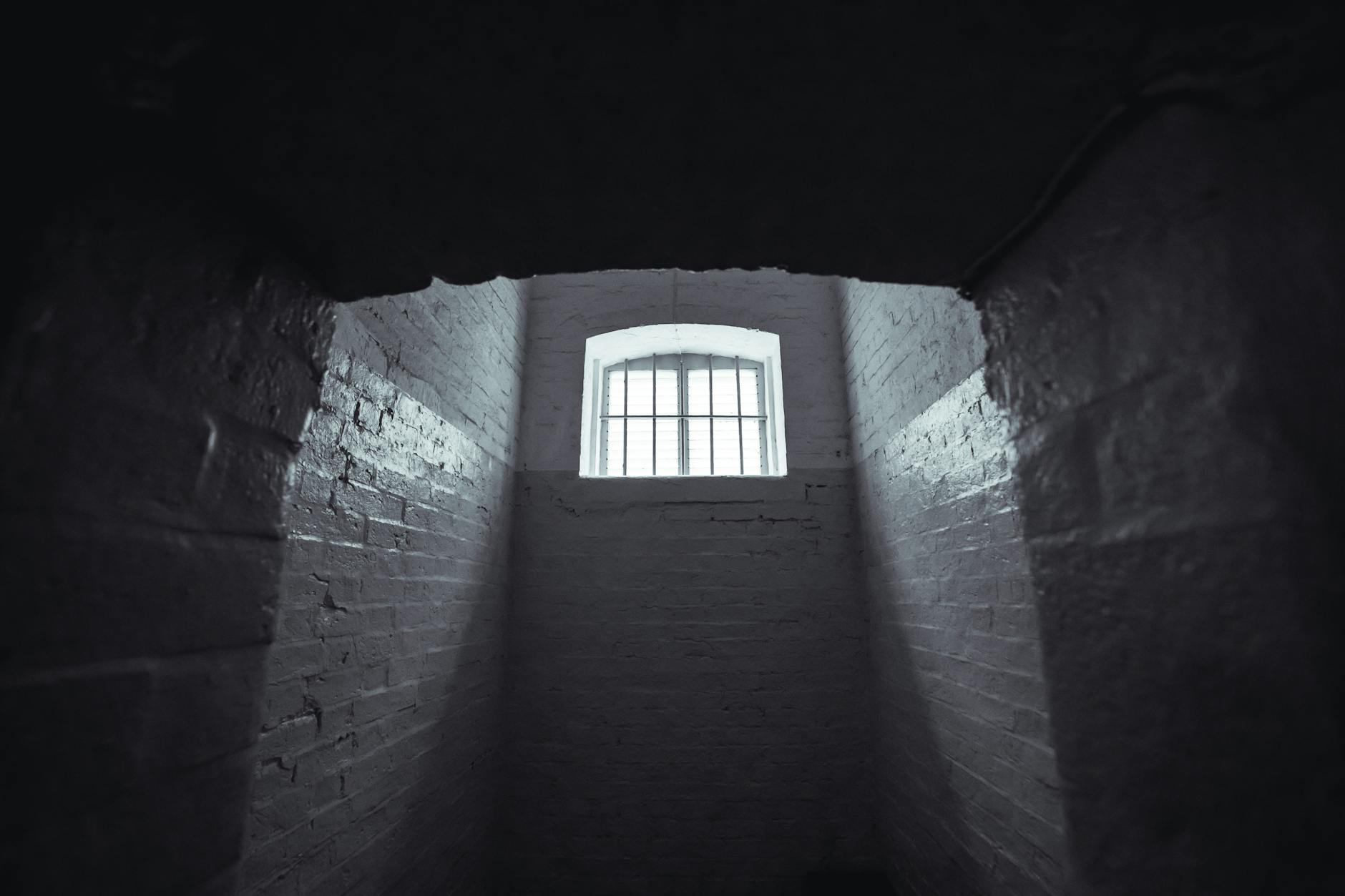
Photo by Jimmy Chan on Pexels.com

2024 brought new health concerns for my husband, and with that a reconsideration of where we should live, since we are currently in a very remote location, three and a half hours by car from the nearest medical center with cardiac care. We responded decisively by putting our house on the market. That decisiveness did not break us out of Limbo, however, as we do not know when or if our home will sell, and we do not know what it will sell for if it does sell. We cannot make plans on where to move until we sell the house. Still, we’re thinking about returning to the Midwest where real estate prices are more reasonable than here in the West and where we can reasonably expect to afford to live in a town with a hospital. But, until we sell, we are in Limbo.

Also, in 2024, I was thrilled to receive an invitation from my dream literary agent to send her my full manuscript, A Fine Suddenness, a World War II historical fiction novel based in Lake Arrowhead, CA. I’ve no idea if she has read it yet. It has been out of my hands for six months now, this after having worked on it pretty consistently for years. Many years. I miss it terribly (it’s an odd thing, really, the attachment I’ve made), and I have no interest in beginning a new novel yet, though at least I am continuing to write. Even so, journaling or posting online, as important and healthy as they are, do not give me the same sense of mission as novel writing does. I wait to hear from the agent, and I do not move forward on a sequel to the book I sent her, nor on some new unrelated novel, because I desperately want her opinion on A Fine Suddenness first. More Limbo.

And 2024, oh my goodness, has been a year of intense worry and anticipation for our nation and the world. We are no longer in the first stage of that particular limbo state, but we are certainly still in a place of transition and uncertainty. So many possible scenarios there, and so little I have control over. More Limbo.

Earliest historical references to Limbo describe a place in-between—not heaven, not hell—a place for deceased unbaptized humans born before the birth of Christ, or who died as infants before baptism, to reside until the second coming of Christ by the Roman Catholic Church, and these begin in the 14th Century. From there, the word limbo (more and more with a lower case “l”) entered usage in less theological contexts: as a place or state of restraint, confinement, neglect, oblivion, uncertainty, or an intermediate or transitional place or state.

Etymology also traces limbo from the English of Trinidad and Barbados limbo “a dance that involves bending backwards under a pole,” related to Jamaican English limba “to bend,” from English limber “flexible” (merriam-webster.com).

Photo by RDNE Stock project on Pexels.com

Which leads us to the dance, or funeral game, which dates back to the mid to late 1800s on the island of Tobago. In the beginning, the game started with the bar at the lowest possible height and the bar was gradually raised, signifying an emergence from death into life (Wikipedia.org). It is possible that the roots of this practice come from the slave experience of being transported across the seas in ships, where the slaves were separated and tried to squeeze through narrow spaces in order to see or touch one another. In some African beliefs, the game reflects the whole cycle of life . . . the players move under a pole that is gradually lowered from the chest level and they emerge on the other side as their heads clear the pole as in the triumph of life over death (Stanley-Niaah, Sonjah “Mapping of Black Atlantic Performance Geographies: From Slave Ship to Ghetto.” Quoted on Wikipedia.org).

The secularization of the dance began in the 1940s where “it became a popular entertainment in Trinidad and was adopted as a physical fitness exercise by American troops,” . . . and is now “considered the unofficial national game of Trinidad and Tobago” (Wikipedia.org). It has become a fun and happy pastime.

Historically, Limbo to limbo, has moved on. Broken free, so to speak. I wonder if my own limbo could progress that way, too. As for human history, perhaps also for me? If I am stuck in the place between heaven and hell right now, will it be possible for me to become limber enough to squeeze myself through the narrow places that block me from reaching the open, even joyful places that still may exist beyond my current ability to see them or experience them?

In order to do that, I would need to understand the constructs of the narrow places. What are they exactly? What are they made of? Are they hard and impervious, like granite? Splintered like rough wood? Flexible and sometimes deadly like serpents? Or are they only real because I make them real in my own paralyzed mind? Maybe I could wish them away, disintegrate them, with new knowledge or some kind of personal epiphany.

Perhaps there is a way. Perhaps not. But I must strive, at least, to remember Helen Keller’s words, these taken from her open letter in response to Nazi book burnings in Germany on May 9, 1933: “History has taught you nothing if you think you can kill ideas. Tyrants have tried to do that often before, and the ideas have risen up in their might and destroyed them. . .You can burn my books and the books of the best minds in Europe, but the ideas in them have seeped through a million channels and will continue to quicken other minds.”

If Helen Keller believed that ideas and hopes have always “seeped through a million channels,” who am I to deny it? Might not a few of those ideas and hopes, and more likely a multitude, have made their way to us now at the dawning of the year 2025? Might not they sustain us, quicken our minds, and help us find a way out of our narrow places and into the light?
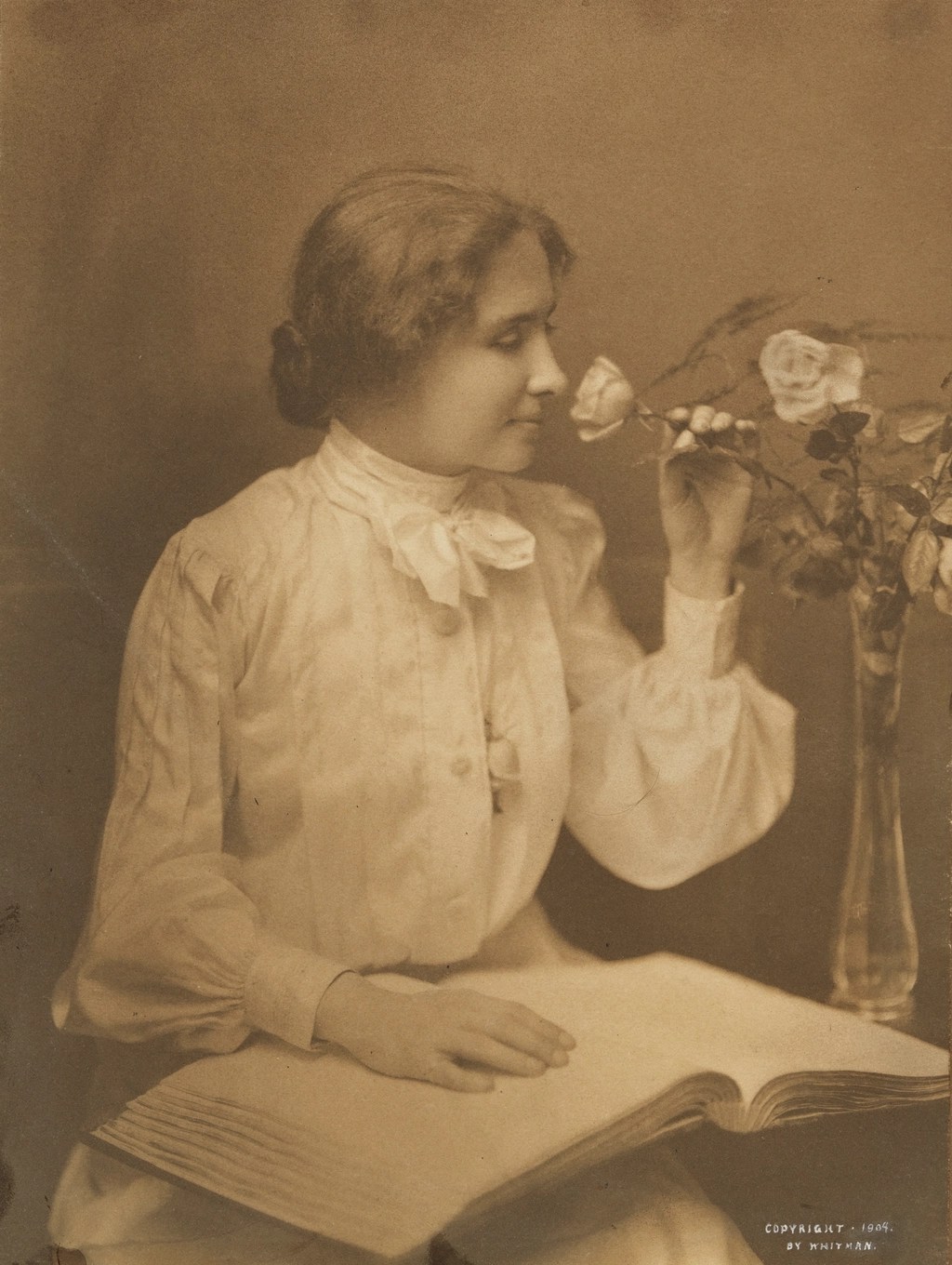
Helen Adams Keller“/ CC0 1.0 from Openverse.

22 Comments

Filed under Advice, Books, Depression, Identity, Lake Arrowhead, Literary Agents, New Year's, Uncategorized, World War II, Writing

Gone to Soldiers

a short review

pexels photo

I finished several books recently, one of which I had been reading for months in between other, less hefty titles. The hefty one is an older release (c1987), WWII historical fiction, Marge Piercy’s Gone to Soldiers. A wonderful book—rich in authentic detail—an amazing amount of research had to have gone into this devastating and sweeping novel. Having written two (as yet unpublished) WWII era novels, myself, I am beyond impressed with everything Piercy brings to life here.

Gone to Soldiers tells the stories of ten men and women who served in America, Europe, and the Pacific in vastly different ways: a war correspondent, an intelligence office for the OSS, a Japanese code breaker, a Women’s Airforce Service Pilot, an artist who fights with the Resistance in France, a woman who leads Jewish children to safety over the Pyrenees, a Marine struggling to stay alive in the Pacific, a Jewish teen from Paris sent to America before France fell, and her American cousin.

I have read a lot of WWII and Holocaust related fiction and nonfiction over the years, but somehow I missed this one. My brilliant friend, Sandy, sent me a copy, and I am so glad she did. It is not an easy book to read. Many of the scenes are incredibly vivid and tragic. Some of them were known to me from other sources, but a couple of them depicted battles or situations of which I was not aware.

I was particularly affected by the scenes in the Pacific, I believe, because my father served in the Pacific theatre, but talked about it so little that I never had a clear picture of what he went through. This book made me more aware of the horror he faced and makes me want to know more about his service.

I recommend Gone to Soldiers for its unblinking portrayal of the realities of war, ignorance, prejudice, love, and loss. It is an important book for men and women who seek to understand and remember our shared history—to mourn and honor those lost, to refuse to fall back into dangerous patterns of racism, prejudice, and misogyny, and to continue to work toward the vision of a safe, equitable, and free land for everyone.

“TODAY THE GUNS ARE SILENT. A GREAT TRAGEDY
HAS ENDED. A GREAT VICTORY HAS BEEN WON. THE SKIES
NO LONGER RAIN DEATH – THE SEAS BEAR ONLY COMMERCE –
MEN EVERYWHERE WALK UPRIGHT IN THE SUNLIGHT.
THE ENTIRE WORLD IS QUIETLY AT PEACE.”

GENERAL DOUGLAS MACARTHUR


Radio address to the American people from the USS Missouri, following the Japanese surrender ceremony, September 2, 1945  (FROM WWW.NPS.GOV)

2 Comments

Filed under Books, HIstorical Fiction, Reading, World War II

What I’m Reading: The Midnight Library by Matt Haig

Hello, Readers! I just finished The Midnight Library and wanted to linger over it a while longer. One way to preserve and examine a recent experience is to write about it. Another way would be to get together with my friends at the Austin Ladies Book Club, but it’s been a busy summer and we are on hiatus. Here then, is my short take on Matt Haig’s “whimsical” novel (as The Washington Post aptly calls it).

It’s an intriguing little book, chockful of tiny little chapters, each one the piece of a puzzle containing alternate lives for our damaged, yet clever and likable heroine, Nora Seed. It’s midnight, and as Nora’s consciousness flickers between life and death, a wise and kind librarian directs Nora to endless books of possibilities—the myriad different paths her choices may have led her, and may lead her still.

This is a puzzle many of us have played in our minds, and often, as in The Midnight Library, we move these pieces around in the wee hours of the night.

Imagine if I had…      What if I hadn’t…      If only I could go back and change…

Regrets.           Lost opportunities.                 

Shame.

Like Nora Seed, I’ve had plenty of these, and being the imperfect human I am, I continue to accrue new ones regularly. It can be a heavy load. The nights can be very dark.

Sometimes, a book can help. Some night soon when I drift off to sleep, perhaps I will find myself in a magic library like Nora’s. After all, I often have vivid dreams where things I experience in my waking hours revisit me in interesting and revealing ways (sometimes horrifying ways, too, but this isn’t that kind of book, thank goodness). So it could happen. Maybe tonight.

The Midnight Library is an obvious win-win for me, the lady lucky enough to run the local library and the lady who finds reading and writing endlessly captivating. It is wonderful for all the right reasons. Fun, and funny, too. Sweet, sad, insightful, and smart—it’s a little volume that may just lighten your heart.

If you read it, let me know what you think!

8 Comments

Filed under Books, Commentary, Reading

What I’m Reading

Tatiana De Rosnay’s Historical Fiction Novel, Sarah’s Key, A Review


Sarah’s Key tells the intertwined stories of two fictional inhabitants of Paris; Sarah, a ten-year-old girl caught in the terror of Nazi-occupied France, an innocent Jewish child desperate to protect her little brother, and Julia, the journalist destined to discover Sarah’s story sixty years later. Though Sarah and Julia are fictional characters, the situations of the story are sadly all too real.

Before reading Sarah’s Key, I hadn’t known of the Velodrome d’Hiver roundup, which was ordered by Nazis, and carried out by French police officers, but as with all events relating to this terrible time of human history, the story is by equal measure unimaginably catastrophic and yet characteristically illustrative of the horrors of the systematic application of the NAZI party’s stated objective to eradicate Jews in what they termed “A Final Solution to the Jewish Question” at the Wannsee Conference on January 20, 1942.

The Velodrome d’Hiver roundup in Paris, France is one example of the implementation of that horrific policy.

Here is a brief summary of the real events:

“Beginning in the early hours of July 16 [1942], French police rounded up thousands of men, women, and children throughout Paris. By the end of the day, the police had taken 2,573 men, 5,165 women, and 3,625 children from their homes. The roundup continued the following day, but with a much smaller number of arrests.

     Approximately 6,000 of those rounded up were immediately transported to Drancy, in the northern suburbs of Paris. Drancy was at that point a transit camp for Jews being deported from France. The rest of the arrestees were detained at the Vélodrome d’Hiver (Winter Cycling Track), an indoor sporting arena in Paris’s fifteenth arrondissement.      

     After five days, Jews incarcerated at the Vél d’Hiv were transferred to other transit camps outside Paris. At Drancy, Pithiviers, and Beaune-la-Rolande, French police guarded these men, women, and children until transport to concentration camps and killing centers in the east. At the end of July, the remaining adults were separated from their children and deported to Auschwitz.

     Over 3,000 children remained interned without their parents until they were deported, among adult strangers, to Auschwitz as well.

     German authorities continued the deportations of Jews from French soil until August 1944.

In all, some 77,000 Jews living on French territory perished in concentration camps  and killing centers—the overwhelming majority of them at Auschwitz.”

From: United States Holocaust Memorial Museum, “The Velodrome D’Hiver (Vel d’ Hiv) Roundup”. Holocaust Encyclopedia. https://encyclopedia.ushmm.org/content/en/article/the-velodrome-dhiver-vel-dhiv-roundup#july-2. Accessed on May 20, 2023.

     De Rosnay’s novel expertly weaves the stories of her two heroines, as one suffers through the event and the other learns of it in a surprisingly intimate way many years later. This book reminds me of the importance of historical scholarship—true scholarship that doesn’t shy away from the painful realities of the past—and of the absolute necessity of bearing witness to the suffering of the innocent—as a way to honor them, of course, and also as a way to teach each new generation the lessons that seem so easy to forget, so fragile, and always under attack. We need to hear the stories. We cannot be allowed to forget. 

     Sarah’s Key is one of those books that takes us on an unforgettable journey, touches our hearts and souls, and joins us to the hearts and souls of others who were forced from this world before their natural times, and in terrible ways. It is both deeply dark and sweetly hopeful. A strange truth about literature, and part of its magic, is that you can enjoy it even while it is hurting you. Sarah’s Key is worth it.

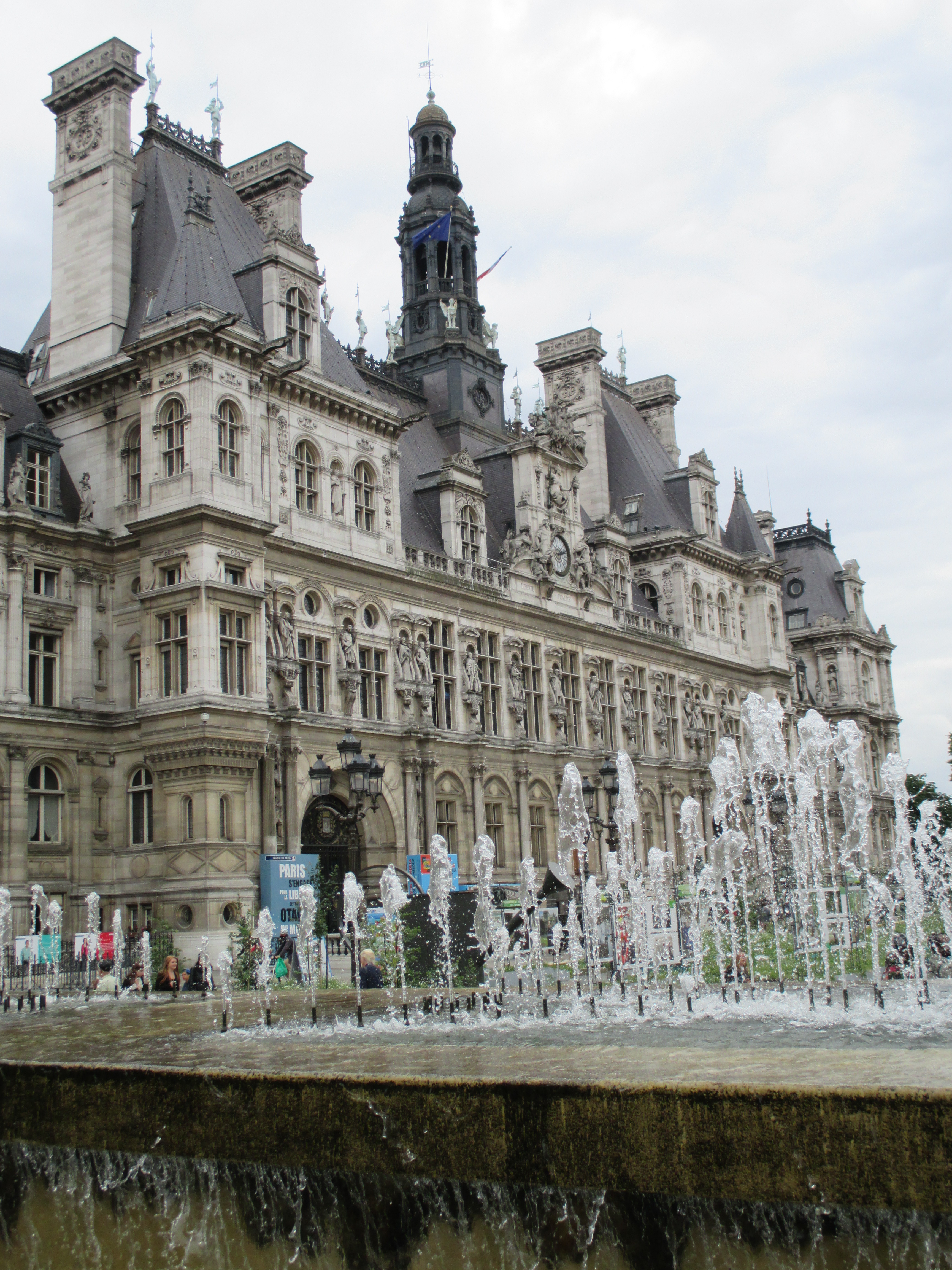
Paris Photos by Lori Pohlman

6 Comments

Filed under Books, Commentary, HIstorical Fiction, World War II

The Library

The Library by Jacob Lawrence, 1960

     It is a small library in a small town. It sits on Main Street in a 150-year-old building that also houses a pub. Both the library and the pub are in the process of renewal, endeavoring to revive their historical importance, their usefulness and vibrancy, their centrality to our community. I began working there last week, and immediately felt a satisfying appreciation at the completion of a circle, which joins both my journey and destination…of coming home, of continuing to matter, and also, of an immediate and curious closeness to my deceased father, who I recalled had loved it when I worked in libraries before, and to his mother, my children’s librarian grandmother, Lorene.

     Nonny Lorene died when I was an infant, but I was given her name, a small collection of children’s books, and a legacy of library lore which included the often-told story of how she, a widow, supported her two sons, her spinster sister, and various other relatives throughout the Great Depression, the only one left with a steady income during those hard years. Her library job saved the family, I was told. There could be no better job. For that reason, and many others, I believe that, and so even though Dad and Nonny have been gone from this earth for many, many years, I feel their presence in my little library, and know that they are pleased.

     It feels right. I love every minute I spend there—reading the shelves, looking up classification numbers, typing up spine labels, adding genre stickers, covering books—touching them, reading them, smelling them, discovering new titles and authors, revisiting the old. Planning a new computer corner, training soon on our newly purchased county-wide circulation system, looking forward to story times and book signings, all that and so much more. There is nothing like a library.

      I’ll end with the wisdom of Carl Sagan:

     “Books permit us to voyage through time, to tap the wisdom of our ancestors. The library connects us with the insight and knowledge, painfully extracted from Nature, of the greatest minds that ever were, with the best teachers, drawn from the entire planet and from all our history, to instruct us without tiring, and to inspire us to make our own contribution to the collective knowledge of the human species. I think the health of our civilization, the depth of our awareness about the underpinnings of our culture and our concern for the future can all be tested by how well we support our libraries.”   ― Cosmos

      And E. B. White:

      “A library is a good place to go when you feel unhappy, for there, in a book, you may find encouragement and comfort. A library is a good place to go when you feel bewildered or undecided, for there, in a book, you may have your question answered. Books are good company, in sad times and happy times, for books are people – people who have managed to stay alive by hiding between the covers of a book.”

Quotes from Hooked to Books, hookedtobooks.com. “50 Inspiring Quotes About Libraries and Librarians”

by Grace Plant, accessed 5/12/2023.

5 Comments

Filed under Books, Reading

Literature Alive

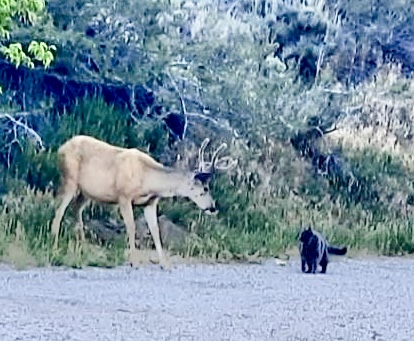
July 2022 at our home in Nevada
     Jack and London, our pampered house cats, couldn't ignore The Call of the Wild any longer, and broke loose this summer. This is London meeting one of our regular visitors, a young buck that we call, you guessed it, Buck. You can take the teacher out of the classroom, but you can't take 17 years of sharing the work of Jack London out of the teacher! 

2 Comments

Filed under Books, Nature

Looking for Comps

Photo by Suzy Hazelwood on Pexels.com

     Hello, Readers! I’m putting together my summer reading list, and getting my historical fiction manuscript ready for submission. One part of this process is to read recent books (published within the last few years) that are in some way comparable to mine, so that I can better describe my own manuscript to potential agents, publishers, and booksellers.

     Have you read any recently published fiction set during the 1930s or 1940s? Have you read a novel about a war widow, or a strong woman struggling and coming to grips with some other loss? If so, I’d love to hear about it. My manuscript is set in Lake Arrowhead, California, and the place is integral to the plot, so I’m also interested in any fiction that transports the reader to a specific city, town, or region.

     If any titles come to mind, I’d greatly appreciate your sharing them here. I welcome any and all suggestions. Many thanks!

1 Comment

Filed under Advice, Books, HIstorical Fiction, Lake Arrowhead, Literary Fiction, Publishing, Women's Fiction, World War II, Writing, Writing Advice

“Reading with Ghosts” Some thoughts on a post by Jenny Lawson, The Bloggess: “Sometimes tattered and worn = loved” August 9, 2016

FallWinter2015Mostly 200

Like Jenny, I love used books, books that have a history of relationship with other readers that I can see and hold in my hands. The cover doesn’t need to be in great shape. There should be a name written in long hand somewhere within the first pages. Notes written in the margins. Words, phrases, paragraphs underlined. Exclamation marks, hearts, question marks in the margins. Old shopping lists stuck between the pages. Dedications to lovers, children, grandchildren, friends on the title page. This book reminds me of how very much I love being your mom.

Despite my librarian grandmother, my own library training and teacher training, and my years working in libraries and public schools, I’ve always been much more of a book sharer than a book protector. This doesn’t mean I condone random doodling, especially not of the tasteless variety, or nasty vulgarisms of any sort in any book (and I’ve seen plenty of those, believe me). And I am not advocating writing in any book that you do not own—please, respect all library books, and school texts! But I do appreciate a pithy comment that pertains to the content. I love knowing that I am sharing the experience of reading a particular piece with someone who found something striking enough to comment on right then and there, in the moment.Paris, 2013 154

Jenny Lawson says, “…reading those found books is like reading with ghosts, ones who eagerly point out their favorite passages or share their thoughts or questions in the margins.”

Books that I can remember writing in that are sitting around my house right now include:

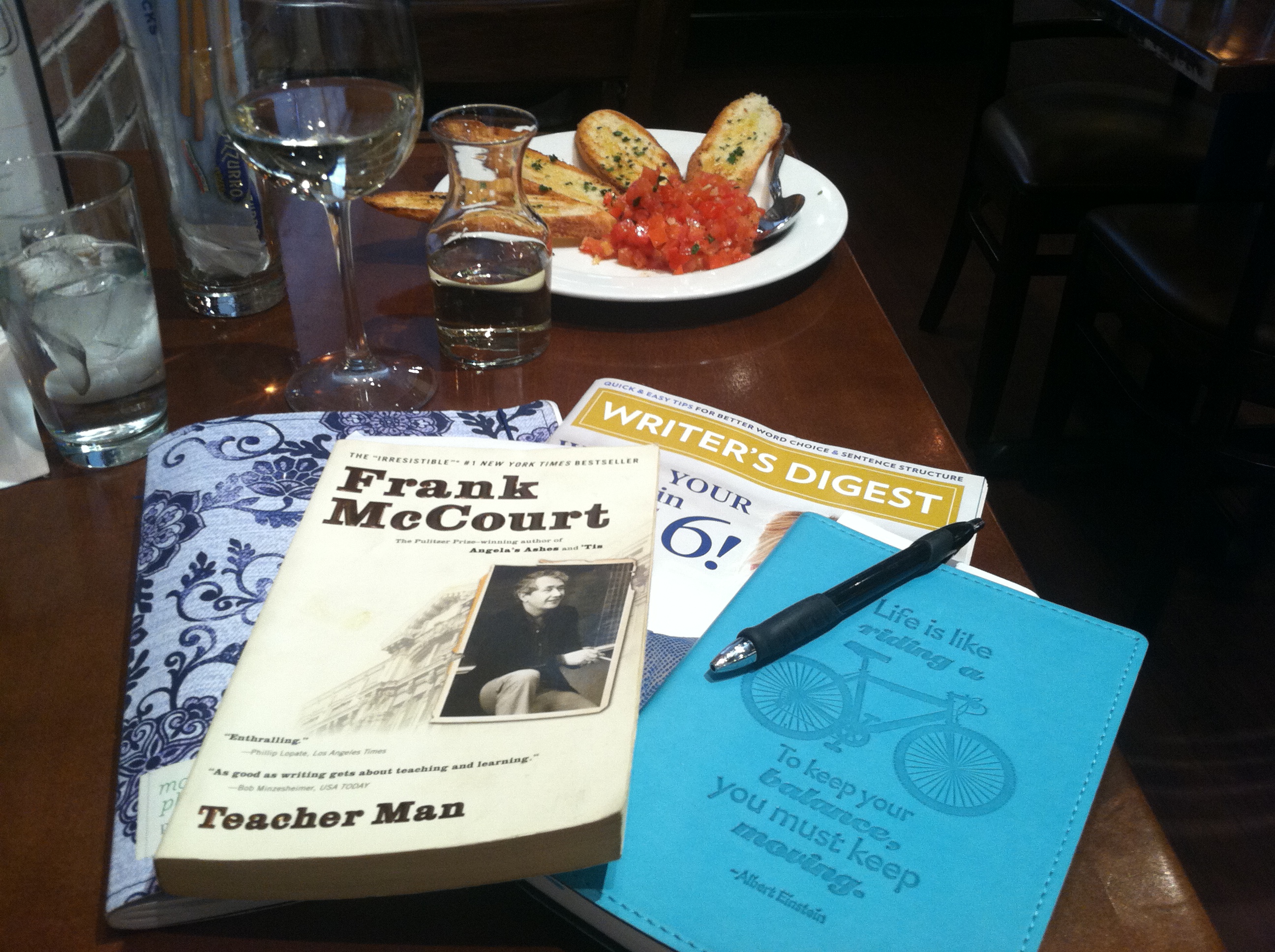
Jane Eyre, A Prayer for Owen Meany, The Catcher in the Rye (probably my first!), The Diary of Anne Frank, Man’s Search for Meaning, Teacher Man, Rebecca, Atonement, Prodigal Summer, The Glass Castle, Learning to Walk in the Dark, and lots of poems—“The Raven” comes to mind along with some of Shakespeare’s sonnets. And memorably, the teacher edition of a literature anthology I used in my classroom for many years (not sure if this qualifies as defacing a public school text, but it did raise a few eyebrows during department meetings).

Funny story there. I was told, “That’s not your book! You can’t write in that!” back in 1998 by a wonderful teacher I respected and admired. Even so, I continued to write in the book. I planned on outlasting the book adoption cycle, and I wanted to remember what worked, what went flat, what insights, funny or touching, or what “light bulb” moments were expressed by my kids. When I retired in 2014 a young English teacher retrieved the same teacher anthology from the school library that I had written notes in for years. There hadn’t been a new book adoption in all of those years because the budget was just too tight for the district to purchase a new anthology. This new teacher wrote me a letter. “What a treasure!” she said. “Thank you for writing all of that down.”

A reader after my own heart. A teacher after my own heart. I hope she never forgets to write in the margins.Paris, 2013 108

Leave a comment

Filed under Books, Commentary, HIstorical Fiction, Humor, Jenny Lawson's Blog, Literary Fiction, Teacher, Used Books, Writing, Writing Advice