How I missed out on reading Lessons in Chemistryby Bonnie Garmus in the several years since its publication is a classic lesson in the old adage, Don’t judge a book by its cover, and also, a lesson in personal flexibility—that being that there are no doubt a plethora of other excellent books out there that I would love if I had bothered to read them, and sometimes that deprives me of valuable experiences. I heard Lessons in Chemistry was very good, but, eh . . . I thought. Not for me. I’m not into chemistry. The 1950s and early 60s don’t interest me as much as earlier times. It looks somehow . . . I don’t know . . . frivolous?
HardcoverEdition
I’m happy to report that I was wrong on all counts. Well, maybe not the I’m not into chemistry part, but as it turns out, that doesn’t matter. I didn’t need to be into chemistry to appreciate chemist Elizabeth Zott’s deep love of it. I just needed to appreciate Elizabeth Zott, the wonderful protagonist of this deeply funny, tragic, and ultimately affirming story. And that was easy. As for my not being interested in the 1950s-60s, I think I took that period for granted because I am a product of it. I have few memories of my earliest childhood, and of those, most are sad. Those years have not been a time I willingly wish to revisit. It appears I prefer visiting earlier and more dramatic times—times that occurred before I was able to suffer through them in person.
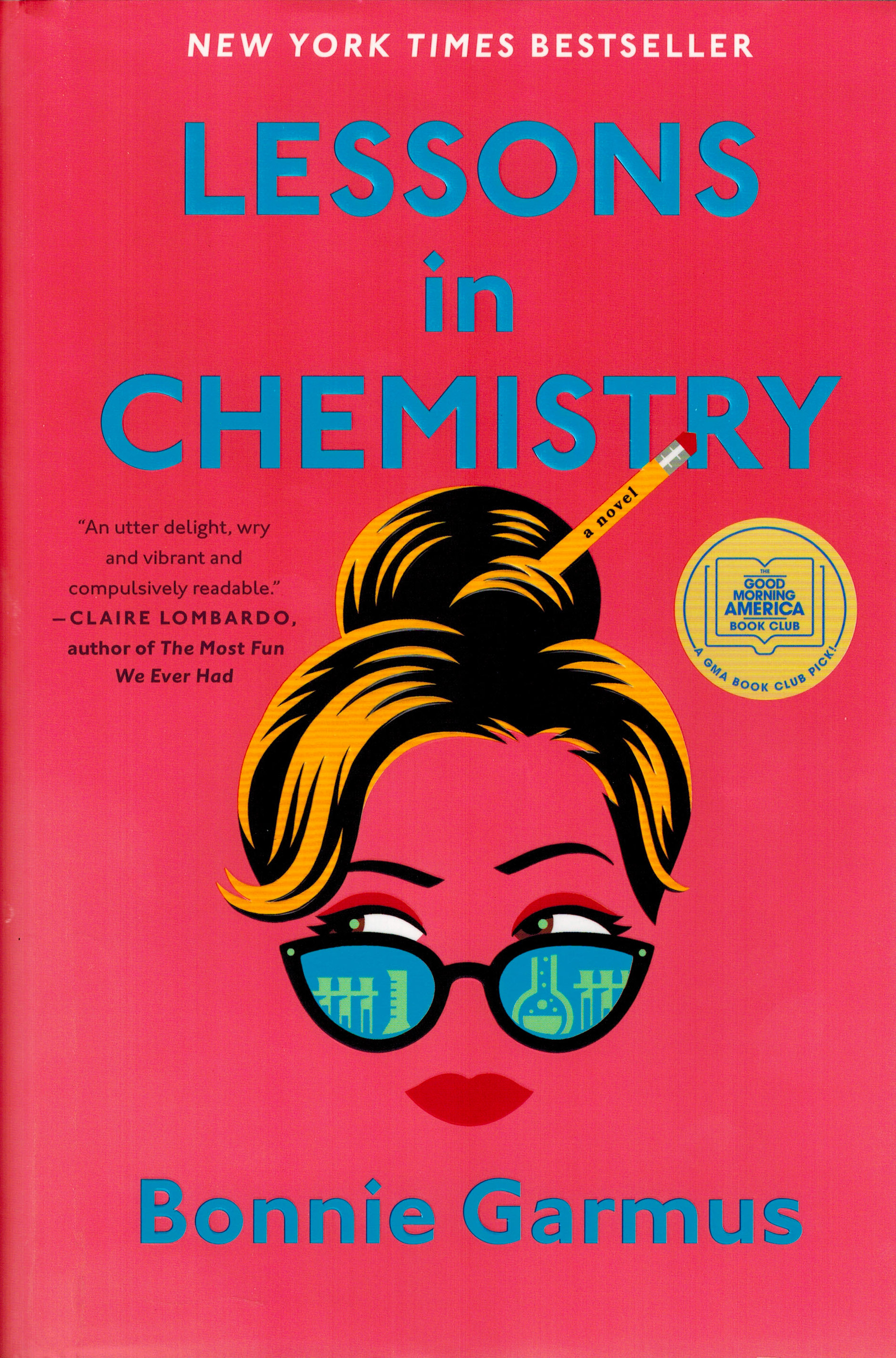
As for the idea that the book was probably frivolous, I definitely derived that from the cover. And I wasn’t the only one. Three years ago, a reader named Lisa Wright posted a question on Goodreads, “Am I the only one who was furious about the pink chick-lit, rom-com cover on this book? It belittles the book in exactly the same way Elizabeth Zott is belittled!”
Bonnie Garmus, the author, answered: “I have to agree–and I’m the author! All I can say is, the publisher did let me have input and I told them I thought it looked like chick-lit (nothing against chick-lit but this book isn’t that). Still, publishers have a lot of experience knowing what an audience will respond to and they thought this was the best way. They’ve been great to work with; we just didn’t see eye-to-eye on this. You can google other covers from the other nations and see you if you think anyone else got a little closer–I think Germany and the UK both did a nice job. I have hopes that this cover will change for the paperback.”
Paperback Cover
The way I fell into reading this book
I went on a trip and forgot to bring my library book. The airport gift shop’s book selection was pretty slim. I didn’t see anything from my TBR list. The cover on the paperback version was slightly less frivolous in my very unscientific opinion than the hardcover I had entered in our public library collection. At least it featured something that looked like the periodic table in the background. I picked it up, sighed, and purchased it.
The book delighted me from the first page. When I read these lines: “Fuel for learning, Elizabeth Zott wrote on a small slip of paper before tucking it into her daughter’s lunch box. Then she paused, her pencil in midair, as if reconsidering. Play sports at recess but donot automatically let the boys win, she wrote on another slip. Then she paused again, tapping her pencil against the table. It is not your imagination, she wrote on a third. Most people are awful. She placed the last two on top.”
Bonnie Garmus had my attention on page one, and she had me laughing and crying and feeling every range of emotion throughout the delicious ride through the air from Reno, Nevada to Minneapolis, Minnesota and back again. I loved this book! Highly recommended.
Have you had this experience? Purposely avoiding something, whether a book or a movie or a sport or an activity, that you later found to be good or valuable? I’m sure I’ve done it a lot!
Luckily for me, this time I was given the gift of proving myself wrong.
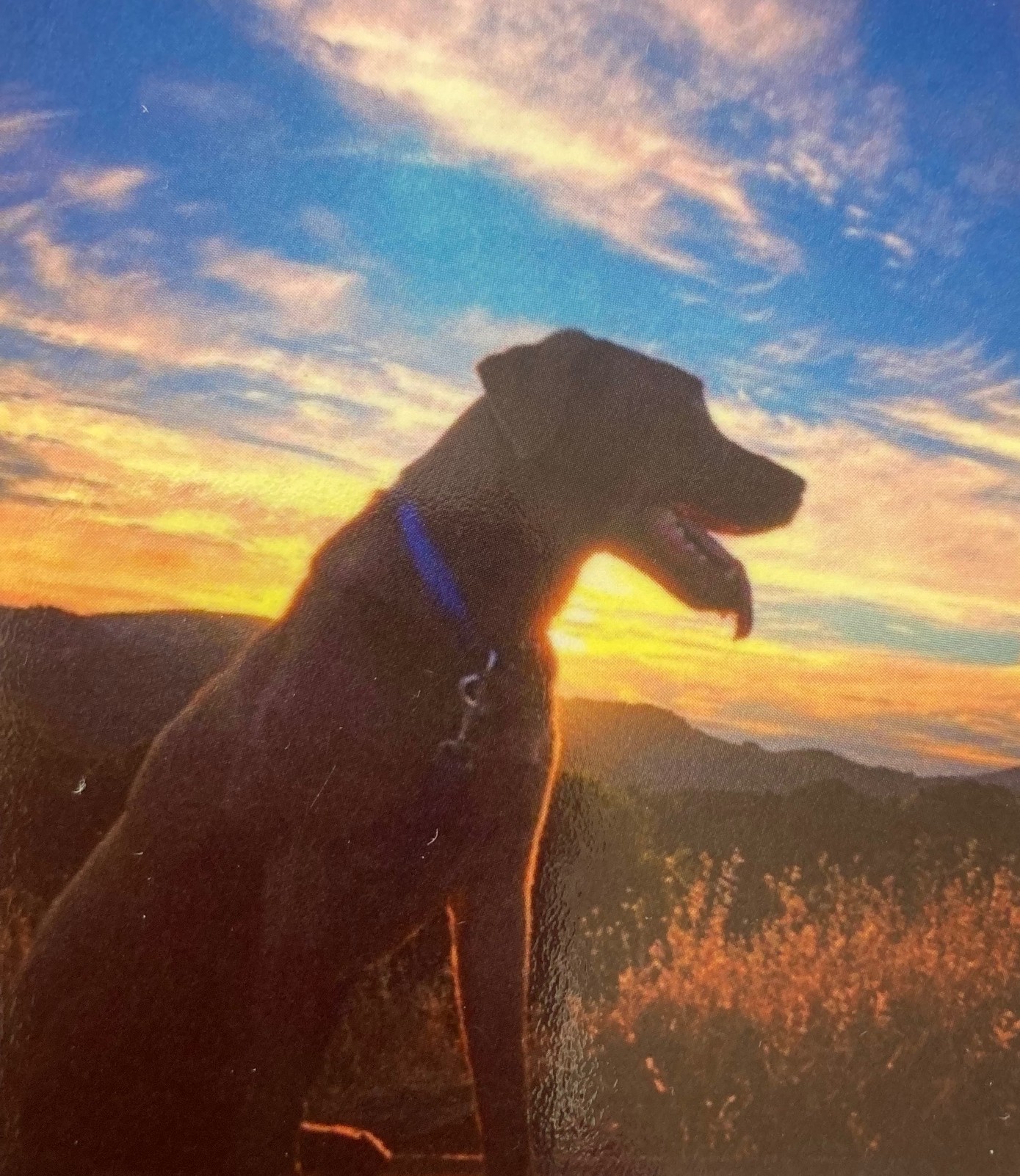
Lauren Scott, King Copper: Our Dog’s Life in Poetry
Lauren Scott’s love of her family’s beautiful chocolate lab, Copper, shines in this sweet little volume of photographs and poems that follow their lives together from adoption day on. In her words, King Copper is “a poetic account of the joy that arises when a lovable chocolate lab walks into your life and changes it forever. And the eventual heartache you feel when he crosses over the rainbow bridge thirteen years later and still too soon.”
What a touching account, and what a testament to the glorious impact our beloved pets have on our lives. If only all dogs—all pets—were as well loved and appreciated as the delightful lab Lauren writes so poetically about, the world would truly be a better place. Brava to Lauren for giving her beloved Copper a tribute worthy of his beauty and goodness! Did it make me cry a bit? Absolutely. But tears shed over the loss of a dear dog are never wrong. There is nothing purer than a dog’s affection and devotion. Copper wasn’t my dog, but I, too, have loved wonderful dogs. Like Lauren and her family, I know our animal companions deserve our deepest affection in return for the many gifts they give us. Part of the price for that gift is the same as it is for anything we open up our hearts to fully—the possibility, even the probability that one day there will be pain and loss.
But as Lauren so aptly says, “We celebrate his life- those soul-searching eyes that connected to us- we were links in a golden chain and now one link is missing, our golden boy- each day tears follow like a shadow- the shadow he was, but smiles gently find their place because he is in our hearts, because joy needs room to simmer.”
You can visit Lauren’s blog at baydreamerwrites.com.
A few days in Paris, Writing . . . Years agoNever forgotten
Instructions for living a life. Pay attention. Be astonished. Tell about it.” ―Mary Oliver
Moving a life forward is an investment in dreams, time, learning, relationship building, and so much more. Moving a writinglife forward is all of that, and I would add it is also, at its best, a life transformed. As Anne Frank so eloquently put it: “I can shake off everything as I write; my sorrows disappear, my courage is reborn.” Writing did not save Anne Frank’s life, but I believe her writing has saved the lives of countless others.
Writers may feel called to the creative life, but that one precious life often must take a back seat to another, more practical life, one that includes a sensible career (aka something with a steady paycheck), perhaps with snatches of scribbling in between the job, chores, and attending to family or societal needs and expectations. The writing life can be a kind of shadow life. It has been for me. Some writers seldom or never mention their craft while engaged in their more acceptable “real” life.
“I love writing. I love the swirl and swing of words as they tangle with human emotions.” —James Michener
It’s hard to explain to nonwriters why a few hours or a whole day spent attending a sporting event or a picnic can create in the writer a kind of panic—a feeling that the time needed to be alone, to read and to write, will never be enough, that time is seeping away, draining their spirit. Spending “free time” in non-creative areas can feel terribly wasted to the writer, while to others, the writer’s avoidance of joining in reeks of selfishness, or delusion. Or perhaps it’s just incomprehensible. Why, people wonder, is writing so important to you? There’s no money in it. And if there is, it’s only available to a few spectacularly talented gifted authors. If you had that gift, surely you’d have been published by now.
The writing life can be an ill-defined series of swells of poetic energy or flow, which is heady and soul lifting. There is nothing quite like those times. Catherine Drinker Bowen says, “For your born writer, nothing is so healing as the realization that he has come upon the right word.” And I have felt that many times. Writing has healed me.
But those transcendent hours or days are for writers seeking an agent or publisher likely to alternate with rejection after rejection after rejection. Writers do much of their writing alone, but if they seek representation and traditional publishing, they must eventually learn the oft times punishing lessons of business.
Soon I’ll be working with a developmental content editor on my completed World War II historical fiction manuscript. I’m excited to be taking this major step forward. It’s been a long journey, and honestly, I’ve loved the myriad lessons and experiences along the way, even the hard ones.
“If a story is in you, it has to come out.” —William Faulkner
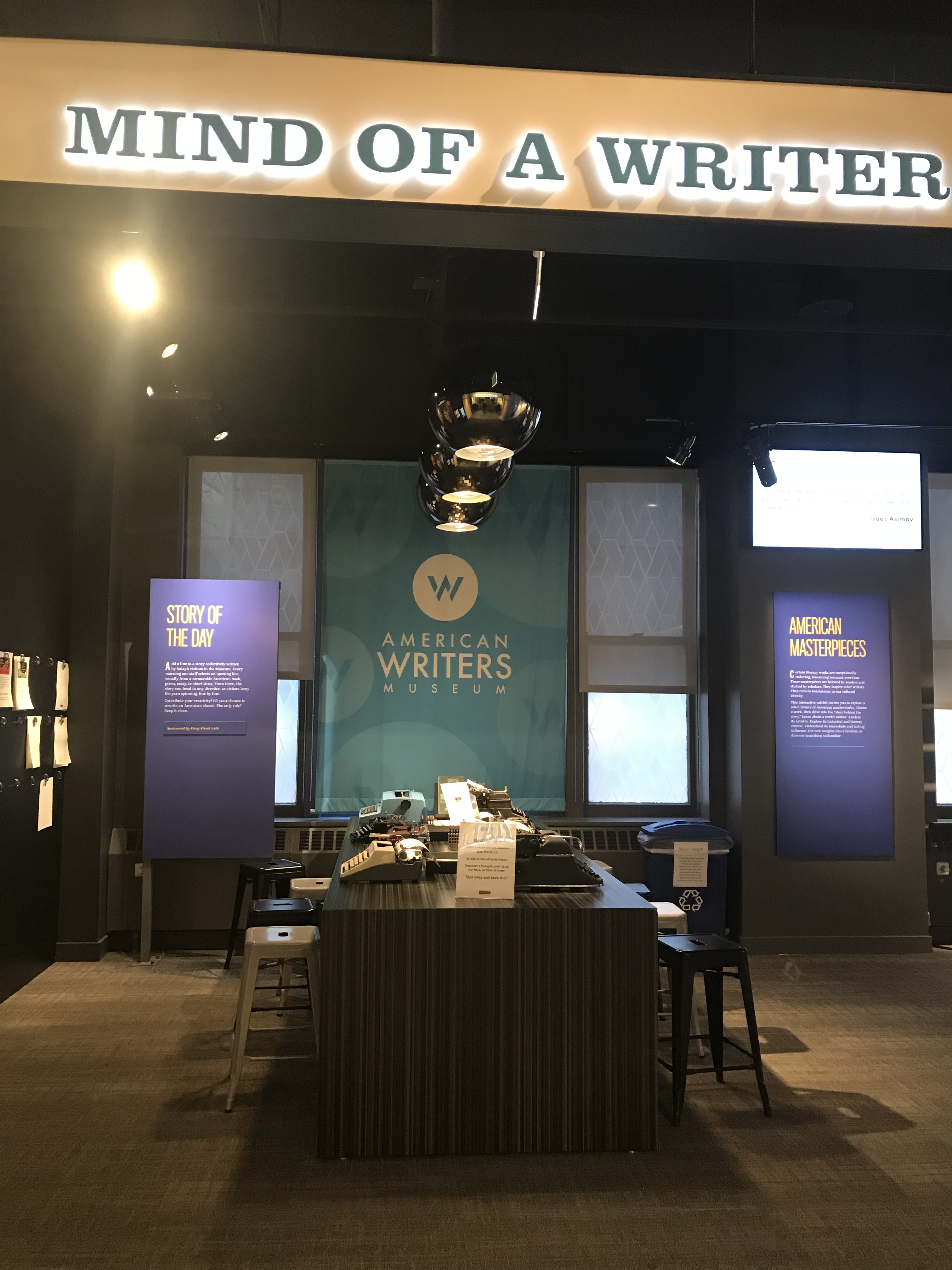
American Writers Museum, Chicago, Illinois
Thank you for visiting! Wishing you a wonderful day, doing exactly what you need and want to do.
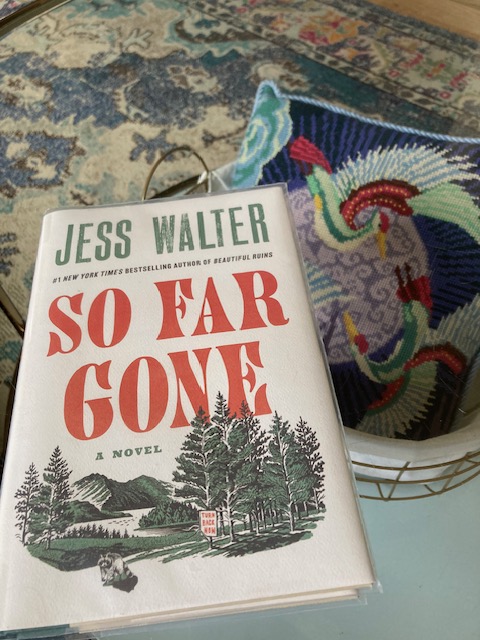
Jess Walter’s latest novel tells the story of Rhys Kinnick, a sad-hearted journalist who punches his son-in-law in the face at Thanksgiving, throws his cell phone out his car window, drops out of society, and goes off to live in the forest. The experience of reading So Far Gone reminded me of the not dissimilar experience of watching a Coen brothers movie such as The Big Lebowski or Fargo—odd ball characters, extreme situations, violence, and humor—often jumbled up together in the same scenes—in an overall story that somehow also manages to convey intelligence and love.
Walters is a master at building complicated characters in vivid, precise strokes. The characters in So Far Gone range from the struggling grandfather protagonist, to his charming grandchildren, his confused daughter, a group of religious zealot gun-toting conspiracy theorists, a bipolar retired cop, an old girlfriend with major attitude, his loyal friends Joanie and Brian, and other colorful characters Rhys meets along the way.
It’s a story about a crumbling America, about people lost and found, a world under siege, and ultimately about small miracles of healing magic fashioned by family and friendship. I found it refreshing, and touching, funny, sometimes outrageous, disturbing . . . and also an interesting look at the way some of us old dreamers and staunch believers in the ideals of fairness, justice, and a better future for all are feeling about and reacting to the twisted reality we now see laid out before us. So Far Gone is the perfect title for a book that describes us, now, today.
Friends! I have been remiss! I apologize for getting so far behind in reading and responding to your posts. I hope you are all well and I’m looking forward to catching up!
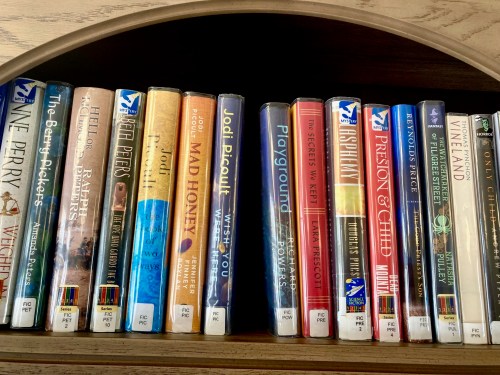
Austin Library, Lander County, Nevada
I’ve been busy of late with revising my historical fiction manuscript after receiving feedback from an agent and a publisher. It’s been fun, in that odd way that perhaps only other writers can understand—a challenge, a wrestling with words, a content shift—all of it within a world that was once mine alone and that now I must share if it is ever to come to fruition as a novel that lives in the world.
Field Trip! I can’t remember where I saw this exercise in visualization. It was likely from one of you, so please accept my apologies for not remembering the source, and let me know if it was you. I love the idea: Go to a book store or a library and find the spot on the shelf where your book would be shelved if it were published. Make a space for your beautiful creation and take a picture. What books will be nestled up to yours?
In the Austin, Nevada library, my book would be shelved right next to Jodi Picoult’s if it were published today!
Your Turn! I’d love to see your spaces! And if you already have a book or books out there, it would be wonderful to see where they sit on the shelf. Please share!
Being vegetarian and eating greens and salads out is always a risk, it s hard to be 100% sure all you eat is absolutely safe, so take it twice a year to guarantee your body is free from unwanted organism
The goal of this blog is to create a long list of facts that are important, not trivia, and that are known to be true yet are either disputed by large segments of the public or highly surprising or misunderstood by many.
This blog feature amusing and heartwarming stories about our late Leonberger dog Bronco, as well as other Leonbergers. It also has a lot of information about the Leonberger breed, the history, care, training, Leonberger organizations, etc. I also wrote a Leonberger book, which I am featuring in the sidebar.
Lessons in Chemistry / Lessons in Flexibility
How I missed out on reading Lessons in Chemistry by Bonnie Garmus in the several years since its publication is a classic lesson in the old adage, Don’t judge a book by its cover, and also, a lesson in personal flexibility—that being that there are no doubt a plethora of other excellent books out there that I would love if I had bothered to read them, and sometimes that deprives me of valuable experiences. I heard Lessons in Chemistry was very good, but, eh . . . I thought. Not for me. I’m not into chemistry. The 1950s and early 60s don’t interest me as much as earlier times. It looks somehow . . . I don’t know . . . frivolous?
I’m happy to report that I was wrong on all counts. Well, maybe not the I’m not into chemistry part, but as it turns out, that doesn’t matter. I didn’t need to be into chemistry to appreciate chemist Elizabeth Zott’s deep love of it. I just needed to appreciate Elizabeth Zott, the wonderful protagonist of this deeply funny, tragic, and ultimately affirming story. And that was easy. As for my not being interested in the 1950s-60s, I think I took that period for granted because I am a product of it. I have few memories of my earliest childhood, and of those, most are sad. Those years have not been a time I willingly wish to revisit. It appears I prefer visiting earlier and more dramatic times—times that occurred before I was able to suffer through them in person.
As for the idea that the book was probably frivolous, I definitely derived that from the cover. And I wasn’t the only one. Three years ago, a reader named Lisa Wright posted a question on Goodreads, “Am I the only one who was furious about the pink chick-lit, rom-com cover on this book? It belittles the book in exactly the same way Elizabeth Zott is belittled!”
Bonnie Garmus, the author, answered: “I have to agree–and I’m the author! All I can say is, the publisher did let me have input and I told them I thought it looked like chick-lit (nothing against chick-lit but this book isn’t that). Still, publishers have a lot of experience knowing what an audience will respond to and they thought this was the best way. They’ve been great to work with; we just didn’t see eye-to-eye on this. You can google other covers from the other nations and see you if you think anyone else got a little closer–I think Germany and the UK both did a nice job. I have hopes that this cover will change for the paperback.”
The way I fell into reading this book
I went on a trip and forgot to bring my library book. The airport gift shop’s book selection was pretty slim. I didn’t see anything from my TBR list. The cover on the paperback version was slightly less frivolous in my very unscientific opinion than the hardcover I had entered in our public library collection. At least it featured something that looked like the periodic table in the background. I picked it up, sighed, and purchased it.
Bonnie Garmus had my attention on page one, and she had me laughing and crying and feeling every range of emotion throughout the delicious ride through the air from Reno, Nevada to Minneapolis, Minnesota and back again. I loved this book! Highly recommended.
Have you had this experience? Purposely avoiding something, whether a book or a movie or a sport or an activity, that you later found to be good or valuable? I’m sure I’ve done it a lot!
Luckily for me, this time I was given the gift of proving myself wrong.
Share this:
26 Comments
Filed under Authors, Books, Commentary, Uncategorized
Tagged as 1950s-1960s, Book Review, Feminism, Fiction, Reading Advice