
I Brake for Ghosts
I admit it. Moving to a ghost town during the height of the Covid pandemic may not have been the best choice. It certainly wasn’t the obvious choice. It was one of those decisions cooked up out of hope and desperation, a recipe for survival with a sprinkle of hope thrown in. A very small sprinkle.
Within the space of a few months, most of our income was gone, along with our health insurance. What wasn’t gone was the mortgage… If we didn’t do something quickly, we imagined complete disaster.
What to do. What to do.
How about sell our house and use the profit to move all of our belongings across the country to a tiny town with a lot of history and no place to spend the money we didn’t have?
Our grandchildren lived out West, and I’d been frantic to see them. If we lived closer, I could visit them a lot more (once the pandemic subsided). With this in mind, we started scouring the Internet for affordable homes. Affordable for us meant that we could come up with the down payment and the monthly mortgage would be low.
We couldn’t get as close to the family as we hoped; they lived in areas where real estate had exploded. I know you’re thinking that real estate exploded everywhere. You’re mostly right. But at the beginning of the pandemic there were still a few places within a day’s drive of the kids where the fuse may have been lit, but hadn’t quite caught. These were in small towns, and they were mostly in the desert. Often they were mobile homes or condominiums with HOA’s that would drive our monthly expenses up too high, so most of these were eliminated. There were a few houses. All of them were small and in need of repair, but we weren’t afraid of the work.
We decided to take the leap. We chose the most remote of the locations, mostly because we loved old homes, and this was an old brick home, and the altitude was high, so we would still have snow (yes, to us this was a good thing!). The house was originally built as a parsonage for the handsome Methodist church adjacent to it.
The town was very quiet. It would make an excellent place to write.
And here we are.
It’s been an adjustment. For the first year we probably only spoke to a total of five other people in town. When we had to drive the 112 miles to the nearest town where we could get supplies, it was quite overwhelming to encounter people on the streets, in the stores. In Austin, the only people you saw were in the post office. You might imagine that was because of pandemic precautions, but I don’t think that was it. This is not a town that follows protocol. It is a town, however, that leaves you alone.
A local woman told one of our movers that our house had a ghost. “But don’t tell them,” she said. “They’ll find out soon enough.” I don’t know if anyone else in town thinks we have a ghost. If so, I suppose that could explain the lack of neighborly visits with casseroles in the early days we were here. The ghost lady is known locally, I’ve since learned, for her flights of fancy, so I don’t really think our house has a ghostly reputation. If we do have a ghost, I haven’t met him/her yet. To us, the house has a very serene vibe. Perhaps our ghost is a parson, or one of the parson’s family members. Perhaps he or she is a writer.
No problem. We were busy using up the remainder of the profit from our old house (a 1950-something cottage that we had renovated after we had renovated a 1920-something cottage… there was a 1940-something house in between that only needed a few tweaks) renovating our 1866 parsonage. These things always cost more than expected, even when you are doing the work yourself.
There were unexpected plumbing issues, for example. Do you have any idea how expensive a snake is? Not the slithery kind, you know, the kind the plumber brings to clean out your sewer pipes? They cost a lot. Plus, there was no plumber, at least not within 100 miles.
Then there’s the digging up of old pipes and putting in new ones… There’s the stripping of the drywall, which isn’t really drywall. It’s layers of wood and wallpaper, and even newspaper, which has been covering the brick walls since the house was built. There’s the painting. There’s knocking down the wood structure that was added in front of the house at some point in the last century, presumably to house automobiles. The one that blocked every ray of sunlight from entering the house.
Anyway, lots to do.
And then, gradually, during our second year here, we started venturing out of the house. I joined the church across the road. The Methodist church next door to us is being used for a community center these days, but the Episcopal church has continuously held worship services since its opening in 1878. My husband and I volunteered to paint the doors red, something the priest had been longing to have done and that we were more than well equipped to do, what with all of our home improvement practice. The effect was stunning.
We increased our walking distance each day, seeing a neighbor here and there, experiencing beautiful wild views, wildlife sightings, even stumbling upon a pet cemetery high up in the forest above town. The streets are still quiet and there are only a couple of businesses open, but we appreciate what we have. We’ve found that we love our route to visit the kids, long as it is, because it takes us through parts of the Eastern Sierra. Hopefully, some day soon, we will take the turn that leads to Yosemite.
And every day, I write.
I Brake for Ghosts
Filed under Uncategorized, Writing
Change
“I have accepted fear as part of life—specifically the fear of change…I have gone ahead despite the pounding in the heart that says: turn back…” Erica Jong
Change. Many of us struggle against it, and, at the very least, devalue it, like the pennies and nickels and dimes that collect in the bottom of our purses, weighing us down. Change, whether gentle or harsh, is uncompromising in its persistence and its accumulation.
Loose change adds up. Minor changes, some of them which occur so gradually we can’t detect them in real time, are not going to remain small forever. The tiniest of cracks hidden behind a wall may grow undetected for months or years before we discover the mushrooms growing in the attic or we step off the last stair into an inch of water pooling on the basement floor.
And also, for women, there is menopause, which I remember my mother calling The Change. Relief or regret, it makes no difference. At the average age of 51, American women stop having menstrual periods and no longer produce eggs (www.mayoclinic.org). The change comes, though at different ages and with varied symptoms. For men, it seems there’s no age-related end to sperm production (though counts do tend to go down), but the prevalent use of Viagra speaks to a change in performance (erectile dysfunction).
My granddaughter’s skin is silky perfection, my daughter’s, still smooth at thirty something. Mine is a map of a lifetime of laughter, heartache, and a wretched lack of self-care. First, a tiny crease transformed into one small wrinkle between my eyes, an exclamation mark above the bridge of my nose. Surprise!
Over the years that small furrow deepened, and numerous others presented themselves, accompanied by an overall loss of tautness and clarity. When the face one sees in the mirror belongs to someone who appears to have lived through a millennium of sleep deprivation, dehydration, and exposure to harsh elements, it’s only natural to be alarmed or saddened. Many of us fear or loath this facet of aging so much that we slather on sun blocks and night creams, either before the lines make their appearance or as soon as we spot them, hoping it’s not too late. If we can afford it, we go to salons for facials, steam baths, Botox, surgery… Some of us ignore the changes in our skin, or better, take a certain pride in them; we’ve earned them! Regardless of what we do or do not do, the wrinkles come.
Children grow up. Careers change. Our bodies change. Our country changes. The world changes. This is all understandably unsettling.
As for me, I have always been the restless type, one of those odd sorts who has accepted and often sought change in my life, even while at the same time yearning for stability. This very probably has to do with the fact that I experienced a great deal of change as a child, living in different states in different circumstances.
Don’t get me wrong. I had parents who loved me. They just weren’t together and they weren’t all that traditional, and our family experienced multiple dead ends, detours, and reroutes. I loved Dorothy’s “No place like home,” but as an abstract idea only. Something from a pretty story. By the time I was eight years old, I didn’t know where home was.
Wisconsin, Nevada, Illinois, Minnesota, and back again. Thirty-seven years in California (a record!), and then another move. Always wondering where to land. And so, as Vonnegut would say, it goes. Wishing it had been different does no good. Wishing I had been different doesn’t either. And now time, the master architect of change, has brought me to my “golden years.” Not for wimps, my dad used to say. Truth there. And he wasn’t. Nor was my mother. And I won’t be either.
That said, there’s no getting out of this thing alive. All the more reason to wake up, spiritually, physically, academically, socially—in whatever way we are stuck downstream of where we want to be. That’s perhaps why I read so much, and travel. And pack up my belongings and move.
It’s not always effective. The change has often been for the worse, at least temporarily. Sometimes short-sighted. Maybe selfish, too. So, as I consider the changes I will willingly make over the next decade(s), and what painful changes may come that I will have to accept, I endeavor to do so consciously self-aware, and mindful of everything and everyone around me. These are to be among the last changes I will know in my lifetime.
Whatever changes come, I pray to accept them with grace and love, and in deep gratitude for the all the people I’ve known: my beautiful family, my dear friends, my students, colleagues, neighbors—the strangers who smile when we pass, or write a story that moves my soul, or who care for a child, an animal, or our natural world—the world entire.
But for now, it’s time to pack the car. I’m off on another road trip. Wishing you the ability to embrace the best of the changes you make or take, and the fortitude to deal with the worst of them. And may love be your unchangeable superpower.
Filed under Aging
My Teaching Voice
Since leaving Lake Arrowhead three years ago I’ve been having trouble hanging on to my voice. And not just my voice really, but also my words. Sentences and paragraphs and pages of text I should be writing but that I push aside for a good novel or a movie or a great new recipe involving bacon, sweet potatoes, rigatoni, mascarpone cheese and fresh sage (this, a recent distraction—the dishes are still soaking in the sink).
I’m sure it’s not only that I am in mourning.
Some of my writing inertia could be due to a mind busy with other things—new things, like teaching college speech and all that entails… learning innovative technologies, tackling a new curriculum, slugging through online faculty required “teaching”courses, trying to lacquer my wild mane into some semblance of what my imagination believes a professor’s hair should look like…oh so many time consuming diversions.
Still, I know I should also be writing creatively.
I’m sure it’s not only that I am in mourning.
When I left Lake Arrowhead, a pain planted itself firmly behind my breast plate and I can’t shake it. I can’t walk it off, though my dear husband and I take many beautiful nature walks every single week. I can’t read it off, though I take time to immerse myself in many an enjoyable book. I can’t yoga it off, or massage it off, or wine it off. It is sewn in, gorilla glued, bolted; it is chained to my heart.
But that cannot be the only reason I do not write.
I did, in fact, write quite a bit a year and more back. (The book is about Lake Arrowhead.)
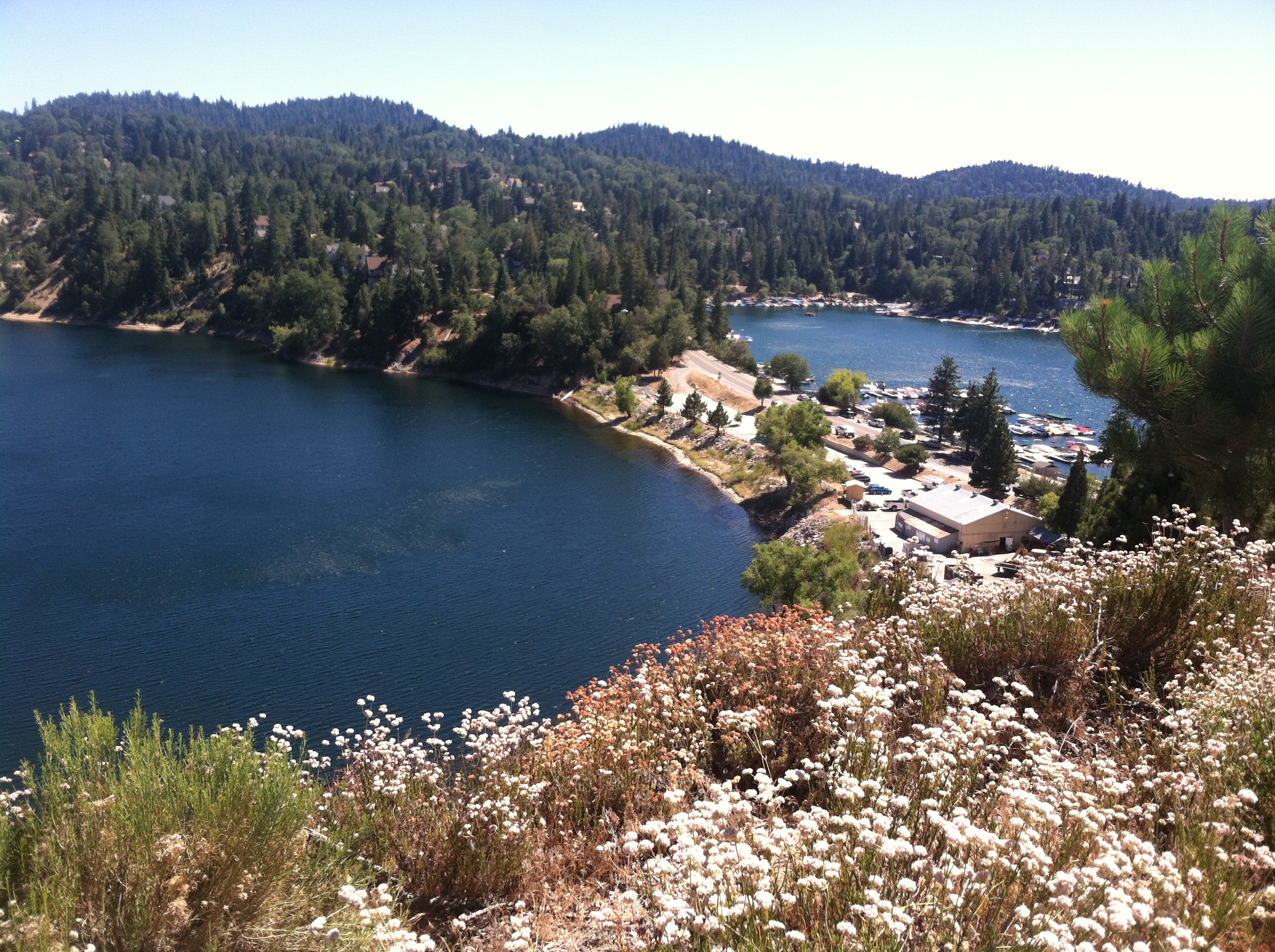
Lake Arrowhead, CA
But I’m sure it’s not only that I am mourning.
I adore Wisconsin, and the weather here suits us perfectly. The vast greenness of the place in summer, the orange-red-yellow-green autumns, the take your breath away white frozen winters. A lake so big it looks Pacific. Lake Arrowhead, amplified.
Mourning comes to some of us for a visit. For me, without my children and my grandchildren, it stays. It has moved in to the quaint little Cape Cop home on the tree-lined avenue where we now live. It’s here to stay.
There, I’ve said it.
Missing Lake Arrowhead means missing a million moments that can never be regained—with my kids, with my grandchildren, with my friends, with all the people I was so fortunate to know. And as much as I love the cardinals and Canadian geese (and I love them a lot!), there is something sad about knowing that I will never happen upon a bear or be awakened in the night by the ungodly howl of a pack of coyotes closing in on its prey.
So, my voice began to falter a while back and has gone somewhat quiet of late.
My husband began to worry, so I finally forced myself to sit and write tonight, but as little as this accomplishment is, and as much as I love him, I cannot give him much of the credit for bringing me to my chair, for opening the blank page, for placing my fingers on the keys and letting them speak for me, expose me, help me… nor can I take any of the credit myself.
It came not from knowing that I should do it, it came instead as a magical gift from a miraculous profession.
Teaching.
Thinking I needed more family photos on my office walls, I drove over to Walgreens this afternoon to pick up some photographs I had ordered. They are beautiful photos of our newest granddaughter, Adaline Lorene, and her big sister, Jasmine, who visited us here in Wisconsin this past June.


As you can see, they are worth the ache. My girls.
Anyway.
On my way back out to the car I stopped to ask a young man (who was coughing uncontrollably as if he might be choking) if I could help him. Just a simple, “Are you okay? Can I do anything?”
The young woman next to him, obviously his companion, said, “I recognize that voice! Do you remember me?”
The coughing continued, but she ignored it. She walked toward me. “I heard your voice and I said, ‘That’s my speech teacher!””
Of course, I remembered her, a lovely person and a good public speaker, animated and organized. We hugged. Her manfriend, ignored, coughed his way unaided to their car.
“Does he need help?” I asked. “Does he need the Heimlich? Because I’ll do it.”
“He’ll be fine,” she said. “It’s wonderful to see you.”
She recognized my voice. Here, in Kenosha, a town of roughly 100,000 people. She recognized my voice.
It seems silly, perhaps. To place so much value on recognition. But I do. I suddenly felt a little less alone. The sharing of a past. In Lake Arrowhead, a teacher never goes out without encountering a former or present student, which sometimes unnerved me. I never realized how important it was to my self-image, to my belief that I was connected to the community. I knew that I loved my students, but I didn’t perhaps understand how much I needed them.
Today I was given back a small piece of my voice, reflected through a young woman’s memory. I still feel the pain, I still crave the everyday closeness of my grandchildren, and I still miss the bears, but I can write, and that’s a soft and soothing salve for my soul. I’ll take it.

Filed under Depression, Gratitude, Lake Arrowhead, Nature, Reading, Teacher, Voice, Wisconsin, Writing, Writing Advice
A Christmas Card Kind of View
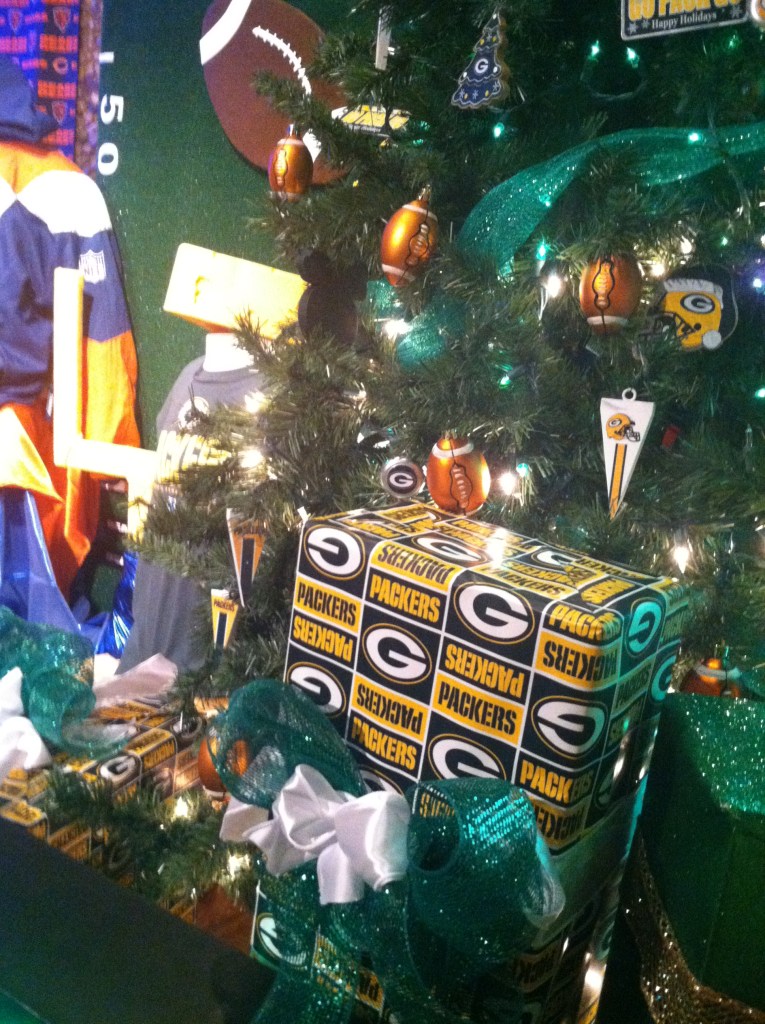
I owe it all to Rachel. I’ve written about this before, the way she made her kids believe in magic—the way that, for a time when we were very young, she glowed with humor and energy and wonder and beauty in everything she did, and the way that all came together at Christmas time. As I sit writing this, a few days before Christmas 2016, my 60th Christmas, it’s natural to look back upon other Christmases: childhood Christmases, falling-in-love Christmases, new-parent Christmases, teenage Christmases, grandparent Christmases, lonely Christmases…Christmases filled with family and friends—all of them precious in some way.
This year Mike and I will be in California and then Arizona visiting our kids and grandkids. We are so excited to be going together this Christmas, though our visits will be shorter than we’d like! (I have plans in the works for springtime…)
Every Christmas, since my first in 1956, when I was a six-month-old infant with a beautiful and entrancing mother—yes, Rachel, not to mention a kind and loving father, and a brother who loved me so much he called me “his present”—every December since, whether happy and relatively carefree, or saddened as I was while enduring hard times and loss, has left a lasting impact on my view of life. A Christmas card kind of view, Rachel Style.
The card is part Norman Rockwell, all homey and twinkly and smelling like home-baked Swedish spritz and candied oranges, but there’s a liberal dose of boozy smoke haze wafting over the rooftops and a neon tavern light or two blinking on and off in the distance just like Rudolf’s shiny nose. 
The house on Sheridan Road had a fireplace the length of the entire living room. One memorable Christmas Eve, Billy and I were sitting on the rug in front of the fire, drinking cocoa and talking excitedly about Santa already being on his way to Wisconsin from the North Pole.
“That sucker is going get a big surprise when he drops down the chimney into that fire,” Mom said, taking a long sip of egg nog.
“Don’t scare the kids, Rachel.” Dad’s voice was always mild, and he assured us that the fire, which was blazing in a newly menacing way, would be out long before Santa and the reindeer arrived. Dad was an excellent camper and he knew how to put a fire out.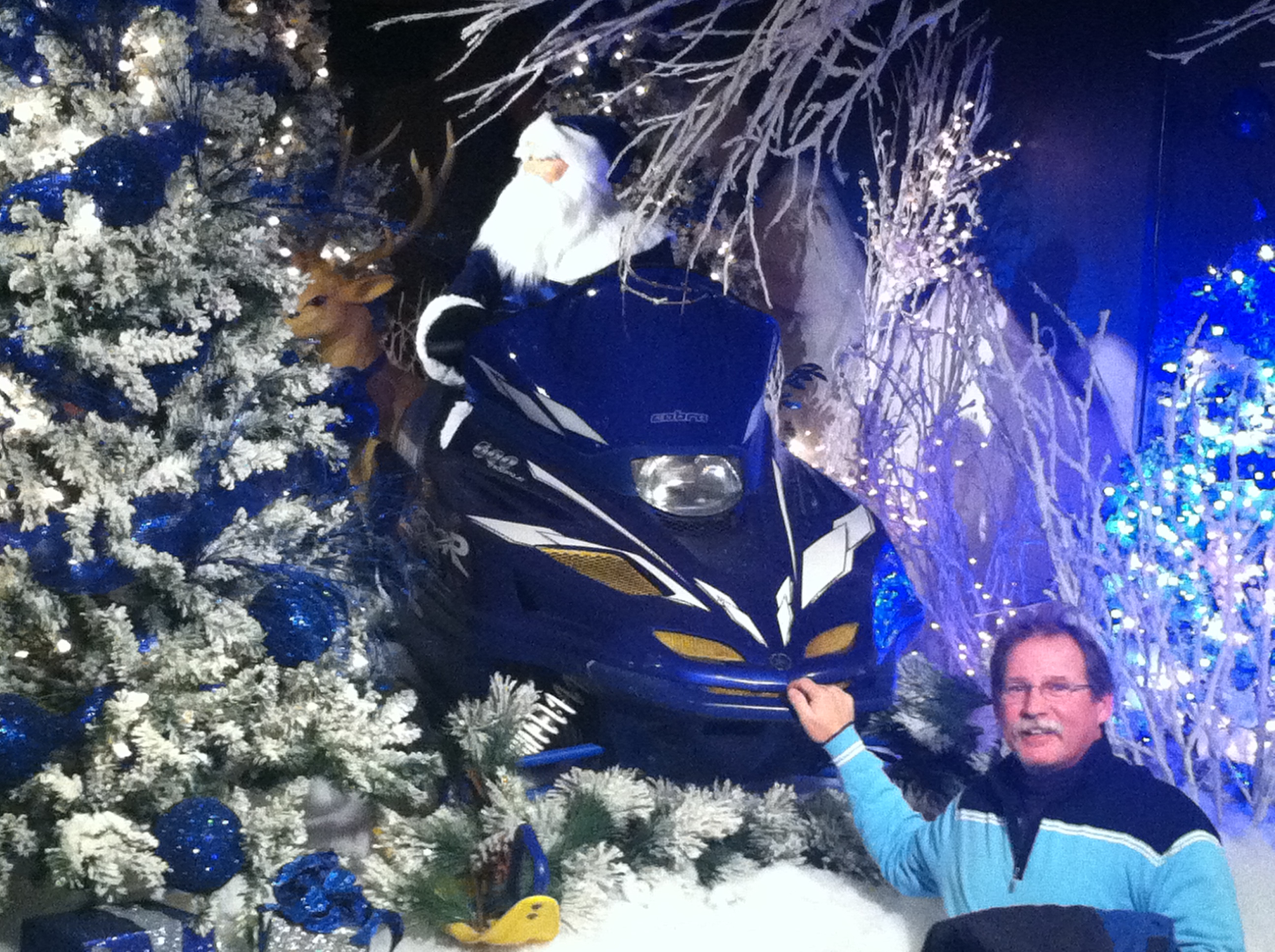
We knew Mom was just making “a funny” about Santa. Mom loved Santa. We knew that. After all, she’d taken us to Dickleman’s Toy Store to meet him, spent hours helping us prepare his favorite cookies, and, other than this one slip, she spoke of him in glowing terms, as if he were probably almost as magic as she was.
“He knows everything, and he loves you both more than anything in the world,” Mom had said, which pretty much made Santa her chubby, white-bearded twin or something, because that description fit her like my Barbie’s velvet gloves fit her tiny stiff hands, easy to put on, easy to take off. Magic.
Of course, Billy explained, Mom didn’t really want Santa to burn up in our fireplace. Still, it was unsettling. Later, she tucked us both in bed, nuzzled us, told us stories about Santa’s big night, and about the times she’d glimpsed him in the past. She’d once caught him bringing Rudolf right in on her clean carpet, she said, and another time Santa was rolling around on the floor playing with our dog, Duchess.
“Duchess loves Santa.” She patted Duchess, who was on the bed with us. “Don’t you, girl?”
Duchess wagged her tail and stretched. Billy and I drifted off to sleep. In the morning, there were presents under the tree and Santa’s cookies were gone.
Mom and Dad looked happy.
Magic.
Billy caught the magic too, and no one else I’ve ever known has come so close to capturing Rachel’s spirit, style, grace, or humor.
“He’s a lot like me,” Mom often said, and she was absolutely right.
Billy didn’t just love people, he became their most loving and loyal supporter—celebrating with them and letting them take what they would, whether his love, money, home, possessions, or heart. For many years, on the day he cut down his Christmas tree, Billy jumped (I’m quite sure, naked), into a freezing stream in the High Sierras of Northern California. That night, wearing warm jammies and cozy socks, with the tree lit and decorated, and the fireplace burning, he would pile up loads of pillows and sleep underneath his tree. It was part of his magic, I guess.
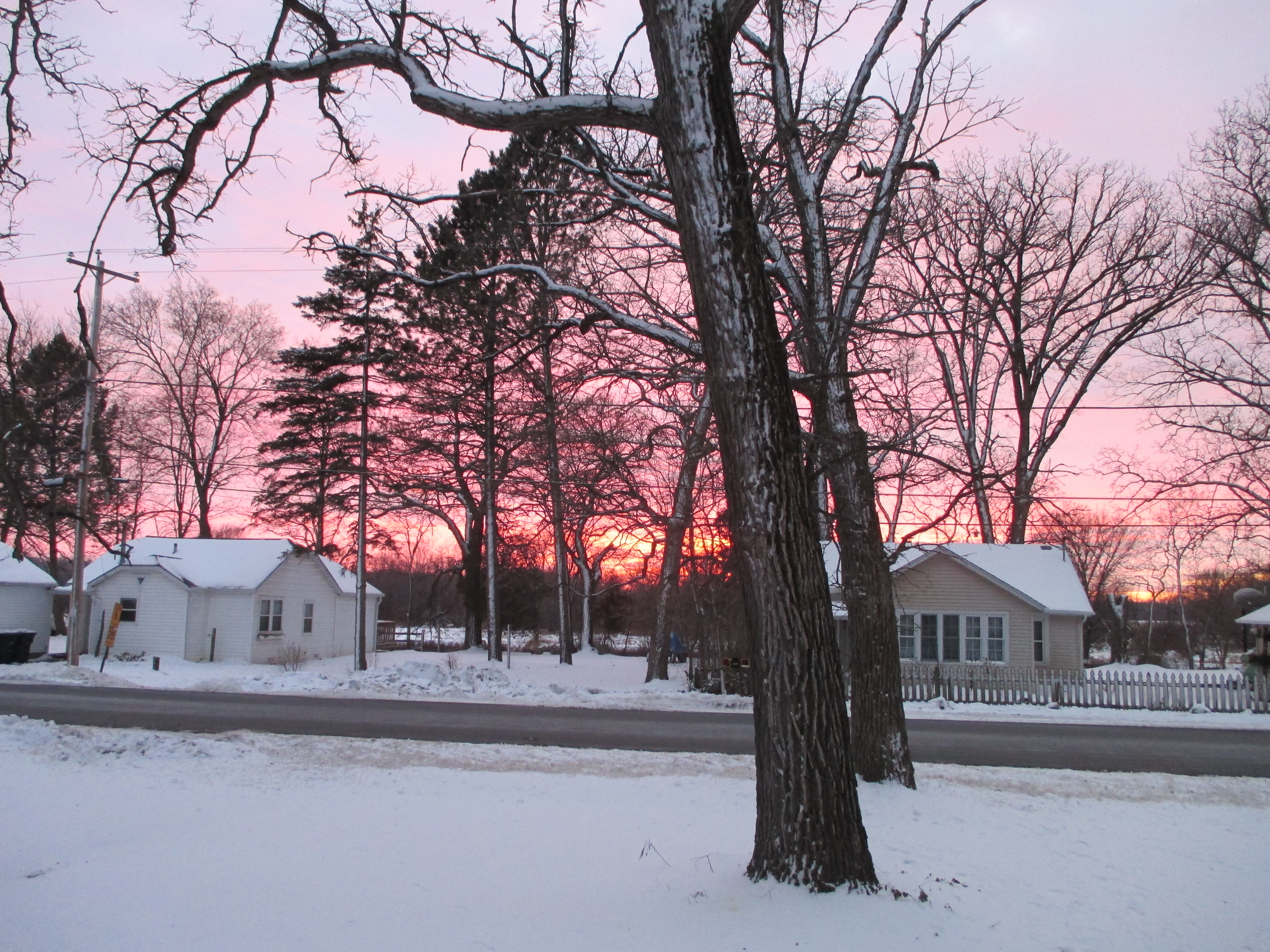
So many memories. There are a lot more, but it’s getting late. Anyway, I know you have your own Christmas memories, your own pictures of the people who shaped your view of this truly magical time of year.
May you be at peace, in your heart and in your life. May you recognize the true gifts and hold them dear. And may you be blessed with abundant and unconditional love.

Merry Christmas, Happy Hanukkah, and Happy New Year to All!
Sometimes tattered and worn = loved
Filed under Uncategorized
But Night Crawler is so much more Evocative
Our yard in May contains the world. Wisconsin teems with life. For many of us living in climates where the temperatures are at or below freezing for so many months of the year, this is a heady experience. One day you’re wearing your jacket and mittens and looking at everything brown and gray, and almost like Dorothy’s arrival in Munchkinland, the next moment goes blindingly Technicolor.

A Few Minutes Ago…
It is grass that melting snow washes to emerald green. Tiny lime-colored leaves on black branches. Tulips, orange, and pink, and red. Daffodils, deep yellow and apricot. Lilacs, deep purple, lavender, and white.

Munchkinland
Robin’s breast russet, and then those impossibly lovely blue shells their babies shed in unexpected places. I find one on the metal chair on the front deck. Cardinals, still here, looking tropical now, the crimson against the green. Red-winged black birds. White herons. Orioles, as orange as the fruit we feed them.
The sky at day, a brilliant blue, at night diamonds and velvet.
My husband calls me out to the yard.
“You have to see this.”
It’s dark and slightly cool. Wet.
“Look.”
He shines a flashlight across the lawn, catching the quiet, clandestine movements of thousands of earthworms.
They are everywhere. The lawn is undulating like the surface of a lake. I’m afraid I’ll hurt them.
He bids me come. “Step slowly. Lightly.”
I’m sure I shouldn’t be out like this, could never tread lightly enough. I say a quick prayer. “Please don’t let me do any harm.”
We stand together watching the glistening movement as the worms slide back into the ground. Everywhere the light hits them, they move. We talk about what they are doing. We’ve never learned.
I suspect they come up out the earth and the rich dark loom to gulp in the sweet, sweet air. My husband suspects it’s for sex.
We know very little about the life of worms. Such a common thing to know so little about. We feel silly, and are sure these must be things our parents were born knowing. Like the call of a mockingbird.
Then, a voice inside me says, Thi s is why they’re called night crawlers, Lori. And I know I am a complete dolt. How could this simple fact have escaped my attention all these years? Though it’s no excuse, night crawlers is not a term I ever remember being used in my family. Just earthworms, or simply worms. We didn’t fish, and we didn’t garden much. Out of sight, out of mind.
But “Night crawlers” is so much more evocative. Briefly, I picture little worm-sized, worm-shaped zombies crawling out of tiny worm-graves, marked by little crosses and a mausoleum or two—“Here lies Squirmy, Beloved Father and Husband”—our entire lawn a movie set for a new Tim Burton story.
 How could I miss this?
“They’re good for the garden,” I say. (We’ve just planted tomatoes, peas, beets, onions, peppers, lettuce, and broccoli.)
“Yes.”
As we walk back to the house, I think, “And fireflies will be next.”
Rachel “Lori” Pohlman, Copyright 2016
*For some interesting facts on worms, such as the fact that, yes, there is some sex involved in night crawling (but that’s not all they do), go to: http://blog.nwf.org/2014/02/ten-things-to-know-about-earthworms/.
Filed under Humor, Nature, Night Crawlers, Seasons, Uncategorized, Wisconsin, Worms, Writing
Fireside Chats in Springtime
Silly me. I had this idea to write a WWII-era literary fiction novel a while back. Quite a while back.
I spent a lot of time researching in between writing scenes. I felt I had a decent grasp on the time period; my dad was a WWII marine—I grew up waking to The Marine Corps Hymn–and though I majored in English, not history, I spent a good deal of time learning about and teaching the Holocaust to my eighth-grade classes when I taught The Diary of Anne Frank. I even wrote a YA novel about a Polish boy falling in love in war-torn Poland for my Master’s thesis in creative writing.
I’d just need to check a few dates here and there, maybe read a few more books and immerse myself in the movies and music of the 1940s, and presto! I’d be good.
Not so true.
What is true is that old saying about “the more you learn, the more you realize how much you don’t know.” Today’s epiphany: Go Deeper. I stumbled into going deeper today almost by accident. I was looking up a few Roosevelt quotes for a scene in my manuscript where my protagonist listens to the president on the radio. Just a few lines, you know, to add realism and texture to the scene.
 GO DEEPER
And I find myself, hours later, too torn up to write the scene. I’ll write it tomorrow, or maybe the next day. You see, I found recordings of Franklin D. Roosevelt speaking to the American public. I listened to them. Then I found recordings of the broadcasts made by the journalists who had followed him throughout his long presidency talking about him on the day of his death.
These recordings are priceless. You will need Kleenex. And maybe a dog. Or a loved one nearby. Luckily, my protagonist has a hankie, a dog, and a brother.
 (Not my photo) Silly me? Yes. But also grateful me.
If you haven’t done so, and you’re interested, go to http://www.fdrlibrary.marist.edu/archives/collections/utterancesfdr.html to get started.
Three dates you might be interested in:
January 11, 1944: Radio Address to the Nation- State of the Union message to Congress (30 min.)
November 2, 1944: Campaign radio speech from the White House—“The World is Rising” (15 min.)
December 24, 1944: Christmas Eve Address (5 mins.) Make sure to stay tuned for The National Anthem that immediately follows.
Rachel “Lori” Pohlman, Copyright2016
Give Me Land, Lots of Land
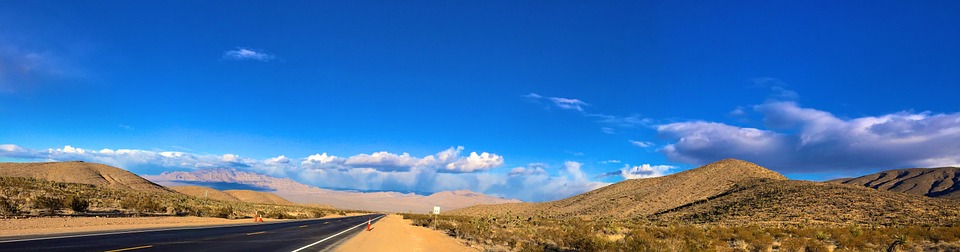
I lived most of my life in the West, quite a departure from the early Wisconsin years. I write this on a United Airlines flight, rocketing across a black starry sky back into the West yet again, a vast desert landscape dotted with mountains and strip malls and the constantly pumping veins of freeways clogged with anonymous western humans.
Funny that I’m happy to be going this time.
For the first time ever I realize this, I am going by choice, I want to go. The West came to me as a young girl so suddenly that I had no dreams created to soften it. The journey there, several non-stop days of riding lodged into the back of a sixty-four VW Beetle, stuck into an area as narrow as my skinny-kid hips, clothing and personal belongings of all varieties, belonging to myself, Dad, and Billy piled to the ceiling, covering the floor up to seat level, and totally obliterating the small oval back window.
It was hot. The heat was the most salient quality of the ride. That, and I did not know why or where or for how long I was being taken away from Kenosha and my mother. Just a knobby -kneed kid going along for the ride.
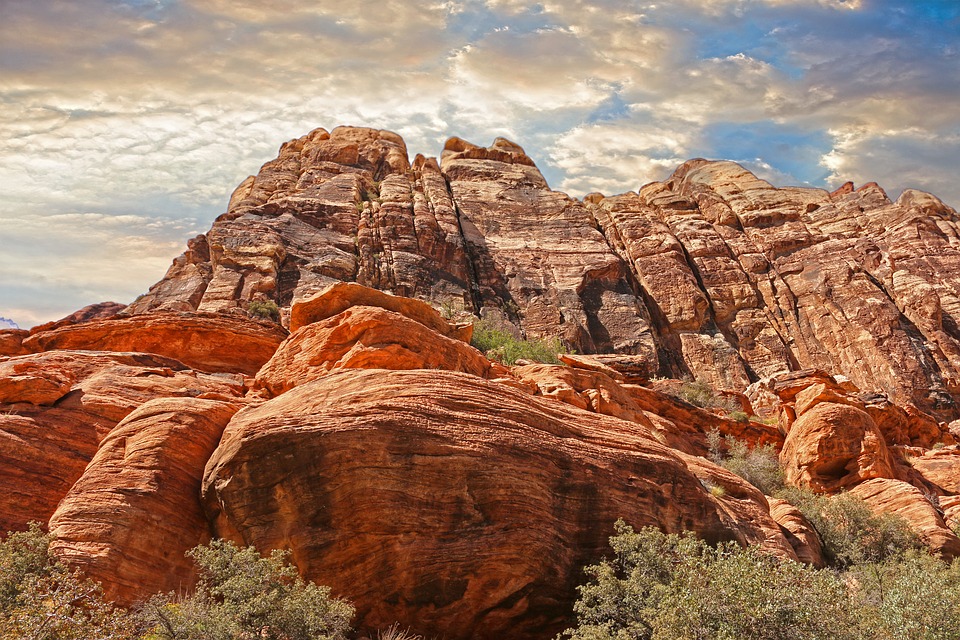 Blue Diamond, Nevada is quite an amazing place. Or, at least it was to me. The desert in summer. So stark. Cactus? Never saw those before. And it was nearly treeless. It was as if green was a forgotten color there. The long, silent two-lane road. Mirages wavering ahead of us, always staying ahead. I thought, if we could just catch up to one, I’d hear the splash of our tires going through the water like back home at Pet’s Woods.
Mountains made of naked red rock. Country music. And at night a dome of shooting stars like I’d seen at the Planetarium in Chicago once.
Off in the distance, a glow. “That’s Las Vegas,” Dad said. “A bad place. We’re not going there.”
He took us to Blue Diamond. For a visit. Aunt Honey and Uncle David lived in a small stucco ranch house. Not an actual ranch, but there were horse stalls just a few blocks away. Aunt Honey was my mom’s sister, a smaller red-ponytailed version of my mom. When she tucked me into bed, I closed my eyes and imagined she was Mom; her voice sounded nearly the same. Uncle David was a tall man, with dark hair and crinkles around his eyes, crinkles I would soon learn that were both from living in the bright desert sun and from laughing.
They were animal crazy, these cowboy relatives, and this probably sealed the deal for me when I came to learn that Dad was going to drop Billy and me off there indefinitely. I could definitely stand to live in a house with an actual chipmunk named Mike who sat on our shoulders and ate out of our hands at meal times, a huge German Shepherd named Rip, a white Persian cat named Idgit, a goat named Easter, and a horse named Christmas. I was allowed to go to the stalls alone and feed and groom Easter and Christmas. I fed them the wrong grain for a while and they put on some extra weight, but I didn’t get in trouble about it.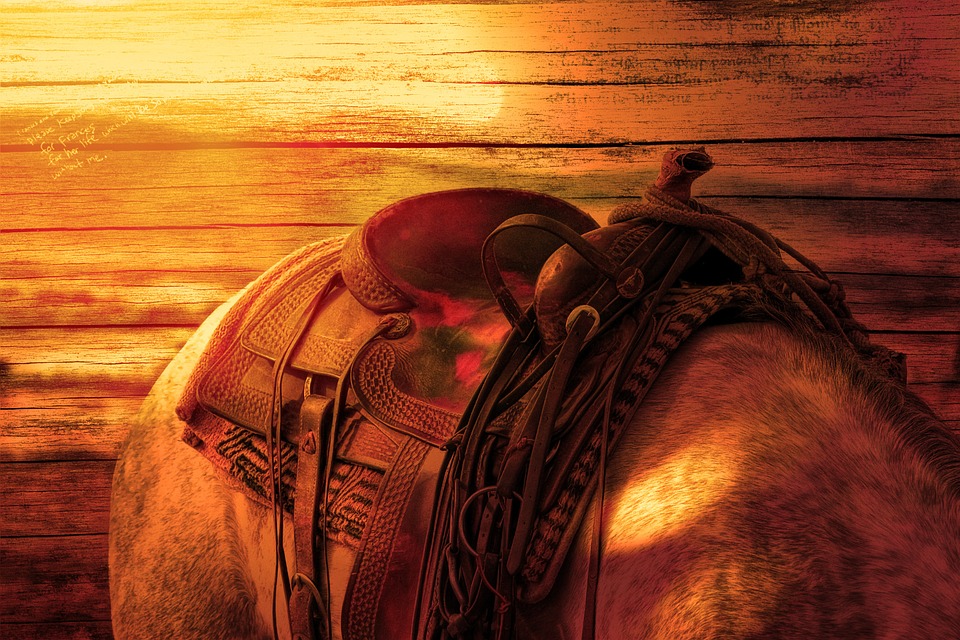
Aunt Honey and Uncle David seemed happy together and also happy enough to have us with them. Billy and I fell rather easily into life on the desert. Though I cried a couple of times initially, Aunt Honey was always proud to remind me in later years that I cried even harder the day Mom showed up to get us.
By this time summer was over and we were attending school, making friends, learning to square dance and ride. We’d also each been given our own pet to care for, Billy got a puppy and me a kitty. Billy dressed up as a Vegas showgirl for Halloween, and I was a nun. We began to look forward to the next holidays, and a promised camping trip over Christmas.
So, it was a surprise when Uncle David drove off one day and came back several hours later with our mom. She swept into the house, smiling a smile so brilliant that I immediately wondered how I had ever thought she and Aunt Honey looked alike. I took in her blonde hair, cut in a bob just like my Barbie doll’s style, navy blue capris, crisp white midriff top neatly knotted at the waste, and high heeled sandals.
“Ally, you look fantastic!” said Aunt Honey.
Mom laughed. “I feel fantastic.”
This was a woman no one could ignore, no one could leave, no one could resist loving. I wished Dad were there to see her.
Billy and I gaped at her, unable to move until she moved in front of us, stooped down and enclosed us tightly in her arms. She smelled wonderful, like soap and spice.
“I’ve come to take you home,” she said, deeply dimpled.
Filed under Uncategorized




 LakeArrowheadLadyWriter
“Reading with Ghosts” Some thoughts on a post by Jenny Lawson, The Bloggess: “Sometimes tattered and worn = loved” August 9, 2016
Like Jenny, I love used books, books that have a history of relationship with other readers that I can see and hold in my hands. The cover doesn’t need to be in great shape. There should be a name written in long hand somewhere within the first pages. Notes written in the margins. Words, phrases, paragraphs underlined. Exclamation marks, hearts, question marks in the margins. Old shopping lists stuck between the pages. Dedications to lovers, children, grandchildren, friends on the title page. This book reminds me of how very much I love being your mom.
Despite my librarian grandmother, my own library training and teacher training, and my years working in libraries and public schools, I’ve always been much more of a book sharer than a book protector. This doesn’t mean I condone random doodling, especially not of the tasteless variety, or nasty vulgarisms of any sort in any book (and I’ve seen plenty of those, believe me). And I am not advocating writing in any book that you do not own—please, respect all library books, and school texts! But I do appreciate a pithy comment that pertains to the content. I love knowing that I am sharing the experience of reading a particular piece with someone who found something striking enough to comment on right then and there, in the moment.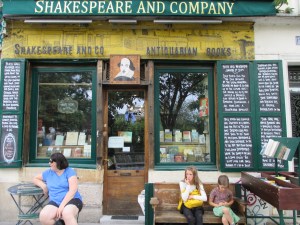
Jenny Lawson says, “…reading those found books is like reading with ghosts, ones who eagerly point out their favorite passages or share their thoughts or questions in the margins.”
Books that I can remember writing in that are sitting around my house right now include:
Jane Eyre, A Prayer for Owen Meany, The Catcher in the Rye (probably my first!), The Diary of Anne Frank, Man’s Search for Meaning, Teacher Man, Rebecca, Atonement, Prodigal Summer, The Glass Castle, Learning to Walk in the Dark, and lots of poems—“The Raven” comes to mind along with some of Shakespeare’s sonnets. And memorably, the teacher edition of a literature anthology I used in my classroom for many years (not sure if this qualifies as defacing a public school text, but it did raise a few eyebrows during department meetings).
Funny story there. I was told, “That’s not your book! You can’t write in that!” back in 1998 by a wonderful teacher I respected and admired. Even so, I continued to write in the book. I planned on outlasting the book adoption cycle, and I wanted to remember what worked, what went flat, what insights, funny or touching, or what “light bulb” moments were expressed by my kids. When I retired in 2014 a young English teacher retrieved the same teacher anthology from the school library that I had written notes in for years. There hadn’t been a new book adoption in all of those years because the budget was just too tight for the district to purchase a new anthology. This new teacher wrote me a letter. “What a treasure!” she said. “Thank you for writing all of that down.”
A reader after my own heart. A teacher after my own heart. I hope she never forgets to write in the margins.
Share this:
Leave a comment
Filed under Books, Commentary, HIstorical Fiction, Humor, Jenny Lawson's Blog, Literary Fiction, Teacher, Used Books, Writing, Writing Advice
Tagged as Annotating, Humor, Jenny Lawson, Library Books, Reading, School Books, Teacher Anthology, Used Books, Writing